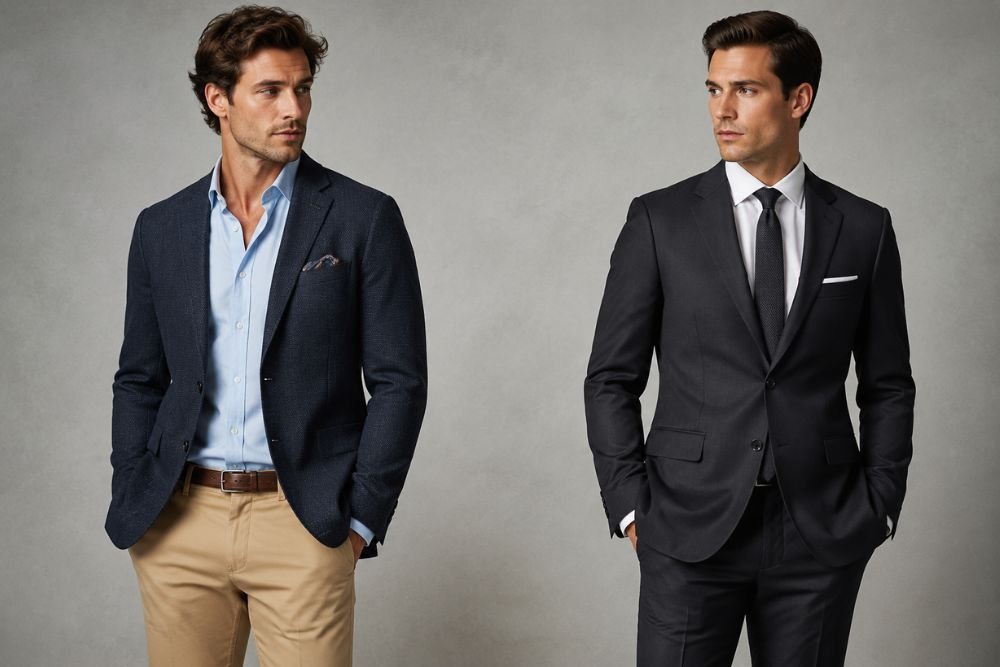
A sport coat is a patterned, versatile jacket worn with mismatched trousers for casual or business-casual outfits. A suit coat is designed to be worn only with matching trousers as part of a formal suit. The key difference between sport coat and suit coat lies in structure, fabric coordination and intended formality.
Understanding the difference between a sports coat and suit jacket helps you build a more versatile wardrobe and avoid common style mistakes in professional and social settings. Building a versatile wardrobe that projects competence, leadership, and professionalism becomes easier when you understand jacket types like sport coats and suit coats. These pieces may look similar at first glance, but their purpose, structure, and styling rules are very different.
Fashion studies show that over 68% of men in business environments prefer smart-casual jackets like sport coats for hybrid workplaces, while formal suit coats still dominate corporate and ceremonial settings.
What Is a Sport Coat?
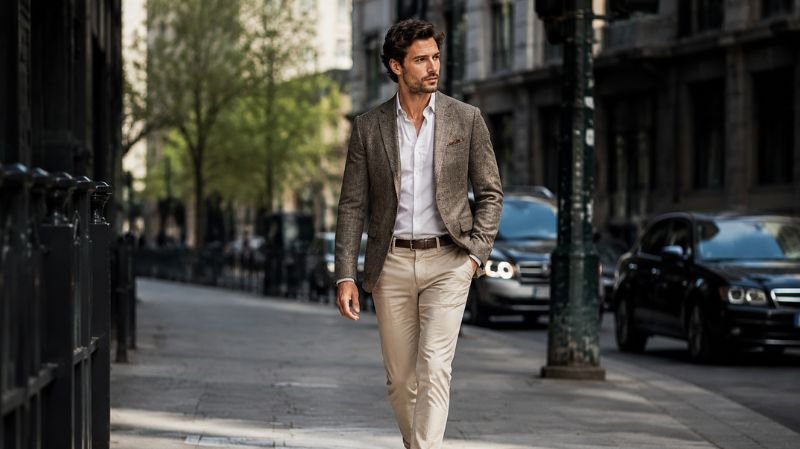
Definition and Historical Background of a Sport Coat
A sport coat is a casual-to-semi-formal jacket originally worn for outdoor activities like hunting and shooting in the 19th century. Today, it represents versatility in modern menswear, bridging casual and professional dressing with ease.
Unlike a suit jacket, it is designed to stand alone without matching trousers.
Key Characteristics of a Sport Coat
Sport coats are defined by relaxed tailoring and visual texture.
Key traits include:
- Patterned fabric (checks, tweed, houndstooth)
- Unmatched trousers styling
- Softer shoulder construction
- Seasonal fabrics (wool, linen, cotton blends)
- Less structured silhouette
Common Fabrics Used in Sport Coats
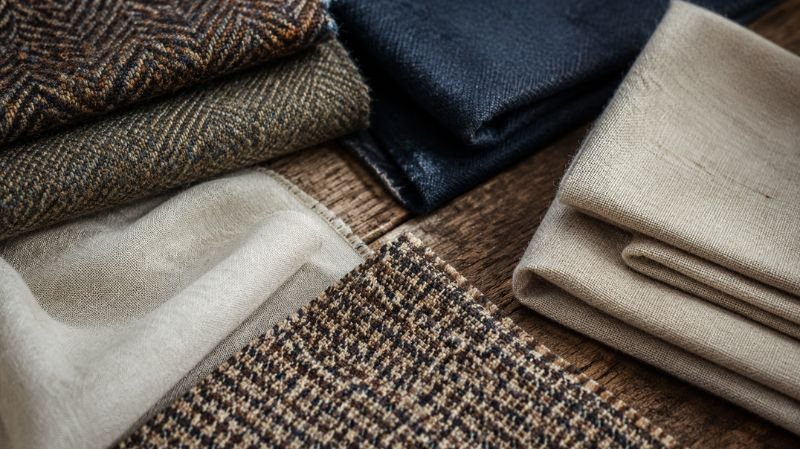
Sport coats are designed for flexibility across seasons.
- Tweed (winter durability)
- Cotton blends (spring/summer comfort)
- Linen (hot weather breathability)
- Flannel (fall/winter warmth)
Popular Styling Use Cases
Sport coats are ideal for:
- Business casual environments
- Smart casual dinners
- Travel outfits
- Semi-formal gatherings
What Is a Suit Coat?

Definition and Purpose of a Suit Coat
A suit coat is the structured jacket component of a matching suit. It is designed to be worn with trousers made from the same fabric and pattern, ensuring a unified and formal appearance. It is the foundation of traditional professional dressing.
Key Characteristics of a Suit Coat
Suit coats are built for precision and formality.
Core features include:
- Matching trousers requirement
- Smooth, consistent fabric
- Structured shoulders and lapels
- Minimal texture or patterns
- Sharp tailoring for formal silhouette
Why Suit Coats Are Always Paired
A suit coat loses its intended aesthetic when separated because:
- Fabric tone must match exactly
- Stitching and dye are uniform
- Design is engineered as a set
This is why wearing suit jackets separately is often discouraged unless styling rules are carefully understood.
Sport Coat vs Suit Coat: Key Differences Explained
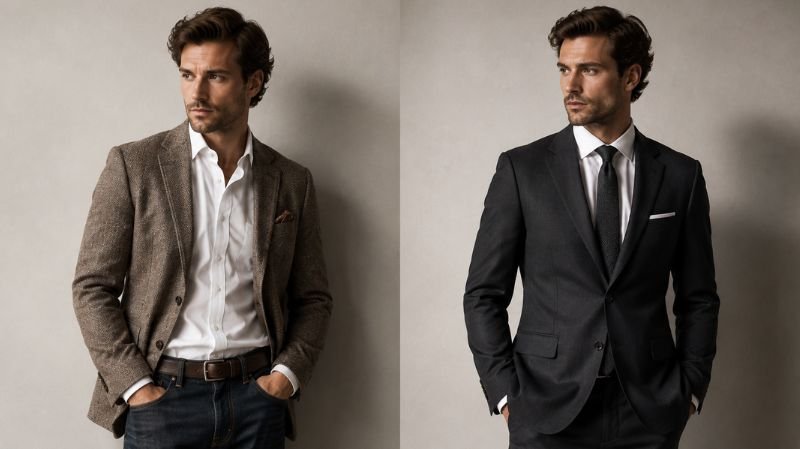
Fabric and Material Differences
Sport coats use textured, patterned fabrics, while suit coats use smooth, uniform materials. This creates a visual and functional separation between casual and formal wear.
Formality Level
- Sport coat: Smart casual to semi-formal
- Suit coat: Formal to professional/business formal
Structure and Design
Suit coats are more structured, while sport coats are softer and more relaxed, allowing movement and layering.
Styling Flexibility
Sport coats are highly flexible and can be worn with jeans, chinos, or dress trousers. Suit coats are restricted to matching pants.
Color and Pattern Use
- Sport coat: Patterns, checks, textures
- Suit coat: Solid, subtle tones (navy, charcoal, black)
Occasion Suitability
| Occasion | Sport Coat | Suit Coat |
| Office (casual) | Yes | Sometimes |
| Weddings | Rare | Yes |
| Interviews | No | Yes |
| Dinner dates | Yes | No |
Price and Investment Value
Suit coats are often more expensive due to full-set tailoring, while sport coats offer more wardrobe versatility per dollar spent.
Comparison Table
| Feature | Sport Coat | Suit Coat |
| Fabric | Textured / patterned | Smooth / uniform |
| Trousers | Mismatched | Matching set |
| Formality | Semi-casual | Formal |
| Flexibility | High | Low |
| Styling Use | Versatile | Limited |
| Structure | Relaxed | Structured |
Historical Background of Jackets
Evolution of Sport Coats
Sport coats originated from English country wear used for hunting and outdoor sports. Over time, they evolved into business-casual essentials in modern menswear wardrobes.
Origin of Suit Coats
Suit coats developed during the industrial era when uniform dressing became associated with professionalism, hierarchy, and corporate identity.
How Blazers Fit In
The suit and blazer system evolved alongside sport coats:
- Blazer: solid, metal-button jacket
- Sport coat: patterned casual jacket
- Suit coat: matching formal set
This trio forms the foundation of modern menswear layering.
Blazer vs Sport Coat vs Suit Coat
Blazers originated from naval uniforms and university rowing clubs, while sport coats evolved from outdoor wear, and suit coats from formal business tailoring.
A blazer is typically:
- Solid color
- Metal buttons
- Mid-formality
This makes it different from both sport coats and suit jackets.
Fashion Expert Opinion
Menswear stylists emphasize that understanding sports jacket vs suit jacket rules is essential for professional image building.
Expert insight:
“A well-chosen sport coat gives personality, while a suit coat gives authority. The smartest wardrobes include both for different levels of formality.”
Stylists also recommend:
- 2–3 sport coats for versatility
- At least 1 navy suit for formal needs
When Should You Wear a Sport Coat?
Business Casual Workplaces
Perfect for modern offices where full suits are not required but professionalism matters.
Social Events
Great for dinners, networking events, and semi-formal gatherings.
Travel Styling
Wrinkle-resistant sport coats make travel outfits stylish yet practical.
When Should You Wear a Suit Coat?
Formal Business Meetings
Suit coats create authority and trust in professional environments.
Weddings and Ceremonies
A matching suit ensures elegance and tradition.
Interviews and Presentations
First impressions are strongest in coordinated formal wear.
Can You Wear a Suit Coat as a Sport Coat?
When It Works
Some modern patterned suits can be separated if:
- Fabric is textured
- Pattern is subtle or bold enough to stand alone
When It Doesn’t Work
Pinstripes or formal suits should never be broken apart.
Style Rule
If unsure, always wear suit coats with matching trousers.
How to Style a Sport Coat

Best Bottoms to Pair
- Chinos
- Dark jeans
- Wool trousers
Shirt Combinations
- White oxford shirt
- Polo shirt
- Light denim shirt
Footwear
- Loafers
- Brogues
- Clean sneakers
How to Style a Suit Coat

Full Matching Set Rule
Suit coats must be worn with identical trousers for a clean silhouette.
Accessories
- Silk tie
- Pocket square
- Leather belt
Common Mistakes Men Make
- Wearing suit jackets as casual blazers
- Mixing clashing patterns
- Ignoring fit and shoulder structure
- Over-accessorizing formal jackets
Real Example
A marketing executive attending a hybrid office day wears a navy sport coat with chinos and loafers for a client meeting. The same person later wears a full charcoal suit for a corporate board presentation, demonstrating how jacket choice changes perception of authority and flexibility.
How to Choose Between Sport Coat and Suit Coat
Consider Your Lifestyle
- Corporate professionals → suit coat heavy wardrobe
- Creative or hybrid roles → sport coats preferred
Budget Strategy
Invest in:
- 1–2 suits for formal needs
- 2–4 sport coats for versatility
Authority Paragraph
In modern professional dressing, jackets are more than clothing, they communicate status, confidence, and intent. Studies in workplace psychology show that structured tailoring increases perceived competence. This is why suit coats dominate formal environments, while sport coats are favored in flexible workplaces that value personality and adaptability.
Conclusion
Understanding the difference between a sport coat and a suit coat is essential for building a modern, functional wardrobe. A sport coat gives you flexibility, personality, and everyday style options, while a suit coat delivers structure, authority, and formal elegance.
If your goal is to look professional across every setting, you don’t choose one over the other, you build a wardrobe that includes both.
Want to upgrade your wardrobe strategy? Start by investing in one versatile navy suit and two high-quality sport coats. This combination ensures you’re prepared for everything from client meetings to casual networking events.
Frequently Asked Questions
1. What is the main difference between a sport coat and a suit coat?
A sport coat is worn with mismatched trousers, while a suit coat must be worn with matching pants as part of a formal suit.
2. Is a sport coat more casual than a suit coat?
Yes, sport coats are designed for casual and business-casual environments.
3. Can you wear jeans with a sport coat?
Yes, dark jeans pair well with sport coats for a smart-casual look.
4. Can a suit jacket be worn separately?
Sometimes, but only if the fabric and pattern allow it.
5. What is the difference between a blazer and a sport coat?
Blazers are solid-colored with metal buttons, while sport coats are patterned.
6. Which is better for business casual?
A sport coat is usually better for business casual environments.
7. What is the difference between sport jacket vs suit jacket?
Sports jackets are casual and textured; suit jackets are formal and structured.
8. How many sport coats should a man own?
At least 2–3 versatile sport coats are recommended.
9. Are suit coats outdated?
No, they remain essential for formal and professional settings.
10. What is better: suit and blazer or sport coat?
It depends on context, suits for formality, sport coats for flexibility.