
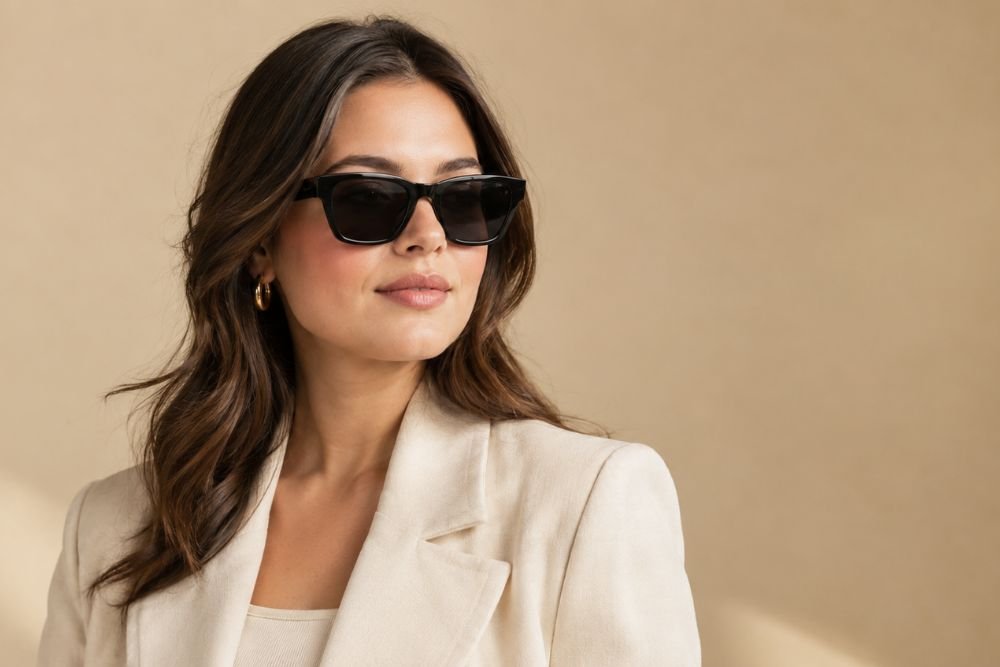
How to Choose the Best Sunglasses for a Round Face starts with understanding your facial proportions, choosing frames that complement your features, and finding a fit that feels comfortable throughout the day.
Square, rectangular, geometric, and cat-eye sunglasses are excellent starting points because their lines create contrast with naturally rounded contours. However, the best pair also depends on your personal style, preferred coverage, and how the frames sit on your face.
The best sunglasses for a round face often include square, rectangular, Wayfarer, cat-eye, geometric, and structured browline frames. Look for a frame width that complements your cheekbones, comfortable bridge placement, and enough clearance to prevent the lenses from touching your cheeks. Treat face-shape guidelines as styling suggestions, not strict rules.
How to Tell If You Have a Round Face Shape
Before choosing sunglasses, take a moment to understand your face shape. This can help you narrow down the styles worth trying without limiting your options unnecessarily.
A round face typically has a similar overall width and length, fuller cheeks, a softly curved jawline, and few prominent angles. Your forehead and jaw may also appear relatively similar in width, although individual proportions vary.
Key Characteristics of a Round Face
Look at your face straight on in natural light, with your hair pulled away from your cheeks. Pay attention to the overall outline rather than judging your face by one feature alone.
Common characteristics include:
- Similar width and length: Your face looks relatively balanced horizontally and vertically.
- Fuller cheeks: The cheek area may be the broadest part of your face.
- A rounded jawline: Your jaw and chin have gentle curves rather than pronounced corners.
- Soft facial contours: Your forehead, cheeks, and jaw transition smoothly into one another.
You do not need to match every characteristic. Many people have a combination of round, oval, or other facial features.
How to Identify Your Face Shape at Home
A simple mirror check can help you estimate your face shape before shopping for sunglasses.
- Pull your hair back so your forehead, cheeks, and jawline are visible.
- Look straight into a mirror without tilting your head.
- Compare your forehead width, cheekbone width, jawline, and face length.
- Notice whether your outline looks rounded, elongated, or angular.
You can also take a straight-on photograph and examine the outline. Avoid using a close-up, wide-angle selfie as your only reference because camera distance and perspective can distort facial proportions.
Round Face vs. Oval Face vs. Square Face
These face shapes can look similar at first glance, but their proportions offer useful clues when choosing frames.
| Face shape | Typical characteristics | Frames to try first |
| Round | Similar width and length, soft jawline | Square, rectangular, geometric |
| Oval | Longer than wide, gently tapered contours | Wayfarer, aviator, square, cat-eye |
| Square | More angular jawline and forehead | Round, oval, curved aviator |
| Heart-shaped | Wider forehead with a narrower chin | Aviator, lighter-bottomed frames |
| Oblong | Noticeably longer than wide | Taller rectangular, oversized, browline |
These are general styling guidelines rather than a scientific classification system. If your features fall between two shapes, experiment with recommendations from both categories.
How to Choose Sunglasses for a Round Face
The easiest starting point is to consider the relationship between your face’s natural curves and the lines of your frames. Angular designs introduce a different visual element, while rounded designs create a softer, more coordinated appearance.
Neither approach is inherently better. The right choice depends on whether you prefer contrast, a harmonious silhouette, or a distinctive fashion statement.
Choose Frames That Complement Your Natural Features
Square and rectangular frames introduce straight edges that contrast with rounded cheeks. Cat-eye sunglasses emphasize the outer corners, while geometric frames create a more architectural look.
If you prefer understated eyewear, you can achieve a similar effect with slim rectangular metal frames. You do not need thick black sunglasses to create definition.
Consider Width, Height, and Overall Proportion
Frame shape is only one part of the decision. A beautifully designed pair can still look unbalanced if it is too narrow, too tall, or too large for your face.
Start with a frame that sits comfortably across your temples and provides adequate lens coverage. Then compare how the top edge, lower rim, and outer corners relate to your eyebrows and cheekbones.
Decide What You Want Your Sunglasses to Emphasize
Different designs create different style effects, even when they have similar dimensions.
- For a structured look: Try square or rectangular frames.
- For a lifted, expressive look: Explore cat-eye silhouettes.
- For a modern statement: Consider angular geometric frames.
- For a classic everyday option: Start with Wayfarer or D-frame sunglasses.
- For a softer, coordinated look: Try rounded frames with defined edges or a structured browline.
This approach makes choosing sunglasses more personal and practical than following a list of supposedly mandatory shapes.
10 Best Sunglasses Styles for a Round Face
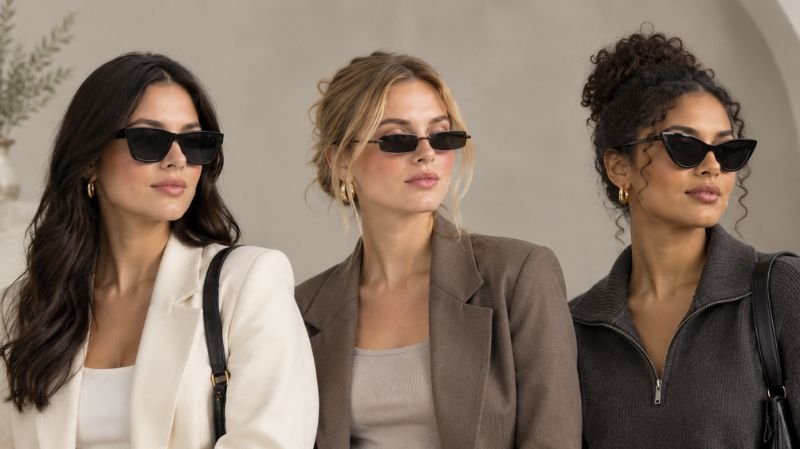
The following styles offer different ways to experiment with shape, scale, and personality. Use them as a shortlist when shopping rather than assuming every style will suit every round face equally well.
1. Square Sunglasses for a Defined, Confident Look
Square sunglasses are a strong starting point if you want to introduce more angular lines into your overall look. Their relatively straight edges contrast with rounded cheeks and a curved jawline.
For everyday wear, try medium-sized square frames with gently softened corners. If you prefer statement accessories, a thicker acetate frame can create a bolder effect without requiring an exaggerated lens size.
Styling tip: Pair black square sunglasses with a white shirt, straight-leg jeans, and loafers for a polished casual outfit. Tortoiseshell versions work particularly well with beige, cream, camel, and denim.
2. Rectangular Sunglasses for a Sleek, Minimalist Style
Rectangular sunglasses feature a wider-than-tall silhouette that can introduce a horizontal line across the upper face. This makes them useful if you prefer clean shapes and understated accessories.
Choose a lens height that offers comfortable coverage without making the frame look excessively shallow. Slim metal rectangles feel modern and lightweight, while acetate versions offer more visual presence.
Styling tip: Wear narrow rectangular sunglasses with a tailored blazer, a simple tank top, and relaxed trousers. For a casual weekend, try them with a denim jacket and a plain T-shirt.
3. Cat-Eye Sunglasses for an Upswept Silhouette
Cat-eye sunglasses have outer corners that rise toward the temples. This distinctive shape directs attention toward the upper part of the face and creates a more expressive outline.
A moderate upsweep is an easy entry point if you want something versatile. Sharper, more exaggerated corners suit a statement-making look, while softly angled cat-eye frames can feel understated enough for everyday wear.
Styling tip: Combine black or tortoiseshell cat-eye sunglasses with a fitted knit, a midi skirt, and ankle boots. For a relaxed look, try a less dramatic frame with straight-leg jeans and a crisp button-down shirt.
4. Geometric Sunglasses for a Contemporary Statement
Geometric sunglasses introduce multiple angles through shapes such as hexagons and octagons. They offer an alternative to conventional square frames while retaining a structured appearance.
The key is to balance the frame’s complexity with the rest of your outfit. A simple metal geometric frame creates a subtle accent, whereas a thick, brightly colored design becomes the focal point.
Styling tip: Try slim gold geometric sunglasses with monochromatic clothing, or pair a bold angular frame with a neutral outfit. Let the unusual silhouette stand out instead of competing with several other statement accessories.
5. Wayfarer Sunglasses for Everyday Versatility
Wayfarer-style sunglasses combine a structured upper edge with a shape that usually broadens toward the temples. They are a practical option if you want something less formal than a sharply squared frame.
Their versatility comes from the range of available proportions, colors, and finishes. A classic dark frame feels timeless, while transparent acetate or lighter tortoiseshell offers a softer interpretation.
Styling tip: Wear Wayfarers with a polo shirt, straight-leg jeans, and sneakers for a casual outfit. They also work with summer dresses, linen shirts, and relaxed tailoring.
6. Browline and Clubmaster Sunglasses for Upper-Face Definition
Browline sunglasses feature a more prominent upper rim and a lighter lower portion. Clubmaster designs are a recognizable example of this general aesthetic.
The stronger top line draws attention toward the eyebrows and gives the frame a defined silhouette without relying on a completely thick rim. This can be appealing if you want structure but find oversized acetate frames too heavy.
Styling tip: Pair browline sunglasses with a crisp shirt, a lightweight jacket, and tailored trousers. For an everyday look, choose a frame with a comfortable bridge and a width that aligns naturally with your temples.
7. Aviator Sunglasses for a Classic, Relaxed Look
Aviator sunglasses are traditionally associated with a double bridge and lenses that taper toward the bottom. Their curved silhouette can work beautifully with a round face, depending on the frame’s proportions.
If you want more angular contrast, try squared aviators or navigator-inspired designs with a flatter lower edge. If you prefer the traditional teardrop shape, focus on the overall width, lens depth, and how the lower rim relates to your cheeks.
Styling tip: Gold or silver aviators complement linen shirts, denim, relaxed tailoring, and simple summer outfits. For a sportier look, consider a more structured frame with darker lenses.
8. Oversized Sunglasses for a Bold Fashion Statement
Oversized sunglasses can make an outfit feel more dramatic, but bigger is not automatically better. The most successful pair has enough scale to make a statement without slipping, pressing against your cheeks, or overwhelming your features.
For a round face, oversized square, rectangular, and angular cat-eye designs are useful options to compare. If you prefer oversized round frames, experiment with their proportions instead of ruling them out because of your face shape.
Styling tip: Wear oversized black sunglasses with a long coat, a simple dress, or a coordinated neutral outfit. Keep the remaining accessories relatively restrained if you want the glasses to take center stage.
9. D-Frame Sunglasses for a Modern Everyday Look
D-frame sunglasses typically have a flatter upper edge and a curved lower outline. This combination gives them a structured appearance without the sharp corners of a conventional square frame.
They are a useful option if you want something between a traditional Wayfarer and a more minimalist rectangular design. Look for a comfortable width and a lower rim that does not press against your cheeks.
Styling tip: Choose a dark D-frame for city outfits or a translucent version for a lighter summer aesthetic. They work particularly well with simple layers, denim, and smart-casual clothing.
10. Tortoiseshell and Transparent Frames for Subtle Personality
Frame color and material can change the overall impression of a design without changing its basic shape. Tortoiseshell introduces pattern and warmth, while transparent frames create a lighter visual effect.
For a round face, try these finishes in square, rectangular, D-frame, or geometric silhouettes if you want to combine color variation with angular structure. Thin metal details can also make a substantial frame feel less visually heavy.
Styling tip: Warm tortoiseshell pairs naturally with cream, camel, olive, and brown. Transparent champagne or smoke-colored frames work well with cooler neutrals, denim, and minimalist outfits.
Which Sunglasses Styles Work Best for a Round Face?
Use this comparison to narrow your options based on the look you want rather than relying on frame names alone.
| Frame style | Visual character | Best starting point |
| Square | Strong, defined lines | Everyday structure |
| Rectangular | Sleek and understated | Minimalist outfits |
| Cat-eye | Upswept and expressive | A lifted silhouette |
| Geometric | Distinctive and modern | Statement styling |
| Wayfarer | Casual and versatile | Daily wear |
| Browline | Emphasis on the upper rim | Classic, polished outfits |
| Aviator | Relaxed and timeless | Casual and travel looks |
| Oversized | Bold and dramatic | Statement accessories |
| D-frame | Structured with softer lower edges | Contemporary everyday wear |
| Angular tortoiseshell | Warm and distinctive | Classic, understated styling |
Fashion expert insight: When two frames have the same basic shape, compare their width, lens height, bridge design, and corner angles. Those details often influence the final look more than the label attached to the style.
How to Choose the Right Sunglasses Size for a Round Face
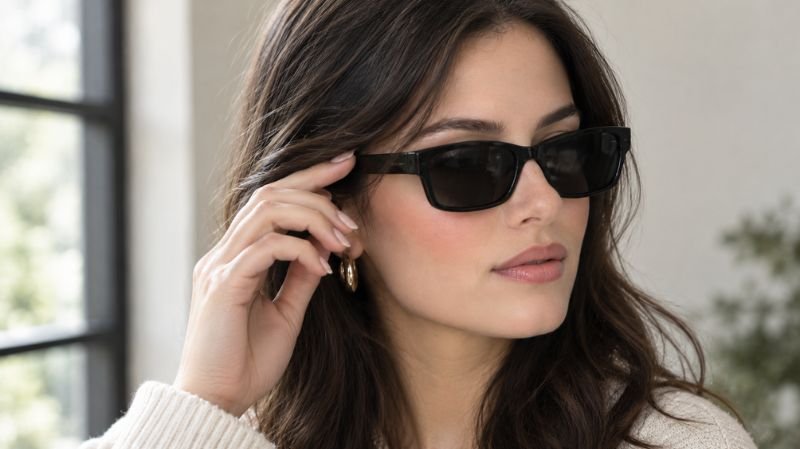
The right size makes sunglasses look intentional and helps them remain comfortable during everyday activities. A flattering shape cannot compensate for a frame that constantly slides, pinches, or touches your cheeks.
Choose a Frame Width That Fits Your Face
Start by checking how the frame front aligns with your temples. A frame that is much narrower than your face may look undersized, while one that extends excessively beyond your temples can feel disproportionate or unstable.
The aim is not to make the frame as wide as possible. Choose a width that sits securely and complements your natural proportions without creating pressure.
Check Lens Height and Proportions
Lens height changes the overall character of sunglasses. Shallow rectangular lenses feel sleek and contemporary, while taller lenses offer a bolder look and may provide more coverage.
Try at least two lens heights within a similar frame width. Compare how each version relates to your eyebrows, cheeks, and preferred style rather than assuming that taller or shorter lenses are automatically more flattering.
Find a Comfortable Bridge Fit
The bridge is the part of the frame that rests on your nose. A well-fitting bridge helps keep sunglasses in position without excessive pressure or repeated slipping.
Different nose shapes and bridge heights can affect how a frame sits. If standard frames slide or leave uncomfortable pressure points, ask an eyewear professional about alternative bridge designs or adjustable nose pads.
Make Sure the Lenses Do Not Touch Your Cheeks
Smile naturally and move your head while trying on sunglasses. The lower rims should not press against your cheeks or rise noticeably whenever you smile.
Also check that your eyelashes do not brush against the lenses. These small details can make a substantial difference to all-day comfort.
Understand the Frame Measurements
Many frames display three measurements, usually printed on the inside of an arm:
- Lens width: The horizontal width of one lens.
- Bridge width: The distance across the nose bridge.
- Temple length: The length of the arms extending toward your ears.
These measurements help you compare similar frames when shopping online. Pupillary distance is a separate measurement used to help position prescription lenses correctly; it is not a measurement of face shape or a substitute for checking frame fit.
Which Sunglasses Colors and Materials Suit a Round Face?
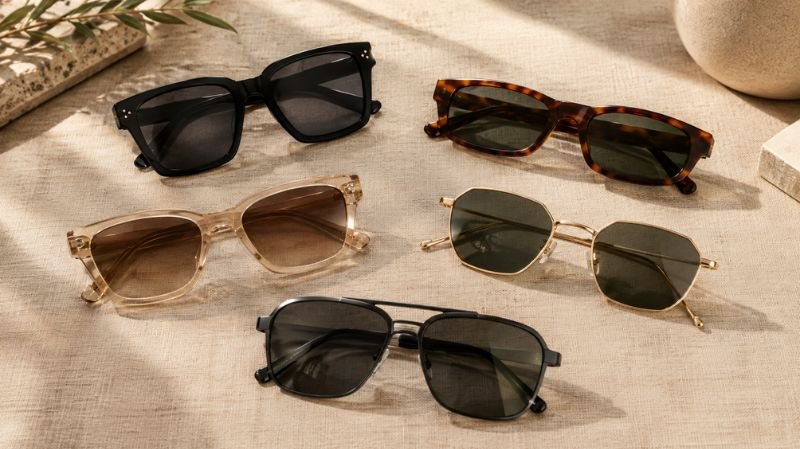
Once you have found a suitable silhouette, experiment with color, material, and frame thickness. These details influence whether sunglasses look understated, dramatic, vintage-inspired, or contemporary.
Black, Tortoiseshell, and Bold-Colored Frames
Black frames create a strong outline and work well with monochromatic outfits, tailored clothing, and casual basics. Tortoiseshell offers more variation, combining darker and lighter tones in a classic pattern.
Burgundy, forest green, navy, and other saturated colors can provide personality without relying on an oversized silhouette. Choose a color that complements your wardrobe rather than assuming dark frames are always more flattering.
Metal, Acetate, and Transparent Frames
Metal frames often have a lighter visual presence and can suit minimalist or vintage-inspired styling. Acetate frames offer a wide variety of colors, patterns, and thicknesses, making them useful for both subtle and statement designs.
Transparent frames can feel less visually dominant, especially in champagne, clear, or smoke finishes. None of these materials is inherently best for a round face; comfort, construction, durability, and personal preference should guide the decision.
How to Choose Lens Colors for Your Needs
Lens tint affects how sunglasses look and can influence visual comfort in different conditions. Gray lenses generally preserve color appearance relatively well, while brown or amber tints can create a warmer visual impression.
Do not confuse lens darkness or tint with ultraviolet protection. Check the manufacturer’s UV rating independently, regardless of the lens color you choose.
Which Sunglasses Should You Avoid With a Round Face?
There is no frame shape that every person with a round face must avoid. However, certain designs may create a different effect than you intended, so it helps to understand what to look for when trying them on.
Small, Perfectly Round Frames
Small circular frames repeat the curves of a round face and may create a deliberately rounded overall appearance. If you prefer stronger contrast, compare them with square, rectangular, or angular geometric designs.
Round sunglasses can still be an excellent fashion choice. The right lens size, bridge, and styling can make a circular frame feel distinctive rather than unbalanced.
Frames That Are Too Narrow or Too Tall
Frames that sit well inside your natural temple width may appear undersized, while excessively tall lenses can overwhelm a smaller face. These effects depend on your individual proportions, so avoid choosing a frame solely because it is marketed as oversized or designed for a particular face shape.
Check the fit from the front and side. A good pair should feel secure, sit naturally, and complement your features without requiring constant adjustment.
Why Personal Preference Still Matters
Face-shape guides are useful shortcuts, not rules about what you should wear. You may prefer the softness of rounded frames, the sharpness of a geometric design, or the drama of an oversized silhouette.
The best choice is the one that reflects your style, fits properly, and meets your practical needs. Use conventional recommendations to discover new options rather than to eliminate styles before trying them.
How to Choose Sunglasses That Protect Your Eyes

Sunglasses are both fashion accessories and protective eyewear. Alongside shape and comfort, make sure the pair you choose offers suitable protection against ultraviolet radiation.
The American Academy of Ophthalmology recommends sunglasses labeled 100% UV or UV400, or those that block both UVA and UVB rays. UV exposure can damage the eyes, so protection matters regardless of the frame’s price or appearance.
Look for 100% UV Protection or UV400
Check the product specifications or label before purchasing. Dark lenses do not automatically provide adequate UV protection, and a designer appearance is not evidence of protective performance.
Larger lenses and close-fitting or wraparound designs can also help reduce light entering around the sides. For prolonged outdoor activities, consider a brimmed hat alongside your sunglasses.
Polarized vs. Non-Polarized Sunglasses
Polarized lenses reduce glare reflected from surfaces such as roads and water. They can be especially useful for driving in daylight, fishing, and spending time near water.
However, polarization does not automatically mean UV protection. Harvard Health explains that polarized lenses and UV-blocking lenses serve different purposes, so check that the pair offers both if you want glare reduction and UV protection.
Choose Frames for Your Everyday Activities
For everyday wear, prioritize comfortable fit, adequate UV protection, and a style that works with your wardrobe. For outdoor sports, look for secure-fitting designs intended for the activity.
For driving, glare reduction may be useful, while activities around water or snow call for careful attention to UV protection and coverage. The best frame is one that suits both your face and the conditions in which you plan to wear it.
How to Find Sunglasses That Match Your Personal Style
The most successful sunglasses choices combine facial proportions with the rest of your outfit. Think about your usual clothing, preferred accessories, and whether you want the glasses to blend in or become the focal point.
Classic and Minimalist Sunglasses
Square, rectangular, and D-frame sunglasses are versatile options for wardrobes built around neutral colors, tailored pieces, and simple silhouettes. Black, tortoiseshell, and understated metal finishes are useful starting points.
For a refined everyday look, coordinate the frame with your shoes, belt, watch, or bag without trying to match every accessory exactly.
Trendy and Statement Sunglasses
Geometric, oversized, and dramatic cat-eye sunglasses can add personality to otherwise simple clothing. If the frame has a strong shape or bright color, let it lead the outfit rather than competing with multiple bold accessories.
For a balanced result, combine statement sunglasses with clean lines, understated jewelry, or a coordinated color palette.
Casual, Smart-Casual, and Vacation Looks
For casual outfits, Wayfarer, square, and aviator styles pair naturally with denim, T-shirts, polos, and relaxed shirts. Smart-casual outfits often work well with rectangular frames, browline designs, and refined acetate finishes.
For vacations, consider lightweight frames that stay secure and provide appropriate UV protection. Choose a style you will genuinely enjoy wearing throughout the day, not just one that looks good in a photograph.
Conclusion
Choosing sunglasses for a round face becomes much easier when you consider shape, proportion, comfort, and personal style together. Square, rectangular, geometric, cat-eye, and Wayfarer designs are excellent options to try first, but the right pair is ultimately the one that feels comfortable and looks the way you want.
Before buying, compare two or three frame styles, check the bridge and temple fit, and verify that the lenses provide adequate UV protection. Small differences in frame width, lens height, and material can transform the overall look.
Ready to find your next favorite pair? Use the comparison table and fit checklist in this guide to shortlist your preferred sunglasses, try them on in natural light, and choose a pair that complements your wardrobe while protecting your eyes.
FAQs
1. What is the most flattering sunglasses shape for a round face?
Square and rectangular frames are useful starting points if you want to contrast rounded facial contours with straighter lines.
2. Are square or rectangular sunglasses better for round faces?
Square frames offer a stronger angular look, while rectangular frames create a sleeker, more horizontal silhouette.
3. Do cat-eye sunglasses suit round faces?
Yes, cat-eye frames can complement round faces with their upswept outer corners and expressive silhouette.
4. Can people with round faces wear round sunglasses?
Absolutely; choose a size and proportion you enjoy, whether you prefer a coordinated rounded look or stronger contrast.
5. Should sunglasses be wider than your face?
Your frames should sit securely around your temples without excessive overhang or uncomfortable pressure.
6. Are oversized sunglasses good for round faces?
They can be, provided the frame’s width, lens height, and weight remain comfortable and proportionate.
7. How do I measure my face for sunglasses?
Compare your cheekbone and temple width, then use the frame’s lens, bridge, and temple measurements to narrow down suitable sizes.
8. Do polarized sunglasses protect your eyes from UV rays?
Not necessarily; polarization reduces reflected glare, so check the separate UV protection rating before buying.
9. Which sunglasses are best for everyday wear on a round face?
Wayfarer, square, and rectangular styles are practical options because they are available in a wide range of proportions and finishes.
10. How can I tell if my sunglasses fit correctly?
They should stay in place during normal movement without pinching your temples, slipping down your nose, or touching your cheeks.