Learning how to style a silk scarf is an easy way to transform everyday outfits, from a simple T-shirt and jeans to a tailored blazer or flowing dress. You can wear a silk scarf around your neck, tie it into your hair, wrap it over your head, or use it as a creative accessory on your handbag or waist. The key is choosing the right scarf shape, folding technique, and placement for the look you want.
Instant Answer: How Do You Style a Silk Scarf?
A silk scarf can be styled in 15 ways, including a classic neck knot, French-inspired neckerchief, headband, bandana, babushka headscarf, ponytail wrap, braided-hair accent, bun wrap, handbag tie, wrist wrap, scarf belt, shoulder drape, bow, halter top, and layered blazer accent.
Beginner tip: Fold a square scarf diagonally, roll it into a narrow band, and tie it loosely around your neck or hair. These simple styles let you experiment before trying full head wraps or scarf tops.
Why Silk Scarves Deserve a Place in Your Wardrobe
A silk scarf can introduce color, pattern, and texture without requiring an entirely new outfit. The same printed square can look relaxed with denim, polished with tailoring, or expressive when worn as a headscarf.
Fashion editors regularly feature scarves beyond the traditional neck tie, including head wraps, ponytail accents, and handbag details. Vogue’s scarf guides and seasonal runway coverage demonstrate how changing the placement of one accessory can change the overall effect of an outfit.
The most useful styling principle is to think of a scarf as a finishing detail rather than an accessory that must match every item you wear. Pick up one color from its print, repeat it in your shoes or bag, or let the scarf become the main visual focus against neutral clothing.
15 Stylish Ways to Wear a Silk Scarf
The best silk scarf styles depend on its dimensions, fabric weight, and how much fabric is available for folding and tying. A small square works well for neck knots and hair accents, while a larger square or long rectangle offers more options for full head wraps and clothing styles.
Use these 15 methods as a practical starting point, adapting the folds and knots to your scarf rather than forcing every style to work with every size.
1. Tie a Silk Scarf Around Your Neck
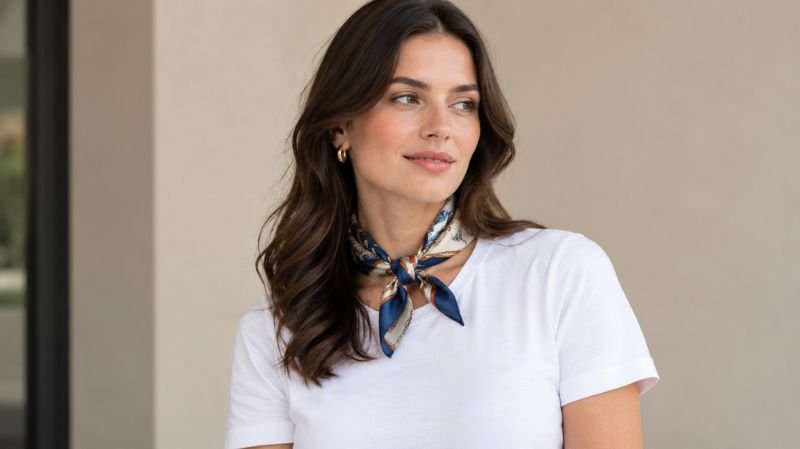
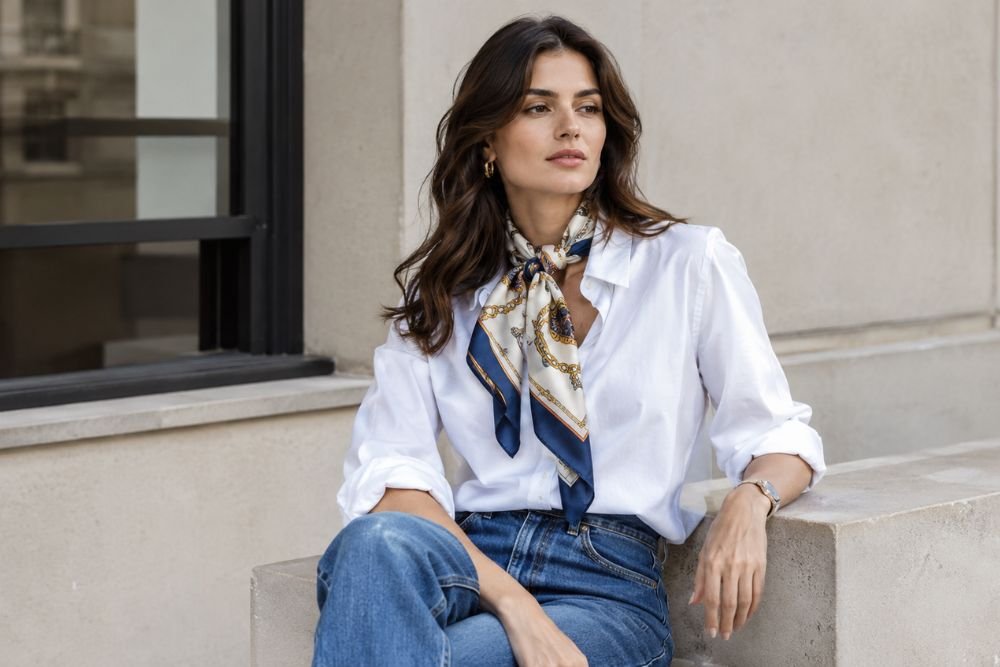
The classic neck scarf is one of the easiest ways to make a plain outfit feel intentional. It works especially well with a crisp white shirt, a simple crew-neck tee, or a blazer with an open collar.
How to tie it:
- Lay a square scarf flat in a diamond shape and fold it diagonally into a triangle.
- Fold the triangle repeatedly from the long edge until you have a narrow band.
- Place the center at the front of your neck, bring the ends around, and tie a small knot at the front or slightly to one side.
- Adjust the folds so the scarf lies flat without pressing tightly against your neck.
For a modern finish, keep the knot compact and let a little space remain between the scarf and your neck. A geometric or floral print looks especially effective against a solid-color top.
2. Create a French-Inspired Silk Scarf Knot
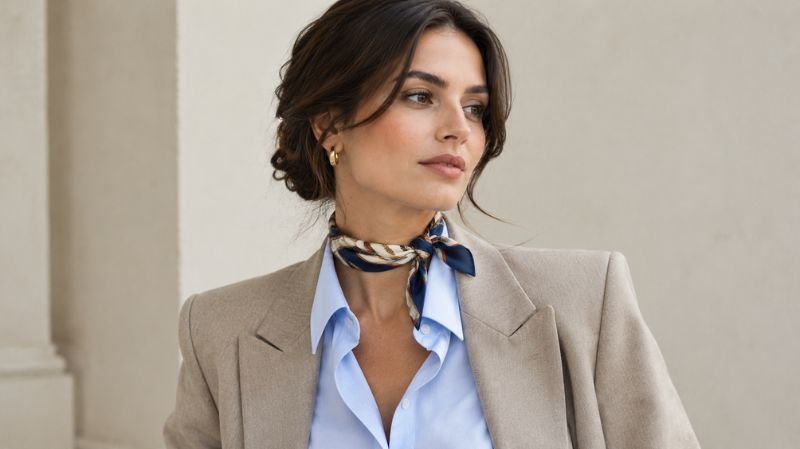
A French-inspired neckerchief creates a neat, structured accent that suits office outfits and smart-casual dressing. Unlike a loose neck drape, this style uses a compact knot that stays visible beneath an open shirt collar or above a blazer neckline.
How to tie it:
- Fold a square scarf diagonally into a triangle, then roll it into a narrow strip.
- Wrap the strip around your neck with the ends meeting at the front.
- Tie one simple knot, then pass one end through again if you want a more secure finish.
- Turn the knot slightly off-center and smooth the fabric.
Pair it with straight-leg trousers, loafers, or a structured jacket. If your shirt already has a prominent collar or decorative details, choose a smaller scarf print to keep the look balanced.
3. Drape a Silk Scarf Over Your Shoulders
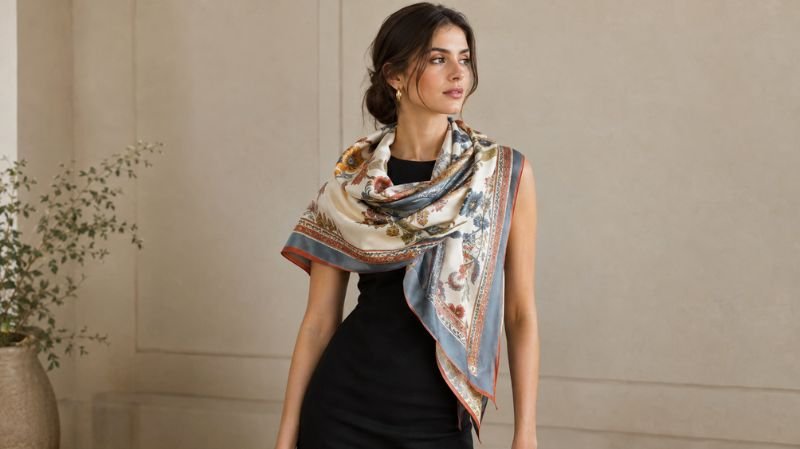
A shoulder drape is ideal when you want the pattern of a silk scarf to remain visible without creating a tight knot. It works well with sleeveless tops, simple dresses, and understated evening outfits.
How to style it: Open a large square scarf, fold it diagonally if you prefer a triangular shape, and place it over your shoulders. Let the ends fall evenly or bring one end across the opposite shoulder for an asymmetrical finish.
This technique is particularly useful when the scarf has a beautiful border or central motif. Keep the rest of the outfit relatively simple so the fabric’s print and drape remain the focus.
4. Wear a Silk Scarf as a Headband
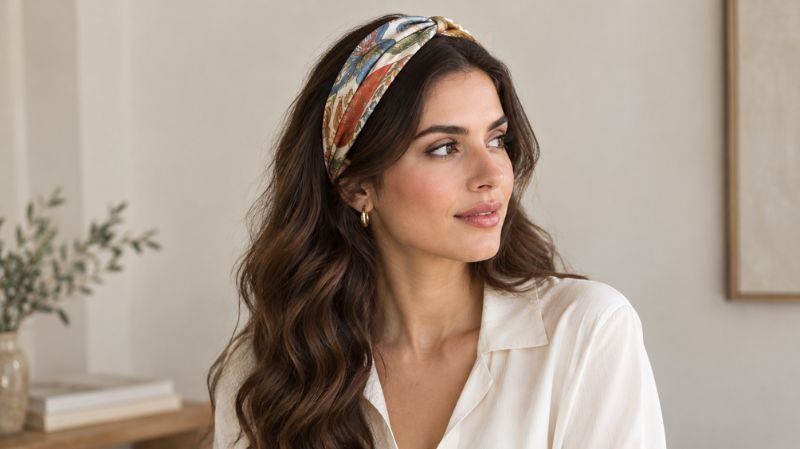
A silk scarf headband is a simple way to introduce color around the face while keeping hair away from the forehead. It works with loose waves, straight hair, a low ponytail, or a short bob.
How to tie it:
- Fold the square scarf diagonally into a triangle.
- Roll it from the pointed end toward the long folded edge until it forms a band.
- Position the center over the crown or just behind your hairline.
- Tie the ends beneath your hair at the nape, or place a small knot near the top for a more playful look.
If the scarf slides, secure it with discreet hair grips or tie it over a thin, nonslip headband. A medium-width band makes a noticeable statement, while a narrow fold feels more understated.
5. Tie a Silk Scarf Around a Ponytail
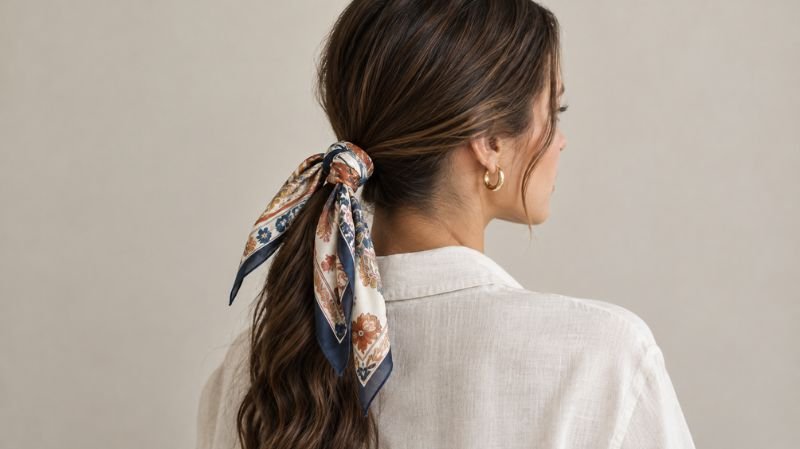
A ponytail wrap adds movement and a decorative finish without requiring an elaborate hairstyle. The scarf’s loose ends can hang alongside the hair, creating a coordinated look with a dress, a linen shirt, or a simple summer outfit.
How to style it: Secure your ponytail with a regular hair elastic first. Fold a narrow scarf into a strip, wrap it around the elastic, and tie a small knot or bow, leaving the ends loose.
Using a separate elastic gives the hairstyle its support while the scarf acts as the decorative layer. For a shorter scarf, make a compact bow; for a longer scarf, let the tails follow the ponytail.
6. Wrap a Silk Scarf Around a Bun
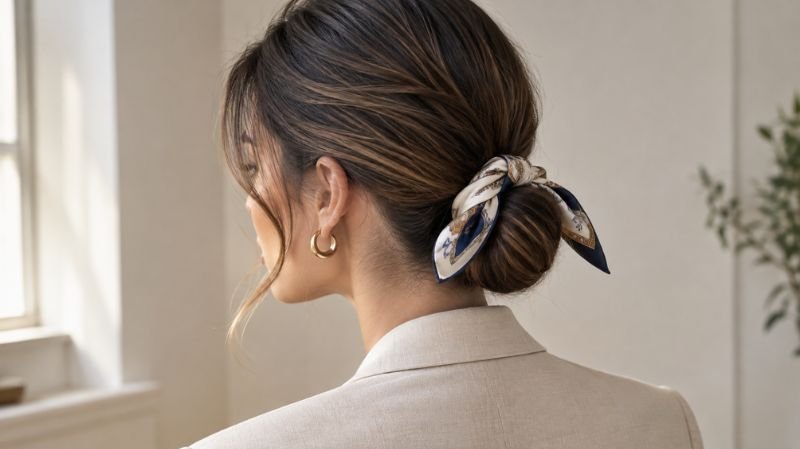
A scarf-wrapped bun is useful when you want an updo to look finished without adding a large hair clip. It suits relaxed weekend outfits, summer dresses, and smart-casual looks.
Make a low or high bun and secure it with a hair tie or pins. Wrap a narrow silk scarf around the base, then tie the ends into a small knot or bow at the side or back.
For a more polished result, keep the knot close to the bun and tuck away any excess fabric. A loose bun can look intentionally relaxed, but the scarf should be secure enough to stay in place as you move.
7. Wear a Silk Scarf as a Babushka Headscarf
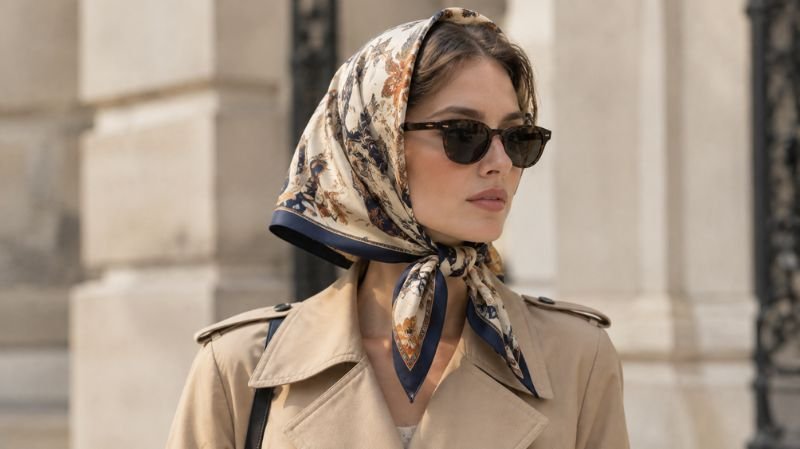
The babushka style covers the top and sides of the head, with the scarf’s corners tied beneath the chin. It creates a vintage-inspired look that pairs naturally with sunglasses, trench coats, denim jackets, and simple knitwear.
How to tie it:
- Open a square scarf and fold it diagonally into a triangle.
- Place the long folded edge along the hairline, allowing the point to cover the back of your head.
- Bring both side corners beneath your chin.
- Tie them in a loose double knot, adjusting the scarf around your temples and ears.
A medium or large square provides more coverage than a small neckerchief. If the silk slips, use a discreet grip at the hairline and keep the knot comfortable rather than pulling it tightly.
8. Create a Classic Silk Bandana Look
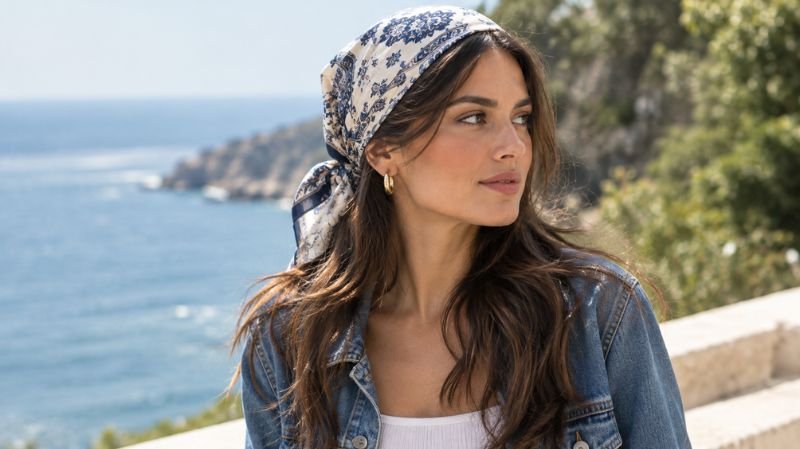
A bandana-style scarf gives an outfit a casual, slightly retro character. Unlike the babushka style, which frames the face with corners tied beneath the chin, this version typically secures at the back of the head.
Fold a square scarf diagonally into a triangle and place the folded edge across your forehead or just above the hairline. Bring the corners around the sides of your head and tie them at the back, keeping the central point over your crown.
Pair it with denim, a plain tank top, or a relaxed button-down shirt. If you prefer less coverage, fold the scarf into a thinner band and leave most of your hair visible.
9. Braid a Silk Scarf Into Your Hair
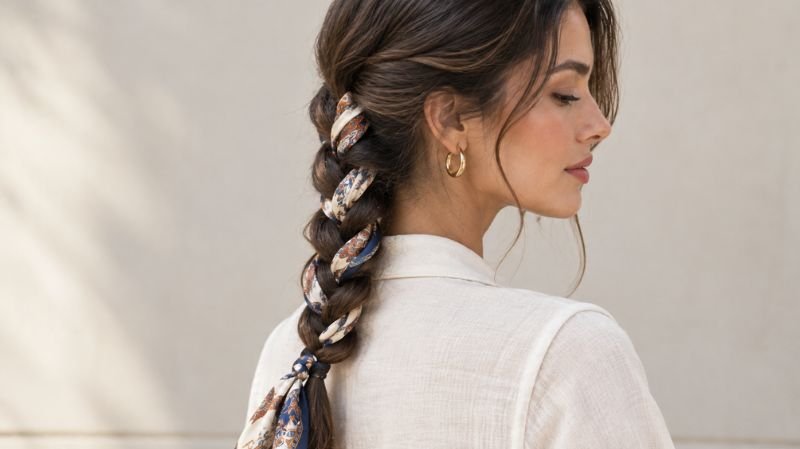
A scarf woven into a braid combines a hairstyle and an accessory in one detail. It is particularly effective with long hair because the scarf adds color and movement along the length of the braid.
Start by securing a narrow scarf to the base of a ponytail with a hair elastic. Divide the hair into three sections, arrange the scarf alongside one section, and braid the hair while incorporating the scarf as an additional strand.
Keep the weave loose enough to avoid pulling on the hair, and secure the braid with a small elastic. If your scarf is slippery or very long, practice with a shorter piece first to keep the ends manageable.
10. Wear a Silk Scarf as a Full Head Wrap
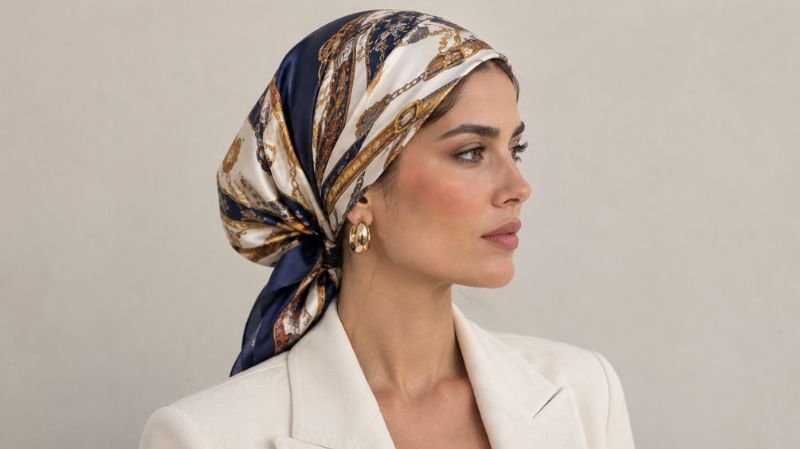
A full head wrap offers more coverage than a headband or bandana and can become the focal point of a minimalist outfit. It works with larger square scarves or long rectangular scarves that provide enough fabric for overlapping layers.
How to style it: Fold a square scarf into a triangle and place the center over your head. Bring the ends toward the nape, cross them securely, then bring them back toward the crown or tuck them neatly underneath the wrap.
The precise method depends on the scarf’s dimensions, so avoid pulling a small square too tightly in an attempt to cover all your hair. Choose a larger scarf for full coverage and use discreet grips to prevent movement.
11. Tie a Silk Scarf Into a Bow
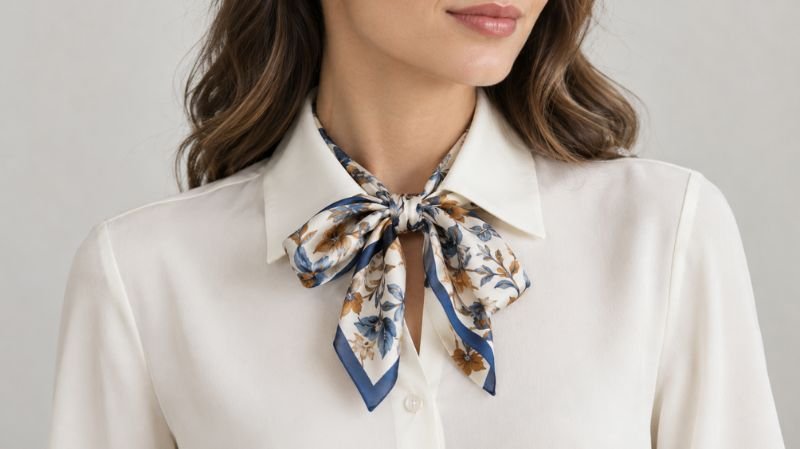
A silk bow can soften a tailored outfit or add a decorative detail to a simple hairstyle. You can place it at the neck, beneath a shirt collar, or around a ponytail depending on the scarf’s length.
Fold the scarf into a narrow band, position it where you want the bow, and tie a loose first knot. Form two loops and tie them as you would shoelaces, then adjust the loops and tails until they sit evenly.
A smaller bow suits office wear and structured shirts, while a larger bow can complement a dress or romantic blouse. Avoid making the knot too bulky if your outfit already has ruffles, a statement collar, or oversized jewelry.
12. Add a Silk Scarf to Your Handbag
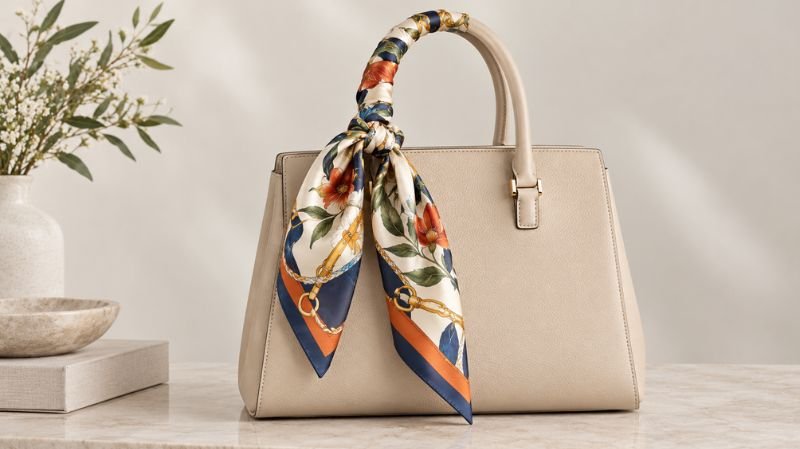
Tying a scarf to a handbag is one of the easiest ways to wear a print without having to coordinate it directly with your clothing. The scarf can introduce a contrasting color to a neutral bag or connect the bag to a shade already present in your outfit.
For a simple knot, fold a small square into a narrow band and tie it around one handle. For a more finished look, wrap a long scarf around the handle in overlapping sections and secure the ends discreetly.
Avoid pulling delicate silk tightly against rough hardware or sharp edges, which can snag the fabric. If you use the bag frequently, check the scarf periodically for friction marks and loosened knots.
13. Use a Silk Scarf as a Belt
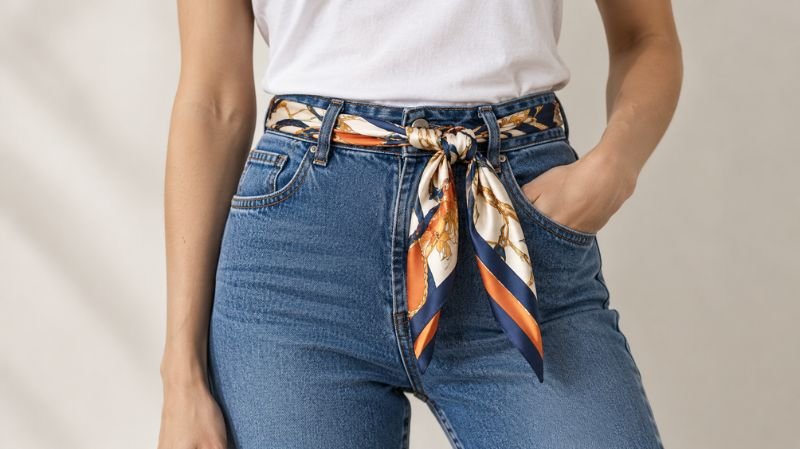
A scarf belt adds a patterned accent to jeans, tailored trousers, or a simple skirt. It works best with a long scarf that can pass through the belt loops and leave enough length for a knot or trailing ends.
Fold the scarf lengthwise into a band, thread it through the loops, and tie it at the front or slightly off to one side. Keep the knot decorative rather than relying on the silk to hold up trousers.
This look is especially effective with high-waisted denim and a tucked-in T-shirt. For a cleaner silhouette, choose a scarf that is narrow enough to pass through the loops without bunching.
14. Wrap a Silk Scarf Around Your Wrist
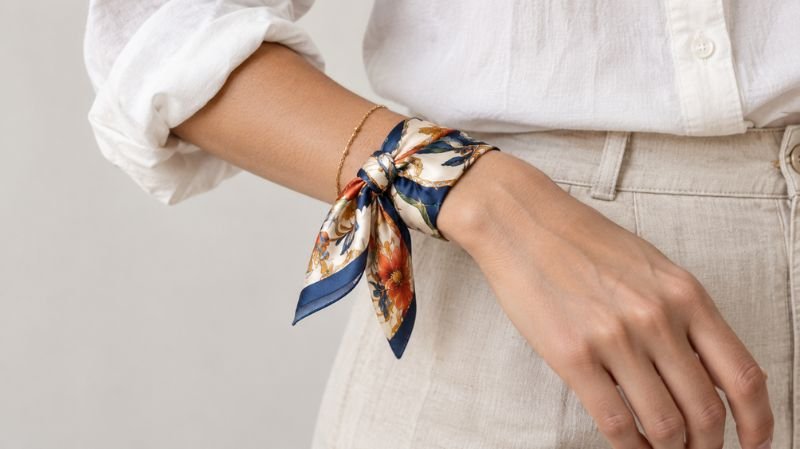
A wrist wrap is a small styling detail that can replace or complement a bracelet. It is useful when you want to echo the colors in your outfit without introducing another large accessory.
Fold a small scarf into a narrow strip and wrap it around your wrist once or twice, depending on its length. Tie a small knot on the underside or side of the wrist, keeping the fit comfortable and leaving enough room for movement.
This style works well with rolled-up shirt sleeves and simple jewelry. Avoid wearing the scarf so tightly that it restricts movement, and keep it away from rough surfaces that may catch the silk.
15. Layer a Silk Scarf Under a Blazer or Coat
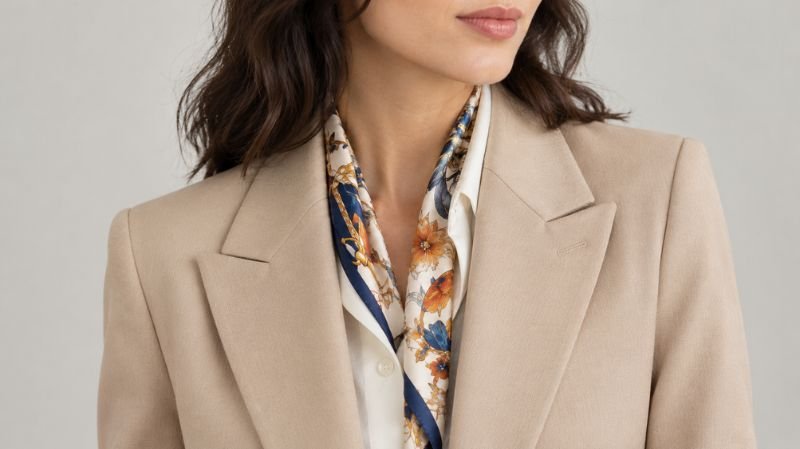
Layering a scarf beneath a blazer or coat creates a more integrated look than wearing it as a separate statement accessory. A small printed square can sit inside an open collar, while a longer scarf can fall vertically down the front of a jacket.
Choose one of the scarf’s colors to complement your outerwear, or deliberately contrast a neutral coat with a brighter print. Keep the fabric visible around the neckline rather than burying the entire scarf beneath layers.
This approach works particularly well for transitional weather, when a lightweight scarf adds visual interest without the bulk of a winter wrap. It also makes a useful bridge between casual denim and more structured pieces.
How to Tie a Silk Head Scarf and Keep It in Place
Knowing how to tie a silk head scarf is often more important than choosing an elaborate design. Because smooth silk can slide against hair, a secure base knot, carefully placed hair grips, or a hidden elastic can make the finished style more comfortable and dependable.
For a classic head wrap, start with a square scarf large enough to cover the area you want to conceal. Fold it into a triangle, position the long edge along your hairline, and tie the ends at the nape or beneath the chin, depending on the look.
How to Style a Headscarf for Different Hair Lengths
The most flattering headscarf placement depends on your hairstyle, the amount of coverage you want, and the scarf’s proportions. Rather than following a rigid rule, adjust the fold so it works with your natural hair volume.
- Short hair: Try a narrow headband, a bandana tied at the back, or a small bow near one temple.
- Medium-length hair: Wear a babushka scarf, a folded headband, or a low ponytail wrap.
- Long hair: Experiment with a full head wrap, a braid woven with silk, or a ponytail with long scarf tails.
- Curly or voluminous hair: Choose a larger square for extra coverage and leave enough room to avoid compressing your hairstyle unnecessarily.
How to Wear a Silk Scarf in Your Hair Without Slipping
The simplest way to wear silk in your hair is to let a hair elastic or grip provide the hold while the scarf supplies the decorative finish. This is more dependable than expecting a smooth scarf knot to hold a ponytail or bun on its own.
For a headband, tie the scarf at the nape and tuck the ends under your hair. For a ponytail, secure the hair first and wrap the scarf around the existing elastic rather than tying it directly around loose hair.
Silk is smooth, but that alone does not guarantee protection against breakage or frizz. Hair condition, friction, tension, and the way an accessory is secured all matter, so avoid tight knots and rough handling.
How to Choose the Right Silk Scarf for Your Style
Before experimenting with a new knot, check the scarf’s size, shape, and fabric weight. These details determine whether the scarf will form a neat neckerchief, cover your head comfortably, or provide enough fabric for a belt or top.
Which Silk Scarf Size Is Best?
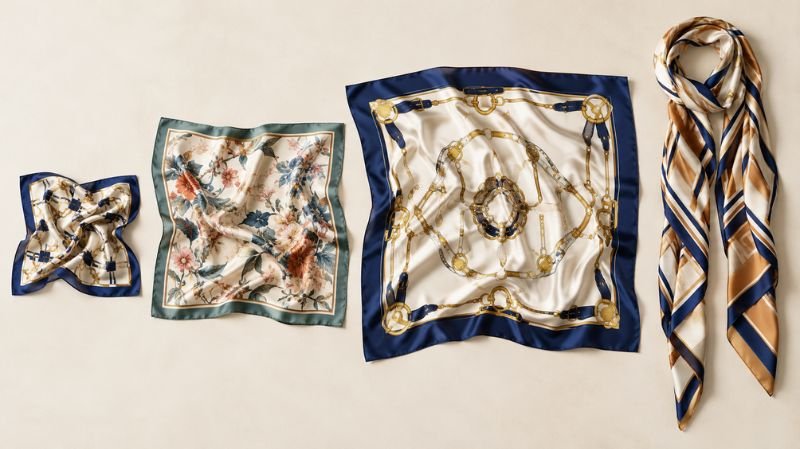
There is no single standard size that works for every styling technique. The dimensions below are practical starting points, not strict rules; a scarf’s drape, thickness, and construction can affect how it ties.
| Scarf type | Useful starting size | Best styling uses |
| Small square | Around 20–22 inches | Neck knots, wrist wraps, small hair bows |
| Medium square | Around 26–28 inches | Headbands, bandanas, neckerchiefs |
| Large square | Around 35–36 inches | Babushka looks, fuller head wraps, some scarf tops |
| Long rectangular scarf | Varies by design | Ponytails, braids, neck ties, belts, shoulder drapes |
If you want one scarf for several purposes, a medium-to-large square is a flexible choice. If you mainly want to decorate a ponytail or handbag, a narrow twilly or long rectangular scarf may be easier to manage.
How to Choose Silk Scarf Colors and Prints
A scarf can coordinate with an outfit without matching it exactly. Look for one shared color between the scarf and another item, such as a handbag, shoe, knit top, or jacket lining.
Neutral and geometric
Navy, cream, black, and camel prints are versatile with denim and tailored basics. They are a useful starting point if you want to wear a scarf frequently rather than save it for special outfits.
Floral and multicolored
Let one or two colors in the print guide the rest of the outfit. A floral scarf looks particularly balanced with a solid blouse, plain denim, or a simple dress.
Bold and high-contrast
Use a striking scarf as the focal point against black, white, navy, or another restrained base. Keep additional prints simple unless you deliberately want a mixed-pattern look.
Match the Scarf to the Occasion
For daytime errands or travel, a ponytail wrap, folded headband, or bag accent offers color without requiring much adjustment. For the office, a compact neck knot or a scarf tucked beneath a blazer provides a more structured finish.
For dinners and special occasions, a shoulder drape or bow can complement a simple dress. A head wrap can also make a statement, but the best choice is the one that feels comfortable and appropriate for the event.
Common Silk Scarf Styling Mistakes to Avoid
Even an attractive scarf can look out of place when the knot, print, or proportions compete with the rest of the outfit. A few small adjustments can make the result feel deliberate rather than overworked.
- Choosing a scarf that is too small: A small square may not provide enough fabric for a full head wrap or scarf top.
- Tying the knot too tightly: Tight knots can create bulk, discomfort, or creases that are difficult to smooth out.
- Mixing too many competing prints: If both your scarf and clothing feature strong patterns, look for a shared color or vary the scale of the prints.
- Ignoring fabric friction: Rough bag hardware, jewelry, or hair accessories can catch delicate silk.
- Treating a decorative scarf as structural support: A scarf belt should not replace a functional belt, and a scarf top needs secure fastening and suitable coverage.
The goal is not to make every fold perfectly symmetrical. It is to choose a placement that suits the outfit, secure the fabric appropriately, and leave enough room for natural movement.
How to Care for a Silk Scarf
A silk scarf can remain a useful wardrobe accessory for years if you handle it carefully. However, silk garments and printed scarves may have different finishes, dyes, and care requirements, so the care label should guide cleaning decisions.
Before cleaning, check the manufacturer’s instructions rather than assuming every silk scarf can be hand-washed. If the label recommends professional cleaning, follow that advice, especially for delicate prints, contrasting borders, or structured finishes.
For everyday storage, fold the scarf loosely and keep it away from rough fasteners, jewelry, and sharp objects. Avoid pulling knots tight when removing the scarf, and smooth out folds gently instead of tugging on the fabric.
If the scarf becomes damp, stained, or snagged, consult its care instructions before applying water or stain removers. Heat and aggressive rubbing can damage delicate fabric, so gentle handling is the safer default.
Conclusion
Learning how to style a silk scarf is less about memorizing complicated knots and more about discovering the placements that work with your wardrobe. A neckerchief can refresh a familiar shirt, a headband can transform a simple hairstyle, and a scarf tied to a handbag can make an everyday accessory feel personal.
Start with one or two techniques that suit your routine, then experiment with different folds, prints, and proportions. You do not need a new outfit for every look; often, a thoughtful change in how you wear an accessory is enough to make familiar pieces feel different.
Ready to try a new look? Choose your favorite scarf, test one of these 15 styling methods, and save the combinations you enjoy most. With a little practice, your silk scarf can become one of the most versatile pieces in your wardrobe.
FAQs
1. What is the easiest way to style a silk scarf?
Fold a square scarf into a narrow band and tie it loosely around your neck or use it to decorate a ponytail.
2. How do you tie a silk head scarf for beginners?
Fold the scarf into a triangle, position it over your head, and secure the corners at the nape or beneath your chin.
3. Can you wear a silk scarf with short hair?
Yes, a narrow headband, side bow, or bandana can add color and definition to short hairstyles.
4. How do you stop a silk scarf from slipping off your head?
Use discreet hair grips or a nonslip headband as a base, and secure the scarf without pulling it uncomfortably tight.
5. Can a silk scarf be worn in every season?
Yes, lightweight silk scarves can be styled year-round, although full wraps and shoulder drapes may feel more suitable in cooler weather.
6. What clothes go best with a silk scarf?
Simple shirts, T-shirts, denim, blazers, and solid-color dresses provide versatile backgrounds for patterned scarves.
7. Is a square or rectangular silk scarf more versatile?
A square scarf offers more options for triangular folds and head wraps, while a long rectangle is especially useful for neck ties, braids, and ponytails.
8. Can men wear a silk headscarf?
Yes, silk headscarves and bandanas can complement casual or tailored outfits, depending on the fold, print, and overall styling.
9. Can you wear a silk scarf as a top?
Yes, a sufficiently large scarf can be styled as a halter or bandeau, but secure fastening, appropriate coverage, and comfortable movement are essential.
10. How should you store a silk scarf?
Fold it loosely in a clean, dry place away from sharp accessories and rough surfaces that could snag the fabric.