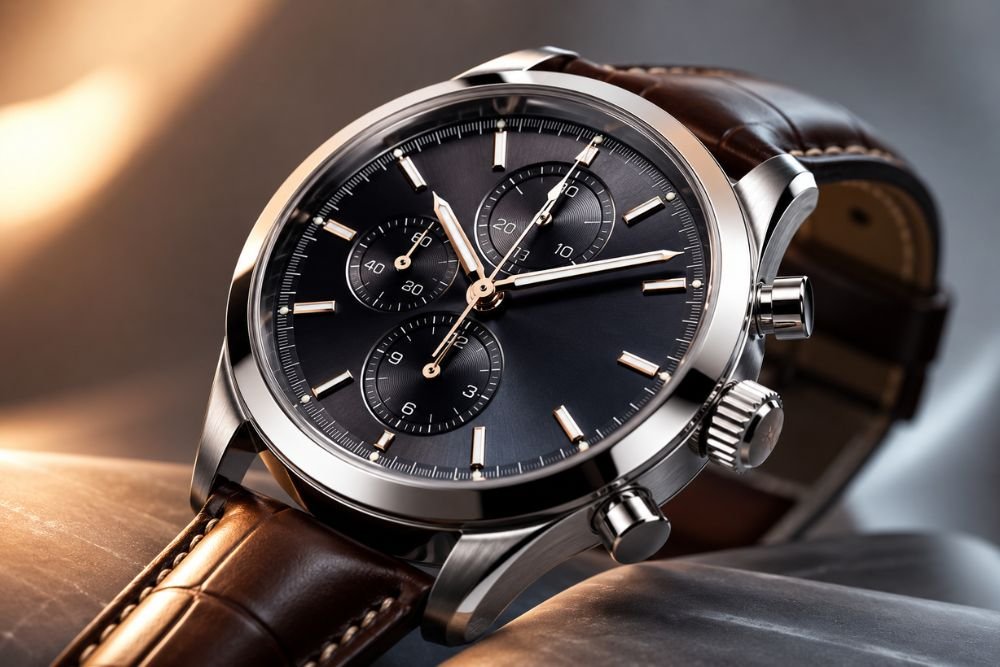
To set chronograph watch functions, first adjust the time and date using the crown, then use the upper pusher to start and stop the chronograph and the lower pusher to reset it to zero. Most chronograph watches feature a central seconds hand and subdials that track elapsed minutes, hours, or seconds.
If you’re wondering how to set a chronograph watch function’s instructions, the process typically involves understanding the crown positions, calibrating the chronograph hands if necessary, and learning how the stopwatch function works. Once set correctly, a chronograph watch can accurately measure elapsed time for sports, travel, racing, and everyday activities.
Why Should You Learn How to Set Chronograph Watch Functions?
A chronograph watch is much more than a traditional timepiece. It combines standard timekeeping with a built-in stopwatch mechanism, allowing users to measure elapsed time with precision.
Originally developed for scientific observations and professional timing applications, chronographs are now widely used by athletes, pilots, racing enthusiasts, divers, and watch collectors.
Learning how to properly set and operate a chronograph ensures:
- Accurate timekeeping
- Correct stopwatch functionality
- Longer movement lifespan
- Better user experience
- Prevention of hand misalignment
Whether you own a quartz, automatic, or mechanical chronograph, understanding its functions can help you maximize its capabilities.
Comparison Table: Standard Watch vs Chronograph Watch
| Feature | Standard Watch | Chronograph Watch |
| Displays Time | Yes | Yes |
| Stopwatch Function | No | Yes |
| Subdials | Usually No | Yes |
| Elapsed Time Measurement | No | Yes |
| Sports Timing | Limited | Excellent |
| Professional Timing Applications | No | Yes |
| Additional Pushers | No | Yes |
| Complexity | Simple | Advanced |
What Is a Chronograph Watch?
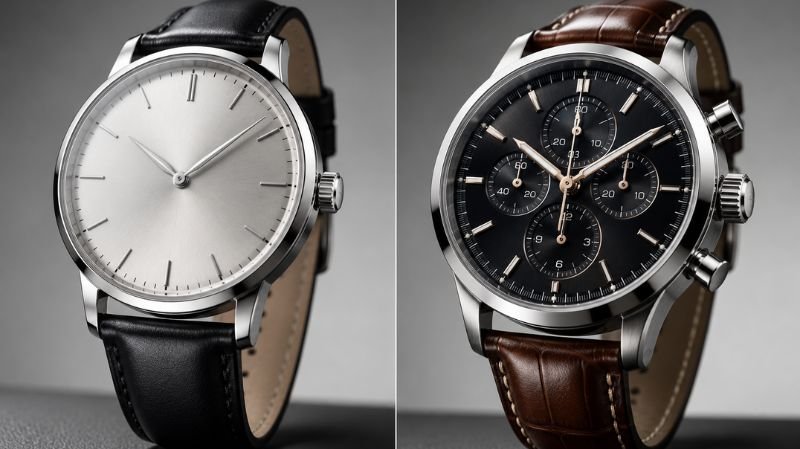
A chronograph watch is a watch equipped with a stopwatch function that operates independently from the standard time display.
The word “chronograph” comes from Greek roots meaning:
- Chronos = Time
- Graph = Recording
Unlike a standard watch, a chronograph allows you to start, stop, and reset a timing event without affecting the normal timekeeping operation.
Most modern chronographs include:
- Main hour and minute hands
- Central chronograph seconds hand
- Multiple subdials
- Crown
- Two pushers
What Are the Main Components of a Chronograph Watch?
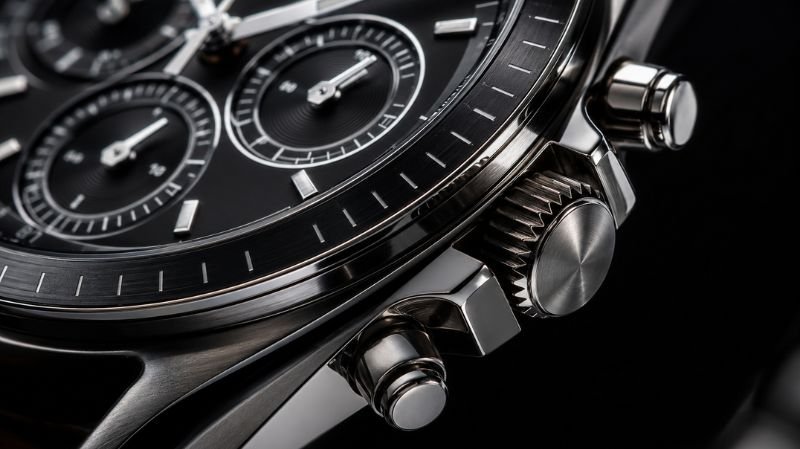
Before learning how to operate chronograph watch functions, it is important to understand its key components.
Main Timekeeping Function
The primary purpose of the watch is still telling time.
This section displays:
- Hours
- Minutes
- Seconds
- Date (on many models)
Stopwatch Function
The stopwatch or chronograph mechanism measures elapsed time.
Users can:
- Start timing
- Stop timing
- Resume timing
- Reset timing
without interrupting normal timekeeping.
Subdials
Subdials provide additional timing information.
Common subdials include:
| Position | Function |
| 3 O’clock | 24-Hour Indicator |
| 6 O’clock | Running Seconds |
| 9 O’clock | Elapsed Minutes |
| Additional Models | Elapsed Hours |
The exact layout varies by manufacturer.
Crown
The crown serves as the control center.
Functions include:
- Time adjustment
- Date setting
- Manual winding (mechanical models)
- Accessing calibration modes
Pushers
Most chronographs include two pushers:
Upper Pusher
- Starts chronograph
- Stops chronograph
Lower Pusher
- Resets chronograph
- Returns hands to zero
How Does a Chronograph Watch Work?
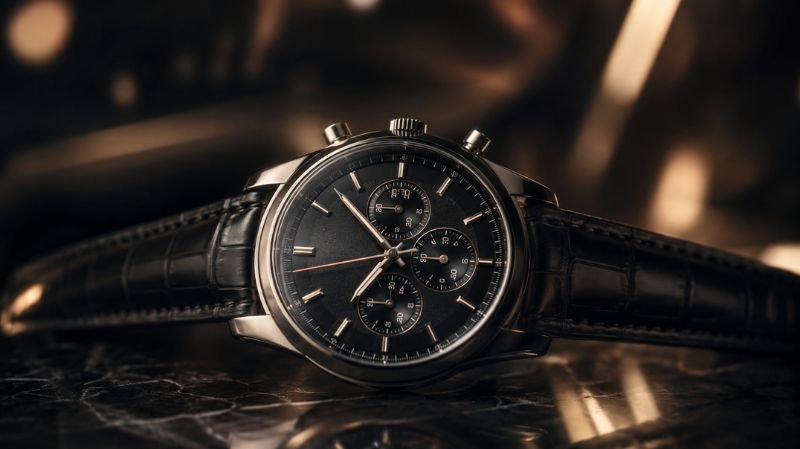
A chronograph operates as an independent stopwatch mechanism integrated into a wristwatch movement.
When activated:
- The central chronograph seconds hand begins moving.
- Subdials record elapsed minutes and hours.
- The watch continues displaying normal time.
- The stopwatch can be stopped and reset independently.
This dual functionality is why chronographs remain among the most popular watch complications in modern horology.
How to Set a Chronograph Watch Functions Instructions Step by Step?
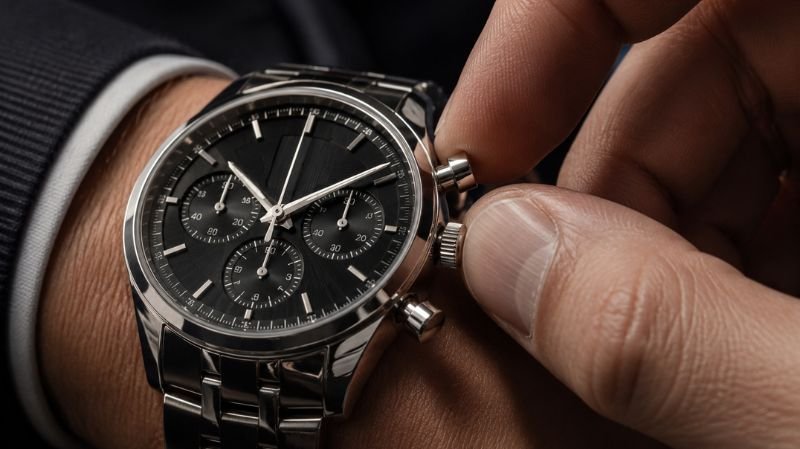
This is the process most users search for when learning how to use a watch chronograph.
Step 1: Identify Your Watch Type
Determine whether your watch is:
- Quartz Chronograph
- Automatic Chronograph
- Mechanical Chronograph
The basic operation remains similar, but calibration procedures may differ.
Step 2: Set the Current Time
Pull the crown to the time-setting position.
Turn the crown until:
- Correct hour appears
- Correct minute appears
Push the crown back into its original position after setting.
Pro Tip
Always move the hands forward rather than backward when possible. This helps maintain movement accuracy.
Step 3: Set the Date
If your watch includes a date display:
- Pull the crown to first position.
- Rotate the crown until the correct date appears.
- Return crown to normal position.
Important Warning
Avoid changing the date between:
9 PM and 3 AM
Many movements are actively engaging the date mechanism during this period, which could cause damage.
Step 4: Start the Chronograph
Press the upper pusher.
You will notice:
- Central chronograph seconds hand begins moving
- Subdials begin recording elapsed time
The chronograph is now active.
Step 5: Stop the Chronograph
Press the upper pusher again.
The hands stop immediately.
The displayed time represents your measured interval.
Step 6: Read the Results
Depending on your watch:
- Central hand measures seconds
- Minute subdial measures elapsed minutes
- Hour subdial measures elapsed hours
Example:
- Minute subdial = 4 minutes
- Central hand = 8 seconds
Result:
4 minutes 8 seconds elapsed
Step 7: Reset the Chronograph
Press the lower pusher.
The hands should return precisely to:
- 12 o’clock
- Zero position
The chronograph is now ready for another timing session.
How to Read a Chronograph Watch Correctly?
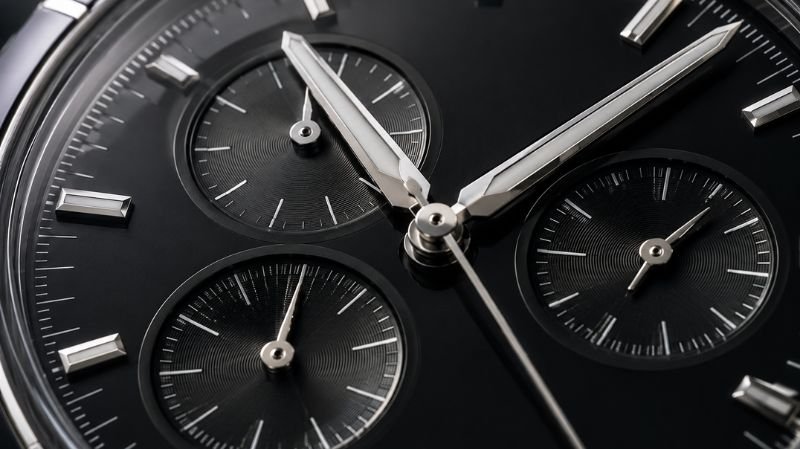
Many beginners understand how to start a chronograph but struggle with reading it.
Here’s a simple method.
Central Seconds Hand
Measures elapsed seconds.
One complete rotation equals:
60 seconds
Minute Counter
Measures elapsed minutes.
Depending on design:
- 30-minute counter
- 60-minute counter
Hour Counter
Measures longer timing intervals.
Common ranges:
- 12-hour
- 24-hour
Real-Life Example
Imagine you’re timing a 5-kilometer run.
After finishing:
- Chronograph second hand points to 15 seconds
- Minute counter points to 27 minutes
Your final time:
27 minutes and 15 seconds
This simple functionality explains why athletes have trusted chronographs for decades.
How to Use a Watch Chronograph for Everyday Activities?
Chronographs are surprisingly practical.
You can use them for:
Sports
- Running
- Cycling
- Swimming
- Interval training
Cooking
- Baking
- Boiling eggs
- Meal preparation
Travel
- Flight timing
- Parking duration
- Transit tracking
Work
- Productivity tracking
- Meeting duration
- Project timing
Learning how to use a watch chronograph effectively can eliminate the need for separate timing devices.
Why Are Chronograph Hands Not Returning to Zero?
This is among the most common chronograph watch issues.
Possible causes include:
- Battery replacement
- Impact damage
- Incorrect reset procedure
- Movement calibration problems
How Do You Recalibrate Chronograph Hands?
Many quartz chronographs include a calibration mode.
General procedure:
- Pull the crown fully out.
- Press the upper pusher repeatedly.
- Advance hand to 12 o’clock position.
- Press lower pusher if required.
- Push the crown back.
Always consult your manufacturer’s manual because procedures vary by model.
What Are the Most Common Chronograph Watch Mistakes?
Resetting While Running
Never press reset while the chronograph is active.
Stop first.
Reset second.
Changing Date at Night
Changing the date during restricted hours may damage internal gears.
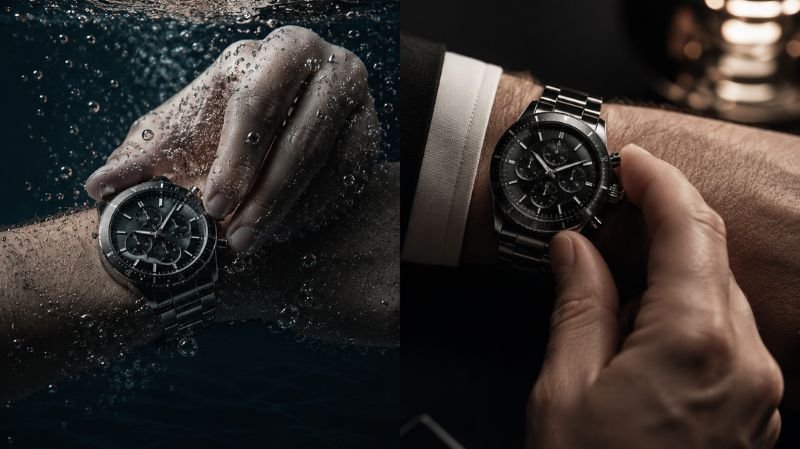
Using Pushers Underwater
Unless specifically designed for underwater operation, avoid pressing pushers while submerged.
Ignoring Hand Misalignment
Minor misalignment can reduce measurement accuracy over time.
Are Chronograph Watches Accurate?
Modern chronographs offer exceptional precision.
According to the Swiss Official Chronometer Testing Institute (COSC), certified chronometers must maintain average daily accuracy within strict performance standards.
Quartz chronographs are often accurate to within:
±15 seconds per month
Mechanical chronographs generally range between:
±4 to ±15 seconds per day depending on movement quality and certification.
This level of precision explains why chronographs remain trusted timing instruments worldwide.
What Is the Difference Between Quartz and Mechanical Chronographs?
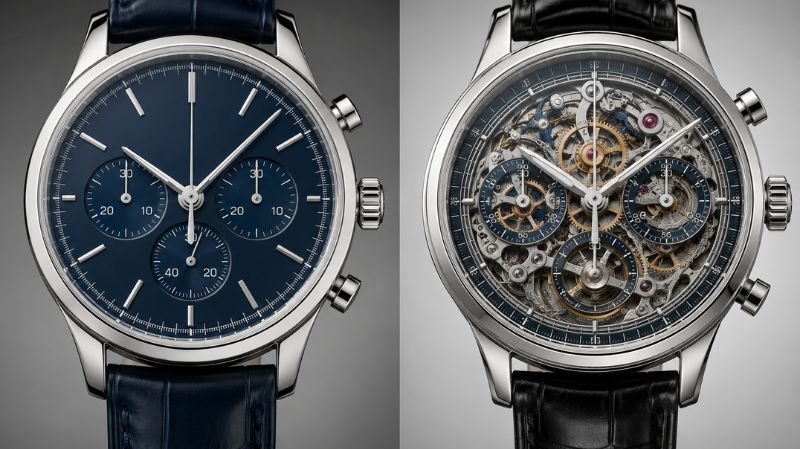
Quartz Chronograph
Advantages:
- High accuracy
- Lower maintenance
- Affordable
- Easy calibration
Disadvantages:
- Battery replacement required
Mechanical Chronograph
Advantages:
- Traditional craftsmanship
- No battery required
- Collector appeal
Disadvantages:
- More expensive servicing
- Lower accuracy than quartz
Can You Leave a Chronograph Running All the Time?
Technically yes.
However, recommendations vary.
Quartz Models
Continuous operation drains battery faster.
Mechanical Models
Continuous use increases wear on certain components.
Most experts recommend using the chronograph only when timing is needed.
Authority Insight
Despite the rise of smartphones and digital timers, chronograph watches remain widely respected in aviation, motorsports, military operations, and professional sports.
Historically, chronographs played significant roles in navigation, racing, and aerospace missions. Their ability to provide instant, independent elapsed-time measurements without relying on external devices makes them valuable even today.
Professional-grade chronographs continue to be used because they combine durability, reliability, and precision in environments where timing accuracy matters.
How to Operate Chronograph Watch Functions Like a Professional?
Follow this simple sequence:
- Set the correct time.
- Set the correct date.
- Press the upper pusher to start.
- Press the upper pusher to stop.
- Read subdials.
- Press the lower pusher to reset.
- Verify all hands return to zero.
Mastering these steps allows you to confidently operate nearly any modern chronograph watch.
Conclusion
A chronograph watch is far more than a stylish accessory, it is a precision timing instrument designed to measure elapsed time while maintaining normal timekeeping. Once you understand the crown positions, pushers, subdials, and reset functions, operating a chronograph becomes straightforward and highly practical.
Whether you’re timing workouts, tracking travel schedules, monitoring work sessions, or simply appreciating fine watchmaking, knowing how to set chronograph watch functions correctly ensures accurate performance and a better ownership experience.
The key is to remember the basic process: set the time, start with the upper pusher, stop when needed, read the elapsed time, and reset using the lower pusher. With regular use, these actions become second nature.
Ready to master your chronograph? Start by testing the stopwatch function today, learn your watch’s specific subdial layout, and become confident in reading and measuring time like a professional.
Frequently Asked Questions
1. How do I set a chronograph watch for the first time?
Set the current time using the crown, adjust the date if needed, then test the chronograph by starting, stopping, and resetting it using the pushers.
2. What does the chronograph function do on a watch?
The chronograph function acts as a stopwatch that measures elapsed time independently from standard timekeeping.
3. How do you read a chronograph watch?
Read the central seconds hand and combine it with the elapsed-minute and hour subdials to determine total elapsed time.
4. Why won’t my chronograph hands return to zero?
This usually occurs because of hand misalignment, battery replacement, impact damage, or calibration issues.
5. Can I leave my chronograph running continuously?
Yes, but doing so may shorten battery life in quartz models and increase wear in mechanical movements.
6. What are the three small dials on a chronograph watch?
They typically display running seconds, elapsed minutes, elapsed hours, or a 24-hour indicator depending on the model.
7. What is the difference between a stopwatch and a chronograph?
A stopwatch is a standalone timing device, while a chronograph is integrated into a watch and operates alongside normal timekeeping.
8. Is a chronograph watch useful for everyday use?
Yes. Chronographs are commonly used for workouts, cooking, meetings, travel timing, and productivity tracking.
9. How accurate is a chronograph watch?
Quartz chronographs are typically accurate within approximately ±15 seconds per month, while mechanical models vary depending on movement quality.
10. Can a chronograph watch measure speed?
Yes. Many chronographs include a tachymeter scale that allows users to calculate average speed over a known distance.