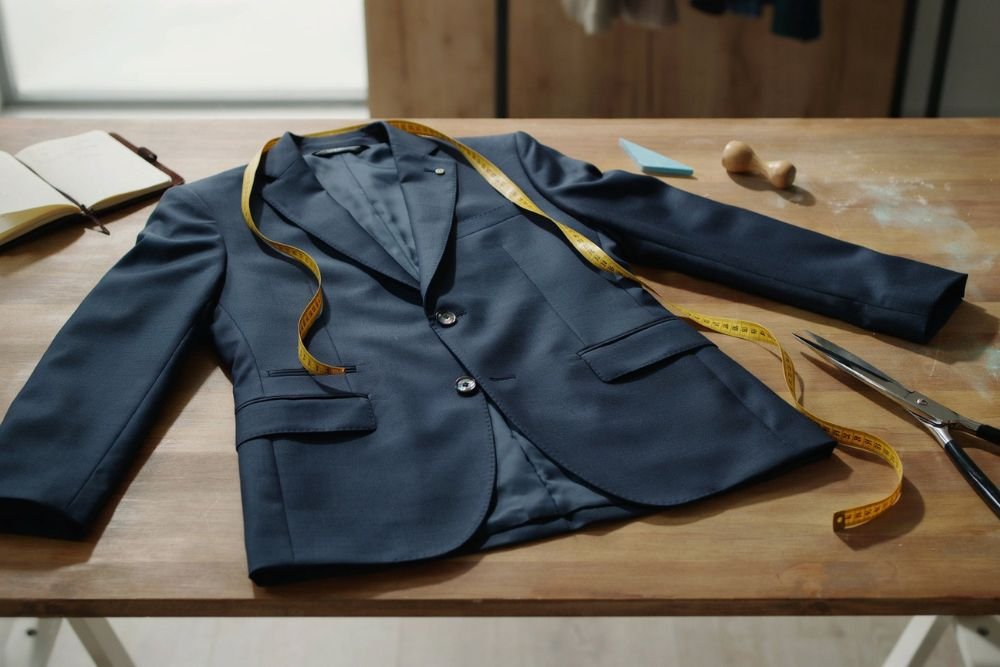
To measure for a suit jacket, use a well-fitting jacket as your reference and measure four key areas: shoulder width, jacket length, sleeve length, and waist/chest fit. Lay the jacket flat, use a flexible measuring tape, and record each measurement carefully. If you fall between two sizes, choose the larger size because a jacket can be tailored smaller but is difficult to expand.
What Is a Suit Jacket Measurement?
Suit jacket measurements are the specific dimensions used to determine how a jacket fits your body, including shoulder width, chest, sleeve length, jacket length, and waist suppression.
Why Is Measuring a Suit Jacket More Important Than Measuring Other Clothing?
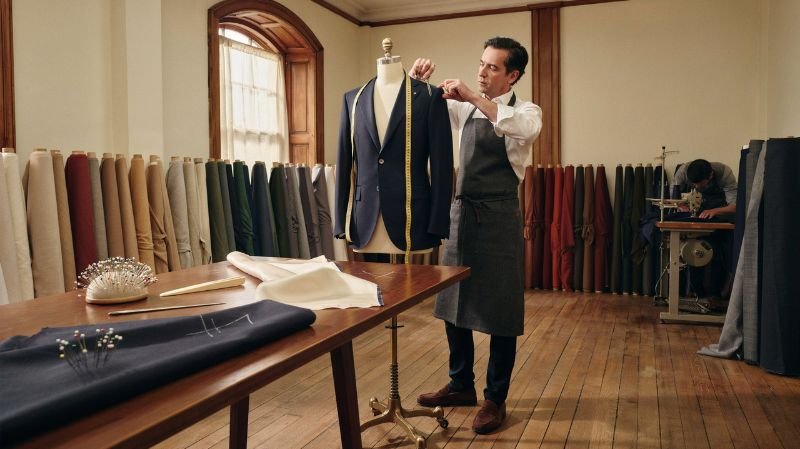
A suit jacket is one of the most difficult garments to alter because its construction depends heavily on fixed structural points.
A shirt that feels slightly loose can still look acceptable. A pair of trousers can often be shortened or adjusted at the waist. However, a jacket with incorrect shoulders or proportions may require significant reconstruction.
The shoulder area is especially important because it controls how the entire jacket hangs. When the shoulder fits correctly:
- The collar sits naturally against the neck.
- The sleeves fall straight.
- The fabric drapes smoothly.
- The lapels remain flat.
- The jacket maintains its intended silhouette.
According to tailoring experts, shoulder width is considered the most critical jacket measurement because correcting shoulder problems often requires rebuilding parts of the garment rather than simple alterations.
A quality suit is not just about size; it is about balance between measurements.
How Suit Measurements Became a Standard Practice
The importance of accurate suit measurements comes from centuries of tailoring traditions.
During the 19th century, especially in cities such as London and Savile Row, bespoke tailors developed detailed measurement systems to create garments that followed an individual’s body shape.
Before modern sizing systems existed, every suit was created from scratch using personal measurements. Tailors measured everything from shoulder slope and chest circumference to sleeve length and posture adjustments.
The industrial revolution later introduced ready-to-wear clothing. Standardized jacket sizes made suits more accessible, but they also created a challenge: average measurements could not perfectly match every person’s body.
Today, made-to-measure and custom tailoring combine traditional measurement techniques with modern sizing technology. Even with advanced tools, the basic principles remain unchanged:
- Correct shoulder placement
- Balanced jacket length
- Proper sleeve proportion
- Comfortable chest and waist allowance
Understanding these fundamentals helps shoppers make better decisions whether buying an off-the-rack suit or ordering a custom jacket.
What Do You Need Before Measuring a Suit Jacket?
Before learning how to measure jacket size for a suit, prepare the right tools. Accurate measurements require simple equipment, but the quality of the process matters.
Essential Tools for Suit Jacket Measurement
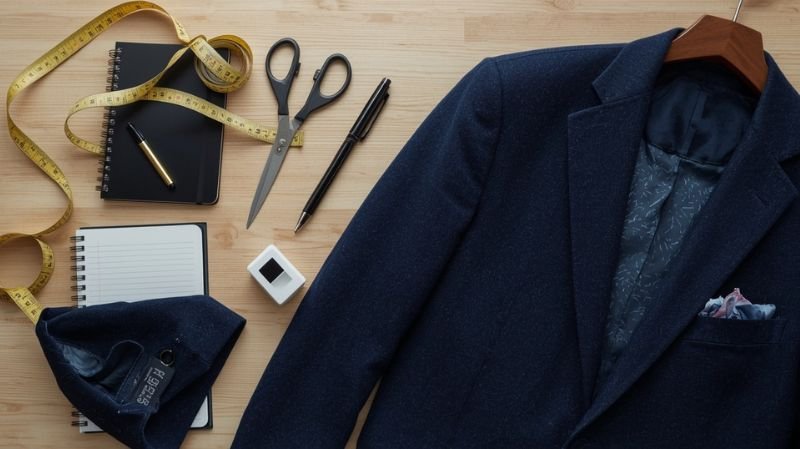
You only need a few items:
| Tool | Purpose |
| Flexible measuring tape | Measures curved areas accurately |
| Well-fitting jacket | Provides reference measurements |
| Coat hanger | Helps measure sleeve length correctly |
| Flat surface | Keeps measurements consistent |
| Notebook or phone | Records measurements |
A flexible fabric measuring tape works better than a rigid tape because jacket measurements follow curves. A hard tape may create inaccurate readings around shoulders and sleeves.
Should You Measure Your Body or an Existing Jacket?
When learning how to measure suit jacket size, many people immediately measure their body. While body measurements are useful, an existing jacket that fits well often provides better results.
A properly fitting jacket already accounts for:
- Your natural posture
- Your preferred amount of movement
- Your ideal jacket shape
- The correct amount of fabric allowance
For the most accurate results:
Measure the jacket for:
- Shoulder width
- Jacket length
- Sleeve length
Measure your body for:
- Waist or torso fit
The best reference jacket should:
- Sit comfortably across your shoulders
- Allow normal arm movement
- Close without pulling
- Have sleeves at the correct length
- Match the style you want to purchase
Avoid using a jacket that is oversized, heavily altered, stretched, or uncomfortable.
Comparison Table: Suit Jacket Measurement Methods
| Measurement Method | Accuracy Level | Best For | Limitations |
| Measuring an existing jacket | Very high | Online purchases, custom jackets | Requires a correctly fitting jacket |
| Measuring your body | High | Custom tailoring | Depends on measuring technique |
| Using old suit size | Medium | Replacement purchases | Sizes vary between brands |
| Guessing based on height/weight | Low | Quick estimates | Often creates poor fit |
For most shoppers, combining an existing jacket measurement with body measurements provides the most reliable result.
How to Measure a Suit Jacket Correctly?
A suit jacket requires four primary measurements:
- Shoulder width
- Jacket length
- Sleeve length
- Waist measurement
These measurements determine the jacket size, fit type, and overall proportion.
A useful rule from professional tailoring:
If a measurement falls between two sizes, select the larger option.
A tailor can easily reduce excess fabric. However, expanding a jacket is much more difficult because the lining, canvas, and seam allowances may not provide enough extra material.
How to Measure Shoulder Width on a Suit Jacket?
Where Should You Measure the Shoulder of a Suit Jacket?
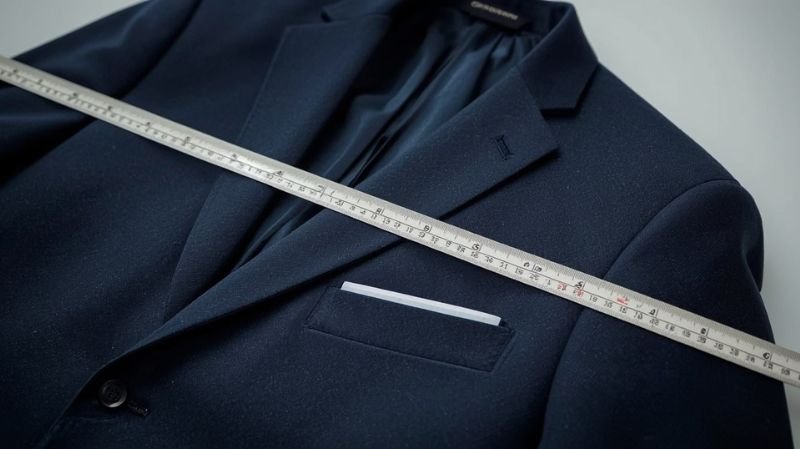
Shoulder width is measured from one shoulder seam to the opposite shoulder seam across the back of the jacket.
To measure:
- Place the jacket face down on a flat surface.
- Smooth out wrinkles without stretching the fabric.
- Locate the shoulder seams where the sleeves connect.
- Measure straight across from one seam point to the other.
This measurement is usually recorded as point-to-point shoulder width.
Why Is Shoulder Measurement the Most Important Suit Jacket Measurement?
The shoulder determines the foundation of the entire jacket.
A shoulder that is too wide creates:
- Fabric bunching near the sleeves
- A sloppy silhouette
- Drooping shoulders
A shoulder that is too narrow causes:
- Pulling across the back
- Restricted movement
- Stress around the seams
Unlike sleeve length or waist suppression, shoulder width is difficult to modify without affecting the jacket’s construction.
A well-fitted shoulder should sit exactly where your natural shoulder ends, creating a smooth line from collar to sleeve.
Expert Tip: How Should a Jacket Shoulder Fit?
Fashion consultants and professional tailors commonly recommend checking the shoulder seam first when evaluating a jacket.
A simple test:
Run your finger from the collar toward the sleeve.
The line should feel smooth and natural without:
- Excess fabric extending beyond the shoulder
- Tight pulling toward the neck
- Visible wrinkles around the sleeve head
If the shoulder is correct, many other fit elements will automatically look better.
How to Measure Jacket Length for a Suit?
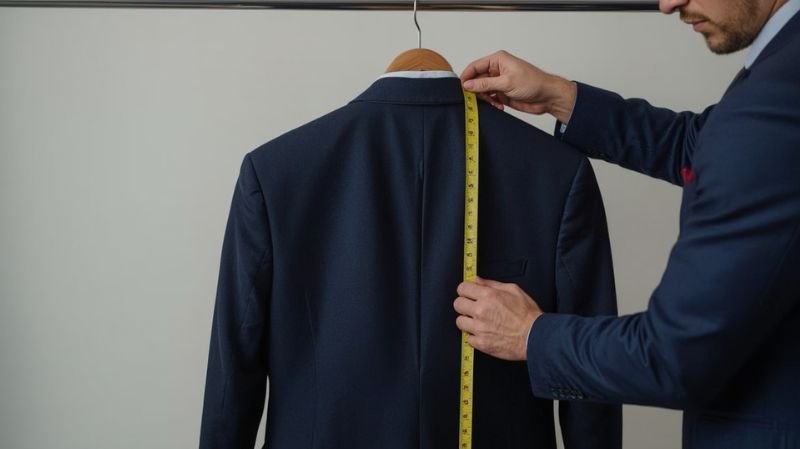
Jacket length determines how balanced your upper body looks and plays a major role in creating a polished silhouette. To measure suit jacket length correctly, measure from the base of the collar at the back of the jacket down to the bottom hem.
This measurement helps determine whether you need a Short, Regular, or Long jacket size.
How to Measure Jacket Length Step-by-Step
Follow these steps:
- Place the jacket on a flat surface or hanger.
- Lift the collar slightly to find the seam where the collar joins the jacket body.
- Place the measuring tape at this point.
- Run the tape straight down the center back.
- Stop at the bottom edge of the jacket hem.
- Record the measurement in inches or centimeters.
The starting point matters. Measuring from the top of the collar instead of the collar seam can add extra length and create an inaccurate result.
Why Does Suit Jacket Length Matter?
Jacket length affects the overall proportion of your body. A jacket that is too short can make the torso appear smaller, while an overly long jacket can make the outfit look heavy and outdated.
Traditional tailoring follows a simple guideline:
A properly fitted jacket should cover most of your seat and reach around the point where your fingers naturally curl when your arms hang at your sides.
However, body proportions matter more than height alone.
For example:
- A tall person with longer legs may need a longer jacket.
- A shorter person with a longer torso may still require a regular jacket length.
- Two people with the same height can require different jacket lengths.
This is why accurate measurement is more reliable than choosing a size based only on height.
How to Measure Suit Jacket Sleeve Length?
Sleeve length is one of the easiest measurements to adjust but still plays an important role in creating a professional appearance.
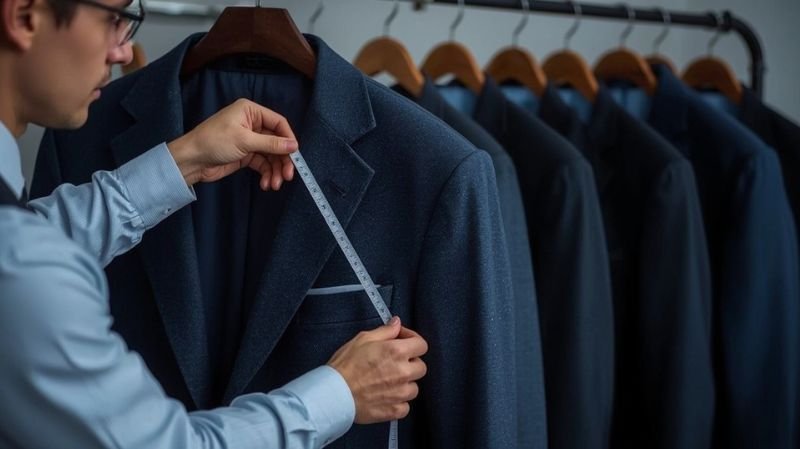
To measure a suit jacket sleeve correctly, place the jacket on a hanger and measure from the shoulder area down to the end of the cuff.
Step-by-Step Guide to Measuring Jacket Sleeve Length
Follow this process:
- Hang the jacket on a sturdy hanger.
- Allow the sleeve to fall naturally.
- Locate the sleeve head where the shoulder joins the sleeve.
- Start the measurement slightly above the sleeve head.
- Measure straight down the outside of the sleeve.
- Stop at the end of the cuff.
Avoid measuring along the inside seam because the angle can make the sleeve appear longer than it actually is.
What Is the Correct Suit Jacket Sleeve Length?
A properly fitted suit jacket sleeve should usually allow around:
1 to 1.5 centimeters (about ¼ to ½ inch) of shirt cuff to show below the jacket sleeve.
This small detail creates a cleaner and more intentional appearance.
A sleeve that is too long can make the jacket appear oversized, while a sleeve that is too short can make the entire outfit look incorrectly proportioned.
Signs Your Jacket Sleeve Length Is Incorrect
Sleeves are too long if:
- They cover most of your shirt cuff.
- The sleeve reaches too far onto your hand.
- The jacket looks oversized.
Sleeves are too short if:
- Too much shirt cuff is visible.
- The jacket appears cropped.
- The sleeve ends above your wrist bone.
The good news is sleeve length is one of the easiest suit jacket alterations. A skilled tailor can usually shorten sleeves without changing the jacket’s overall structure.
How to Measure the Waist of a Suit Jacket?
The waist measurement determines how closely the jacket follows your torso. Unlike shoulder width and jacket length, waist fit is usually measured directly on your body.
To measure:
- Stand naturally with a relaxed posture.
- Wrap a flexible measuring tape around your natural waist.
- Keep the tape level around your body.
- Do not pull the tape tightly.
- Take the measurement while breathing normally.
The goal is a comfortable measurement, not a compressed one.
Slim Fit vs Regular Fit Suit Jackets: Which Measurement Matters?
When choosing a suit jacket, your waist measurement helps determine the best fit style.
Slim Fit Suit Jacket
A slim fit jacket has:
- Narrower waist suppression
- Closer body contour
- Less extra fabric
- More modern appearance
It works well for people who prefer a sharper silhouette and do not need much room through the torso.
Regular Fit Suit Jacket
A regular fit jacket provides:
- More room through the chest and waist
- Greater comfort
- Traditional tailoring proportions
- Easier movement
It is often preferred for:
- Longer working days
- Formal events
- Broader body types
- Classic styling
Neither fit is universally better. The correct choice depends on your body shape, comfort preference, and personal style.
How to Measure Chest Size for a Suit Jacket?
Although many people search for how to measure suit jacket size by chest measurement alone, modern jacket fitting considers several measurements together.
Chest measurement is still an important reference point, especially for ready-to-wear suits.
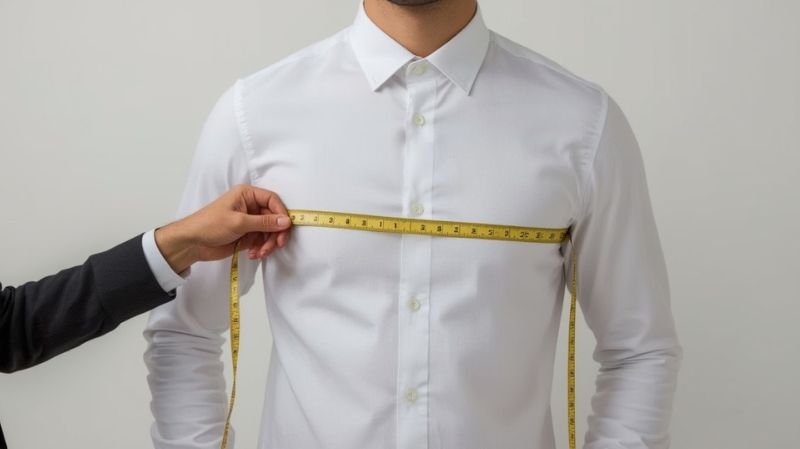
To measure your chest:
- Stand naturally with your arms relaxed.
- Wrap the tape around the fullest part of your chest.
- Keep the tape horizontal.
- Avoid pulling tightly.
- Take a normal breathing position.
The tape should sit comfortably without compressing your shirt or body.
Suit Jacket Size Chart: Men’s Standard Measurements
The following chart provides a general guide for men’s suit jacket sizing.
| Chest Measurement | Approximate Jacket Size |
| 34–35 inches | 34 Jacket |
| 36–37 inches | 36 Jacket |
| 38–39 inches | 38 Jacket |
| 40–41 inches | 40 Jacket |
| 42–43 inches | 42 Jacket |
| 44–45 inches | 44 Jacket |
| 46–47 inches | 46 Jacket |
| 48–49 inches | 48 Jacket |
Note: Different brands may use slightly different sizing systems. Always compare measurements with the brand’s individual size guide before purchasing.
How to Measure an Existing Suit Jacket?
If you already own a jacket that fits perfectly, learning how to measure a suit jacket from that garment is often the easiest approach.
A flat jacket measurement removes many variables that occur when measuring the body.
Measure Your Existing Jacket Using These Steps:
1. Measure the Shoulder Width
Place the jacket flat and measure from shoulder seam to shoulder seam.
2. Measure Jacket Length
Measure from the collar seam down to the bottom hem.
3. Measure Sleeve Length
Measure from the sleeve head to the cuff edge.
4. Measure Chest Width
Lay the jacket flat and measure across the chest area from one armpit seam to the other.
Multiply this number by two to estimate the jacket’s chest circumference.
5. Measure Waist Width
Measure across the narrowest point of the jacket body.
Body Measurements vs Jacket Measurements: Which Is Better?
Both methods have advantages.
| Measurement Type | Advantages | Best Use |
| Body measurements | Shows your actual body dimensions | Custom tailoring |
| Existing jacket measurements | Reflects your preferred fit | Online shopping |
| Both combined | Highest accuracy | Made-to-measure suits |
For most customers purchasing a suit online, using a combination of both methods provides the best outcome.
Real Example: Why Accurate Measurements Matter
Imagine someone purchasing a premium navy suit online.
They know their chest size is 40 inches, so they order a size 40 jacket. However, they do not measure shoulder width.
When the jacket arrives, the chest fits correctly, but the shoulders extend beyond the natural shoulder line. The sleeves also sit incorrectly because the jacket structure is too wide.
The result?
The jacket looks oversized despite having the “correct” size.
After comparing with a previous jacket that fits well, they discover their ideal shoulder measurement is two centimeters narrower. Choosing based on complete measurements would have prevented the return.
This example shows why suit fitting is about proportion, not just numbers.
How Do Professional Tailors Measure a Suit Jacket?
Professional tailors consider more than basic measurements. They evaluate how the jacket interacts with the wearer’s body.
A tailor may consider:
- Shoulder slope
- Posture
- Chest shape
- Arm position
- Back curvature
- Preferred fit style
- Fabric behavior
According to traditional tailoring principles, measurements are only the starting point. The final goal is creating balance between comfort, movement, and appearance.
Modern made-to-measure services combine these traditional methods with digital sizing tools, but the fundamentals remain the same: accurate measurements create better-fitting garments.
Key Takeaways Before Ordering Your Suit Jacket
Before purchasing, remember:
✓ Use a jacket that already fits well as your reference.
✓ Measure shoulders carefully because they are difficult to alter.
✓ Measure length from the collar seam, not the collar edge.
✓ Measure sleeves from the sleeve head to the cuff.
✓ Choose the larger size when between measurements.
✓ Consider your preferred fit style: slim, modern, or regular.
Accurate measurements make online suit shopping easier and help ensure your jacket looks intentional from every angle.
How Should a Suit Jacket Fit? A Complete Fit Guide

A correctly measured suit jacket should not only match your numbers; it should also create balance, comfort, and a clean silhouette. The best-fitting jackets follow the natural shape of your body without restricting movement or creating unnecessary fabric.
After learning how to measure a suit jacket, the next step is understanding how those measurements translate into real-world fit.
A good suit jacket should:
- Sit naturally on the shoulders
- Close comfortably without pulling
- Allow free arm movement
- Maintain a smooth back
- Show a small amount of shirt cuff
- Create a balanced proportion between your upper and lower body
Professional tailors often say that a suit should look effortless. The wearer should not appear to be “wearing” the jacket; instead, the jacket should appear naturally built around the wearer.
What Are the Most Important Suit Jacket Fit Checks?
How Should the Shoulders Fit on a Suit Jacket?
The shoulder is the foundation of the entire jacket.
A properly fitted shoulder should end exactly where your natural shoulder ends. The seam should not extend beyond your shoulder line or pull inward toward your neck.
A correct shoulder fit looks like:
- Smooth line from collar to sleeve
- No visible shoulder overhang
- No wrinkles around the sleeve head
- Comfortable movement when reaching forward
Signs the shoulders are incorrect:
Too large:
- Shoulder seam extends past your natural shoulder
- Fabric collapses around the upper arm
- Jacket looks oversized
Too small:
- Pulling across the upper back
- Tight feeling when moving arms
- Wrinkles near the collar
The reason shoulder fit receives so much attention is simple: it is the hardest area to alter. A tailor can adjust sleeves, waist suppression, and length more easily than reconstructing the shoulder structure.
How Should the Chest and Button Area Fit?
A suit jacket should close comfortably with a natural amount of space between your body and the fabric.
When the jacket is buttoned:
- The fabric should lie flat.
- The lapels should maintain their shape.
- The button area should not create visible pulling lines.
A common mistake is choosing a smaller jacket because it creates a sharper appearance while standing still. However, a jacket that is too tight will usually reveal itself through:
- X-shaped wrinkles around the button
- Pulling across the chest
- Restricted movement
A properly fitted jacket should allow you to move naturally while maintaining structure.
How Should the Back of a Suit Jacket Fit?
The back of the jacket reveals many measurement problems.
A well-fitting jacket should have a clean, smooth back without excessive folds.
Common back fit issues:
Horizontal wrinkles across the shoulder blades
- Usually indicate the jacket is too tight through the chest or back.
Vertical folds running down the back
- Often indicate excess fabric or a jacket that is too large.
Bunching near the collar
- May suggest incorrect shoulder positioning.
The back should follow your body shape while still allowing enough room for movement.
How Should Suit Jacket Sleeves Fit?
Sleeve length creates one of the most noticeable finishing details in menswear.
A properly fitted sleeve should:
- End near the wrist bone
- Allow approximately 1–1.5 cm of shirt cuff visibility
- Fall naturally without twisting
Many style experts consider visible shirt cuff one of the small details that separates an average suit from a polished one.
However, sleeve length should be judged together with the shirt underneath. A jacket sleeve may appear too short if the shirt cuff is incorrectly positioned.
How Should a Suit Jacket Length Fit?
Jacket length affects your overall body proportions.
A traditional suit jacket should generally cover:
- The waistband area of your trousers
- Most of the seat
- The upper portion of your hips
A useful classic test:
Stand naturally with your arms relaxed. The jacket hem should approximately reach the point where your fingers naturally curl.
However, modern fashion has introduced slightly shorter jacket styles, especially in slim and contemporary fits.
The correct length depends on:
- Height
- Torso length
- Leg proportion
- Jacket style
Common Suit Jacket Measurement Mistakes to Avoid
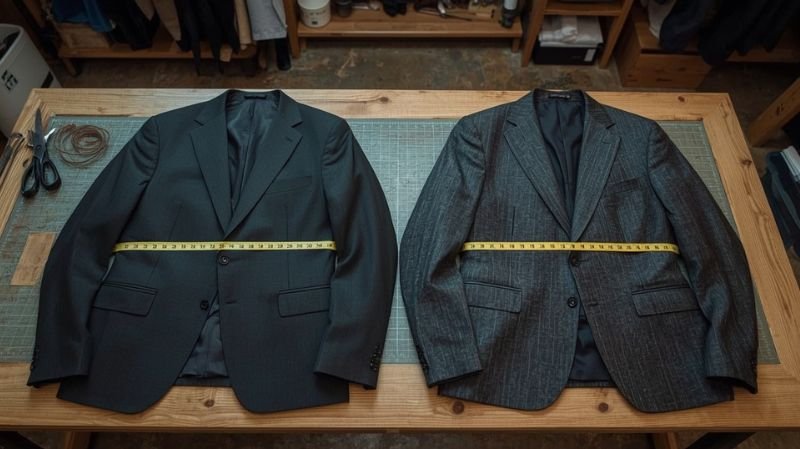
Even small mistakes during measurement can lead to an incorrect fit. Understanding these errors can improve your results when learning how to measure jacket size for a suit.
Mistake 1: Measuring Over Thick Clothing
Heavy sweaters or jackets can add extra inches and create inaccurate measurements.
For the most accurate results:
- Wear a thin dress shirt
- Keep your posture relaxed
- Avoid bulky layers
Mistake 2: Pulling the Measuring Tape Too Tight
A common mistake is tightening the tape to get a smaller measurement.
This creates a jacket that looks good while standing but feels uncomfortable during movement.
The tape should:
- Sit flat
- Touch the fabric lightly
- Allow normal breathing
Mistake 3: Ignoring Shoulder Width
Many shoppers focus only on chest size.
For example:
A person may have a 42-inch chest but a narrower shoulder structure. A size 42 jacket may technically match the chest measurement but still fit poorly because the shoulder width is incorrect.
Shoulder measurement should always be checked before finalizing a jacket purchase.
Mistake 4: Assuming All Brands Use the Same Sizes
A size 40 jacket from one brand may not fit exactly like a size 40 jacket from another.
Differences occur because brands use different:
- Fit blocks
- Construction methods
- Style preferences
- Fabric allowances
Always compare measurements rather than relying only on the label.
Mistake 5: Measuring Only Once
Fabric movement and tape placement can slightly affect results.
Professional advice:
Measure twice.
If the numbers are different, take a third measurement and use the most consistent result.
How to Measure a Suit Jacket for Online Shopping?
Online suit shopping has become increasingly popular because customers can access more styles and fabrics than traditional stores.
However, buying online requires better measurement accuracy.
Before ordering, check:
1. Compare Your Measurements With the Brand Size Chart
Do not rely only on your previous suit size.
Compare:
- Shoulder width
- Chest measurement
- Sleeve length
- Jacket length
2. Understand Different Jacket Fits
Most brands offer three main styles:
Slim Fit
Best for:
- Narrower frames
- Modern styling
- Minimal extra fabric
Characteristics:
- Higher waist suppression
- Narrower sleeves
- Closer body shape
Modern Fit
Best for:
- Most body types
- Contemporary professional wear
Characteristics:
- Balanced comfort
- Slight shaping
- Versatile appearance
Classic Fit
Best for:
- Maximum comfort
- Traditional styling
- Broader builds
Characteristics:
- More room through chest and waist
- Easier movement
- Timeless silhouette
Suit Jacket Fit Guide by Body Type
Different body shapes may require different approaches when selecting a jacket.
Athletic Body Type
Characteristics:
- Broad shoulders
- Narrow waist
- Strong chest
Recommended:
- Modern fit jackets
- Structured shoulders
- Moderate waist suppression
Avoid overly slim jackets that restrict movement.
Slim Body Type
Characteristics:
- Narrow shoulders
- Lean frame
- Less body volume
Recommended:
- Slim or tailored fits
- Light shoulder structure
- Cleaner silhouette
Avoid jackets with excessive fabric.
Broad Body Type
Characteristics:
- Larger chest
- Wider waist
- Fuller build
Recommended:
- Regular fit jackets
- Comfortable chest allowance
- Balanced proportions
Avoid extremely slim styles that create pulling.
Tall Body Type
Tall individuals often need attention beyond chest size.
Important measurements:
- Jacket length
- Sleeve length
- Shoulder width
A correctly sized tall jacket prevents the upper body from appearing shortened.
Shorter Body Type
Shorter individuals often benefit from:
- Proper jacket length
- Minimal excess fabric
- Balanced shoulder proportions
A jacket that is too long can overwhelm the frame.
Fashion Expert Opinions: Why Measurement Matters in Modern Menswear
Fashion professionals consistently emphasize that fit is the foundation of style.
According to tailoring principles followed by established menswear houses, the most expensive fabric cannot compensate for poor proportions.
A moderately priced jacket with excellent fit often appears more luxurious than a premium jacket with incorrect measurements.
Menswear experts commonly prioritize:
- Shoulder fit
- Jacket proportion
- Sleeve length
- Fabric quality
- Styling details
This reflects a broader trend in modern fashion where consumers are moving away from disposable clothing toward fewer, better-fitting pieces.
Real Data: Why Proper Fit Improves Clothing Satisfaction
The global apparel industry has increasingly focused on reducing returns because incorrect sizing is one of the biggest challenges in online fashion.
Industry research from apparel retailers shows that fit-related issues remain among the leading reasons customers return clothing purchases.
Better measurement practices help:
- Reduce unnecessary returns
- Improve customer confidence
- Increase garment lifespan
- Create a more sustainable wardrobe
A correctly fitted jacket also tends to be worn more frequently, increasing the value of the purchase over time.
Tailor’s Expert Tips: Measurements Professionals Never Skip
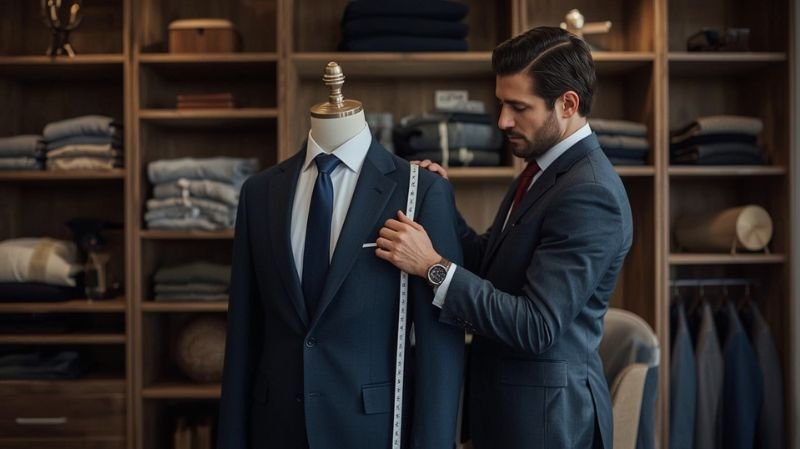
Professional tailors focus on more than just numbers; they evaluate how each measurement affects the jacket’s structure, comfort, and overall appearance. These expert checks help create a balanced fit that looks refined and feels natural.
- Prioritize Shoulder Width: The shoulder is the foundation of the jacket, and an accurate fit ensures the collar, sleeves, and overall structure sit correctly.
- Use a Well-Fitting Jacket: A jacket that already fits well provides the most reliable reference for measuring your ideal size.
- Check Movement and Comfort: Tailors ensure the jacket allows natural movement without pulling across the chest, back, or shoulders.
- Consider Body Proportions: Professional measurements account for posture, shoulder shape, and body structure—not just numbers.
- Measure Twice Before Ordering: Double-check key measurements like shoulders, sleeves, and length to avoid sizing mistakes.
Final Thoughts
Learning how to measure for a suit jacket is the first step toward buying a jacket that looks refined, feels comfortable, and lasts for years.
A great-fitting suit jacket is not created by size alone. It comes from understanding the relationship between shoulder width, jacket length, sleeve length, chest, and waist measurements.
Modern menswear is moving toward smarter purchasing decisions. Instead of buying multiple jackets that almost fit, many men are choosing fewer garments with better construction, better fabrics, and more accurate sizing.
The perfect jacket is not the one with the most expensive label. It is the one that looks like it was designed specifically for you.
Before ordering your next suit jacket:
- Measure your current best-fitting jacket.
- Compare measurements with the brand’s size guide.
- Double-check shoulder width and sleeve length.
- Choose a larger size if you are between measurements.
- Consult a professional tailor when needed.
A few careful measurements today can help you build a wardrobe filled with jackets that feel comfortable, look sophisticated, and reflect your personal style.
Take your measurements, choose your ideal fit, and invest in a suit jacket that works for every occasion.
FAQs
1. How do you measure a suit jacket?
Measure the shoulder width, jacket length, sleeve length, and waist/chest fit using a flexible tape and a well-fitting jacket as a reference.
2. How do I measure my suit jacket size at home?
Measure your chest, shoulders, sleeves, and jacket length, then compare the results with the brand’s size chart.
3. What is the most important measurement when buying a suit jacket?
Shoulder width is the most important measurement because it determines the jacket’s overall structure and is difficult to alter.
4. How do I measure a suit jacket that already fits me?
Lay the jacket flat and measure the shoulders, chest, length, sleeves, and waist using a measuring tape.
5. How should a properly fitted suit jacket fit?
A properly fitted suit jacket should sit naturally on the shoulders, close comfortably, and allow easy movement without wrinkles.
6. Should I measure my body or my jacket when choosing a suit size?
Using both body measurements and an existing well-fitting jacket provides the most accurate suit size.
7. What should I do if my suit jacket measurement is between two sizes?
Choose the larger size because a tailor can reduce a jacket but expanding it is usually difficult.
8. How do I measure suit jacket sleeve length correctly?
Measure from the sleeve head near the shoulder down to the end of the cuff while the jacket hangs naturally.
9. What is the difference between slim fit and regular fit suit jackets?
Slim fit jackets have a closer body shape, while regular fit jackets offer more room and traditional comfort.
10. Can I measure a suit jacket without a size label?
Yes, measure the jacket’s shoulders, chest, length, sleeves, and waist, then compare them with a sizing chart.