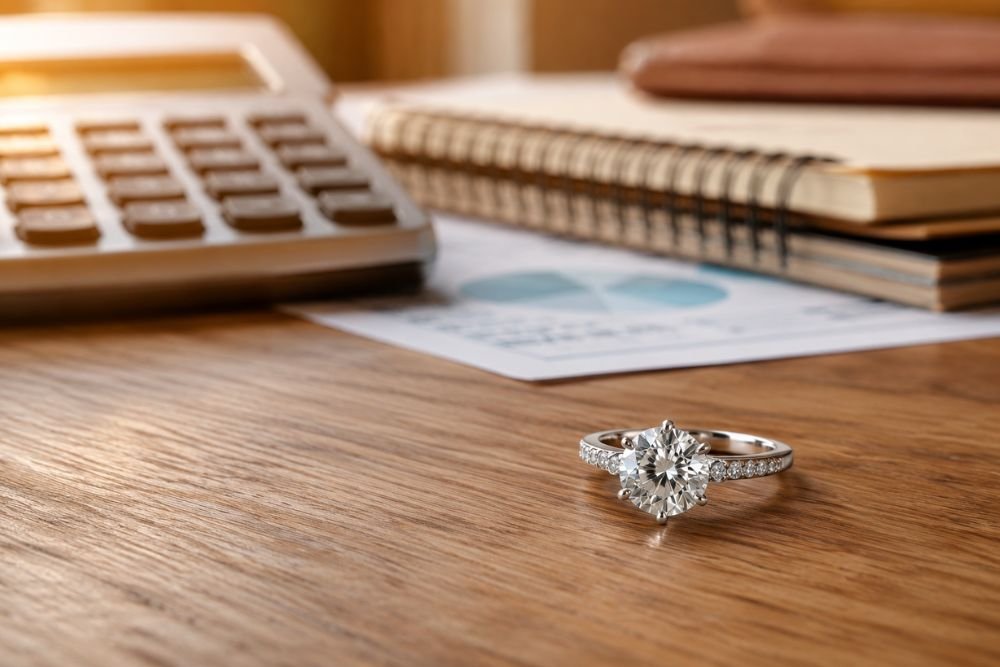
Most couples spend between $1,000 and $10,000 on an engagement ring, with the U.S. average sitting around $5,200 according to recent industry surveys. However, the “right” amount depends entirely on your income, savings, and financial priorities, not a fixed rule or tradition.
An engagement ring should fit your budget comfortably without creating debt stress. There is no universal spending requirement, and modern couples increasingly choose practical, personalized budgets instead of outdated salary rules.
Why Engagement Ring Budgets Matter More Than Ever
An engagement ring is one of the most emotionally significant purchases in a relationship, but it is also one of the most misunderstood financially. Many couples feel pressure to overspend due to outdated rules, social expectations, or marketing influence.
Today, the conversation has shifted. Couples are asking smarter questions like how much is an engagement ring really supposed to cost, and whether the “right price” is even a real concept. The answer is simple: your budget should reflect your financial reality, not tradition.
Modern engagement planning prioritizes balance, romance and responsibility. That’s why understanding realistic price ranges is more important than chasing symbolic rules.
How Much Should You Spend on an Engagement Ring?
There is no fixed amount you “should” spend on an engagement ring. Instead, most financial advisors recommend spending what you can afford without going into debt or compromising essential goals like rent, savings, or emergency funds.
What the Real Market Data Shows
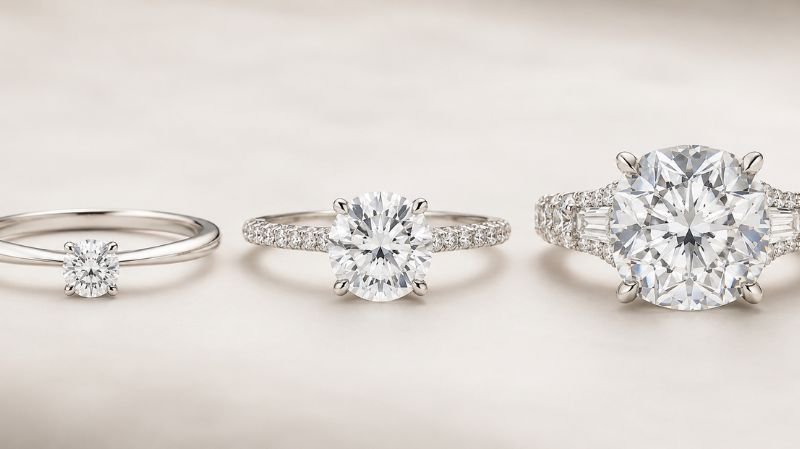
Across the U.S., engagement ring spending varies widely:
- National average: Around $5,200
- Lower budget buyers: $500–$2,500
- Mid-range buyers: $2,500–$7,500
- Luxury buyers: $10,000–$25,000+
This shows a wide spectrum rather than a single standard. When people ask how much engagement rings are, the reality is that pricing is highly flexible based on design, diamond quality, and brand.
Why Averages Can Be Misleading
Averages don’t reflect individual situations. A couple in their early 20s with student loans may spend far less than a dual-income couple in their 30s.
Key pricing factors include:
- Diamond or gemstone quality
- Carat size
- Metal type (gold, platinum, etc.)
- Custom vs ready-made design
- Brand markup
So while the average price of a wedding ring and engagement ring can be helpful, it should never dictate your personal budget.
The Origin of the “Three-Month Salary Rule”
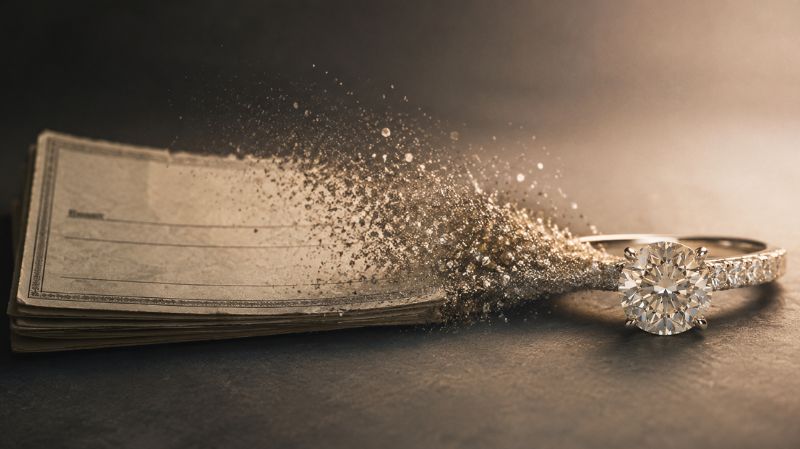
For decades, couples were told to spend about two to three months’ salary on an engagement ring. But this guideline was never a financial rule, it was marketing.
Where the Rule Came From
The concept originated during the Great Depression era, when diamond sales declined. Major diamond marketers promoted the idea that love should be expressed through higher spending, gradually shaping the “three-month salary” expectation.
Why Modern Couples Don’t Follow It
Today’s financial reality looks very different:
- Higher living costs (housing, education, healthcare)
- Longer financial independence timelines
- Increased focus on savings and investments
If applied today, someone earning $70,000 annually might be expected to spend $12,000–$17,000 on a ring, something many couples now consider unnecessary or impractical.
The Modern Approach to Budgeting
Experts now recommend a more flexible method:
Spend what aligns with your financial comfort, not a fixed formula. This shift reflects how couples now prioritize long-term financial health over symbolic rules.
What Is a Realistic Engagement Ring Budget Today?

A realistic engagement ring budget depends on income, savings, and life goals. Instead of fixed rules, consider budgeting as a percentage of disposable income.
Budgeting Based on Financial Comfort
A practical guideline many financial planners suggest:
- 1–2% of annual income (conservative budget)
- 2–5% of annual income (moderate budget)
- 5%+ (luxury-focused spending)
For example:
- Income: $60,000 → Budget range: $600 to $3,000 (conservative to moderate)
- Income: $100,000 → Budget range: $1,000 to $5,000+
The Hidden Costs People Forget
When planning your engagement ring budget, don’t forget:
- Ring insurance
- Resizing or custom adjustments
- Maintenance and cleaning
- Wedding planning costs
These can add an extra 5–15% to your total spending over time.
How Much Is the Average Engagement and Wedding Ring Cost?
Many people also search for terms like how much is an engagement ring and how much is the average wedding ring. While engagement rings are typically more expensive, wedding bands also contribute to overall jewelry spending.
Average Engagement Ring Cost
- U.S. average: ~$5,200
- Lab-grown diamond rings: often 30–70% cheaper
- Natural diamond rings: typically higher depending on quality
Average Wedding Ring Cost
- Individual wedding band: $500–$2,500
- Matching couple bands: $1,000–$5,000 total
Combined Jewelry Budget
For many couples:
- Engagement ring + wedding bands total: $2,000–$10,000+
This combined view gives a more realistic financial picture than focusing on one ring alone.
What Actually Drives Engagement Ring Prices?
Understanding pricing is essential before setting your budget. Engagement ring cost is not random—it is influenced by specific measurable factors.
The Four Cs of Diamonds
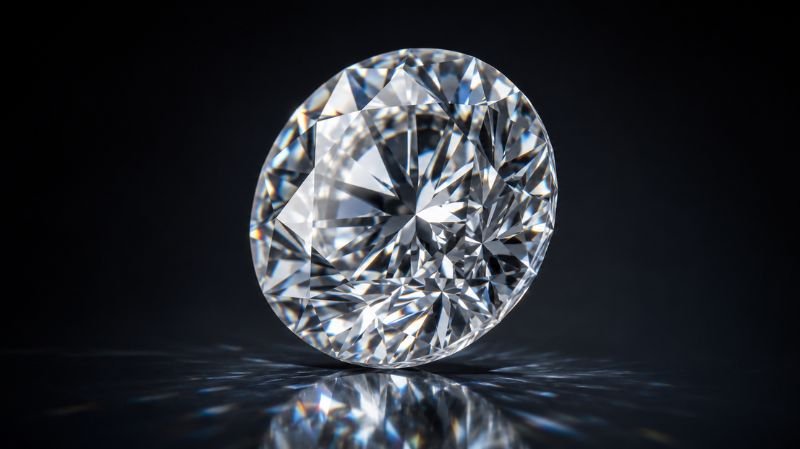
The “Four Cs” are the most important pricing drivers:
- Cut: Affects sparkle and brilliance (most important factor)
- Color: Ranges from colorless to slightly tinted
- Clarity: Measures internal imperfections
- Carat weight: Size of the diamond
Even small changes in these categories can significantly impact price.
Metal Type and Setting
The band also affects cost:
- Platinum: Most expensive and durable
- White gold: Mid-range, popular choice
- Yellow gold: Classic and often slightly more affordable
Natural vs Lab-Grown Diamonds
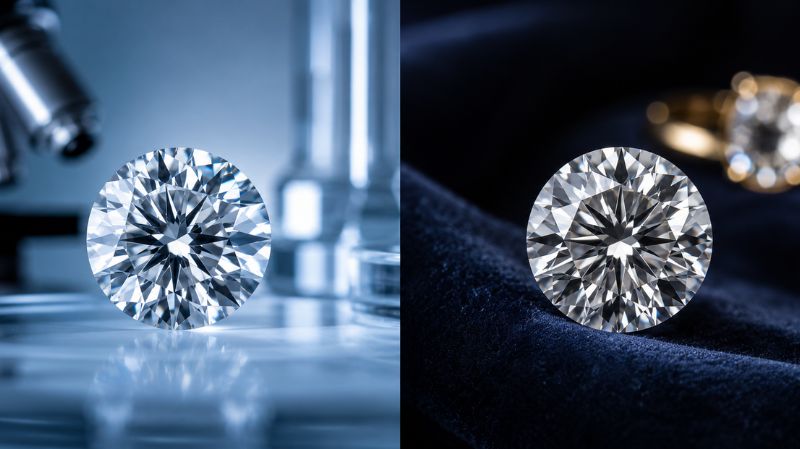
One of the biggest budget decisions today:
- Lab-grown diamonds: 30–70% cheaper, same physical properties
- Natural diamonds: higher resale value, traditional appeal
A 2-carat lab diamond might cost a third of a natural diamond of similar quality.
Life Example: How Couples Actually Budget
Consider a couple earning a combined $90,000 annually.
Instead of following outdated rules, they:
- Set aside $4,000 as their total engagement ring budget
- Prioritized a lab-grown diamond
- Chose a simpler gold setting
- Avoided financing or debt
Result: They purchased a beautiful ring while still maintaining savings for a home deposit.
This reflects a growing trend, couples are prioritizing financial stability over oversized symbolic spending.
What Matters More Than Price?
Price is only one part of the equation. Many jewelers emphasize that emotional value, design quality, and long-term satisfaction matter more than cost alone.
Emotional Meaning
The ring represents commitment, not financial status.
Craftsmanship and Design
A well-crafted smaller ring often looks better than a larger poorly cut diamond.
Lifestyle Fit
Practicality matters:
- Daily wear comfort
- Durability
- Maintenance needs
Expert Insight on Engagement Ring Value
A key industry perspective is that value is not determined by price alone.
As jewelry experts often explain, two rings with similar specifications can feel completely different once craftsmanship, proportion, and design are considered. This is why educated buyers who understand design fundamentals often end up more satisfied than those who only focus on carat size.
A thoughtfully chosen ring, regardless of budget, can offer better long-term satisfaction than a high-cost purchase made under pressure.
How to Save Money on an Engagement Ring Without Sacrificing Quality
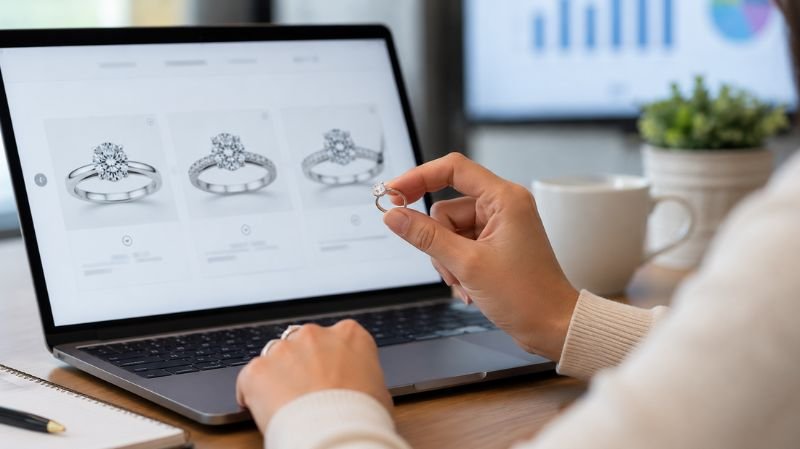
Saving money on an engagement ring is not about lowering standards, it’s about making smarter trade-offs. With the right strategy, couples can often reduce costs by 20–60% while still getting a high-quality, beautiful ring.
Choose Lab-Grown Diamonds for Maximum Value
Lab-grown diamonds have become one of the most effective ways to control budget without visible compromise in appearance.
- Typically 30–70% cheaper than natural diamonds
- Identical physical and optical properties
- Allows larger carat size within the same budget
For example, the cost of a 2-carat natural diamond might be $10,000+, while a lab-grown equivalent could be around $3,000–$5,000.
Prioritize Cut Over Carat Size
Many buyers focus on size, but professionals prioritize cut quality.
A well-cut 1.5-carat diamond often looks more brilliant than a poorly cut 2-carat stone. This is because the cut affects light reflection, sparkle, and overall visual impact.
Smart strategy:
- Choose “Excellent” or “Ideal” cut
- Slightly reduce carat weight if needed
- Maintain visual brilliance over size inflation
Consider Alternative Gemstones
Not all engagement rings need to feature diamonds.
Popular alternatives include:
- Sapphires (durable, royal aesthetic)
- Emeralds (unique and luxurious)
- Moissanite (high brilliance, budget-friendly)
- Rubies (bold and symbolic)
These options can reduce costs significantly while offering a more personalized design.
Buy Just Under Popular Carat Thresholds
Diamond pricing increases sharply at key milestones:
- 1.0 carat
- 1.5 carat
- 2.0 carat
A diamond weighing 0.9 carat or 1.8 carat can look nearly identical but cost 15–30% less.
Compare Jewelers and Avoid First-Offer Pricing
One of the most overlooked savings strategies is comparison shopping.
- Prices vary widely between brands
- Online retailers often offer lower markups
- Local jewelers may negotiate more flexibility
Even a 10–20% difference in pricing can translate to hundreds or thousands in savings.
Engagement Ring Budget Mistakes You Should Avoid
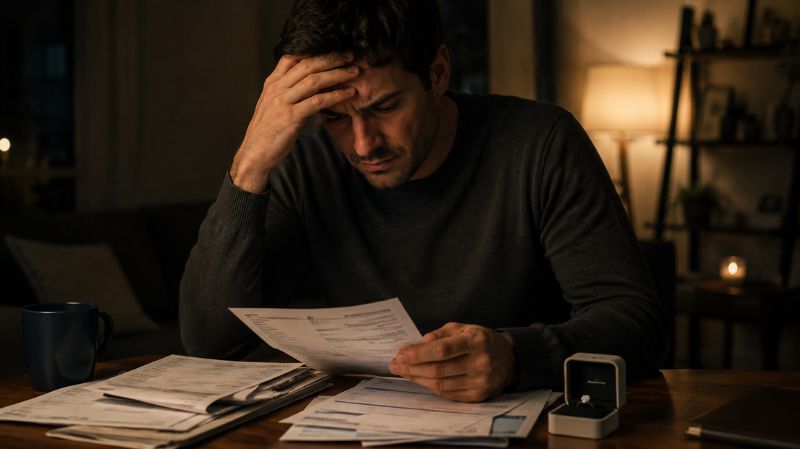
Even well-intentioned buyers often make financial mistakes when purchasing an engagement ring. Avoiding these errors can help protect both your budget and long-term financial health.
Going Into Debt for a Ring
Financing a ring may feel convenient, but high-interest payments can turn a meaningful purchase into long-term financial stress.
If financing is necessary:
- Check interest rates carefully
- Choose short repayment timelines
- Avoid revolving credit debt when possible
Ignoring Total Cost of Ownership
Many buyers only consider the ring price, not additional costs.
Hidden costs include:
- Insurance (1–2% of ring value annually)
- Maintenance and cleaning
- Resizing fees
- Wedding band pairing costs
Over-Focusing on Carat Size
Carat size is often the most emotionally driven decision, but not the most important visually.
A smaller, higher-quality diamond can appear more brilliant than a larger lower-quality one.
Skipping Certification (GIA or Equivalent)
Certified diamonds ensure transparency in quality grading.
Without certification:
- True value is unclear
- Resale value decreases
- Quality becomes harder to verify
Always request grading reports for clarity and confidence.
Engagement Ring Cost Comparison Table
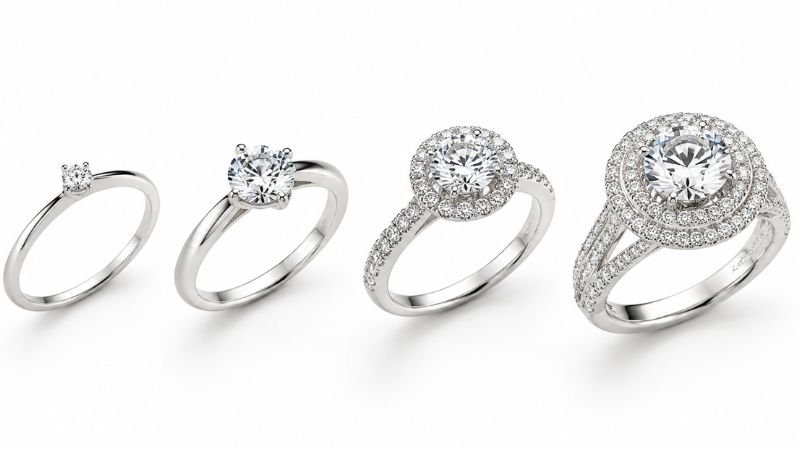
Understanding pricing tiers helps buyers set realistic expectations before shopping.
| Budget Range | What You Can Expect | Best For |
| Under $1,000 | Moissanite rings, small lab diamonds, simple bands | Budget-conscious buyers |
| $1,000–$3,000 | High-quality lab diamonds, minimal settings | First-time buyers |
| $3,000–$5,000 | Larger lab diamonds, upgraded gold/platinum settings | Balanced budget shoppers |
| $5,000–$10,000 | High-quality natural diamonds, custom designs | Premium buyers |
| $10,000+ | Large natural diamonds, luxury designer rings | High-income or luxury buyers |
This table reflects real-world market behavior rather than theoretical pricing models, helping answer searches like how much is an engagement ring and average price of wedding ring in a practical way.
How Much Do Most Couples Actually Spend?
Spending behavior varies significantly by age, income, and region.
Modern Spending Trends
Recent surveys show:
- Many couples spend $1,500–$6,000
- First-time buyers often stay under $3,000
- High-income couples may exceed $10,000
Despite marketing narratives, fewer couples today follow rigid spending rules.
Generational Differences
- Gen Z & Millennials: More budget-conscious, prefer lab diamonds
- Older generations: Higher spending on natural diamonds
- Urban areas: Higher average spend due to income levels
What Is a Reasonable Engagement Ring Budget?
A reasonable budget is one that:
- Does not create debt stress
- Fits comfortably within savings goals
- Reflects shared financial priorities
Financial experts generally agree:
A meaningful engagement ring should enhance your life, not financially restrict it. This makes “reasonable” highly personal rather than universal.
Realistic Example: Different Budget Scenarios
To better understand how budgets translate into real rings:
Scenario 1: $2,000 Budget
- 1 carat lab-grown diamond
- Simple white gold setting
- Minimal customization
Scenario 2: $5,000 Budget
- 1.5–2 carat lab diamond or small natural diamond
- Custom setting options
- Higher clarity and cut quality
Scenario 3: $10,000+ Budget
- High-quality natural diamond
- Designer setting
- Premium craftsmanship
This helps clarify how much is the average wedding ring and engagement ring combined spending in real-world terms.
Conclusion
Understanding how much to spend on an engagement ring is less about rules and more about awareness. The smartest buyers today are those who balance emotional meaning with financial responsibility.
Whether your budget is $1,000 or $10,000, the goal remains the same: choose a ring that represents your relationship without compromising your financial future.
A well-planned purchase ensures your engagement begins with excitement, not financial stress, and that’s what truly makes a ring priceless
Frequently Asked Questions
1. How much should I spend on an engagement ring?
Most couples spend between $1,000 and $10,000, but the right amount depends on your income, savings, and financial comfort, not fixed rules.
2. Is the three-month salary rule still valid?
No. It is an outdated marketing guideline. Modern couples base spending on financial goals rather than salary formulas.
3. How much is an engagement ring on average?
The average engagement ring in the U.S. costs around $5,200, but prices vary widely depending on diamond quality and design.
4. What is the average price of a wedding ring?
A wedding band typically costs between $500 and $2,500 per ring, depending on metal type and design.
5. Can I get a good engagement ring under $2,000?
Yes. Lab-grown diamonds, moissanite, and simple gold settings can produce beautiful rings within this budget.
6. Are lab-grown diamonds worth it?
Yes, if your priority is size and affordability. They cost significantly less while looking identical to natural diamonds.
7. Should I finance an engagement ring?
It depends. Financing is acceptable if interest rates are low and repayment is manageable, but cash payment is safer financially.
8. What size diamond can I get for $5,000?
Typically, you can get a 1–2 carat lab diamond or a smaller natural diamond depending on quality.
9. Does engagement ring price matter in relationships?
No. Most couples prioritize meaning and commitment over price. Emotional value matters more than cost.
10. How can I save money on an engagement ring?
Choose lab-grown diamonds, prioritize cut over carat, compare jewelers, and consider alternative gemstones.