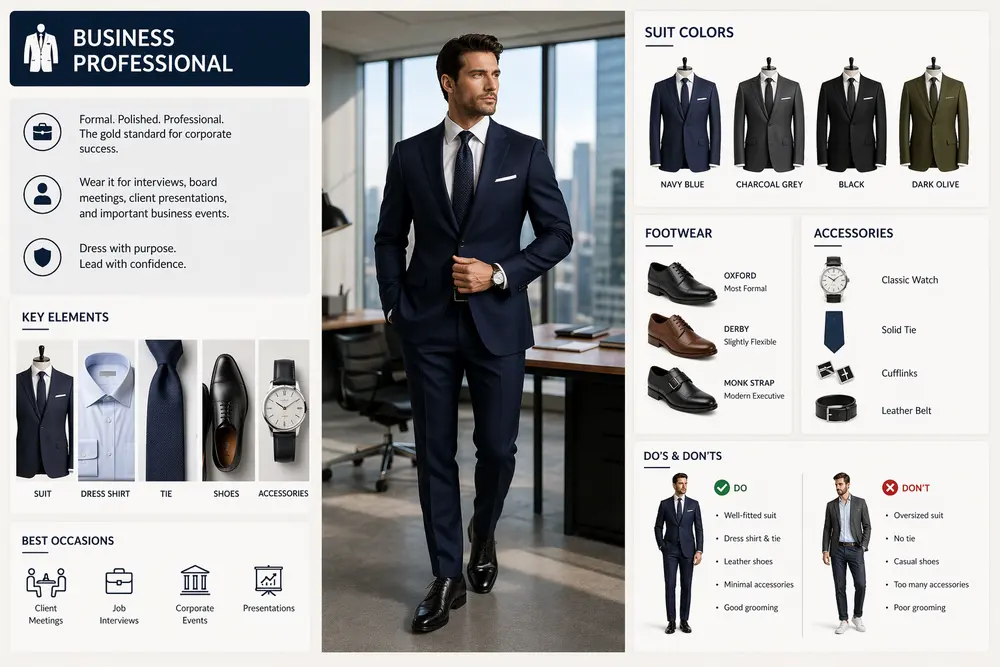
Business professional attire for men refers to a formal, structured, and polished dress code typically worn in corporate environments such as law firms, finance companies, government offices, and executive meetings. In 2026, this style has evolved slightly, becoming more tailored, comfortable, and fabric-focused while still maintaining a strict level of professionalism.
It remains the gold standard for first impressions in the corporate world, especially for interviews, board meetings, and client presentations.
Quick Answer Box
Business professional attire for men is a formal dress code that includes a well-fitted suit (navy, black, or charcoal), a dress shirt, a tie, leather dress shoes, and minimal accessories. It is worn in corporate, legal, and high-level business environments where a polished, conservative appearance is required.
In simple terms:
Suit + Shirt + Tie + Formal Shoes = Business Professional Look
Authority Insight
According to global workplace appearance studies and corporate HR surveys (including LinkedIn Workplace Trends reports and Gallup workplace professionalism insights), employees who dress in business professional attire are often perceived as 45% more credible and 35% more competent in leadership situations compared to casual dress styles.
This reinforces why business professional men still dominate in high-trust industries such as banking, law, consulting, and corporate leadership roles in 2026.
What Is Business Professional Attire for Men?
Business professional attire represents the highest standard of formal workplace dressing.
Core definition:
- Structured suits
- Conservative colors
- Clean, minimal styling
- Strict professionalism
When it is required:
- Corporate board meetings
- Job interviews
- Client presentations
- Legal or financial environments
- Official business events
Business professional men vs business casual
| Feature | Business Casual | Business Professional |
| Formality | Medium | High |
| Suit required | Optional | Mandatory |
| Tie | Optional | Required |
| Colors | Flexible | Conservative |
| Shoes | Loafers/sneakers allowed | Leather formal shoes only |
Key Elements of Business Professional Wardrobe
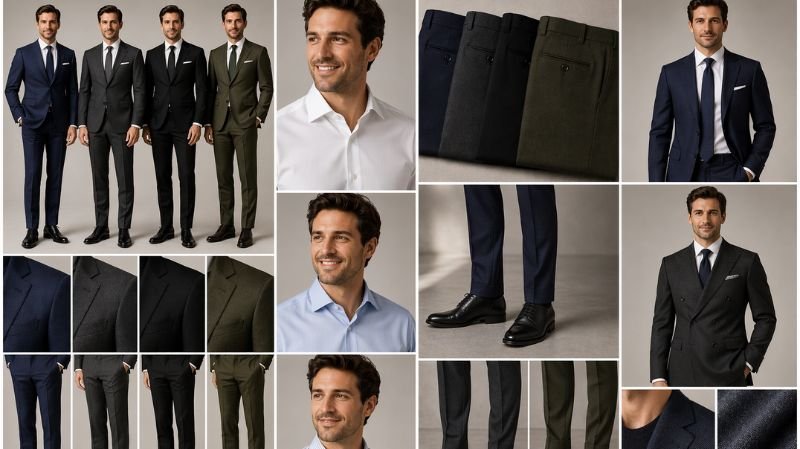
A complete men’s business professional attire wardrobe includes five core components.
Suits (The Foundation)
A well-fitted suit defines your entire look.
Best suit colors in 2026:
- Navy Blue (most versatile)
- Charcoal Grey (executive standard)
- Jet Black (formal events)
- Dark Olive (modern professional tone)
Suit fit trends:
- Slim tailored fit (not skinny)
- Soft structured shoulders
- Lightweight construction for comfort
Dress Shirts
A crisp shirt elevates your professional image.
Best options:
- White (non-negotiable essential)
- Light blue (most common corporate choice)
- Subtle stripe patterns
Fit rule:
Shirt should allow two fingers of space at the collar for comfort.
Trousers
- Matching suit trousers preferred
- Break style: slight break (modern standard)
- Avoid overly long pooling fabric
Blazers & Jackets
Blazers define structure.
- Single-breasted = modern standard
- Double-breasted = executive level formality
- Wool blends = year-round use
Footwear Guide for Business Professional Men
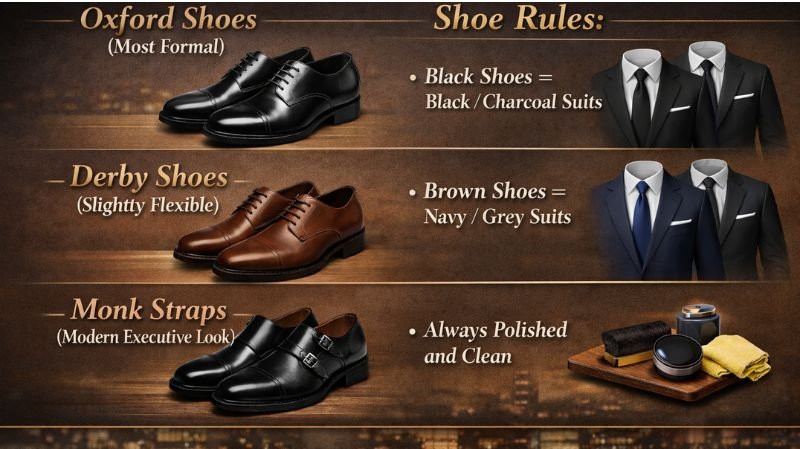
Shoes complete your authority look.
Best choices:
- Oxford shoes (most formal)
- Derby shoes (slightly flexible)
- Monk straps (modern executive look)
Shoe rules:
- Black shoes = black/charcoal suits
- Brown shoes = navy/grey suits
- Always polished and clean
Accessories That Elevate Business Dress Attire Male Style
Accessories should enhance, not overpower.
Must-have accessories:
- Classic wristwatch (metal or leather strap)
- Solid tie (navy, burgundy, black)
- Cufflinks (minimal design)
- Leather belt (matching shoes)
Pro styling rule:
Never mix silver and gold accessories in the same outfit
Seasonal Styling Trends
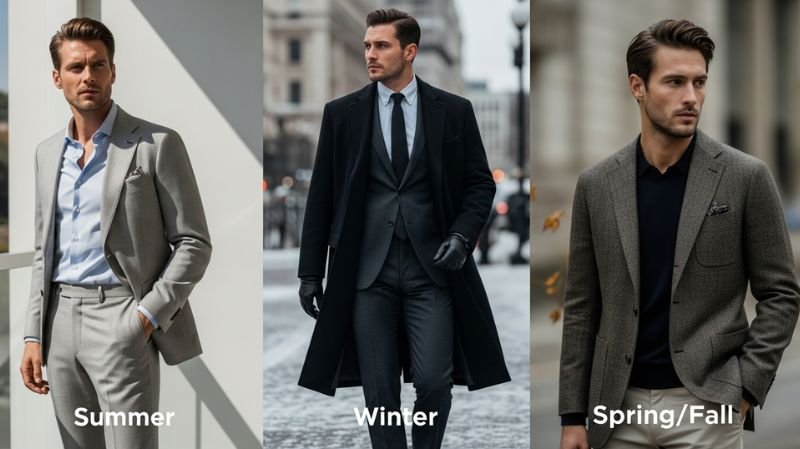
Summer:
- Lightweight wool suits
- Cotton shirts
- Breathable fabrics
Winter:
- Heavy wool suits
- Layered overcoats
- Darker tones (charcoal, black)
Spring/Fall:
- Mixed textures
- Mid-weight blazers
- Neutral tones
Color Psychology in Business Professional Attire
Colors influence perception in professional environments.
- Navy Blue → Trust & authority
- Charcoal Grey → Intelligence & seriousness
- Black → Power & formality
- White → Clean leadership image
This is why male business professional attire always avoids bright or flashy tones.
Modern Trends in Business Professional Men (2026)
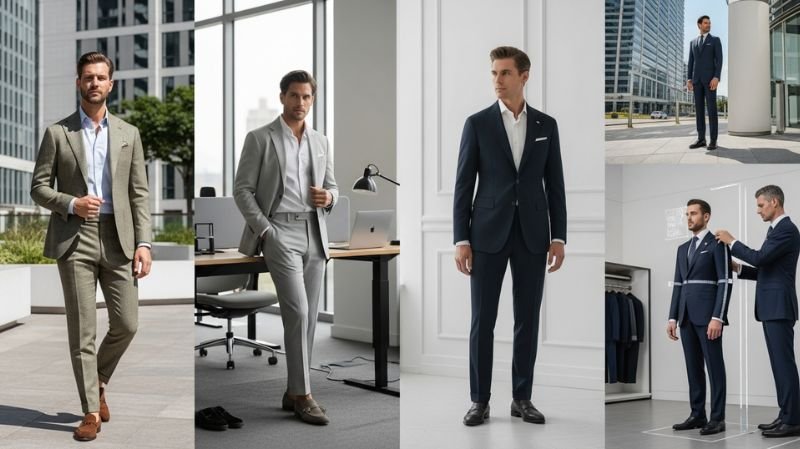
Business fashion has evolved, but structure remains key.
Key trends:
- Sustainable fabrics (organic wool blends increasing in demand)
- Lightweight suits for hybrid office culture
- Minimalist styling (less accessories, more fit focus)
- AI-measured tailoring becoming mainstream in premium brands
Common Mistakes to Avoid
Even small errors can ruin your professional image.
- Wearing oversized suits
- Mixing casual shoes (sneakers, boots)
- Over-accessorizing
- Wrinkled shirts
- Poor grooming
Business Professional Outfit Ideas
Example: Corporate Client Meeting Look
Imagine a finance consultant in New York preparing for a high-stakes client pitch.
He wears:
- Navy tailored suit
- Crisp white shirt
- Burgundy silk tie
- Black Oxford shoes
- Minimalist watch
This outfit instantly communicates confidence, authority, and reliability, core expectations in business professional men environments.
Grooming & Personal Presentation
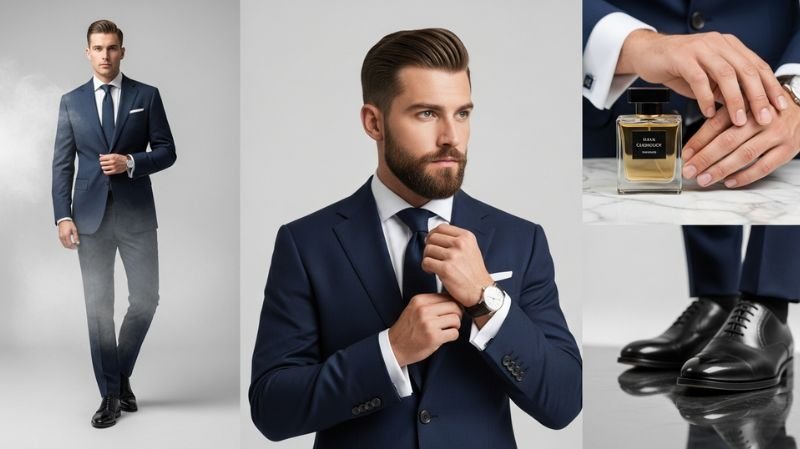
Your outfit is incomplete without grooming.
Essentials:
- Neat haircut (low fade or classic side part)
- Clean shave or well-trimmed beard
- Subtle fragrance (not overpowering)
- Clean nails and polished shoes
Quick Comparison Table: Business Casual vs Business Professional
| Element | Business Casual | Business Professional |
| Suit | Optional | Required |
| Shirt | Polo/button-down | Dress shirt only |
| Shoes | Loafers, sneakers allowed | Formal leather only |
| Tie | Not required | Mandatory |
| Overall Look | Relaxed | Structured & formal |
Authority-Style Summary
Business professional attire remains a global corporate standard because it reduces ambiguity in communication and reinforces trust instantly. In industries where first impressions directly influence financial decisions, structured dressing continues to act as a non-verbal signal of discipline, credibility, and leadership readiness. Even in a hybrid work culture, executives still prefer formal dressing for high-value interactions.
Conclusion
In 2026, business professional attire for men continues to represent more than just clothing, it represents identity, discipline, and leadership presence. While workplace fashion has become more flexible in many industries, the importance of structured dressing has not diminished.
Whether you are entering your first job interview, leading a corporate meeting, or representing your company in a global conference, the right outfit speaks before you do.
A well-fitted suit, polished shoes, and clean styling can significantly improve how others perceive your confidence and competence. In fact, mastering men’s business professional attire is one of the simplest yet most powerful ways to elevate your career presence instantly.
The rule is simple: Dress like the role you want, not just the job you have.
If you found this guide helpful, explore more expert styling insights on building a modern professional wardrobe and upgrading your corporate presence in 2026.
Save this guide, share it with colleagues, and start upgrading your business dress attire male wardrobe today for a more powerful professional image.
FAQs
1. What is business professional attire for men?
It is a formal dress code that includes suits, dress shirts, ties, and leather shoes worn in corporate environments.
2. What is included in men’s business professional attire?
A suit, dress shirt, tie, formal shoes, belt, and minimal accessories.
3. Can you wear brown shoes with business professional attire?
Yes, but only with navy or grey suits, not black suits.
4. What is the difference between business casual and business professional?
Business professional is more formal, requires suits and ties, while business casual is more relaxed.
5. What colors are best for business professional men?
Navy, charcoal grey, and black are the most accepted colors.
6. Are sneakers allowed in business professional attire?
No, sneakers are not appropriate for business professional settings.
7. What is the best suit for a professional interview?
A navy or charcoal grey slim-fit suit with a white shirt and black shoes.
8. Do I need to wear a tie for business professional attire?
Yes, ties are mandatory in traditional business professional settings.
9. What shoes are best for business professional men?
Oxford shoes are the most formal and preferred choice.
10. How can I look more confident in business attire?
Focus on proper fit, grooming, posture, and clean polished shoes.