
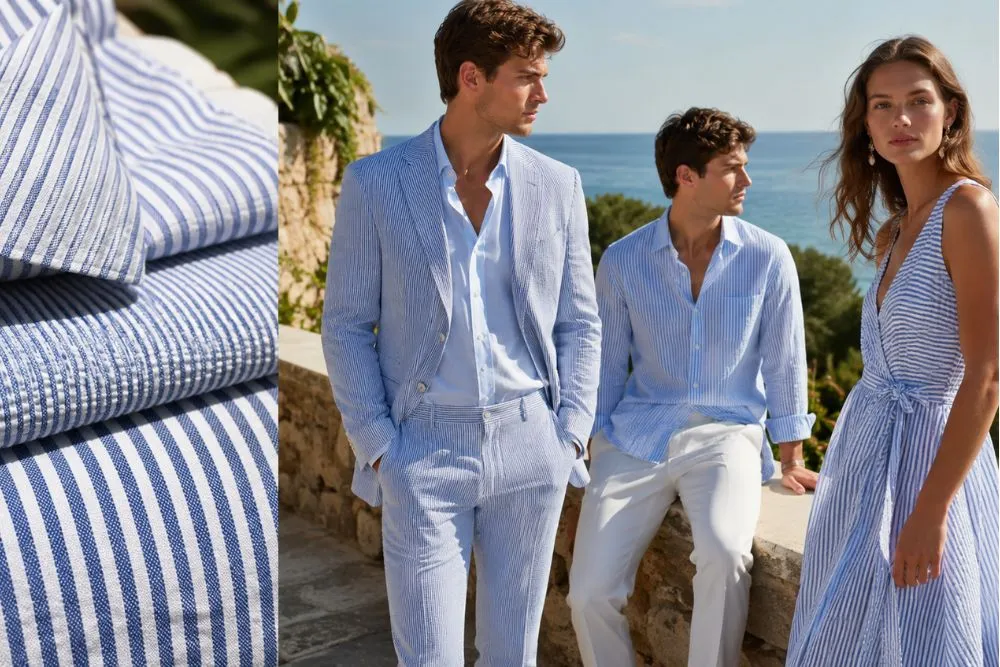
Seersucker is a lightweight woven fabric best known for its distinctive puckered texture, which helps keep portions of the cloth away from the skin and makes it especially useful in warm weather. Traditionally made from cotton, it combines breathability, low-maintenance texture, and an unmistakable summer character that works in everything from shirts and dresses to tailored suits.
If you want a fabric that looks polished without demanding the crisp perfection of conventional cotton or the constant wrinkle management of linen, seersucker is one of the smartest warm-weather options to consider.
Answer Box: What is seersucker?
Seersucker is a lightweight fabric characterized by alternating smooth and puckered areas, usually created through differences in yarn tension during weaving. The raised texture reduces the amount of fabric sitting directly against the skin, helping air circulate. Cotton seersucker is particularly popular for summer clothing, including shirts, dresses, trousers, shorts, and suits.
What Is Seersucker Fabric?
Seersucker is a woven fabric with a deliberately uneven, rippled or puckered surface. Traditional versions commonly use cotton, although modern seersucker can also be made with blends or other fibers.
The defining feature isn’t simply that it looks wrinkled. The texture is engineered into the fabric during weaving, giving seersucker its characteristic combination of flat and raised areas.
That distinction matters when you’re shopping: an ordinary wrinkled cotton garment is not automatically seersucker.
What Does Seersucker Look and Feel Like?
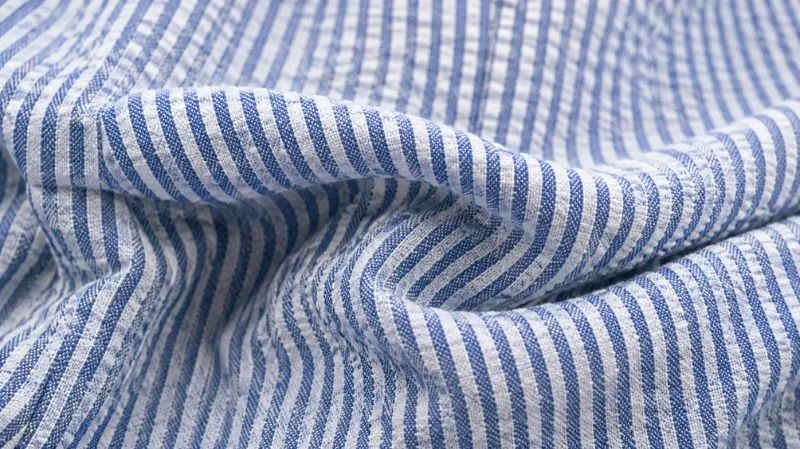
Classic seersucker often features alternating blue-and-white stripes, but today’s versions extend far beyond that traditional combination.
You can find:
- Blue-and-white stripes
- Navy and white
- Pastel stripes
- Solid colors
- Checks and plaids
- Tone-on-tone patterns
- Stretch seersucker
- Cotton-blend versions
To the touch, good seersucker has a slightly textured, almost crinkled surface. It generally feels lighter and more airy than smooth, densely woven cotton.
Why Is Seersucker Puckered?
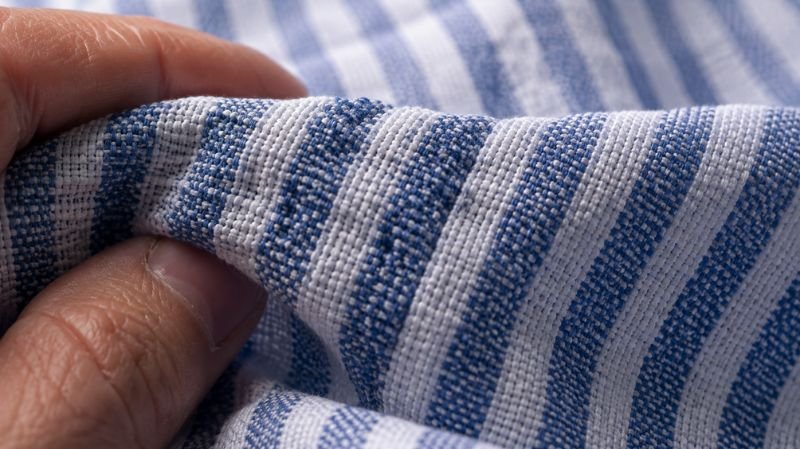
The puckering is created through differences in tension during weaving. In a traditional slack-tension construction, some warp yarns are held more loosely than others, allowing those sections to buckle and create the raised stripes.
This isn’t a finishing trick designed to make ordinary fabric look rumpled. The texture is part of the fabric’s construction.
That built-in texture is also why seersucker doesn’t need to look perfectly pressed to look polished.
Is Seersucker Good for Hot Weather?
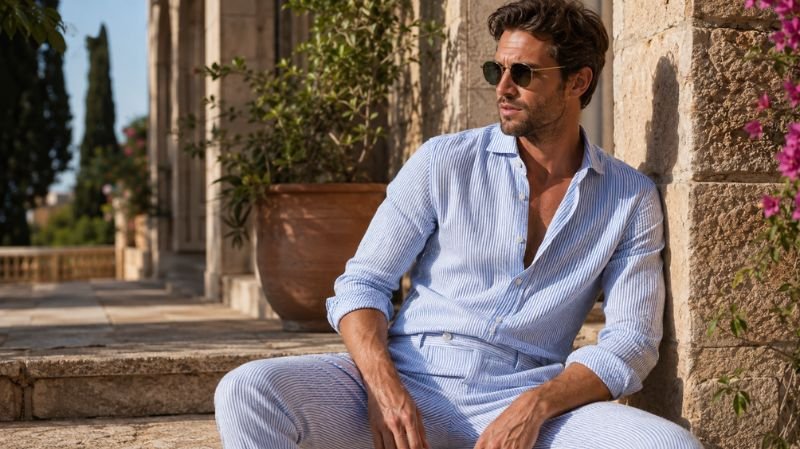
Yes, Seersucker is particularly well suited to hot weather because its puckered surface reduces direct contact between the fabric and skin, while lightweight construction can encourage airflow.
Cotton also has useful moisture-management properties. Cotton Incorporated reports standard moisture gain of roughly 7% — 8.5%, while USDA research describes cotton as having strong moisture absorption characteristics that contribute to clothing comfort.
There is an important caveat, however: not every seersucker garment performs identically.
Fiber content, yarn size, fabric weight, weave density, lining, and garment construction all influence how cool a finished piece feels.
A heavily lined seersucker blazer, for example, will not necessarily feel as airy as an unlined or lightly constructed seersucker shirt.
Does Seersucker Keep You Cooler Than Regular Cotton?
It can feel cooler because of its surface construction, but it’s too simplistic to say that every seersucker garment will outperform every other cotton fabric.
Think of it this way:
Fiber + weave + weight + construction + fit = actual comfort.
The puckered surface is one advantage, but the entire garment determines the final experience.
What Are the Benefits of Seersucker Fabric?
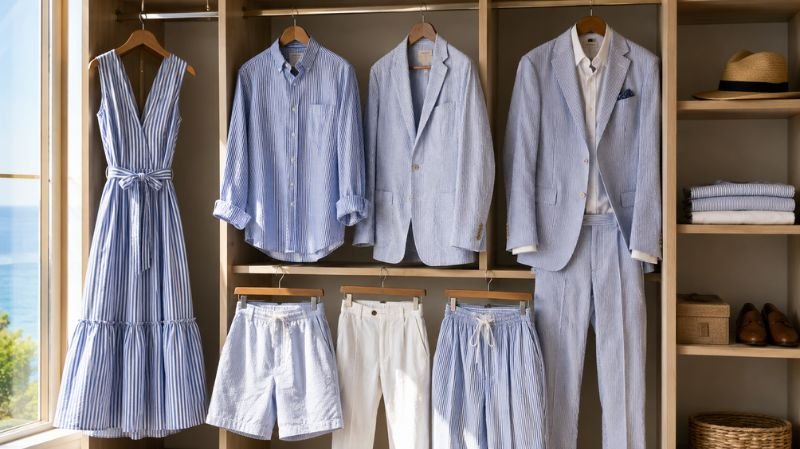
Seersucker’s popularity isn’t based solely on tradition. Its construction solves several practical problems associated with warm-weather dressing.
1. It Promotes Airflow
The raised areas of the fabric sit slightly away from the body instead of creating continuous skin-to-fabric contact.
That can make seersucker feel particularly comfortable when temperatures rise.
2. It Is Lightweight
Traditional cotton seersucker is commonly associated with lightweight summer clothing.
That makes it appropriate for:
- Summer shirts
- Casual dresses
- Shorts
- Trousers
- Lightweight jackets
- Warm-weather suits
3. It Hides Everyday Wrinkling
This is one of seersucker’s most underrated advantages.
Linen’s wrinkles are part of its charm, but they can sometimes look accidental. With seersucker, the fabric is supposed to have texture.
A few additional rumples during a long day therefore tend to blend into the overall appearance.
4. It Is Easy to Style
The texture creates visual interest without requiring a complicated print.
A simple white shirt with blue seersucker trousers can look intentional with very little accessorizing.
5. It Works Across Dress Codes
Depending on the garment and styling, seersucker can move between:
- Casual
- Smart casual
- Business casual
- Summer weddings
- Garden parties
- Outdoor events
- Resort dressing
The trick is controlling the silhouette and accessories, rather than assuming the fabric itself determines the dress code.
Is Seersucker Better Than Linen?
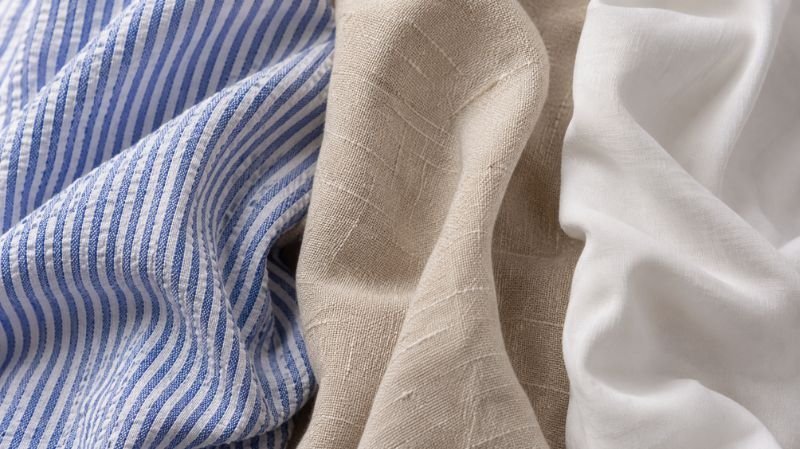
Neither fabric is universally better. They solve slightly different wardrobe problems.
Seersucker is particularly attractive if you want texture, easier wrinkle management, and a more structured summer appearance. Linen is often preferred when you want a softer, more relaxed drape and the unmistakable character of natural linen texture.
Comparison: Seersucker vs. Linen vs. Cotton
| Feature | Seersucker | Linen | Lightweight Cotton |
| Warm-weather comfort | Excellent | Excellent | Good to excellent |
| Signature texture | Puckered | Slubby/crisp | Usually smooth |
| Wrinkle visibility | Low to moderate | High | Moderate |
| Airflow | Very good | Excellent | Depends on weave |
| Maintenance | Relatively easy | More demanding visually | Varies |
| Typical style | Polished summer | Relaxed summer | Highly versatile |
| Best use | Suits, shirts, dresses, trousers | Shirts, dresses, suits, resort wear | Everyday clothing |
The comparison should be treated as a styling framework rather than a laboratory ranking. Fabric weight and construction can change the performance of any garment.
What Is the History of Seersucker?
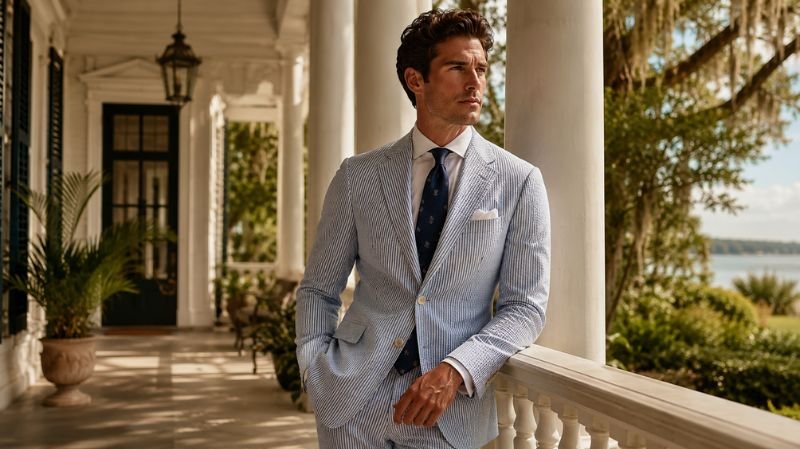
Seersucker has a history that stretches far beyond modern American summer style.
The word is commonly traced to Persian terms associated with “milk and sugar,” a reference to the fabric’s contrasting smooth and rough textures. The cloth became associated with hot-weather clothing in British India before gaining a strong identity in the United States.
How Did Seersucker Become Popular in America?
The fabric became particularly associated with the American South, where lightweight clothing was practical in hot, humid conditions.
New Orleans clothing manufacturer Haspel, founded by Joseph Haspel Sr. in 1909, played a major role in turning seersucker from practical workwear into recognizable summer tailoring. Haspel describes its early use of the fabric as a response to New Orleans heat.
The fabric later became strongly associated with Southern style and Ivy League summer dressing.
Its cultural reach expanded further into American public life. The U.S. Senate has continued the tradition of National Seersucker Day, with the 2025 Senate resolution recognizing June 12 and noting the tradition’s revival in Congress.
Why Is Seersucker Associated With Southern Style?
The connection makes practical sense.
Before widespread air conditioning, lightweight clothing that performed better in heat had an obvious advantage. Seersucker’s texture, lightness, and relatively relaxed appearance made it a natural choice for Southern summer wardrobes.
Over time, practicality became tradition—and tradition became fashion.
That evolution is a useful reminder that seersucker wasn’t originally created merely as a “preppy” aesthetic. Its style identity grew from a genuine response to climate.
What Does a Seersucker Suit Look Like?
A traditional seersucker suit typically features lightweight puckered fabric, often in a blue-and-white stripe.
The classic version has a distinctly American summer-tailoring identity, but modern designers have expanded the formula with:
- Navy
- Gray
- Tan
- Black
- Tonal stripes
- Checks
- Contemporary fits
- Separate jackets and trousers
The most important consideration is fit.
GQ’s coverage of seersucker repeatedly emphasizes fit as a critical factor, while designer Sam Shipley of Haspel has specifically argued that the fabric’s volume and vertical stripe make tailoring especially important.
How Should You Style a Seersucker Suit?
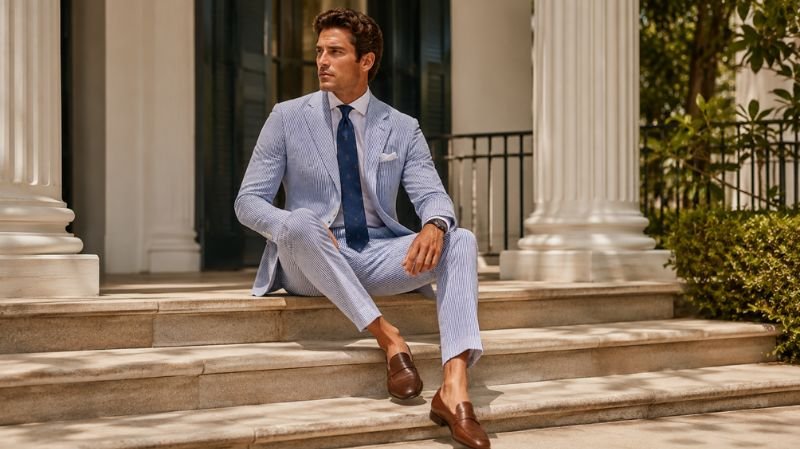
The easiest way to make a seersucker suit look modern is to simplify everything around it.
For a Classic Look
Try:
- Blue-and-white seersucker suit
- Crisp white shirt
- Solid navy or burgundy tie
- Brown loafers or derbies
- Minimal leather accessories
Keep the accessories restrained.
The fabric already supplies pattern and texture, so adding a loud tie, patterned shirt, colorful pocket square, and statement shoes can quickly make the outfit feel costume-like.
For a Modern Wedding
For an outdoor or daytime wedding, try a softer interpretation:
Seersucker jacket + white or pale-blue shirt + tailored trousers + loafers.
You don’t necessarily need the matching trousers.
Separates can make the fabric feel more contemporary and give you more opportunities to wear the jacket independently.
For a Casual Weekend Look
A seersucker jacket can work surprisingly well with:
- Plain T-shirt
- Dark denim
- Minimal sneakers
- Loafers
- Rolled sleeves
GQ’s current seersucker coverage also highlights the fabric’s ability to move beyond traditional preppy styling, including more relaxed combinations.
How Should Men Style Seersucker?
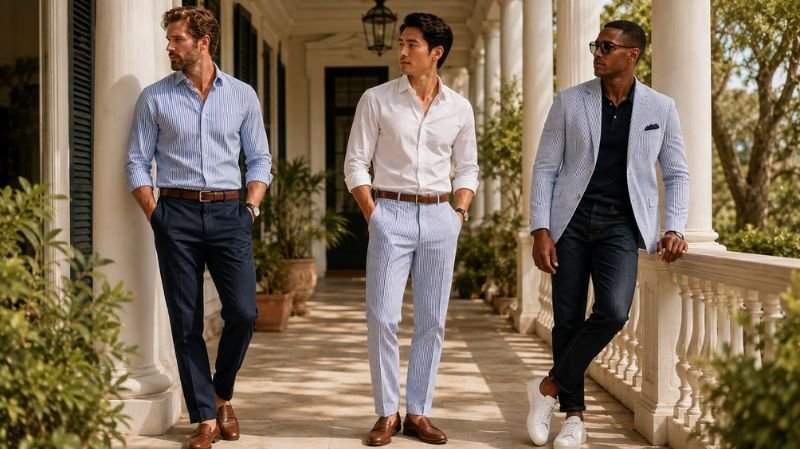
For men’s fashion, the most reliable formula is:
One textured seersucker piece + simple solid basics.
Seersucker Shirt
Pair a striped seersucker shirt with:
- Navy chinos
- Stone trousers
- White denim
- Tailored shorts
- Dark jeans
Avoid pairing strong seersucker stripes with another dominant stripe or busy pattern unless you deliberately want a maximalist look.
Seersucker Pants
Treat the trousers as the statement piece.
A white, navy, cream, or pale-blue shirt creates a clean foundation.
For shoes, consider:
- Loafers
- Suede derbies
- Minimal sneakers
- Espadrilles for casual settings
Seersucker Blazer
A seersucker blazer is arguably more versatile than a full suit.
Wear it with:
Smart:
White shirt + chinos + loafers
Business casual:
Oxford shirt + tailored trousers + leather shoes
Weekend:
T-shirt + denim + minimalist sneakers
How Should Women Style Seersucker?
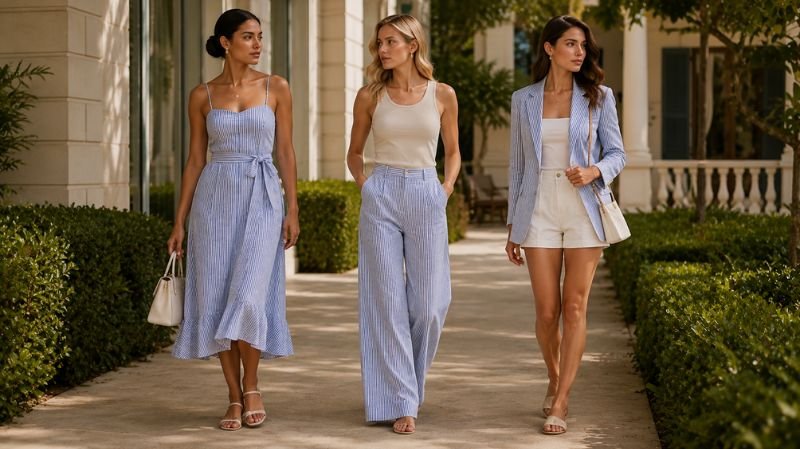
Seersucker works particularly well in women’s wardrobes because its texture can add dimension without the visual weight of heavier fabrics.
How to Wear a Seersucker Dress
A seersucker dress needs surprisingly little styling.
Try:
- Minimal sandals
- Structured handbag
- Simple jewelry
- Sunglasses
For daytime, lighter colors emphasize its summer character.
For evening, darker seersucker or a more structured silhouette can make the same fabric feel significantly more sophisticated.
How to Wear Seersucker Pants
Pair wide-leg or tailored seersucker trousers with a smooth, fitted top.
The contrast between:
textured bottom + clean top
creates balance.
A tucked-in tank, fitted knit, crisp button-down, or minimalist blouse can all work.
How to Wear a Seersucker Blazer
For a contemporary look, use the blazer as a lightweight layer over:
- A monochrome dress
- White tank and trousers
- Simple knit top
- Denim
- Tailored shorts
The key is to let the seersucker provide texture without making every other element equally decorative.
What Colors Go Best With Seersucker?
Classic blue-and-white seersucker is easy to style because both colors function almost like neutrals.
Best Pairings
White: clean and classic
Navy: sophisticated and low contrast
Tan: warmer and more relaxed
Brown: especially effective with blue seersucker
Cream: softer than bright white
Burgundy: useful as an accent color
Pastels: ideal for spring and daytime events
If you’re buying your first seersucker garment, blue-and-white is the safest starting point.
If you already own traditional stripes, consider a solid or tonal seersucker for a more contemporary wardrobe.
What Shoes Should You Wear With Seersucker?
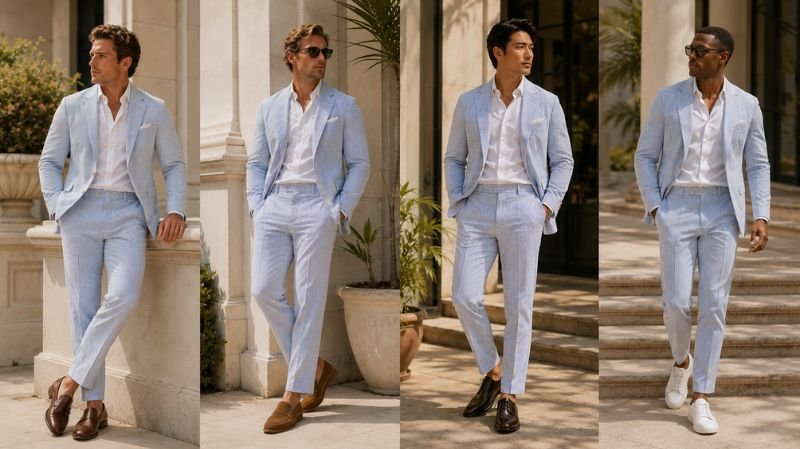
The right shoe depends more on the occasion than the fabric.
For Formal Summer Events
- Brown loafers
- Dark leather derbies
- Refined dress shoes
For Smart Casual
- Suede loafers
- Penny loafers
- Clean leather sneakers
For Casual Outfits
- Minimal sneakers
- Canvas shoes
- Sandals
- Espadrilles
Traditional styling may suggest white buck shoes with seersucker, but contemporary dressing doesn’t require them.
In fact, darker or simpler footwear can make a traditional seersucker suit feel more modern. GQ’s styling guidance has similarly recommended avoiding an overload of stereotypically “Southern” accessories when wearing the classic suit.
Can You Wear Seersucker to a Wedding?
Yes, particularly for daytime, outdoor, garden, Southern, coastal, and warm-weather weddings, provided the dress code permits it.
The important distinction is between the fabric and the silhouette.
A sharply tailored seersucker suit with refined accessories can look polished.
A very casual seersucker shirt and shorts combination is obviously a different proposition.
Before wearing one to a wedding, check:
- The invitation’s dress code.
- The time of day.
- The venue.
- Whether the couple has specified colors or attire.
- Whether your outfit is more casual than the wedding party.
For black-tie or strictly formal evening events, traditional seersucker is generally not the first choice.
Can You Wear Seersucker to the Office?
Yes, but workplace culture matters.
A seersucker blazer with solid trousers can work well in a relaxed business-casual environment.
A full blue-and-white seersucker suit may be too seasonal or expressive for a conservative corporate office.
When in doubt, start with one seersucker piece rather than an entire suit.
That gives you comfort and texture without making the fabric the entire message of your outfit.
Does Seersucker Wrinkle?
Seersucker is not wrinkle-proof, but its built-in puckering makes ordinary wrinkling much less visually disruptive.
That’s one of its practical advantages over smooth cotton.
The important mistake is trying to iron the fabric completely flat. The puckering is intentional and fundamental to the appearance of the material.
Should You Iron Seersucker?
Usually, no aggressive ironing is necessary.
Always follow the garment’s care label, but in general:
- Avoid pressing the puckered areas flat.
- Use low heat if the care instructions permit ironing.
- Steam lightly when appropriate.
- Hang the garment after wearing.
- Allow natural texture to remain visible.
The goal is not to make seersucker look like poplin.
The texture is the point.
How Do You Wash and Care for Seersucker?
Care depends on the fiber composition and garment construction.
A washable cotton seersucker shirt may have completely different instructions from a tailored seersucker suit.
Basic Seersucker Care Framework
- Read the care label first.
This matters more than generic fabric advice.
- Avoid unnecessary heat.
High heat can contribute to shrinkage or affect finishing.
- Don’t over-dry cotton garments.
USDA research has documented that excessive drying and heat can damage cotton fabric, reinforcing the value of controlled drying rather than simply using the hottest dryer setting.
- Preserve the texture.
Don’t press or flatten the puckered sections unnecessarily.
- Store it properly.
Hang structured garments and avoid crushing the fabric beneath heavy clothing.
How Do You Choose Good-Quality Seersucker?
Don’t judge seersucker solely by its stripes.
Check the Fiber Content
If breathability is your priority, compare the fiber composition carefully.
A cotton-rich fabric can behave very differently from a heavily synthetic blend.
Examine the Puckering
The texture should look intentional and relatively consistent.
Uneven puckering isn’t automatically a quality defect, but poorly constructed fabric can look distorted rather than deliberately textured.
Check the Weight
For peak summer use, look for a lightweight fabric that feels airy rather than dense.
For a jacket intended for longer seasonal wear, a slightly more substantial cloth may make sense.
Examine the Garment Construction
For tailored pieces, inspect:
- Shoulder fit
- Sleeve length
- Trouser break
- Jacket length
- Lining
- Seam quality
- Button construction
A beautiful seersucker fabric cannot rescue a badly fitted suit.
What Do Fashion Experts Say About Styling Seersucker?
The strongest expert consensus is surprisingly simple: fit and restraint matter more than following old-fashioned rules.
GQ’s seersucker coverage repeatedly stresses getting the fit right, while current coverage also shows how the fabric can be styled outside its traditional preppy context.
Designer Sam Shipley of Haspel, a company deeply associated with the American seersucker suit, has emphasized that the fabric’s volume and vertical stripes make proper tailoring especially important.
GQ’s summer-suiting coverage also recommends monochromatic seersucker as a more understated alternative to the traditional blue-and-white version.
The practical takeaway is:
Don’t try to make seersucker disappear. Make the rest of the outfit simple enough that its texture looks intentional.
That’s the difference between wearing seersucker as a costume and wearing it as modern clothing.
What Are the Biggest Seersucker Styling Mistakes?
Wearing the Wrong Fit
This is the most important mistake.
Because seersucker has surface volume, an oversized garment can look substantially bigger than it actually is.
Overdoing the Theme
You don’t need:
- Seersucker suit
- White buck shoes
- Bow tie
- Straw hat
- Pocket square
- Nautical accessories
all at once.
Pick one or two traditional references and modernize the rest.
Mixing Too Many Patterns
Seersucker already provides texture and, often, stripes.
A solid shirt is usually the easiest companion.
Ignoring the Occasion
A lightweight fabric doesn’t automatically make an outfit appropriate for every summer event.
Always dress for the dress code first and the weather second.
Treating Puckering as Wrinkling
If the fabric loses its characteristic texture because you’ve aggressively ironed it, you’ve essentially removed one of the reasons to own seersucker in the first place.
When Is the Best Time to Wear Seersucker?
Seersucker is most naturally suited to spring and summer, particularly in warm or humid climates.
That said, there isn’t a universal calendar rule anymore.
Traditional American etiquette often associated seersucker with the warmer months between Memorial Day and Labor Day, but contemporary fashion is considerably less restrictive.
Color, fabric weight, garment type, and styling all matter.
A dark, tonal seersucker jacket can feel substantially less “summer costume” than a traditional blue-and-white striped three-piece suit.
Is Seersucker Still Fashionable?
Yes, but its modern appeal is less about following an old Southern dress code and more about texture, comfort, and relaxed tailoring.
Recent fashion coverage has renewed attention around seersucker precisely because it offers an alternative to the increasingly predictable linen-heavy summer wardrobe. GQ’s May 2026 coverage framed seersucker as a practical warm-weather alternative to linen, emphasizing its puckered surface and reduced tendency to make wearers look rumpled.
That makes it particularly relevant now: the fabric has heritage, but it doesn’t require heritage styling.
Who Should Wear Seersucker?
Almost anyone who wants a lightweight warm-weather fabric can wear it.
It’s especially useful if you:
- Live in a hot or humid climate.
- Prefer textured fabrics.
- I want summer tailoring.
- Travel frequently in warm weather.
- Dislike highly visible linen wrinkles.
- I want an easy way to make simple outfits more interesting.
- Prefer relaxed but polished clothing.
It is less useful if you need extremely structured, year-round tailoring or prefer completely smooth fabrics.
What Is the Best Way to Add Seersucker to Your Wardrobe?
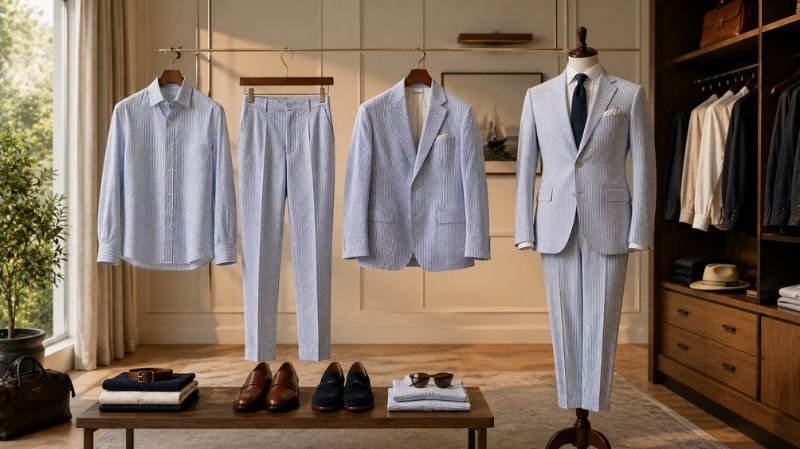
If you’re new to the fabric, don’t start with the full suit.
Start with one versatile piece.
Option 1: Seersucker Shirt
Probably the easiest entry point.
Pair it with neutral trousers, shorts, or denim.
Option 2: Seersucker Trousers
More distinctive but still easy to balance with a plain shirt.
Option 3: Seersucker Blazer
The best choice if you already dress in smart-casual or business-casual clothing.
Option 4: Full Seersucker Suit
Choose this if you regularly attend summer weddings, outdoor events, or formal daytime occasions.
For a first suit, classic blue-and-white remains the most versatile heritage choice—but tonal navy, gray, and other subdued versions offer a more contemporary direction.
Final Verdict
Yes, especially for warm-weather clothing that combines comfort with polish. Seersucker’s puckered texture reduces skin contact and gives it a distinctive, breathable feel.
The key is to keep it clean, fitted, and modern. Start with one piece and pair it with simple colors.
Choose seersucker trousers or a blazer for a polished wardrobe, a shirt or dress for casual wear, or a well-tailored suit for summer weddings and outdoor events.
The goal isn’t to wear more seersucker, it’s to wear the right piece, in the right proportion, for the right occasion.
FAQs
Is seersucker always made from cotton?
No. Cotton is the traditional and most recognizable choice, but seersucker can also be produced using blends and other fibers. Always check the garment’s fiber-content label rather than assuming every puckered fabric is cotton.
Why does seersucker have stripes?
The classic striped appearance comes from the way smooth and puckered sections are arranged during weaving. Stripes are traditional, but seersucker is also available in solids, checks, plaids, and tonal patterns.
Is seersucker itchy?
Quality cotton seersucker is generally comfortable against the skin, but texture and fiber composition vary considerably between garments. If you are sensitive to texture, feel the fabric before buying and avoid assuming that every seersucker has the same hand feel.
Does seersucker shrink?
Cotton can shrink when exposed to heat, particularly if the fabric has not been treated for dimensional stability. Follow the garment’s care instructions and be especially cautious with high-heat washing and drying.
Is seersucker good for travel?
Yes, particularly for warm-weather trips. Its intentional texture disguises ordinary rumpling better than many smooth fabrics, making it useful for shirts, trousers, and relaxed tailoring that may spend time in luggage.
Can seersucker be worn in humid weather?
Yes. Its lightweight construction and puckered surface make it a strong option for humid conditions. However, no fabric eliminates the effects of high heat and humidity; garment weight, lining, fit, and fiber composition still matter.
Is seersucker fabric expensive?
It ranges widely in price. Simple cotton seersucker shirts can be relatively accessible, while premium tailoring can cost considerably more. With suits and jackets, construction and tailoring quality often matter more than the fabric name alone.
Can seersucker be worn by people of all ages?
Absolutely. The fabric itself isn’t age-specific. A younger wearer might choose seersucker shorts or an oversized shirt, while someone seeking a more traditional look might choose a tailored jacket or suit. The silhouette determines the mood.
Can you wear seersucker with denim?
Yes. A seersucker blazer with dark denim is one of the easiest ways to make the fabric feel contemporary rather than traditionally preppy. Keep the rest of the outfit relatively simple.
Is seersucker environmentally friendly?
You shouldn’t automatically classify it as sustainable simply because it is often made from cotton. Environmental impact depends on fiber sourcing, dyeing, manufacturing, finishing, garment lifespan, and how the clothing is cared for. A durable garment worn frequently can be a more responsible purchase than a trend-driven piece that quickly gets discarded.