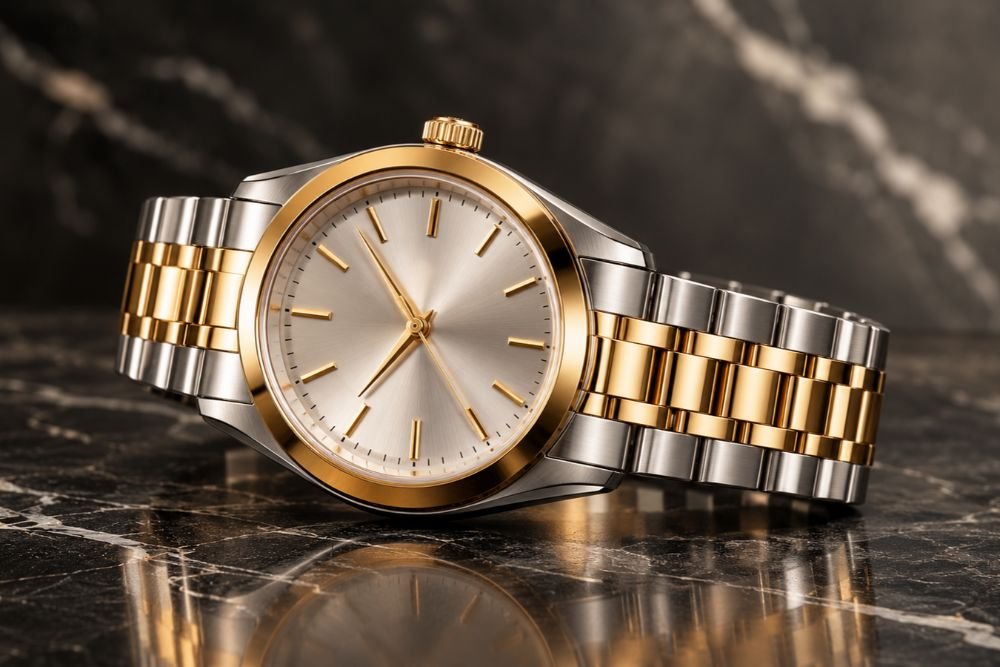
A two-tone watch is a timepiece that combines two different metal colors or finishes, most commonly silver-colored stainless steel and gold. This combination creates a distinctive look that blends the cool appearance of steel with the warmth of gold, making the watch versatile enough for everyday outfits, professional clothing, and more formal occasions.
Whether you prefer classic yellow gold, contemporary rose gold, or understated mixed-metal designs, a two-tone watch offers a stylish alternative to choosing between an entirely gold or silver timepiece. Its appeal lies in its ability to bring different accessories together while adding dimension to your overall look.
What Does a Two-Tone Watch Look Like?
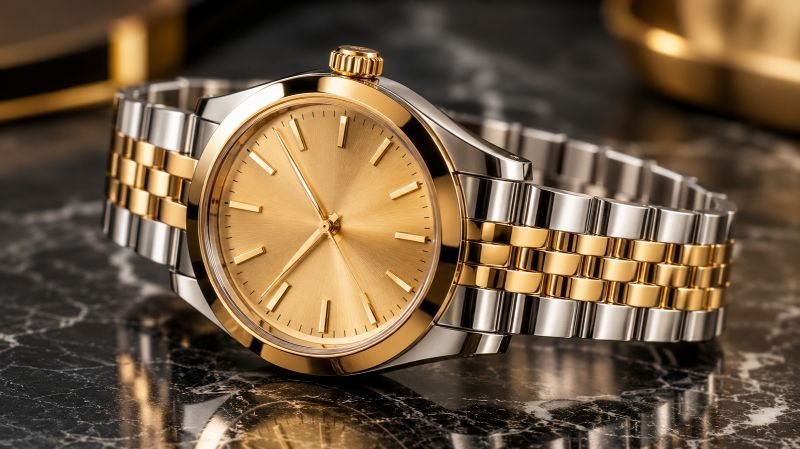
A two-tone watch features two contrasting metal colors across its exterior. The most recognizable design combines a silver-colored stainless steel case and bracelet with gold-colored details on the bezel, crown, or bracelet links.
However, not every design follows the same arrangement. Some watches use gold-colored center links surrounded by stainless steel, while others feature a gold bezel paired with a silver case or alternate different finishes across the bracelet.
The distribution of these colors determines the watch’s overall appearance. A design with subtle gold accents looks understated, whereas one with a prominent gold bezel and center links creates a more noticeable luxury-inspired appearance.
Two-Tone Watch Case and Bezel
The case houses the watch movement and protects its internal components. In many traditional two-tone designs, the case is predominantly stainless steel, while the bezel introduces a contrasting gold finish.
This arrangement creates a defined border around the dial without making the entire watch look overly decorative. Fluted, polished, smooth, and brushed bezels can all influence how prominent the gold appears.
Two-Tone Watch Bracelet and Center Links
The bracelet is often the most recognizable feature of a traditional two-tone watch. A popular arrangement places gold-colored links in the center, with silver-colored links running along the outer edges.
This creates a balanced pattern that remains visible when the watch is worn. Some manufacturers also alternate gold and steel links throughout the bracelet or use different finishes to create additional contrast.
Two-Tone Watch Crown and Other Details
The crown, the small component used to set the time and date, can also feature a contrasting metal finish. Depending on the design, manufacturers may incorporate gold-colored details into the bezel, case sides, bracelet clasp, or decorative elements.
These smaller details help create visual consistency across the watch. A well-designed two-tone timepiece makes its contrasting finishes look intentional rather than randomly combined.
What Metals Are Used in Two-Tone Watches?
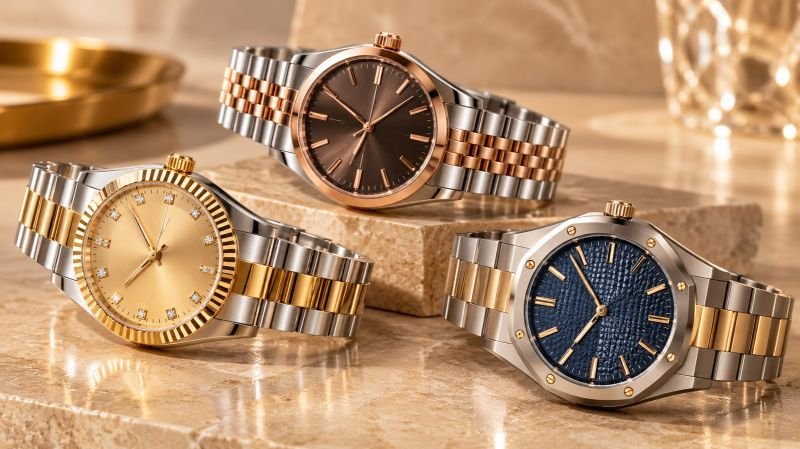
Two-tone watches are not limited to one specific metal combination. Although stainless steel and gold remain the classic pairing, manufacturers use different alloys and finishes to create distinctive appearances.
Stainless Steel and Yellow Gold
Stainless steel and yellow gold create the traditional two-tone appearance. The cool silver color of steel contrasts with the warmer, more noticeable appearance of yellow gold.
This combination is particularly recognizable in classic luxury watch designs. It works well with traditional accessories, gold jewelry, and neutral clothing.
Yellow gold also creates a stronger visual statement than more subtle mixed-metal combinations. If you enjoy noticeable accessories, this pairing offers a timeless starting point.
Stainless Steel and Rose Gold
Rose gold combines a warm pinkish appearance with the cooler finish of stainless steel. It creates a softer contrast than traditional yellow gold and often gives a watch a more contemporary, jewelry-inspired character.
This combination works particularly well with cream, beige, blush, brown, and other warm neutral colors. It can also complement silver jewelry without making the overall look feel too traditional.
Rose gold is an alloy rather than pure gold, and its precise color depends on the metals used in its composition.
Silver and White Gold
White gold has a pale, silvery appearance that can look similar to stainless steel. When manufacturers combine these materials, the contrast may be more subtle than in a yellow-gold and steel watch.
The difference often comes from the materials’ properties, surface finishes, and specific construction rather than a dramatic color change.
White gold is also not identical to stainless steel. Its composition and finishing can differ, so buyers should check the manufacturer’s material specifications rather than judging by appearance alone.
Titanium and Gold
Some manufacturers combine titanium with gold to create a distinctive alternative to conventional steel-and-gold designs.
Titanium is known for its relatively low weight and strength, making it useful in watches designed for comfortable everyday wear. Gold accents introduce warmth and contrast.
This combination is worth considering if you prefer a lighter-feeling watch with a more distinctive material composition.
Other Mixed-Metal Combinations
Two-tone designs can also combine different gold colors or other contrasting materials. For example, yellow gold and rose gold can create a warmer, more decorative appearance.
The term describes the combination of two tones rather than a fixed recipe. Always examine the actual material specifications when comparing different watches.
Are Two-Tone Watches Made of Real Gold?
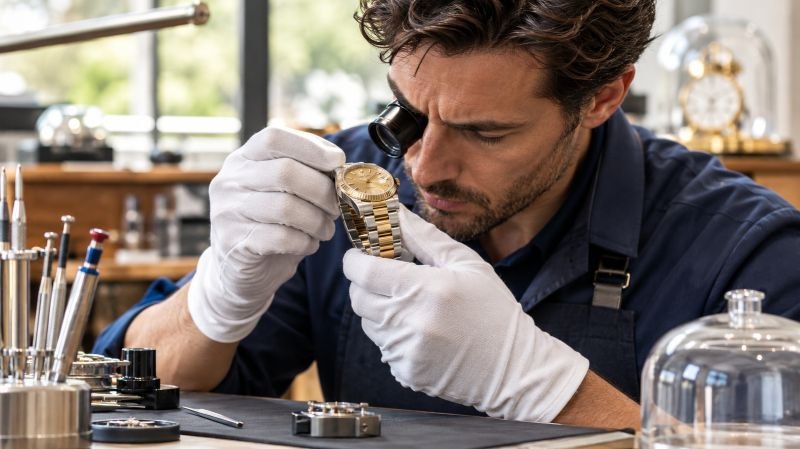
Not necessarily. Some two-tone watches contain genuine gold components, while others use a gold-colored coating applied to stainless steel or another base material.
This distinction is important because two watches can look almost identical but have very different material compositions, prices, and maintenance requirements.
Here are the main construction methods to understand before purchasing.
Solid Gold Components
A solid-gold component is made from a gold alloy throughout rather than having only a thin gold-colored surface.
Many luxury two-tone watches use 18-karat gold for selected components. Eighteen-karat gold contains 75% gold by mass, with the remaining 25% made up of other metals that influence its strength and color.
For example, Rolex’s Yellow Rolesor models combine Oystersteel with 18-karat yellow gold components. The gold bezel and other designated parts provide the contrasting finish.
Solid gold can develop scratches during regular wear, but its color does not disappear simply because the surface is scratched.
Gold-Plated Two-Tone Watches
Gold plating involves applying a layer of gold over another material, commonly stainless steel or a different base metal.
The thickness of the coating and the quality of the application influence how the finish performs over time.
Repeated friction, contact with hard surfaces, and everyday wear can gradually affect plated areas. Bracelet edges and clasps may be particularly exposed to rubbing.
Gold-plated watches can be attractive and accessible, but they should not be confused with watches containing solid-gold components.
Gold PVD and Ion-Plated Finishes
Physical Vapor Deposition (PVD) is a coating process used to create different colors and surface finishes on watch components.
Some gold-colored PVD finishes use compounds such as titanium nitride, while manufacturers may use different coating technologies and compositions.
Ion plating is another surface-treatment process associated with durable decorative finishes.
These finishes can provide an attractive gold appearance without requiring components to be made entirely from gold. However, their exact composition and durability depend on the manufacturer’s process.
Gold-Capped and Gold-Filled Components
Gold-capped and gold-filled constructions use a thicker layer of gold than conventional thin electroplating.
These terms are associated with particular manufacturing methods and standards, and they should not be treated as interchangeable.
They are especially relevant when evaluating vintage watches. Buyers should check the manufacturer’s original specifications, case markings, and condition rather than assuming that a gold-colored vintage watch contains solid gold.
How to Identify the Materials in a Two-Tone Watch
Before purchasing, examine the official product description, technical specifications, and material markings.
Look for terms such as:
- 18-karat gold: Indicates an 18K gold alloy component.
- Gold-plated: Indicates a gold layer applied over another material.
- Gold PVD: Indicates a gold-colored surface treatment using PVD technology.
- Gold-tone: Describes the appearance but does not establish that the component contains genuine gold.
- Stainless steel and gold: Check whether the manufacturer specifies solid gold components or coated finishes.
Do not rely on photographs or price alone to establish authenticity. When buying a pre-owned luxury watch, request appropriate documentation and an independent authenticity assessment if necessary.
The History and Evolution of Two-Tone Watches
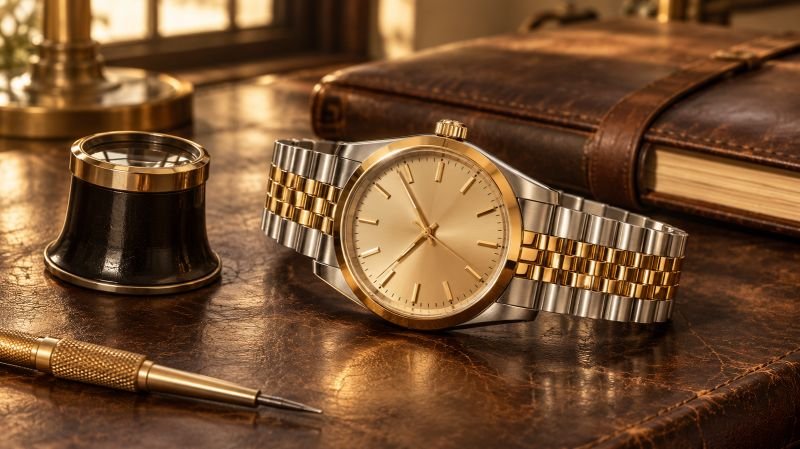
Two-tone watches have a longer history than their association with 1980s fashion might suggest. Their appeal developed through changing watch designs, material combinations, and the growing popularity of luxury wristwatches.
The Early History of Two-Tone Designs
The combination of gold and steel became an important design feature in the early twentieth-century watch industry.
Rolex is particularly associated with popularizing this aesthetic through its Oyster collections. According to the brand’s official history, Rolex used the gold-and-steel combination during the 1920s and registered the name Rolesor in 1933.
Rolesor is a Rolex-specific name for its combination of gold and steel. It should not be used as a generic replacement for every two-tone watch.
The Rise of Two-Tone Rolex Watches
The Rolex Datejust, introduced in 1945, became one of the brand’s most recognizable watch families. Two-tone versions helped establish the combination of steel and gold as a distinctive luxury-watch design.
The appeal came from combining the practical appearance of steel with the visual warmth of gold.
Over time, this approach became recognizable across both dress-oriented and sportier watch designs.
Why Two-Tone Watches Became Associated With the 1980s
During the 1980s and 1990s, gold-and-steel accessories became strongly associated with bold fashion and luxury styling.
Two-tone watches fitted naturally into this aesthetic. Their polished bracelets, gold accents, and prominent cases made them noticeable accessories.
However, fashion preferences changed. As understated steel watches and minimalist designs gained popularity, some two-tone styles began to feel less contemporary.
The Modern Return of Two-Tone Watch Designs
Two-tone watches have attracted renewed fashion attention in recent years. Vogue’s July 2025 coverage highlighted the return of silver-and-gold watch designs, including updated proportions and contemporary interpretations.
The appeal is not simply nostalgia. Modern designs allow the combination to appear more balanced through different case sizes, bracelet proportions, dial colors, and finishes.
Rather than treating two-tone as an exclusively retro accessory, contemporary styling allows it to work with minimalist wardrobes, modern tailoring, and mixed-metal jewelry.
Are Two-Tone Watches Still in Style?
Yes. Two-tone watches remain a relevant fashion choice in 2026, particularly for people who appreciate mixed-metal accessories and versatile watch designs.
Their appeal comes from the balance between warm and cool metal finishes. Instead of committing to an entirely gold or silver watch, you get both in one accessory.
However, not every two-tone design looks equally contemporary. Proportions, finishing, dial design, and the amount of gold all influence the final appearance.
Why Two-Tone Watches Remain Fashionable
The biggest advantage is versatility. A two-tone watch can connect accessories that would otherwise look like separate styling choices.
For example, someone who regularly wears silver earrings and gold rings can use a two-tone watch to bring the combination together.
The design also offers more visual interest than a completely monochromatic bracelet without necessarily becoming an oversized statement accessory.
Vintage Appeal Meets Modern Fashion
Vintage-inspired accessories continue to influence contemporary fashion, and two-tone watches fit naturally into this aesthetic.
Older designs often feature stronger gold contrasts, while newer interpretations may use smaller cases, softer gold tones, or more restrained bracelet patterns.
Neither approach is automatically better. The right choice depends on whether you prefer a noticeable vintage-inspired accessory or a more understated modern look.
Are Two-Tone Watches Timeless or Just a Trend?
The design itself is not new, which gives two-tone watches a stronger historical foundation than a short-lived seasonal accessory.
However, individual designs can still become dated. Extremely oversized cases, excessive polishing, and disproportionate gold accents may reflect a particular fashion period more strongly than simpler designs.
For a longer-lasting wardrobe choice, consider a balanced bracelet, a versatile dial, and proportions that feel comfortable on your wrist.
How to Style a Two-Tone Watch
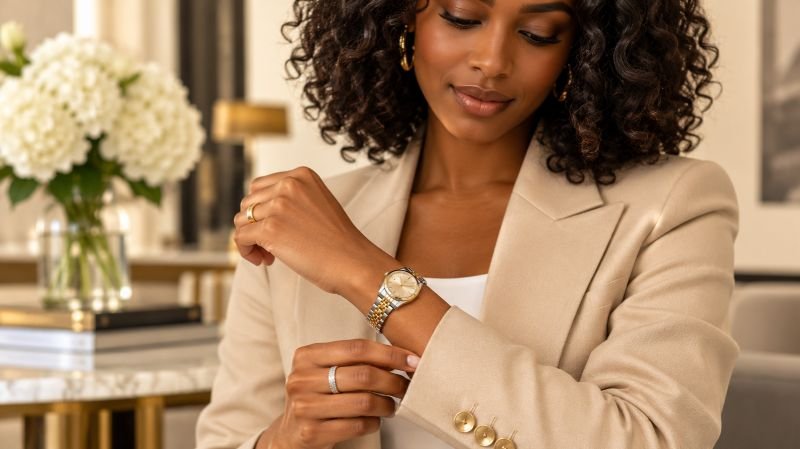
A two-tone watch is one of the easiest accessories to incorporate into a mixed-metal wardrobe. The key is to create visual balance rather than matching every piece of jewelry exactly.
Instead of thinking of gold and silver as competing colors, treat them as complementary elements.
Pair a Two-Tone Watch With Gold and Silver Jewelry
You do not need to choose only one metal when wearing a two-tone watch.
The watch itself already establishes a connection between gold and silver, making it easier to incorporate rings, necklaces, earrings, and bracelets in either finish.
Try these combinations:
- Mostly gold jewelry: Wear a two-tone watch with gold hoops, a delicate gold necklace, and one or two simple rings.
- Mostly silver jewelry: Combine the watch with silver earrings and a silver necklace, allowing the gold details to provide warmth.
- Balanced mixed metals: Wear a gold ring with silver earrings and let the watch connect both finishes.
- Minimal jewelry: Allow the watch to become the main accessory against an otherwise simple outfit.
A useful styling principle is to let one metal dominate and use the second as an accent. This is a flexible editorial guideline, not a strict fashion rule.
Choose Clothing Colors That Complement Mixed Metals
The color of your clothing can change how gold and silver details appear.
| Clothing color | Styling effect | Recommended combination |
| Black | Creates contrast and highlights metallic details | Two-tone watch with minimal jewelry |
| White | Gives the watch a clean, crisp appearance | Silver-dominant jewelry with gold accents |
| Navy | Creates a polished, understated combination | Classic yellow gold and steel |
| Beige and cream | Emphasizes warm metallic details | Rose gold or yellow gold accents |
| Grey and charcoal | Balances warm and cool finishes | Mixed-metal accessories |
| Brown and camel | Complements warmer gold tones | Gold-dominant two-tone designs |
| Olive and forest green | Creates a rich, balanced appearance | Yellow gold and brushed steel |
These combinations are styling suggestions rather than fixed color rules. The dial, bracelet finish, fabric texture, and overall outfit also affect the result.
Style a Two-Tone Watch With Casual Outfits

For everyday dressing, pair a two-tone watch with denim, a basic T-shirt, a casual shirt, or a simple knit.
A stainless-steel bracelet with subtle gold center links works particularly well when you want a little polish without making the watch look overly formal.
For a relaxed outfit, try blue jeans, a white shirt, neutral sneakers, and a two-tone watch. The watch adds structure without competing with the rest of the clothing.
Wear a Two-Tone Watch With Business and Formal Outfits

A two-tone watch can complement office clothing, tailored suits, dresses, and smart-casual outfits.
For professional environments, choose a design with balanced metal proportions and a relatively clean dial. A slimmer case can also sit more comfortably beneath a shirt cuff.
With formal clothing, consider the overall level of decoration. A simple two-tone watch often works better than a heavily embellished bracelet when the outfit already contains statement jewelry.
For traditional formal occasions, especially those involving metallic embroidery or elaborate accessories, coordinate the watch with the existing details rather than adding several competing finishes.
Layer a Two-Tone Watch With Bracelets and Rings
Bracelet stacking can work beautifully with two-tone watches, but the combination needs some restraint.
If your watch has a prominent metal bracelet, try a slim bangle or delicate chain bracelet rather than several large, rigid pieces.
You can also wear bracelets on the opposite wrist to distribute the accessories more evenly.
For rings, repeating one of the watch’s metal tones is usually enough to create visual consistency. You do not need every ring to match the bracelet.
Common Two-Tone Watch Styling Mistakes to Avoid
Even a versatile accessory can look unbalanced when the proportions and surrounding accessories compete.
Avoid these common mistakes:
- Wearing several oversized metallic bracelets alongside a large two-tone watch.
- Mixing multiple highly polished gold shades without a connecting element.
- Choosing a case size that overwhelms your wrist.
- Matching every accessory so precisely that the outfit looks overly coordinated.
- Ignoring the watch’s dial color when choosing clothing and jewelry.
- Wearing an elaborate watch with equally elaborate accessories when a simpler combination would create more balance.
The aim is not to follow rigid rules. It is to make the watch feel like a natural part of the outfit.
Two-Tone Watches for Men and Women
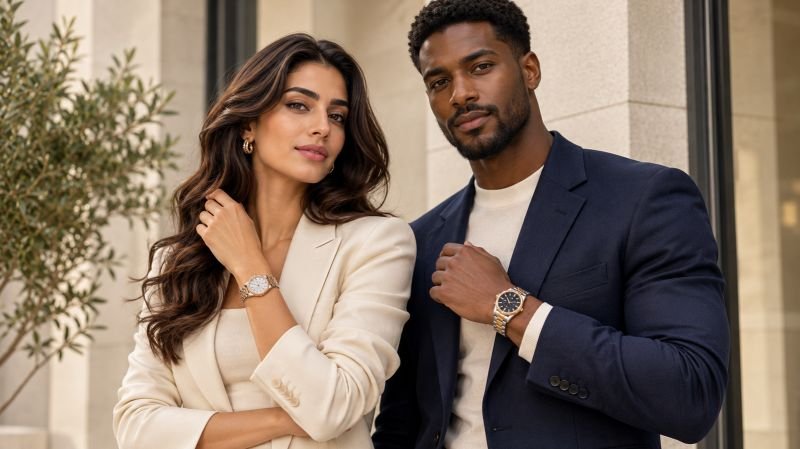
Two-tone watches are not limited to a particular gender or clothing style. Their versatility comes from the combination of metal finishes, case proportions, bracelet construction, and overall design.
How Men Can Style Two-Tone Watches
For men’s wardrobes, a traditional gold-and-steel watch can complement business clothing, casual shirts, knitwear, and tailored jackets.
A three-link bracelet with restrained gold accents offers a sportier appearance, while a more intricate bracelet can feel dressier.
For everyday wear, consider pairing a two-tone watch with a navy shirt, dark denim, or a neutral blazer.
If you prefer understated accessories, choose a simpler dial and avoid excessive gold detailing.
How Women Can Style Two-Tone Watches
Women can wear two-tone watches as both functional timepieces and jewelry-inspired accessories.
Smaller cases, delicate bracelets, and rose-gold details can create an elegant appearance, while larger steel-and-gold designs offer a bolder look.
A two-tone watch works particularly well alongside mixed-metal earrings, layered necklaces, rings, and simple bracelets.
For a polished everyday outfit, try tailored trousers, a neutral blouse, gold earrings, and a two-tone watch.
Choosing the Right Two-Tone Watch for Your Personal Style
Rather than choosing a watch based only on fashion trends, consider how it fits your existing wardrobe.
If you mostly wear minimal clothing, a clean design with subtle gold accents may be the most versatile.
If your wardrobe includes statement accessories and bold colors, a more prominent two-tone bracelet can become an intentional focal point.
The most flattering choice is ultimately the one that feels comfortable, proportionate, and consistent with how you like to dress.
Two-Tone vs. Gold-Tone vs. Silver Watches
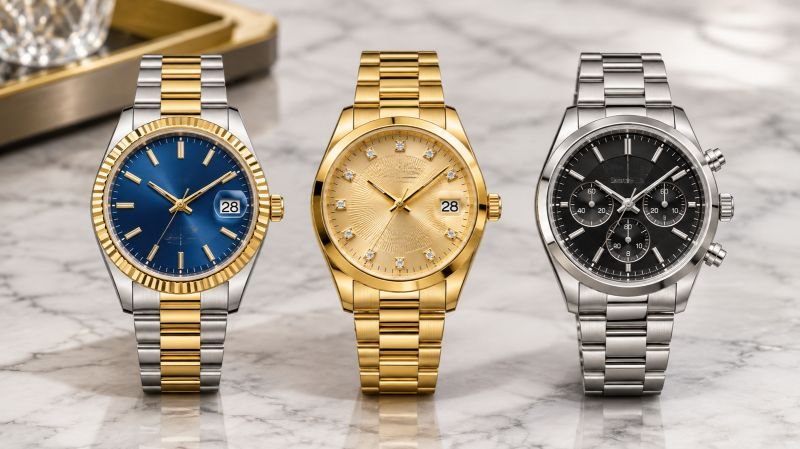
Although these terms may sound similar, they describe different watch appearances.
A two-tone watch combines two contrasting metal colors, a gold-tone watch features a gold-colored appearance, and a traditional silver-colored watch generally uses stainless steel or another silver-colored material.
Understanding these differences makes it easier to select a watch that suits your style and expectations.
| Watch type | Appearance | Styling character |
| Two-tone watch | Combines two metal colors, commonly gold and silver | Versatile and visually balanced |
| Gold-tone watch | Predominantly gold-colored | Warm, noticeable and jewelry-inspired |
| Silver watch | Predominantly silver-colored | Clean, understated and easy to coordinate |
| All-gold watch | Features gold throughout its specified gold components | More prominent and luxurious |
Two-Tone vs. Gold-Tone Watches
A gold-tone watch uses a gold-colored finish, but this does not necessarily mean that its components contain genuine gold.
A two-tone watch combines two different colors or finishes. It may feature solid gold components, gold plating, or another coating.
The distinction is therefore primarily about appearance, not automatically about material quality.
Two-Tone vs. All-Gold Watches
An all-gold watch creates a more consistent and noticeable metallic appearance.
A two-tone watch introduces contrast, which can make it easier to wear with different jewelry finishes and clothing styles.
If you prefer a more subtle combination of metals, two-tone is a practical option. If you want a stronger gold statement, an all-gold design may suit your preferences better.
Two-Tone vs. Stainless Steel Watches
Stainless-steel watches are generally more understated and have a consistent silver-colored appearance.
Two-tone designs introduce gold details, making them more decorative and visually distinctive.
Steel may be the easier choice for someone who prefers minimalist accessories, while a two-tone watch can be more useful if their jewelry collection includes both warm and cool metal finishes.
Are Two-Tone Watches Worth Buying?
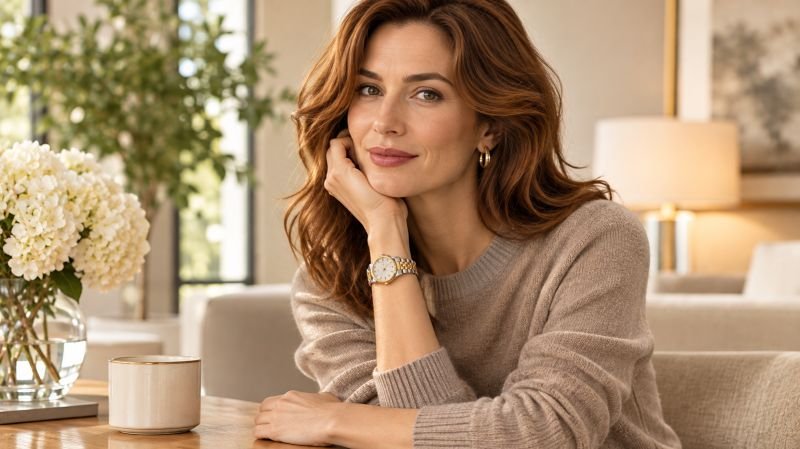
A two-tone watch can be a worthwhile purchase if you appreciate its appearance, find it comfortable, and choose materials that suit your budget and expectations.
Its biggest practical advantage is styling flexibility. You can wear it with gold jewelry, silver accessories, or a combination of both.
However, the value of a watch depends on much more than its color combination.
Benefits of Owning a Two-Tone Watch
- Greater styling flexibility
The combination of two metal colors makes it easier to coordinate the watch with different accessories and outfits.
- A distinctive appearance
Gold and steel create visual contrast, helping the watch stand out without requiring an entirely gold bracelet.
- Suitable for different occasions
Depending on its design, a two-tone watch can work with casual clothing, professional outfits, and selected formal occasions.
- Multiple material options
Buyers can choose between affordable coated finishes and more expensive watches containing solid-gold components.
- A combination of classic and contemporary design
Two-tone watches have a long history, but modern interpretations allow the style to work with contemporary wardrobes.
Potential Disadvantages of Two-Tone Watches
Two-tone watches are not perfect for everyone.
Gold-colored coatings can wear with repeated friction, while solid-gold components can develop scratches more easily than harder steel surfaces.
Some designs may also appear too decorative for people who prefer simple accessories.
Additionally, a mixed-metal bracelet may not suit someone who consistently wears only one metal and wants every accessory to match.
What to Consider Before Buying a Two-Tone Watch
Before making a purchase, evaluate the following:
| Buying consideration | What to check |
| Materials | Confirm whether the gold components are solid gold, plated, or coated |
| Case size | Choose proportions that complement your wrist |
| Bracelet construction | Check link quality, clasp security, and comfort |
| Dial design | Consider how the dial works with the contrasting metals |
| Finish | Compare polished and brushed surfaces |
| Movement | Understand whether the watch uses quartz, automatic, or another movement |
| Water resistance | Check the manufacturer’s stated rating and care instructions |
| Warranty | Review the manufacturer’s coverage and servicing requirements |
| Authenticity | Buy from a reputable seller and verify documentation |
Are Two-Tone Watches Suitable for Everyday Wear?
Yes. Many two-tone watches are designed for everyday use, but suitability depends on their construction and specifications.
A stainless-steel case with gold details can be a practical choice for regular wear, provided the watch is maintained properly.
However, you should not assume that every two-tone watch is suitable for swimming, sports, or demanding activities. Check its water-resistance rating, bracelet construction, and manufacturer instructions before exposing it to those conditions.
How to Care for a Two-Tone Watch
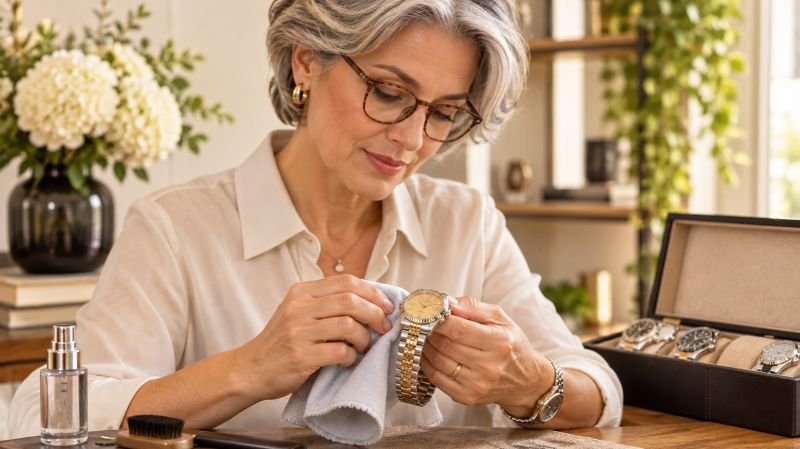
Proper care helps maintain the appearance and functionality of a two-tone watch. The most appropriate cleaning method depends on its materials, water resistance, and surface treatment.
Clean the Watch Regularly
Use a soft, clean microfiber cloth to remove fingerprints, dust, and everyday residue.
For a water-resistant watch, follow the manufacturer’s cleaning instructions. Some models can be cleaned using a slightly damp cloth and mild soap, while others require more careful handling.
Avoid abrasive pads, aggressive polishing compounds, and harsh household chemicals.
Prevent Scratches and Finish Wear
Gold components can show scratches through regular use, while plated and coated finishes may gradually wear in areas exposed to repeated friction.
Remove your watch before activities that involve heavy impact or contact with abrasive surfaces.
Avoid wearing it against hard jewelry that can repeatedly rub against the bracelet.
Store Your Watch Properly
Store the watch in a clean, dry place when you are not wearing it.
A dedicated watch box or soft storage pouch can help prevent scratches and accidental damage.
Keep it separate from other jewelry to reduce unnecessary contact between metal surfaces.
Understand Water Resistance and Maintenance Requirements
Water resistance is a specification of the individual watch, not a guarantee that every two-tone watch can handle water exposure.
Follow the manufacturer’s instructions regarding swimming, showering, and servicing.
If the watch has been exposed to moisture or suffers damage, have it inspected by a qualified watch professional.
For coated watches, avoid having the gold-colored surface polished aggressively, as polishing may remove or damage the finish.
Final Thoughts
A two-tone watch offers more than a combination of gold and silver. It brings together contrasting finishes, adds dimension to an outfit, and makes coordinating different jewelry metals easier.
From traditional stainless-steel and yellow-gold combinations to contemporary rose-gold designs, there is a wide range of styles to suit different wardrobes and preferences.
The most important consideration is choosing a watch that balances appearance, comfort, construction, and quality. Pay attention to whether its gold components are solid or coated, consider the proportions of the bracelet, and select a design that complements the accessories you already own.
Ready to update your accessory collection? Explore different two-tone watch styles, experiment with mixed-metal jewelry, and choose a timepiece that reflects your personal style rather than following a trend simply because it is popular.
Frequently Asked Questions
1. What is a two-tone watch?
A two-tone watch combines two different metal colors or finishes, most commonly stainless steel and gold. The contrasting materials may appear on the case, bezel, bracelet, crown, or other exterior components.
2. Are two-tone watches made of real gold?
Some are, but not all. Luxury models may use solid 18-karat gold components, while more affordable designs often use gold plating or PVD coatings over stainless steel.
3. Are two-tone watches still in style in 2026?
Yes. Two-tone watches remain a relevant accessory in contemporary fashion, particularly as mixed-metal jewelry and vintage-inspired designs continue to attract attention. Modern versions offer different case sizes, gold shades, and bracelet styles.
4. Can you wear a two-tone watch with gold and silver jewelry?
Absolutely. A two-tone watch naturally connects gold and silver accessories. You can wear it with either metal individually or combine both, using one as the dominant finish for a balanced appearance.
5. Do two-tone watches fade over time?
It depends on their construction. Solid-gold components do not lose their gold color through ordinary surface wear, although they can scratch. Plated and coated finishes may gradually wear, particularly in areas exposed to repeated friction.
6. Are two-tone watches suitable for everyday wear?
Yes, many are suitable for everyday use. However, durability depends on the case material, bracelet construction, surface finish, and water-resistance specifications. Choose a design that matches your daily activities.
7. Are two-tone watches suitable for men and women?
Yes. Two-tone watches are available in different case sizes, bracelet styles, and designs for all kinds of personal preferences. The right choice depends on comfort, proportions, and individual fashion taste.
8. Are two-tone watches more expensive than stainless-steel watches?
Not necessarily. Their prices depend on the brand, movement, materials, craftsmanship, and construction. A watch with solid-gold components will generally cost more than a comparable model using only stainless steel, while coated fashion watches can be relatively affordable.
9. What is the difference between a two-tone and a bicolor watch?
The terms generally describe the same concept: a watch that combines two different colors or materials. Bicolor is commonly used in European watch terminology, while two-tone is widely used in English-language fashion and watch discussions.