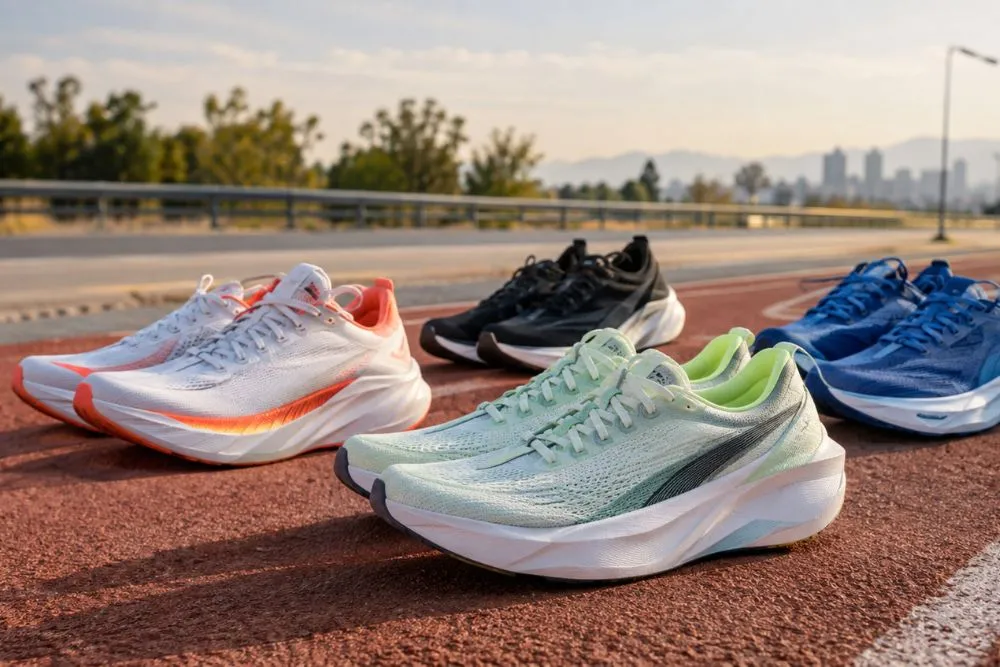
Best marathon running shoes should balance cushioning, energy return, stability, fit and weight rather than simply being the lightest or most expensive pair. For most runners, the right choice also depends on whether the shoe will handle weekly long runs, race day, or both.
For race-focused runners, carbon-plated models such as the Nike Alphafly 3 and ASICS METASPEED SKY TOKYO offer a highly responsive, race-oriented ride, while versatile shoes such as the ASICS Megablast can bridge training and racing.
Which Marathon Running Shoes Should You Consider?
| Runner or goal | Shoe to consider | Why it stands out |
| Race-day performance | Nike Alphafly 3 | Carbon plate, ZoomX foam and Air Zoom units |
| Lightweight racing | ASICS METASPEED SKY TOKYO | Very low weight with race-focused geometry |
| Energy return | adidas Adizero Adios Pro 4 | Responsive foam and Energy Rods |
| Heel-striking marathoners | Saucony Endorphin Pro 5 | Cushioning, rocker and higher heel-to-toe drop |
| Maximum impact protection | HOKA Cielo X1 3.0 | High-cushion race-oriented construction |
| One-shoe training and racing | ASICS Megablast | High cushioning with a versatile ride |
| First marathon | A cushioned, familiar daily trainer | Comfort and predictable handling matter more than maximum speed |
| Stability-focused runners | A broad-platform stability model | Better control when fatigue changes running mechanics |
Model availability, pricing and specifications can vary by market and shoe version, so check the manufacturer’s current specifications before buying.
The Best Marathon Running Shoes for Long Runs and Race Day
A marathon shoe has to perform differently from a shoe used for a short speed session. At a 5K pace, a slightly aggressive fit or unusual rocker may feel exciting; several hours later, the same design can become a completely different experience.
That is why the best marathon shoe is better judged by the entire 26.2-mile experience. Cushioning, upper comfort, traction, stability and fatigue management can become increasingly important after the halfway point.
Nike Alphafly 3: Race-Day Choice for Maximum Propulsion
The Nike Alphafly 3 is built specifically around road racing, with a full-length carbon-fibre Flyplate, ZoomX foam and two forefoot Air Zoom units. Nike lists an approximate men’s US 10 weight of 218 grams and an 8mm heel-to-toe drop.
Its design is unapologetically performance-focused. The carbon plate, high-energy foam and forefoot Air Zoom units are intended to create a propulsive sensation without sacrificing the cushioning required for marathon distance.
This makes the Alphafly 3 especially interesting for experienced runners who already know that its geometry works with their stride. It is less compelling as a blind first purchase for someone who has never used a super shoe.
Best for: race day, experienced runners, personal-best attempts and runners who like a highly energetic ride.
Watch for: price, fit and whether the aggressive geometry feels natural at your marathon pace.
ASICS METASPEED SKY TOKYO: Lightweight Race-Day Option
The ASICS METASPEED SKY TOKYO is designed for stride-style runners and uses FF LEAP and FF TURBO PLUS foam with a carbon plate. ASICS lists a 5mm drop and approximately 170 grams in a men’s US 9.
The important point is not simply that the shoe is light. ASICS has positioned the SKY TOKYO around increasing stride length while maintaining energy return, making its geometry part of the performance equation.
For runners who prefer a light, race-specific sensation, it belongs on the shortlist. However, its relatively specialized design means comfort and control should be tested at marathon pace rather than judged during a quick store walk.
Best for: lightweight racing and runners who respond well to stride-oriented race geometry.
Watch for: the narrower, specialized feel that may not suit every foot shape or running style.
Adidas Adizero Adios Pro 4: Responsive Marathon Racer
The adidas Adizero Adios Pro 4 combines Lightstrike Pro cushioning with Energy Rods rather than a conventional full-length carbon plate. Independent testing in the supplied research measured substantial energy return and highlighted its responsive ride.
The shoe also demonstrates why “carbon plated” should not become a shortcut for “fast.” Different stiffening systems can create different sensations, and the interaction between foam, geometry and plate or rods matters more than the label alone.
Its combination of cushioning, propulsion and outsole grip makes it relevant for runners who want a serious racing shoe without choosing purely on minimum weight.
Best for: marathon racing, responsive cushioning and runners who like a firm-to-springy transition.
Watch for: fit around the toe box and whether the rear platform feels sufficiently secure for your foot strike.
Saucony Endorphin Pro 5: Strong Option for Heel Strikers
The Saucony Endorphin Pro 5 combines PWRRUN PB cushioning, a carbon plate and Speedroll geometry. Independent testing in the supplied research measured an approximately 36.5mm heel stack and an 8.7mm heel-to-toe drop.
That combination makes the shoe particularly interesting for runners who land farther toward the rear of the foot. A pronounced rocker can help create a smoother transition from landing toward toe-off, although the sensation remains highly individual.
The Endorphin Pro 5 also demonstrates an important marathon principle: a racing shoe does not need to be extremely minimal to feel fast. Some runners benefit from a little more underfoot protection when fatigue begins to change their mechanics.
Best for: heel strikers, marathon racers and runners wanting a cushioned plated shoe.
Watch for: its relatively pronounced rocker and whether the upper provides enough ventilation for your race conditions.
HOKA Cielo X1 3.0: Cushioning and Shock Protection
The HOKA Cielo X1 3.0 is aimed at runners who want substantial cushioning in a performance-oriented package. RunRepeat’s testing places particular emphasis on its shock absorption, while the shoe retains a race-focused rocker and plate construction.
For marathoners, that matters because “fast” does not have to mean harsh. A shoe that remains comfortable as the miles accumulate can be more useful than an extremely aggressive model that feels brilliant for the first hour.
The Cielo X1 3.0 is therefore worth considering when cushioning is high on the priority list but the runner still wants a dedicated performance shoe.
Best for: runners prioritizing cushioning and impact protection without abandoning race-day responsiveness.
Watch for: its larger, more substantial geometry compared with lighter racing models.
ASICS Megablast: Versatile Training-and-Racing Option
The ASICS Megablast is one of the most interesting alternatives to the traditional two-shoe marathon strategy. Current testing from RTINGS places it highly for marathon use because it combines deep cushioning with an energetic ride without using a carbon plate.
That versatility can be valuable during a marathon build. Instead of learning one shoe for daily mileage and another for race day, some runners prefer a familiar model that can handle easy runs, long runs and faster sessions.
It will not provide the same sensation as an aggressive carbon racer, but that is precisely the point. A calmer shoe can make sense for runners who value predictability, comfort and versatility over maximum propulsion.
Best for: one-shoe marathon training, long runs and runners who prefer a non-plated ride.
Watch for: runners chasing maximum race-day efficiency may prefer a dedicated super shoe.
Marathon Running Shoes Compared
| Model | Primary role | Plate/stiffening | Long-run suitability | Race-day suitability | Main consideration |
| Nike Alphafly 3 | Racing | Carbon Flyplate | Good for experienced users | Excellent | Aggressive, expensive |
| ASICS METASPEED SKY TOKYO | Racing | Carbon plate | More specialized | Excellent | Very lightweight |
| adidas Adios Pro 4 | Racing | Energy Rods | Good | Excellent | Specialized fit |
| Saucony Endorphin Pro 5 | Racing | Carbon plate | Good | Excellent | Rockered ride |
| HOKA Cielo X1 3.0 | Racing | Plate | Very good | Very good | Substantial geometry |
| ASICS Megablast | Training/racing | None | Excellent | Very good | Less aggressive than super shoes |
The table reveals an important distinction that gets lost in generic “best shoe” lists: race performance and training versatility are different attributes. A shoe can be exceptional at one without being the ideal choice for the other.
What Makes a Good Marathon Running Shoe?
There is no single specification that defines a marathon shoe. The useful question is how several design elements work together after thousands of foot strikes.
Cushioning That Still Feels Useful Late in the Run
Cushioning is not simply about making a shoe feel soft in the store. It needs to provide protection and a ride that remains useful as fatigue accumulates.
A very soft shoe can feel comfortable initially but may feel unstable to some runners. A firmer shoe can feel more controlled but less forgiving, so the ideal balance depends on your stride and preference.
Energy Return Without Chasing Numbers
Energy return describes how much energy a midsole returns after compression, but laboratory percentages should not be treated as a direct prediction of marathon performance.
The supplied research makes the same important distinction: energy-return measurements are only one part of the performance picture, alongside foot strike, runner characteristics, stiffness and other factors.
In practical terms, look for a shoe that feels lively at your actual marathon pace rather than assuming the highest laboratory number will automatically make you faster.
Stability Becomes More Important as You Tire
A marathon shoe can feel stable during the first few miles but less controlled once your stride changes.
A broad platform, secure upper and predictable transition can therefore be valuable even for runners who do not normally think of themselves as needing a stability shoe.
Weight Matters, But It Is Not the Whole Story
A lighter shoe can feel easier to turn over, but removing material is not automatically an advantage over 26.2 miles.
The better question is whether the reduction in weight comes with compromises in cushioning, stability, traction or fit that become noticeable later in the race.
Breathability Is a Performance Detail
A hot, humid marathon can expose weaknesses that are invisible during a short test run.
A breathable upper can help manage heat and moisture, while an overly restrictive upper can become uncomfortable as the feet swell. The supplied research specifically identifies breathability as a factor worth considering for marathon footwear.
Outsole Grip Should Match the Course
Most road marathons do not require trail-shoe levels of traction, but wet turns, painted road markings and rough pavement can still challenge an outsole.
Consider the actual course rather than choosing based only on the shoe’s appearance. Rubber coverage and compound can matter more on a wet urban course than a small difference in midsole weight.
How to Choose Marathon Shoes for Your Running Goal
For Your First Marathon
First-time marathoners usually benefit from familiarity more than novelty.
If your current training shoe feels comfortable during progressively longer runs, replacing it with an aggressive racing shoe shortly before the event creates unnecessary variables.
A first marathon is already a major logistical and physical challenge. Your footwear should remove uncertainty rather than add another experiment.
For a Personal-Best Attempt
A dedicated racing shoe can make sense when the runner has already tested it and understands how it behaves.
Carbon-plated shoes are particularly relevant here because the plate, foam and rocker can create a highly efficient race-day sensation. But the shoe still needs to match your stride and pace.
For Long, Comfortable Marathon Finishes
When you expect to spend several hours on the course, comfort, stability and cushioning become increasingly important.
A slightly heavier shoe that remains comfortable can be more appropriate than an ultra-light racer that becomes difficult to control when fatigue sets in.
For Faster or Elite-Level Running
Running shoes for elite runners are often highly specialized because small differences in geometry, stiffness, weight and foam behavior matter at high speeds.
That does not mean recreational runners should copy an elite athlete’s exact shoe choice. Elite footwear is developed around specific biomechanics, race goals and training environments.
Carbon-Plated vs. Non-Plated Marathon Shoes
What Does a Carbon Plate Actually Do?
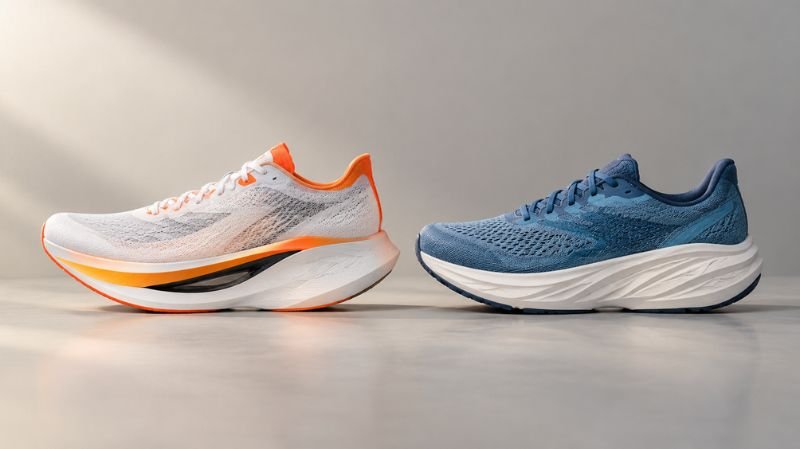
A carbon plate adds stiffness to the shoe and interacts with the midsole foam and rocker geometry.
The result can be a strong forward-moving sensation, but the plate is not working alone. Foam characteristics, plate position, shoe curvature, stack height and the runner’s mechanics all influence how it feels.
Who Should Consider a Carbon-Plated Shoe?
Experienced runners chasing a personal best are the clearest candidates.
The supplied research notes that plated shoes can be less comfortable at slow speeds and may require an adjustment period, particularly because their stiffness and geometry can feel unusual outside faster running.
Who May Prefer a Non-Plated Shoe?
A non-plated shoe can be the better option for runners who prioritize versatility, comfort or a familiar ride.
Current 2026 testing from RTINGS and The Run Testers demonstrates that highly cushioned non-plated shoes can still serve marathon training and, for some runners, race day.
The absence of a carbon plate does not make a shoe unsuitable for a marathon. It simply creates a different performance profile.
Marathon Training Shoes vs. Race-Day Shoes
A useful marathon rotation often separates mileage from performance.
Training shoes need to survive repeated runs and provide dependable comfort. Race shoes can prioritize responsiveness, low weight and specialized geometry because they are not necessarily expected to carry the entire training workload.
One-Shoe Strategy
A one-shoe setup works when the runner values simplicity and the selected model is versatile enough for easy runs, long runs and faster sessions.
The ASICS Megablast is an example of the type of shoe that can occupy this middle ground, while current iRunFar testing also identifies versatile models as useful alternatives to a dedicated racer-and-trainer rotation.
Two-Shoe Strategy
A two-shoe rotation is often more logical for a serious marathon build.
One pair handles everyday mileage and long runs, while a faster shoe is introduced for tempo workouts, marathon-pace sessions and eventually race day.
Three-Shoe Strategy
More experienced runners may separate easy mileage, quality workouts and racing.
That approach is not necessary for everyone, but it can reduce the temptation to use an expensive race shoe for every run while allowing the runner to become familiar with race-specific geometry before competition.
How Should Marathon Shoes Fit?
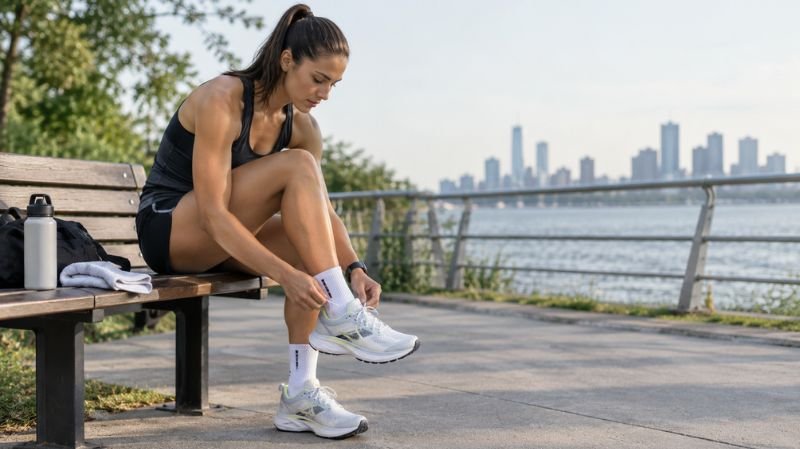
Fit is one area where technical specifications cannot replace your own experience.
You want enough room for your toes to spread and accommodate the changes that occur during a long run, while the heel and midfoot should remain secure enough to prevent excessive movement.
Check the Toe Box
Your toes should not be forced against the front of the shoe.
The supplied research emphasizes that marathon comfort requires avoiding cramped toes, hot spots, chafing and heel movement. It also notes that toe-box shape can matter as much as headline width because different foot shapes need different amounts of taper.
Check the Heel Lockdown
A secure heel reduces unwanted movement and can help prevent rubbing.
Try the shoe with the socks you intend to race in, lace it as you normally would, and walk before testing it at running pace.
Shop for the Foot You Have
Do not choose a shoe simply because it is popular.
Two runners can wear the same size and have completely different experiences because of differences in toe shape, arch structure, width, volume and preferred lockdown.
Heel-to-Toe Drop, Stack Height and Rocker Explained
Heel-to-Toe Drop
Drop is the difference in height between the heel and forefoot of the shoe.
It influences how the shoe feels underfoot, but it should not be treated as a universal ranking system. A runner accustomed to a particular drop may find a sudden change uncomfortable even if the new shoe looks technically impressive.
Stack Height
Stack height describes how much material sits between the foot and ground.
World Athletics’ current 2026 athletic-shoe regulations specify a maximum sole thickness of 40mm for road running events. That is a competition rule, not a recommendation that every marathon shoe should be 40mm tall.
This distinction matters because some consumer running shoes can be designed primarily for training rather than regulated competition.
Rocker Geometry
A rocker curves the sole to help guide the foot through the running cycle.
A strong rocker can make transitions feel smooth and efficient, but the sensation is highly individual. The supplied testing research notes that rocker geometry can feel excellent for some runners while being less suitable for others.
How to Test Marathon Shoes Before Race Day

The best time to discover a problem with your race shoe is not mile 18 of the marathon.
Use shorter runs first, then progressively longer sessions. Pay attention to the same things that matter during competition: toe pressure, heel movement, hot spots, sock interaction, lacing and comfort at your intended marathon pace.
Test the Shoe at Marathon Pace
A shoe can feel completely different at an easy pace compared with marathon pace.
If you intend to race at a particular pace, include some controlled sections around that pace during training before committing to the shoe.
Test It on a Long Run
A long run reveals issues that a 20-minute treadmill session cannot.
Foot swelling, friction, heat, fatigue and changing mechanics can all become apparent only after substantial time on your feet.
Never Make Race Day Your First Test
Current marathon guidance from iRunFar, GQ and other tested guides consistently emphasizes using training to establish familiarity with the shoe rather than introducing an untested model immediately before competition.
Common Marathon Shoe Mistakes to Avoid
Choosing the Lightest Shoe Automatically
Light weight is attractive, but the lightest option may not offer the stability or cushioning you need.
Buying a Carbon Racer Without Testing It
Carbon shoes can feel dramatically different from conventional trainers.
Test the actual model at realistic training speeds before making it your race shoe.
Wearing Brand-New Shoes on Marathon Day
A shoe can be comfortable in a store and problematic after 15 miles.
Your race-day footwear should already be familiar enough that fit, lacing and ride are not questions you are still answering during the race.
Ignoring Toe Space
Feet can swell during long efforts, making a tight toe box significantly less forgiving.
The supplied research specifically warns against cramped toes and highlights toe-box taper as an important fit variable.
Using a Super Shoe for Every Run
A premium racing shoe does not automatically make every training session better.
For many runners, a durable trainer plus a dedicated race shoe is a more practical combination.
Recommended Running Shoes for Marathon Training
The best recommended running shoes for marathon preparation are not necessarily the shoes you will eventually wear on race day.
Training footwear has a different job: it needs to support repeated mileage, easy days, long runs and sometimes faster workouts without creating unnecessary discomfort.
For many runners, a versatile high-cushion trainer is the foundation of the rotation. A faster plated or stiffened model can then be introduced for marathon-pace sessions and race-specific workouts.
Marathon Training Sneakers: What Should You Look For?
When comparing marathon training sneakers, prioritize comfort over marketing language.
Look for a secure upper, appropriate cushioning, dependable outsole grip and a ride that remains comfortable during progressively longer runs.
A training shoe should also fit your weekly mileage. If you are running several times per week, durability becomes much more relevant than it would be for someone buying a shoe exclusively for race day.
Running Shoes for Elite Runners vs. Everyday Marathoners
Running shoes for elite runners often prioritize extremely low weight, aggressive propulsion and highly specific geometry.
Everyday marathoners may benefit from a more forgiving balance because their race duration, pace and training requirements can differ substantially from those of elite athletes.
The most useful lesson from elite footwear is therefore not “buy the same shoe.” It is to understand how weight, foam, stiffness and geometry are being combined for a particular performance objective.
How Many Pairs Do You Need for Marathon Training?
For many runners, two pairs are enough. Use a durable, comfortable trainer for most mileage and a faster shoe for quality sessions and race day. This keeps the race shoe familiar without forcing it to absorb every training mile.
If simplicity matters more, a versatile model such as the ASICS Megablast can make sense as a one-shoe solution, provided its ride suits your running style. Current independent guides also identify versatile shoes as a legitimate alternative to a traditional training/racing rotation.
A Simple Marathon Shoe Decision Guide
| If your priority is | Focus on | Avoid choosing based only on |
| First marathon | Comfort and familiarity | Elite marketing |
| Long training runs | Cushioning and durability | Minimum weight |
| Personal best | Efficiency and tested race geometry | Price alone |
| Stability | Platform and secure fit | Carbon plate alone |
| Maximum comfort | Cushioning and upper fit | Laboratory score alone |
| Lightweight racing | Weight plus adequate protection | Weight without fit |
| One-shoe setup | Versatility | Race-day specialization |
| Two-shoe rotation | Durable trainer + racer | Using one shoe for everything |
Final Takeaway
The best marathon running shoe is not necessarily the shoe with the biggest stack, lowest weight, stiffest plate or highest laboratory score. It is the shoe whose combination of fit, cushioning, stability, responsiveness and geometry continues to work when fatigue changes how you run.
For a performance-focused race, a model such as the Nike Alphafly 3 or ASICS METASPEED SKY TOKYO offers specialized race technology. For runners who want a broader training-and-racing solution, a model such as the ASICS Megablast represents a different and often simpler strategy.
The most important test is brutally practical: does the shoe still feel right when the run gets long? If the answer is yes after repeated training, marathon-pace work and a properly tested long run, you have learned more than any “best shoe” list can tell you.
Start with your race goal, expected time on your feet, running style, foot shape and training setup, then narrow the field by cushioning, stability, weight and plate technology. Try the shortlisted pair at realistic running pace, test it over distance, and make race day about running—not discovering what your shoes feel like.
Frequently Asked Questions
What are the best running shoes for marathon training?
The best training shoe is one that remains comfortable and predictable over repeated long runs. A versatile cushioned trainer is often more practical for daily mileage than a highly specialized race shoe.
Are carbon-plated shoes better for marathons?
Carbon-plated shoes can provide a highly responsive, propulsive ride, particularly at faster paces. They are not automatically better for every runner because fit, stability, experience and personal preference still matter.
Should marathon shoes be soft or firm?
There is no universal ideal firmness. A useful marathon shoe should provide enough cushioning for protection while remaining responsive and controlled at your normal pace.
How much toe room should marathon shoes have?
Your toes should have enough space to avoid pressure against the front or sides of the shoe. The exact amount depends on foot shape, sock thickness, swelling and personal preference.
Can I run a marathon in regular running shoes?
Yes. A marathon does not require a carbon-plated super shoe. A comfortable daily trainer can be an entirely reasonable race-day choice when it has been tested over long distances.
Should I use my race shoes during training?
Using race shoes during selected workouts can help you become familiar with their geometry and feel. There is usually no need to use an expensive race shoe for every easy training run.
How long should I test marathon shoes before race day?
Test them over multiple sessions rather than relying on one short run. Include at least one meaningful long run and some running at your intended race effort before committing to them.
Are heavier marathon shoes always slower?
Not necessarily. Weight is one factor among cushioning, foam response, stability, geometry and fit. A slightly heavier shoe that keeps you comfortable and controlled can be more useful over 26.2 miles than an unstable ultralight model.
What is the 40mm marathon shoe rule?
World Athletics’ current 2026 regulations specify a maximum sole thickness of 40mm for road running events. The rule concerns competition compliance; it does not mean every recreational marathoner needs a shoe near that height.
Should I buy the same marathon shoes as an elite runner?
Not automatically. Elite shoes are often highly specialized, and an elite athlete’s pace, mechanics and training demands may differ substantially from yours.