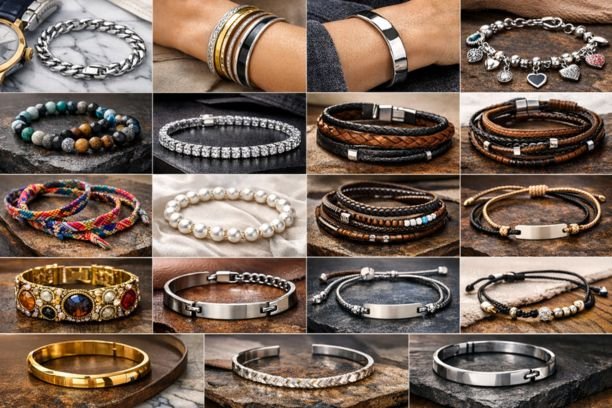
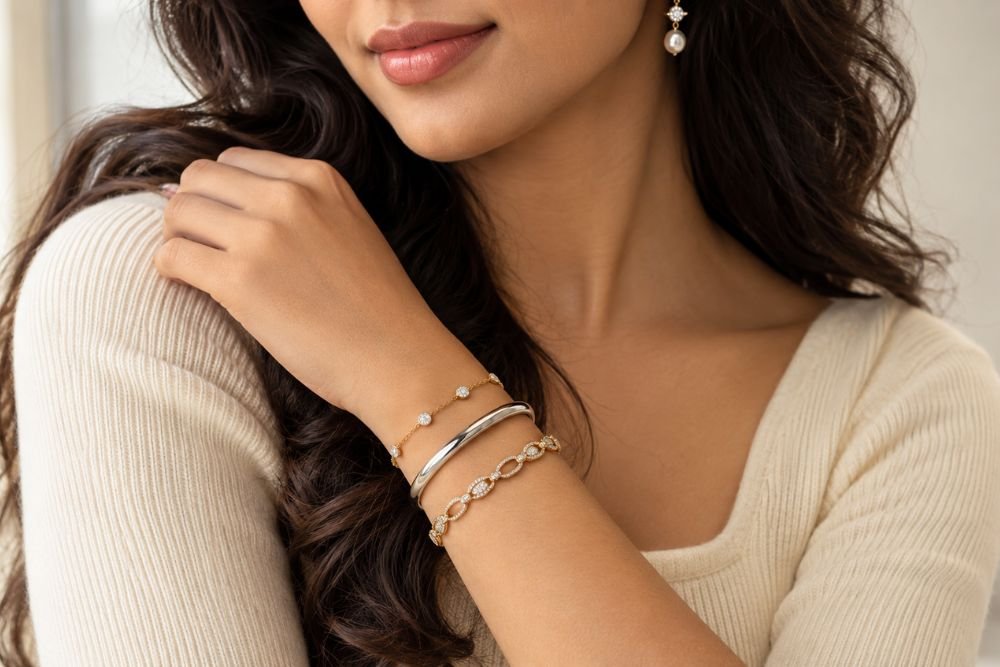
Knowing how to stack bracelets is all about combining different jewelry pieces in a way that feels balanced, comfortable, and true to your personal style. Start with one bracelet that stands out, add complementary pieces with different textures or widths, and bring everything together through color, proportion, and thoughtful layering.
Whether you prefer delicate gold chains, chunky bangles, colorful beads, or classic tennis bracelets, the right combination can make even a simple outfit feel more polished. The secret is to create a bracelet stack that looks intentional without feeling overcrowded.
If you’re new to bracelet stacking, these nine easy styling tips will help you build attractive combinations, mix different jewelry styles, and find looks that work for everyday outfits as well as special occasions.
Fast Answer: How Do You Stack Bracelets?
To create a stylish bracelet stack, choose one focal piece and layer two to four complementary bracelets around it. Combine different widths and textures, coordinate or intentionally mix metal finishes, and make sure every piece fits comfortably. Adjust the number of bracelets according to their size, weight, and the look you want.
1. Start With a Statement Bracelet
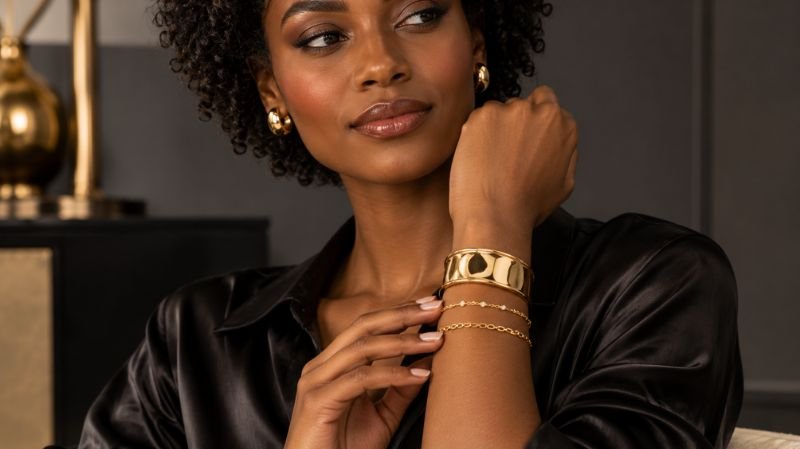
Every well-balanced bracelet stack benefits from a focal point. This is the piece that catches the eye first and gives the other bracelets a clear styling direction.
Your statement bracelet could be a chunky chain, a structured gold cuff, a gemstone bangle, or a sparkling tennis bracelet. Choose something with a noticeable design or texture that reflects the overall look you want to create.
For example, a wide gold cuff can give a collection of delicate chain bracelets a more defined appearance. Similarly, a bold silver link bracelet can anchor a stack of slimmer metallic bangles.
How to build around your statement piece:
- Choose one bracelet with a noticeable shape, width, or detail.
- Add slimmer bracelets that complement rather than compete with it.
- Keep the remaining pieces relatively simple if your focal bracelet is heavily decorated.
- Experiment with placement until the stack feels balanced.
Your anchor doesn’t always have to be the largest bracelet. A sentimental charm bracelet or an interesting vintage piece can also become the centerpiece.
The goal is to give your stack a visual starting point rather than allowing every bracelet to compete for attention.
2. Choose the Right Number of Bracelets
One of the most common questions about bracelet stacking is how many pieces to wear at once.
There isn’t a fixed number that works for everyone. Three bracelets are a convenient starting point because they allow you to combine a focal piece with two complementary layers. However, two delicate bracelets can look just as intentional, while several substantial bangles may create a complete look without needing additional pieces.
Consider these combinations when experimenting with different bracelet stacking ideas:
| Bracelet combination | Overall appearance | Best suited for |
| 2 bracelets | Simple and understated | Minimalist outfits |
| 3 bracelets | Balanced and coordinated | Everyday styling |
| 4–5 bracelets | Fuller and more layered | Casual and statement looks |
| 6 or more | Bold and expressive | Maximalist styling |
These are starting points, not fashion rules. A wide cuff takes up considerably more visual and physical space than a thin chain, so the combined size of your bracelets matters more than the total number.
Styling tip: Put on your focal bracelet first, then add one piece at a time. Stop when the stack feels visually complete and still allows your wrist to move naturally.
3. Mix Gold, Silver, and Rose Gold Bracelets

You don’t have to choose just one metal finish when creating a bracelet stack. Combining gold, silver, and rose gold can add contrast and make your jewelry look more individual.
Mixed-metal styling works particularly well when the bracelets share another visual element, such as a similar shape, link pattern, finish, or decorative detail.
For instance, a yellow-gold chain bracelet can look interesting beside a polished silver bangle, especially when a two-tone bracelet connects the two finishes.
How to Mix Gold and Silver Bracelets
If you’re unsure how to combine different metals, begin with two pieces rather than introducing every finish at once.
Try these combinations:
- Gold and silver: Pair a delicate gold chain with a smooth silver bangle for a clean contrast.
- Gold and rose gold: Combine warm metallic tones with similar finishes for a softer, coordinated appearance.
- Silver and rose gold: Use a rose-gold accent to bring warmth to a predominantly silver stack.
- Three-metal combination: Include a two-tone bracelet or another repeated design detail to visually connect all three finishes.
You can also let one metal dominate while using another as an accent. For example, three gold bracelets with one silver piece create a different effect from an evenly mixed stack.
Neither approach is automatically better. The important thing is that the combination looks deliberate.
4. Combine Different Bracelet Widths and Shapes
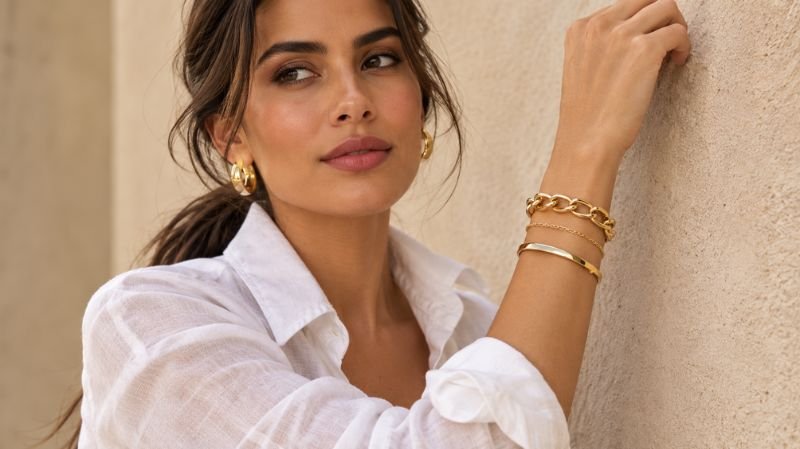
A bracelet stack can look repetitive when every piece has approximately the same width and structure. Introducing different proportions creates depth and helps individual bracelets stand out.
The easiest approach is to combine one substantial piece with two or three slimmer designs.
Pair Chunky Bracelets With Delicate Chains
A chunky cuff alongside a thin chain bracelet creates an appealing contrast between structure and movement.
You can also try:
- A wide bangle with a delicate tennis bracelet.
- A chunky chain with a slim snake chain.
- A structured cuff with a narrow charm bracelet.
- A bold link bracelet with a simple metallic band.
The contrast should feel intentional rather than random.
For example, if your statement piece has thick links, a fine chain with a similar metallic finish can complement it without making the entire wrist look heavy.
Experiment With Different Shapes
Bracelet shapes influence how a stack sits on your wrist.
Bangles are rigid and retain their circular shape, while chain bracelets are flexible and move with your wrist. Cuffs have an open structure, making them visually distinct from closed bangles.
Combining these forms can create a more interesting arrangement. However, consider how much the pieces move against one another before wearing them together throughout the day.
5. Experiment With Different Textures and Materials

Texture is one of the easiest ways to make bracelet stacking more interesting without relying on bold colors or oversized jewelry.
A combination of smooth, polished, woven, and textured surfaces creates contrast even when every bracelet belongs to the same color family.
Mix Beaded, Leather, Chain, and Metal Bracelets
Different materials can give your stack a distinct personality.
Consider these combinations:
- Metal and beads: Pair a polished gold bangle with neutral or colorful beaded bracelets for a relaxed look.
- Leather and chains: Combine a slim leather band with a delicate metallic chain for an understated casual style.
- Pearls and metal: Wear a pearl bracelet alongside a simple gold or silver chain for a softer, elegant combination.
- Gemstones and bangles: Introduce a gemstone bracelet between simpler metallic pieces to add color without overwhelming the stack.
You don’t need to combine several different materials every time. Two contrasting textures can be enough to create visual interest.
Pay Attention to Material Compatibility
An attractive combination should also protect the jewelry itself.
Harder metal edges and gemstones can scratch softer materials when bracelets repeatedly rub against each other. Pearls, in particular, require extra care because their surface is relatively soft.
The Gemological Institute of America (GIA) identifies pearls as approximately 2.5 on the Mohs hardness scale and recommends protecting them from scratches, chemicals, and abrasive contact.
If you’re wearing pearls or delicate gemstones, avoid placing them directly against rough-edged metal or harder stones. Give them their own space or separate them with a smoother bracelet.
This is a particularly important consideration when creating a stack for frequent, everyday wear.
6. Coordinate Your Bracelet Stack With Your Outfit

A bracelet stack should complement your clothing rather than compete with it. Think about your outfit’s colors, fabric, neckline, sleeve length, and overall aesthetic before choosing your jewelry.
You don’t need to match every bracelet to your clothing. Instead, use your stack to introduce a complementary detail or create a subtle contrast.
Minimalist Bracelet Stacks for Everyday Outfits
For everyday styling, delicate chains, slim bangles, and understated metallic bracelets are easy to wear.
Try pairing two or three fine gold bracelets with a white shirt, jeans, and a neutral handbag. The jewelry adds detail without distracting from the outfit.
Silver chains and simple bangles also work well with denim, monochromatic clothing, and casual knitwear.
Elegant Bracelet Stacks for Dresses and Formal Outfits
When wearing an evening dress or tailored outfit, consider a more refined combination.
A tennis bracelet paired with a slim bangle creates a polished look, while pearls and delicate chains can complement softer fabrics and understated silhouettes.
If your outfit already features heavy embellishment, keep the bracelet stack relatively simple.
Boho Bracelet Stacks for Casual Styling
For a relaxed, expressive look, combine colorful beads, woven bracelets, leather bands, and small charms.
These combinations work particularly well with flowing dresses, relaxed denim, printed tops, and casual summer outfits.
The trick is to maintain one connecting element, such as a shared color palette or repeated material, so the stack looks collected rather than random.
7. Style Bracelets With Your Watch

A watch can become the focal point of your bracelet stack, especially when its design has a distinctive case, strap, or metal finish.
The easiest way to achieve a balanced combination is to treat your watch as another piece of jewelry rather than styling it separately.
Choose Bracelets That Complement Your Watch
Consider the size and design of your watch before adding other pieces.
- Large watch: Pair it with one or two slim bracelets so the watch remains the main attraction.
- Minimalist watch: Add a delicate chain or a narrow bangle for extra detail.
- Metal bracelet watch: Coordinate the finish with similar metallic bracelets or introduce a contrasting metal intentionally.
- Leather-strap watch: Try a simple metal bracelet or a subtle beaded design for texture.
For example, a silver watch with a metal strap can look sophisticated beside a slim silver chain and a delicate gemstone bracelet.
Should You Wear Bracelets on the Same Wrist as Your Watch?
Yes. You can wear bracelets beside your watch or place your bracelet stack on the opposite wrist.
If you choose the same wrist, pay attention to how the pieces move. A bracelet with a heavy clasp or sharp decorative details may scratch the watch case or catch against its crown.
Avoid overcrowding the area around the watch, and make sure the additional bracelets don’t interfere with the strap or your ability to check the time.
For expensive watches, delicate finishes, or valuable bracelets, separate wrist placement may be the more practical option.
8. Find the Right Fit for Your Wrist
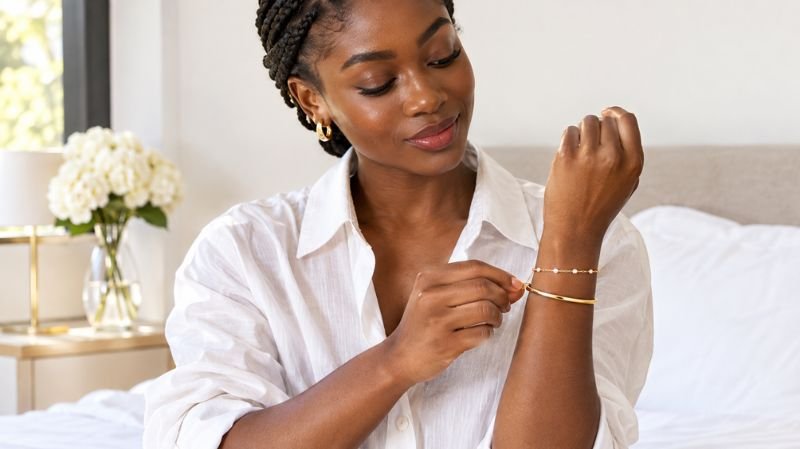
Even the most beautiful combination can feel uncomfortable if the bracelets are too tight, too loose, or constantly slipping over one another.
A good bracelet stack should allow natural wrist movement without pinching, pulling, or repeatedly catching on your clothing.
Choose Bracelet Sizes That Allow Comfortable Movement
Start by checking the fit of each bracelet individually before combining them.
For a flexible chain bracelet, you should have enough room for comfortable movement without the piece sliding excessively. Rigid bangles need enough clearance to pass over the hand while remaining comfortable once worn.
Jewelers of America provides general bracelet-sizing guidance of approximately 0.25 to 1 inch beyond wrist circumference, depending on the bracelet style and preferred fit. The appropriate amount of ease varies between chains, bangles, and cuffs.
When purchasing a new bracelet, check its specific sizing guidance rather than assuming every style should fit identically.
Adjust Your Stack to Your Wrist Proportions
If you have a smaller wrist, delicate chains, narrow bangles, and slim cuffs can create a balanced look without overwhelming your proportions.
For wider wrists, medium-width and chunkier bracelets can make a confident statement. However, neither wrist size requires a particular jewelry style.
Pay attention to how the bracelets sit together and whether they leave enough room for natural movement.
A useful fitting test: After putting on your stack, rotate your wrist, bend your hand, and move your fingers. If the bracelets pinch, pull, or slide into an uncomfortable position, remove a piece or adjust the fit.
9. Match Your Bracelet Stack to the Occasion

The same bracelets can create completely different impressions depending on how you combine and wear them.
Rather than building one stack for every outfit, create a few combinations that suit different parts of your lifestyle.
Casual Everyday Bracelet Stacks
For errands, coffee dates, and relaxed weekends, choose comfortable pieces that won’t interfere with everyday activities.
A simple combination might include:
- One slim gold chain bracelet.
- One small beaded bracelet.
- One understated bangle.
This combination adds personality without requiring an elaborate jewelry arrangement.
Elegant Bracelet Stacks for Work and Formal Events
For office outfits, dinners, and special occasions, focus on cleaner silhouettes and complementary finishes.
A delicate tennis bracelet paired with a smooth cuff or a fine chain can create a sophisticated effect. With tailored clothing, keep the overall arrangement polished and avoid pieces that make excessive noise or catch on sleeves.
Bold Bracelet Stacks for Weekend and Party Outfits
When the occasion allows more expressive styling, experiment with statement cuffs, chunky chains, colorful beads, and charm bracelets.
For example, a wide gold cuff, a slim chain bracelet, and a colorful gemstone piece can create an eye-catching combination.
You can also wear a fuller stack with a simple outfit to make the jewelry the main accessory.
The best approach is to consider the occasion, your clothing, and how much movement or activity your day involves.
Bracelet Stacking Ideas: 6 Combinations to Try

If you’re still deciding which pieces work well together, these bracelet stacking ideas offer an easy starting point. You can recreate them using jewelry you already own rather than purchasing an entirely new collection.
| Bracelet stack | What to combine | Style |
| Classic gold stack | Gold chain, slim bangle, gold cuff | Timeless and polished |
| Minimalist stack | Two delicate metallic bracelets | Understated |
| Mixed-metal stack | Gold chain, silver bangle, two-tone accent | Contemporary |
| Boho stack | Beaded bracelet, leather band, charm bracelet | Relaxed and expressive |
| Elegant stack | Tennis bracelet, pearl bracelet, slim bangle | Refined |
| Everyday watch stack | Metal watch, delicate chain, narrow bracelet | Practical and coordinated |
Try the three-piece formula: Choose one statement bracelet, one contrasting texture, and one simple finishing piece. This is an easy way to create a balanced stack without overthinking every combination.
Common Bracelet Stacking Mistakes to Avoid
Creating an attractive stack is not simply about wearing more jewelry. A few small adjustments can make a noticeable difference to both the appearance and comfort of your bracelets.
Wearing Too Many Statement Pieces
Several chunky bracelets competing for attention can make the stack feel visually crowded.
Choose one dominant piece and let the remaining bracelets provide contrast or support.
Mixing Too Many Colors Without a Connection
Combining different colors can look beautiful, but too many unrelated shades may make the arrangement feel disconnected.
Try repeating one color, metallic finish, or decorative detail throughout the stack.
Ignoring Bracelet Compatibility
Delicate chains can catch on charms, while hard edges and gemstones can scratch softer jewelry.
Check how the pieces interact before wearing them together for extended periods.
Choosing Style Over Comfort
Bracelets should not restrict your wrist movement or dig into your skin.
If the stack feels uncomfortable while typing, walking, or carrying a bag, simplify it. A smaller, comfortable combination is better than a larger stack that you constantly need to adjust.
Forgetting About Jewelry Care
Not every bracelet is suitable for showering, swimming, exercising, or sleeping.
Gold-plated finishes can wear with use, while pearls and some gemstones need more careful handling. Follow the manufacturer’s care instructions and remove delicate jewelry when exposure to chemicals, impact, or abrasion could damage it.
How to Care for Your Bracelet Stack
A little maintenance helps keep your favorite jewelry looking its best.
Start by removing your bracelets before activities that involve heavy movement, household cleaning, or exposure to chemicals.
After wearing them, wipe away perspiration and surface residue with a clean, soft cloth. Store delicate pieces separately to reduce scratching and tangling.
Pay particular attention to pearls and gemstone bracelets. GIA recommends keeping pearls away from perfumes, hairspray, cleaning agents, and sharp or rough objects. Pearls should also be stored in a soft pouch or case.
For metal jewelry, follow the care instructions for its specific material and finish. Gold-plated jewelry, sterling silver, and solid gold do not all have identical cleaning or maintenance requirements.
If a bracelet has loose stones, a damaged clasp, or a stretched chain, have it inspected before adding it back to your everyday stack.
Final Thoughts
Learning how to stack bracelets is less about following strict fashion rules and more about understanding how different pieces work together. A statement bracelet, contrasting textures, complementary metals, and the right fit can transform a simple combination into something that feels personal and well put together.
Start with the jewelry you already own. Experiment with delicate chains, chunky bangles, pearls, beads, and mixed metals until you discover combinations that suit your outfits and everyday routine.
Remember, a stylish stack doesn’t have to be elaborate. Sometimes two carefully chosen bracelets create a more beautiful look than a wrist full of competing accessories.
Looking for more ways to elevate your everyday outfits? Explore for more fashion inspiration, jewelry styling tips, and practical ideas to make your personal style your own.
Frequently Asked Questions
1. How many bracelets should you stack at once?
Three bracelets are a practical starting point for a balanced stack, but there is no fixed limit. Two delicate pieces can create an understated look, while four or five can produce a fuller appearance. Consider bracelet width, weight, comfort, and the occasion when deciding how many to wear.
2. Can you mix gold and silver bracelets?
Yes. Gold and silver bracelets can be worn together to create contrast and a more individual look. Start with one dominant finish and introduce the other through a contrasting bangle, chain, or two-tone bracelet. Repeating a shape or texture can help connect the different metals.
3. Which bracelets look best together?
Bracelets with contrasting widths and complementary textures often make attractive combinations. Try pairing a chunky cuff with a delicate chain, a pearl bracelet with a smooth bangle, or a beaded bracelet with a simple metallic design. The best combination depends on your outfit and personal style.
4. How do you stack bracelets without them tangling?
Avoid combining several loose, delicate chains with similar lengths and movement. Introduce a structured bangle or cuff between flexible bracelets to help separate them. Check the clasps, remove pieces with snagging details, and adjust the fit if the bracelets repeatedly twist around one another.
5. Can you wear bracelets on both wrists?
Absolutely. You can wear a small bracelet combination on one wrist and a fuller stack on the other, or create similar arrangements on both sides. If you prefer a balanced appearance, repeat a metal finish or color without making the two stacks identical.
6. Can you stack bracelets with a watch?
Yes. A watch can serve as the focal point of a bracelet stack. Pair a larger watch with one or two slimmer bracelets, or combine a minimalist watch with delicate chains and bangles. Make sure the additional jewelry does not rub against the watch case, strap, or clasp.
7. How do you make a bracelet stack look elegant?
Choose a limited color palette, combine different widths, and avoid using too many competing statement pieces. A tennis bracelet, a slim gold chain, and a smooth bangle can create an elegant combination. Keeping the arrangement comfortable and coordinated with your outfit also makes a difference.
8. Should all your bracelets be the same metal?
No. Matching metals can create a cohesive and classic appearance, but mixing gold, silver, and rose gold is also a stylish option. Use a repeated design detail, similar finish, or two-tone bracelet to bring the different pieces together.
9. Can you sleep with stacked bracelets?
It is generally better to remove your bracelets before sleeping. Chains, clasps, and decorative details can catch on bedding, while rigid bangles may press against your wrist. Removing jewelry overnight also reduces unnecessary friction and gives you an opportunity to inspect and store each piece properly.
10. How do you choose bracelets for a small wrist?
Start with slim chains, delicate bangles, and adjustable bracelets that sit comfortably without sliding excessively. You can still wear chunky statement pieces if you like them; just consider balancing one substantial bracelet with simpler layers. Personal comfort and proportion matter more than strict wrist-size rules.