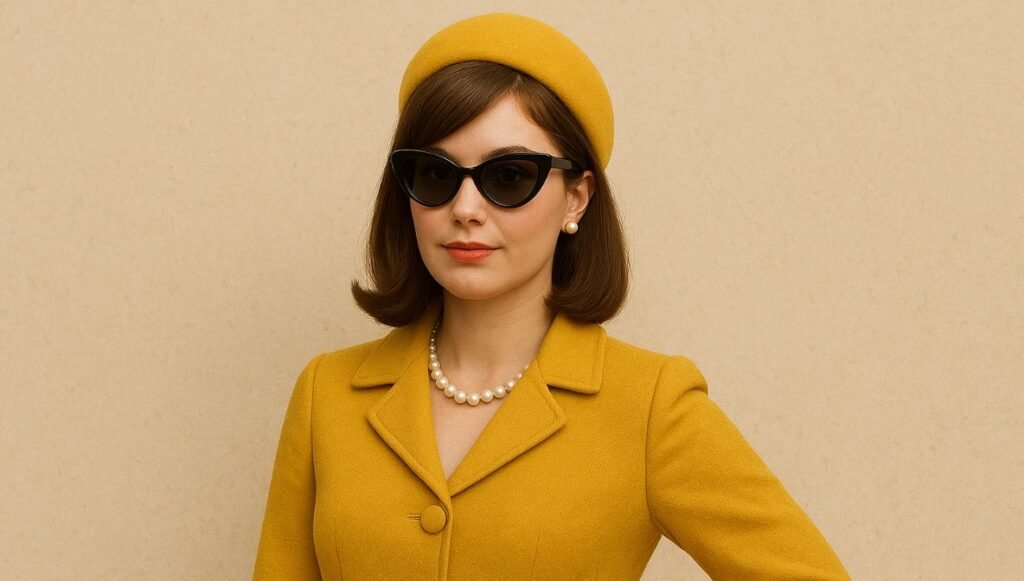
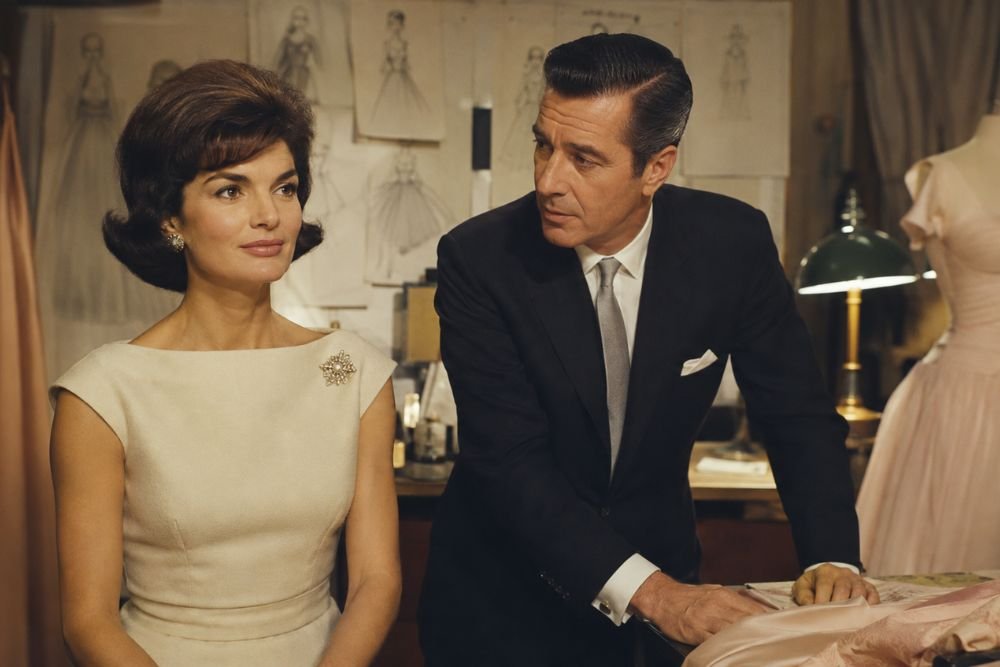
Oleg Cassini was the American fashion designer who helped shape Jacqueline Kennedy’s highly recognizable White House wardrobe, becoming closely associated with the “Jackie Look” of the early 1960s. During the Kennedy administration, Cassini produced more than 300 outfits for Jackie, ranging from tailored daywear and coats to evening gowns, while helping translate her sophisticated personal taste into a distinctly American public image.
Who Was Oleg Cassini to Jackie Kennedy?
| Question | Answer |
| Who was Jackie Kennedy’s designer? | Oleg Cassini was her principal fashion designer during the Kennedy White House years. |
| What was Cassini known for? | Clean, feminine silhouettes, geometric lines, sophisticated tailoring and luxurious fabrics. |
| How many outfits did he design? | More than 300 outfits during the approximately 1,000 days of the Kennedy administration. |
| What was his famous title? | He became known as Jackie Kennedy’s “Secretary of Style.” |
| What did he create? | Coats, dresses, suits, eveningwear and other wardrobe pieces that helped define the Jackie Look. |
| Did Jackie wear only Cassini? | No. She continued to wear French and other American designers, making the idea of Cassini as her only designer an oversimplification. |
Why Oleg Cassini Became So Important to Jackie Kennedy’s Style
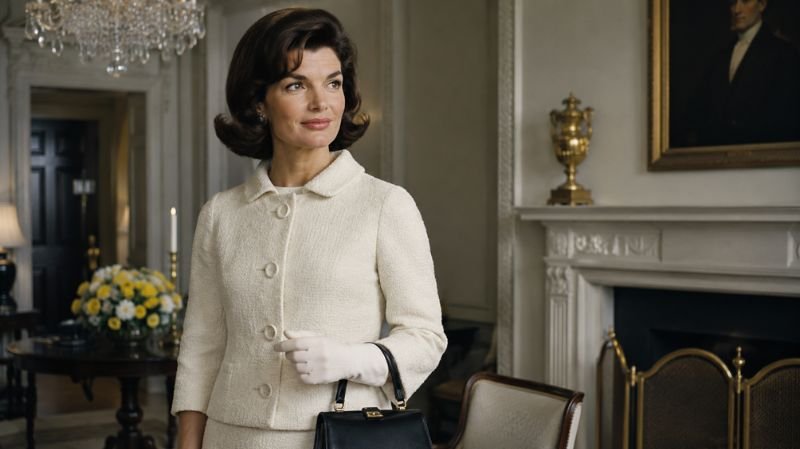
The story of Oleg Cassini and Jackie Kennedy is more complicated—and more interesting—than the simple idea of a designer creating clothes for a celebrity.
Jackie already possessed a highly developed fashion sensibility before Cassini became her principal designer. She loved French couture, understood proportion and color, and was closely interested in the construction and presentation of her clothes. Evidence from her surviving correspondence shows that she could specify fabrics, colors, sleeve construction and styling details herself.
Cassini’s particular contribution was to turn those preferences into a coherent wardrobe for one of the most photographed women in the world.
That distinction matters.
The cassini fashion legacy is therefore not simply a collection of attractive 1960s dresses. It represents an early example of fashion functioning as an image strategy: clothing had to work in photographs, on television, at diplomatic events, at state dinners and against the architecture of the White House.
And Cassini’s Hollywood background made him unusually well prepared for that task.
Who Was Oleg Cassini?
From Paris and Florence to American Fashion
Oleg Cassini was born in Paris in 1913 into a family with Russian aristocratic and Italian connections. He studied design in Florence before moving to the United States in 1936. His career subsequently crossed several areas of fashion, including Hollywood costume design and New York ready-to-wear.
The designer eventually established Oleg Cassini Inc. in New York in 1950. The CFDA describes his aesthetic as clean but feminine, a combination that became especially significant once he began dressing Jackie Kennedy.
His Hollywood Experience Shaped His Approach
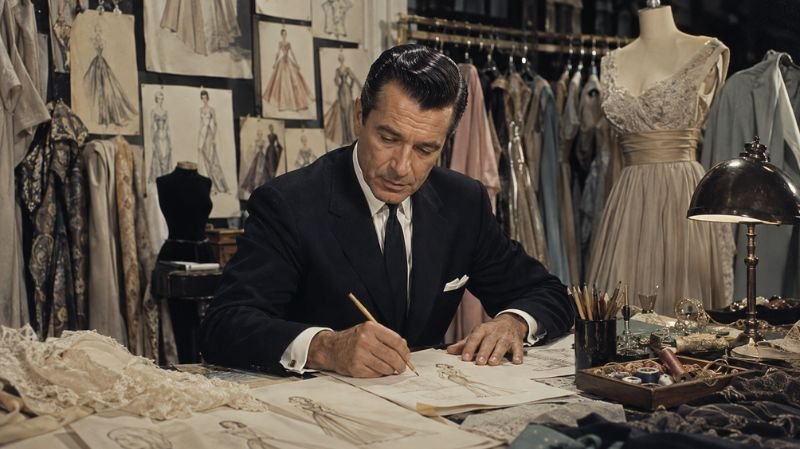
Before the White House, Cassini had experience designing for film. That background gave him an understanding of something increasingly important in the television age: clothing had to communicate instantly.
A First Lady did not simply enter a room.
She was photographed entering it, filmed walking through it and reproduced in newspapers and magazines around the world.
That made silhouette, color, scale and visual recognition particularly important.
The CFDA specifically notes that Cassini’s film background suited him to dressing Jackie because he understood how to dress a woman for cameras.
Cassini Was More Than a Dressmaker
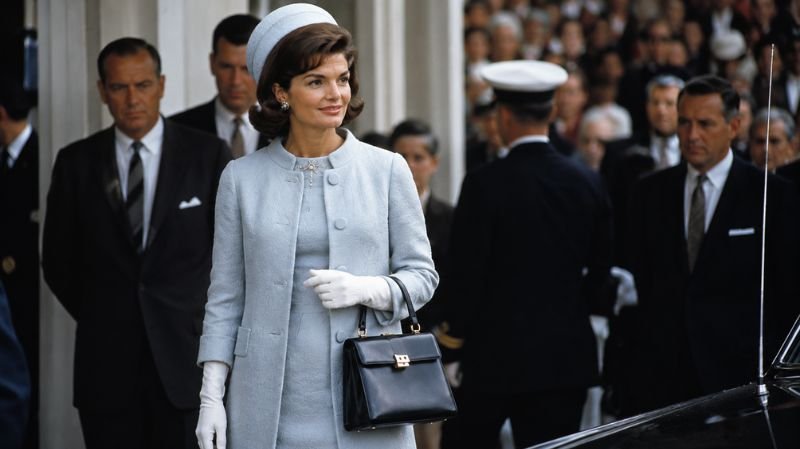
The phrase “cassini fashion designer” can make his role sound narrower than it actually was.
Cassini worked within a much larger system of fashion image-making. His work for Jackie included dresses, coats, evening gowns and suits, but his influence extended into the coordination of accessories and the overall visual consistency of her wardrobe. Cassini’s own book describes a role encompassing shoes, hats, gloves and handbags as well as clothing.
That holistic approach helped transform individual garments into a recognizable style identity.
How Oleg Cassini Became Jackie Kennedy’s Designer
Jackie Wanted American Fashion With a Sophisticated European Sensibility
Jackie Kennedy’s love of French fashion was well established. She had studied French literature at George Washington University and admired the sophistication of Parisian couture.
But becoming First Lady introduced a political dimension to her wardrobe.
She was representing the United States, and her expensive French wardrobe had already attracted public criticism. Contemporary and later accounts describe the pressure for her to showcase American designers.
Cassini offered a solution.
He could produce clothing in America while drawing on the refinement and construction techniques associated with European couture.
That combination became one of the defining characteristics of Oleg Cassini fashion.
The “Secretary of Style” Was an Image-Making Role
Cassini became associated with the title “Secretary of Style.” Cornell’s Fashion + Textile Collection records that Jackie Kennedy named him to this role and that he designed more than 300 custom outfits for her over the three years of the Kennedy administration.
But the title should not be interpreted as an official government position.
It was a fashion designation that captured the importance of his work in constructing Jackie’s public appearance.
Jackie Was an Active Participant
One of the biggest weaknesses in simplified accounts of the partnership is the assumption that Cassini simply handed Jackie finished dresses.
The surviving evidence tells a different story.
Jackie communicated detailed preferences about fabrics, colors and construction. In one surviving note discussed by University Archives, she specified that a white suit should have a particularly tight set-in sleeve and suggested a black sleeveless blouse to accompany it.
This makes the partnership better understood as designer plus highly involved client, rather than designer plus passive wearer.
That is one of the most important distinctions in understanding the Jackie Look.
What Was the “Jackie Look”?
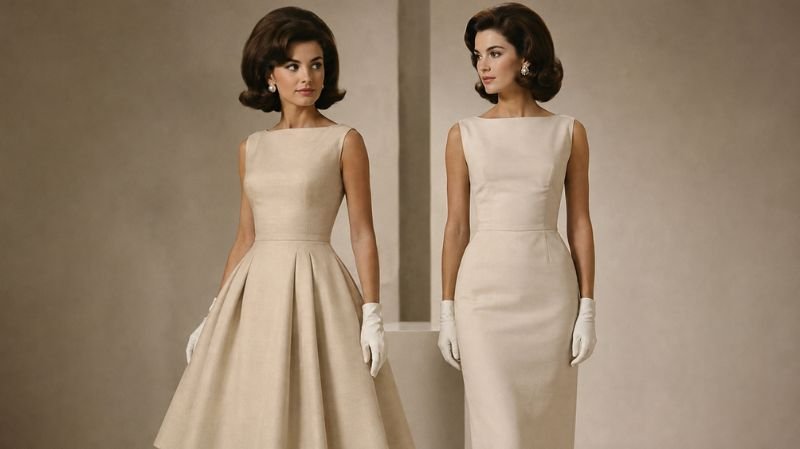
The Jackie Look was not one dress.
It was a repeatable visual language.
A-Line and Streamlined Silhouettes
Cassini became strongly associated with A-line shapes, sheath dresses and clean geometric construction.
These silhouettes had several advantages:
- They looked polished without appearing excessively complicated.
- They photographed clearly.
- They allowed strong colors to become part of the design.
- They created a youthful but sophisticated proportion.
- They could be adapted for daytime, diplomatic appearances and evening events.
The CFDA specifically identifies A-lines, sheath dresses and clean geometric lines among the defining characteristics of Cassini’s work for Jackie.
Structured Coats Were as Important as Dresses
The Jackie Look was not built around dresses alone.
Coats were crucial because they were often the first garment seen when Jackie arrived at a public event.
Cassini used:
- controlled shoulders,
- clean fronts,
- sculptural collars,
- matching accessories,
- strong buttons and pockets,
- carefully controlled proportions.
The result was a wardrobe that remained recognizable even when the underlying dress was hidden.
Color Became a Signature
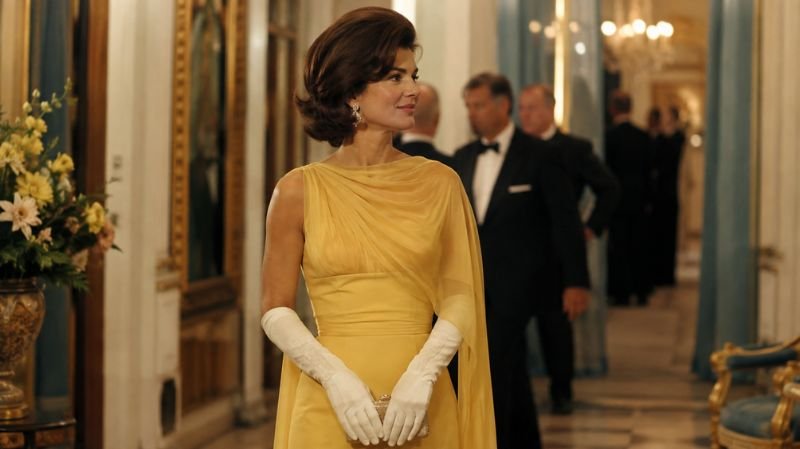
Jackie understood that color could create instant visual recognition.
Rather than relying exclusively on black and neutral shades, her wardrobe included striking pinks, yellows, whites and other saturated or carefully softened colors.
The Smithsonian’s National Museum of American History, for example, documents a yellow silk evening gown with crepe-chiffon overlay designed by Cassini for the Kennedy administration’s first state dinner in 1961.
Accessories Completed the Architecture
Pillbox hats, gloves, handbags, shoes and jewelry were not afterthoughts.
They created continuity.
A matching hat and coat could turn an otherwise simple silhouette into a highly recognizable public image. Likewise, gloves could extend the visual line of an evening dress, while carefully selected jewelry could provide contrast without overwhelming the clothing.
This is one reason it is more useful to discuss Jackie Kennedy’s styling system rather than simply listing her dresses.
Oleg Cassini’s Most Important Designs for Jackie Kennedy
The 1961 Inauguration Wardrobe
Cassini’s association with Jackie is inseparable from the inauguration.
The National Museum of American History records that Cassini designed clothing for Jackie during the Kennedy administration, while Cornell identifies her 1961 inaugural gown as one of his celebrated designs.
The broader inauguration story, however, contains an important nuance that many articles miss.
Contemporary reporting in The New Yorker stated that Bergdorf Goodman was making the inaugural gown from sketches Jackie herself had drawn.
That is a useful reminder that attribution around Jackie’s wardrobe can be complicated.
Not every famous garment associated with the Kennedy inauguration should automatically be attributed to Cassini.
The Inaugural Ball Gown
The evening wardrobe presented a very different visual message from the daytime inauguration.
The Smithsonian identifies a yellow silk Cassini gown among its First Ladies collection, while the JFK Presidential Library’s holdings contain numerous Cassini garments worn by Jackie during the administration.
The contrast illustrates Cassini’s range: the Jackie Look could move from restrained daytime tailoring to elaborate evening glamour without losing its underlying elegance.
The 1961 State Dinner Dress
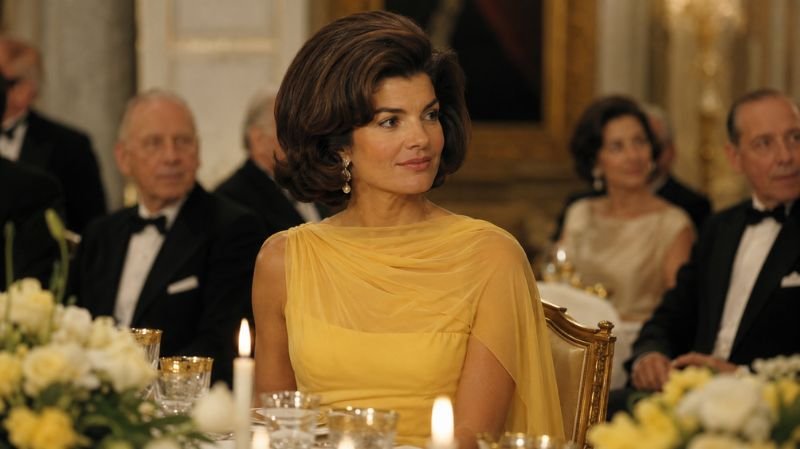
One particularly well-documented Cassini garment is the yellow silk evening gown Jackie wore for the Kennedy administration’s first state dinner, honoring Tunisian President Habib Bourguiba and First Lady Clorinda Málaga de Prado.
The Smithsonian describes it as a yellow silk evening gown with a crepe-chiffon overlay.
This is an important example because it demonstrates how color and fabric could carry diplomatic as well as aesthetic weight.
The Ivory Evening Gown
The John F. Kennedy Presidential Library and Museum documents an ivory duchesse-silk-satin evening gown designed by Cassini in 1962. Jackie wore it at a fundraiser marking the first anniversary of Kennedy’s inauguration and later in New Delhi.
That record provides something many fashion articles lack: an institutional object record connecting a specific garment, designer, material, date and location.
The Leopard Coat
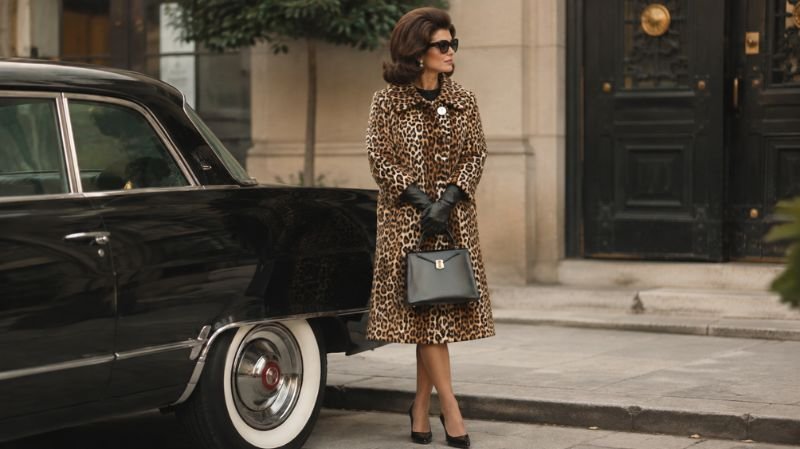
The leopard coat is one of Cassini’s most consequential designs—and not simply because it looked glamorous.
Jackie wore a leopard coat during her 1962 travels, and the garment helped ignite a major demand for spotted-animal coats. The fashion historian and designer’s later regret over the environmental consequences has become part of Cassini’s legacy.
The episode is a useful reminder that fashion influence has consequences beyond aesthetics.
Cassini later became an advocate of faux fur and, according to the CFDA, introduced microfiber fake fur in 1999.
Did Oleg Cassini Design Everything Jackie Kennedy Wore?
No, this is one of the most important factual corrections to make when discussing Oleg Cassini Jackie Kennedy.
Cassini designed more than 300 outfits for Jackie during the Kennedy administration, but she also wore clothing by other American and European designers. Her relationship with French culture never disappeared.
Historical evidence shows that Jackie continued to look to French fashion for inspiration. Surviving notes even document her studying contemporary French designs as references for future Cassini creations.
The Smithsonian’s historical material also emphasizes that Jackie worked with Cassini while retaining her own fashion identity.
The Pillbox Hat Attribution Is Complicated
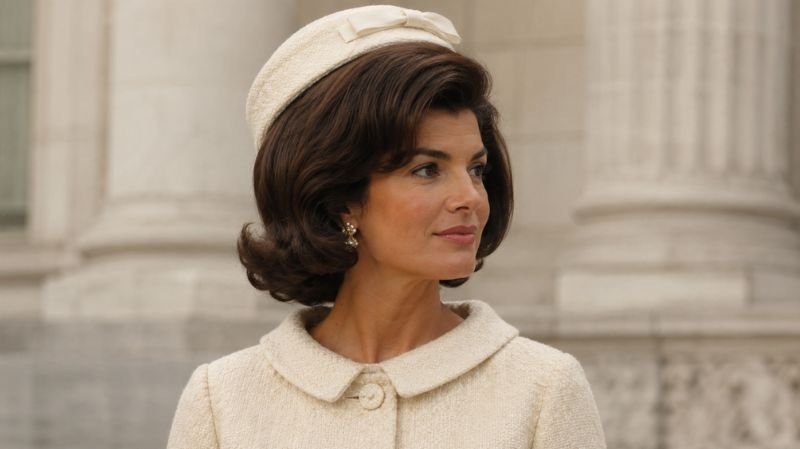
Cassini is frequently credited with the pillbox hat associated with Jackie.
But Cornell’s Fashion + Textile Collection provides a valuable qualification: Cassini claimed the pillbox as his design, while Jackie herself acknowledged that the hat was by Halston.
That makes the pillbox a good example of why responsible fashion history requires attribution rather than repetition.
A strong article should say Cassini is closely associated with Jackie’s pillbox-hat image, rather than presenting every pillbox she wore as definitively designed by him.
How Jackie Kennedy and Cassini Created a Distinctly American Style
The most interesting part of their partnership was the tension between American identity and European sophistication.
Jackie loved French fashion.
Cassini had European roots and a background in Hollywood.
Yet the clothes needed to communicate with an American First Lady.
That tension produced a style that felt international without being entirely Parisian.
The Formula Behind the Jackie Look
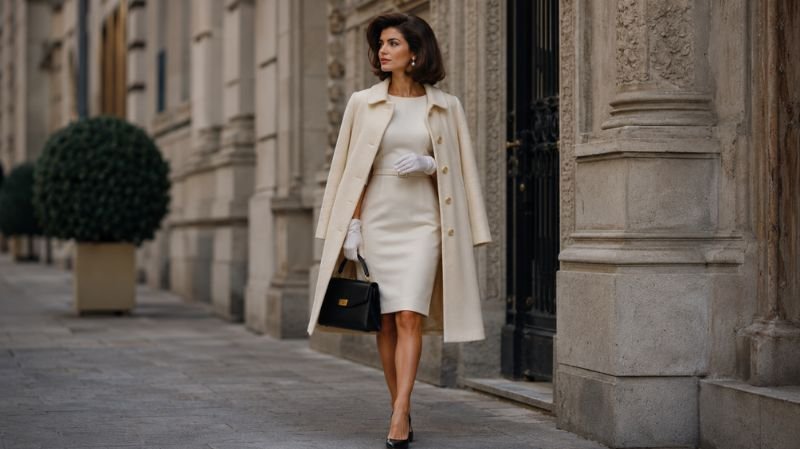
| Style element | Cassini/Jackie approach | Why it worked |
| Silhouette | A-line, sheath and streamlined shapes | Created instant visual clarity |
| Color | Strong, carefully selected colors | Made photographs memorable |
| Outerwear | Structured coats and tailored jackets | Created a polished arrival image |
| Accessories | Coordinated hats, gloves and bags | Added visual consistency |
| Fabric | Luxurious couture-quality materials | Added richness without excessive ornament |
| Proportion | Controlled, clean lines | Kept the look youthful and sophisticated |
| Styling | Repetition of recognizable elements | Built a coherent personal brand |
The result was not minimalism in the modern sense.
It was controlled luxury.
That distinction explains why Jackie’s clothes could appear simple while still looking expensive.
Why Cassini’s Hollywood Background Mattered
Cassini understood celebrity before the Kennedy White House turned Jackie into a global fashion celebrity.
Film costumes are designed for an audience viewing clothing through a frame. The proportions have to read from a distance. Colors have to work under lighting. Details need to survive photography.
Jackie’s public appearances created a similar challenge.
A coat photographed from across a Washington street needed a strong silhouette.
A state-dinner gown needed to look sophisticated under artificial light.
A television appearance required colors and shapes that translated well to the screen.
This is where designer Cassini had an advantage: he understood that clothing could function as visual storytelling.
Fashion Became Part of Jackie Kennedy’s Political Image
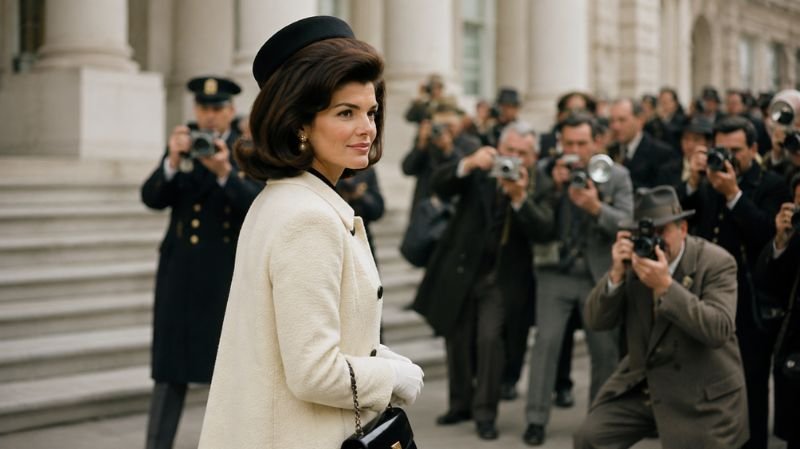
Jackie was not a politician, but her clothing became part of the Kennedy administration’s visual identity.
The Smithsonian notes that copies of garments associated with Jackie and Cassini were sold throughout America, sometimes displayed on mannequins designed to resemble the First Lady.
That is a significant development.
The clothes did not merely make Jackie fashionable.
They made her commercially influential.
Her silhouette could be copied. Her accessories could be reproduced. Her colors could become retail trends.
Fashion therefore became an extension of celebrity, mass media and political image-making.
Jackie Kennedy, Oleg Cassini and the Power of Television
The early 1960s represented a crucial moment in American media.
Television was becoming increasingly central to political communication, while photography and magazines could distribute a public figure’s image at enormous speed.
Jackie’s clothing benefited from this environment.
Her outfits were recognizable even when the audience did not know the designer.
That is the mark of successful fashion branding: the visual code becomes more memorable than the label.
In this sense, Cassini’s greatest achievement may not have been any single dress.
It was helping develop a wardrobe that made Jackie instantly identifiable.
Practical Style Lessons From the Jackie Look
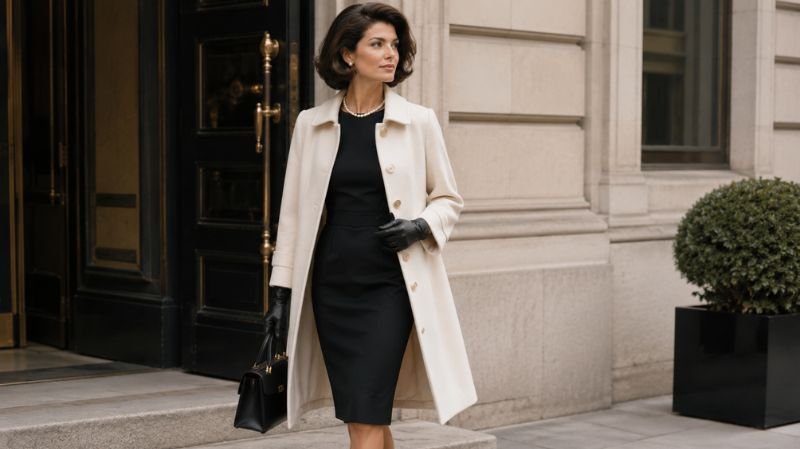
The original wardrobe may belong to the 1960s, but its design principles remain surprisingly useful.
1. Start With One Strong Silhouette
Instead of combining multiple statement pieces, choose one clear shape.
Try:
- an A-line dress with simple pumps,
- a structured coat over a slim dress,
- or a tailored jacket with a clean skirt.
The silhouette should do most of the visual work.
2. Use Color Deliberately
Jackie’s wardrobe demonstrates that bright color does not have to look excessive.
For a contemporary interpretation, choose one dominant color and keep accessories restrained.
For example:
Cream coat + black dress + black pumps + structured handbag
or
Soft yellow dress + neutral shoes + minimal jewelry
The objective is controlled contrast rather than maximum color.
3. Match Accessories Without Making the Outfit Look Costume-Like
A modern interpretation does not require a perfectly matching hat, gloves and handbag.
Instead, repeat one visual element.
If the coat has black buttons, echo black in the shoes or handbag.
If the dress is ivory, use warm metallic jewelry rather than adding several competing colors.
4. Choose Structure Over Decoration
The Jackie Look often gained its impact from construction rather than embellishment.
Look for:
- defined shoulders,
- clean collars,
- precise seams,
- structured handbags,
- polished shoes,
- simple necklines.
This creates sophistication without excessive ornament.
5. Adapt the Principle, Not the Costume
Wearing a literal 1960s replica can easily become theatrical.
A better approach is to borrow the design logic.
Take the silhouette, proportion, restraint and color discipline and translate them into contemporary clothing.
That creates a Jackie-inspired look rather than a costume.
Oleg Cassini’s Fashion Legacy After Jackie Kennedy
Cassini’s career did not end with the Kennedy White House.
After Kennedy’s death, he expanded into ready-to-wear, sportswear, menswear, perfume and licensing. Cornell’s Fashion + Textile Collection describes his later use of synthetic fabrics such as polyester and acrylic and documents the breadth of his collections.
His approach to licensing was particularly significant.
He understood that a designer’s name could itself become a commercial asset.
That model eventually became common across the fashion industry.
His career therefore has two distinct legacies:
- The cultural legacy: helping define Jackie Kennedy’s iconic image.
- The business legacy: expanding the designer name into a broad consumer brand.
Both are essential to understanding Cassini fashion designer Oleg Cassini.
What Made Oleg Cassini Different From Other Designers of the Era?
Cassini’s importance came from the combination of several skills.
He understood:
- American mass-market fashion,
- European couture aesthetics,
- Hollywood image-making,
- celebrity culture,
- photography,
- branding,
- and the commercial power of a recognizable silhouette.
That combination made him unusually suited to the Kennedy era.
He was not simply designing clothes for a wealthy woman.
He was helping create a visual identity for a First Lady whose image was being distributed internationally.
Oleg Cassini & Jackie Kennedy: Key Facts
| Detail | Verified information |
| Designer | Oleg Cassini |
| Born | 1913, Paris |
| Moved to the U.S. | 1936 |
| New York label | Oleg Cassini Inc., established in 1950 |
| Jackie’s role | Principal/exclusive designer during the Kennedy White House years |
| Known title | “Secretary of Style” |
| Design output | More than 300 outfits during the Kennedy administration |
| Signature characteristics | A-lines, sheath silhouettes, geometric lines, bold colors and luxurious fabrics |
| Museum documentation | Cassini garments are held by the Smithsonian and JFK Presidential Library |
| Career length | More than seven decades |
| Died | March 17, 2006 |
The CFDA, Cornell Fashion + Textile Collection and John F. Kennedy Presidential Library provides particularly strong institutional evidence for these biographical and wardrobe details.
Final Takeaway
Oleg Cassini’s importance to Jackie Kennedy’s fashion legacy lies in the fact that he helped turn clothing into a coherent visual identity.
Jackie brought the taste, discipline and understanding of her own image. Cassini brought design expertise, couture technique, Hollywood experience and an instinct for how clothing would perform in public.
Together, they created a wardrobe that was recognizable without being repetitive, luxurious without always appearing excessive, and sophisticated enough for diplomacy while remaining accessible enough to influence mass fashion.
That is why the story of Oleg Cassini & Jackie Kennedy still matters.
The most useful lesson for modern fashion is not to copy a 1960s pillbox hat or recreate a vintage coat exactly. It is to understand the principle behind the Jackie Look: choose a strong silhouette, control the proportions, use color intentionally and make every accessory support the overall image.
For anyone studying cassini fashion, Jackie Kennedy or the history of American style, that collaboration remains one of the clearest examples of how a designer and a highly intentional client can create an enduring fashion identity.
Want more fashion-history stories and practical style guides? Explore Stylingmania for deeper guides to iconic designers, influential style movements, and ways to translate fashion history into modern looks.
Frequently Asked Questions
Was Oleg Cassini Jackie Kennedy’s personal designer?
He became her principal fashion designer during the Kennedy White House years and was widely known as her “Secretary of Style.” He designed more than 300 outfits for her during the administration.
How many outfits did Oleg Cassini design for Jackie Kennedy?
Cassini is documented as having designed more than 300 outfits for Jackie during the approximately 1,000 days of the Kennedy administration.
Did Jackie Kennedy wear only Oleg Cassini?
No. Jackie also wore French couture and designs from other American designers. Her fashion relationship with Cassini was extensive but should not be interpreted as exclusive ownership of her entire wardrobe.
What was Oleg Cassini’s “Secretary of Style” role?
It was an informal fashion title describing Cassini’s role in helping shape Jackie’s wardrobe and public image. It was not an official U.S. government position. Cornell identifies Jackie as naming him “Secretary of Style.”
What made Jackie Look so distinctive?
Its defining characteristics included streamlined silhouettes, A-line and sheath shapes, bold but controlled color, structured coats, elegant accessories and luxurious fabrics.
Did Cassini design Jackie Kennedy’s pillbox hat?
Cassini claimed the pillbox hat as part of his work for Jackie, but the attribution is disputed. Cornell’s fashion collection notes that Jackie herself acknowledged Halston as the designer of the pillbox.
Did Oleg Cassini design Jackie Kennedy’s inaugural outfit?
Cassini designed important clothing for the inauguration period, but attribution should be handled carefully. Contemporary reporting documented that Jackie herself sketched the inaugural gown that was made by Bergdorf Goodman, while other Cassini garments became strongly associated with her inauguration wardrobe.
What was one of Cassini’s best-documented Jackie Kennedy dresses?
The Smithsonian documents a yellow silk evening gown with a crepe-chiffon overlay that Jackie wore for the Kennedy administration’s first state dinner in 1961.
Why is Oleg Cassini important to fashion history?
His importance extends beyond Jackie. Cassini connected Hollywood costume experience, American ready-to-wear, celebrity branding and political image-making, while his later licensing strategy helped expand the commercial possibilities of a designer name.
Did Oleg Cassini influence fashion beyond Jackie Kennedy?
Yes. His later career included menswear, sportswear, perfume, licensing and synthetic-fabric experimentation. Cornell’s collection documents the breadth of these activities.