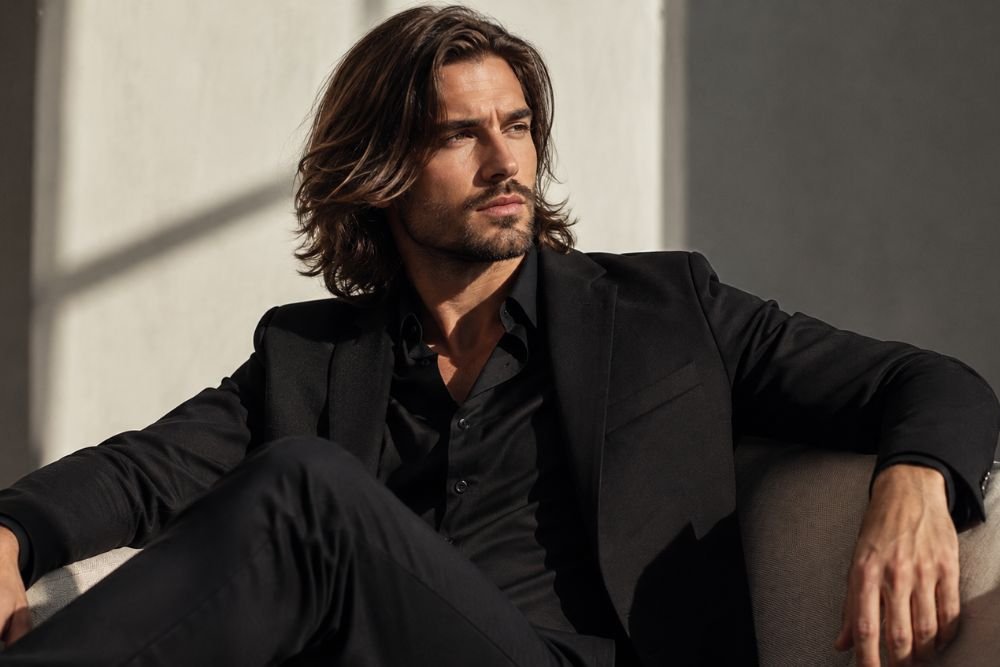
Layered haircuts for men use different lengths to create movement, shape, texture, and controlled volume rather than letting long hair fall as one heavy block. For men growing their hair out, the right layers can preserve length while reducing unwanted bulk, framing the face, and making everyday styling easier.
The best layered haircuts for men’s long hair include the long layered flow, shoulder-length layers, layered wolf cut, long shag, curtain layers, layered waves, layered curls, bro flow, long middle part, and long hair with a taper. Choose the layering pattern according to your hair density and texture: subtle, longer layers usually work best for fine hair, while thicker hair can handle more weight removal.
What Is a Layered Haircut for Men?
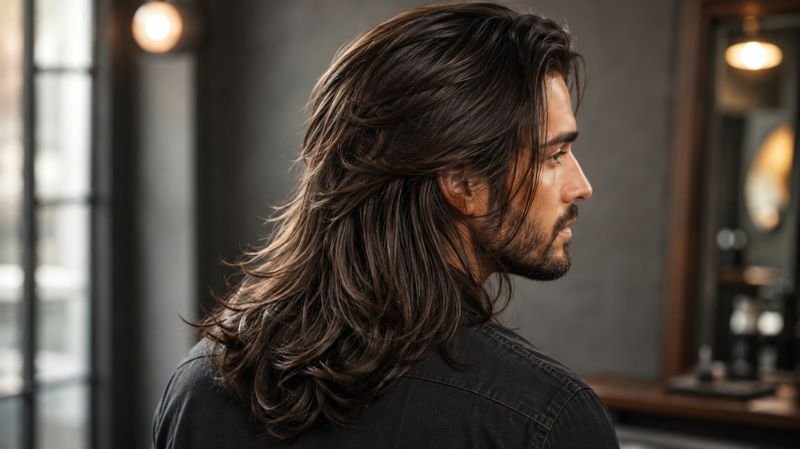
A layered haircut is a cutting technique in which different sections of hair are left at different lengths. Instead of removing length uniformly, a barber or stylist uses carefully positioned layers to redistribute weight and create movement.
For long hair, layering is particularly useful because it can make a substantial amount of hair feel lighter without turning it into a short haircut. The goal is not simply to create “short pieces”; it is to create a silhouette that works with the way your hair naturally falls.
Modern barbering education also distinguishes layering from texturizing. Layering changes the internal length structure of the haircut, while texturizing generally refines weight and detail at the ends. The two techniques can be combined, but they are not interchangeable.
Why Are Layered Haircuts So Popular for Men?
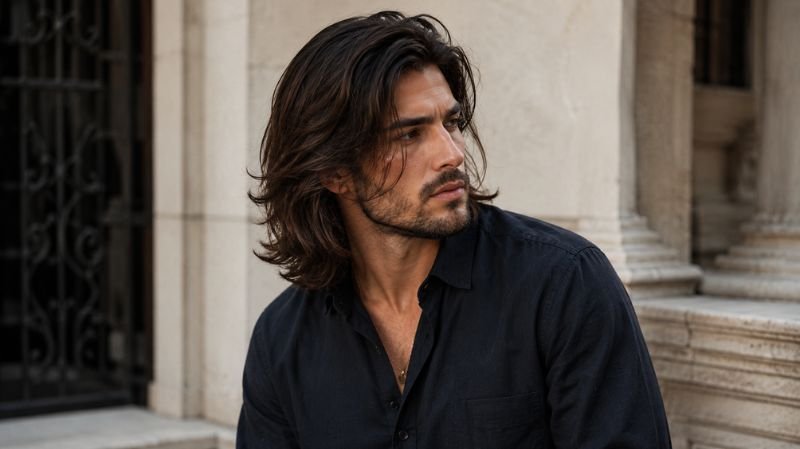
The strongest reason is versatility. A good layer pattern can make thick hair less bulky, give fine hair a more visible body, encourage waves and curls to form naturally, and prevent long straight hair from looking like a single heavy curtain.
Current search results also show that readers are no longer looking only for a gallery of hairstyle names. Leading guides increasingly explain who each style suits, what to tell the barber, how to style it, and how much maintenance it requires.
That is an important distinction: a good layered haircut should solve a hair problem, not just look good in a photograph.
What Does Layering Do to Men’s Hair?
Layering changes how weight is distributed through the haircut.
For dense hair, removing selected internal weight can help prevent the sides from expanding outward. For fine hair, conservative layers can create separation and movement without removing so much density that the ends appear sparse.
The result depends on where the layers begin, how aggressively they are cut, your hair texture, and the desired final length.
35 Best Layered Haircuts for Men
1. Long Layered Flow
The long layered flow is one of the most versatile choices for men who want to keep substantial length while giving the hair direction.
Longer layers sweep backward from the crown and blend toward the ears, shoulders, and neckline. The shape works particularly well with straight-to-wavy hair because natural movement does much of the styling.
Best for: Medium-thick to thick straight or wavy hair
Face shapes: Oval, square, oblong
Maintenance: Moderate
Ask your barber: “Keep my overall length, add long blended layers for movement, and avoid taking too much weight from the ends.”
For a polished finish, blow-dry backward with your fingers. Use a lightweight cream rather than a heavy wax if you want the hair to remain touchable.
2. Shoulder-Length Layered Hair
Shoulder-length layers strike a useful middle ground between short and very long hair.
The length gives you enough hair for a middle part, ponytail, flow, or loose styling, while the layers stop the silhouette from becoming excessively heavy.
This is one of the best men’s haircut styles for long hair when you want versatility without committing to hair that reaches well below the shoulders.
Best for: Straight, wavy, or moderately curly hair
Face shapes: Most face shapes
Maintenance: Moderate
Use a leave-in conditioner if the ends feel dry, then air-dry or blow-dry on low heat.
3. Long Layered Hair With a Middle Part
The middle part instantly changes the proportions of long hair.
Adding face-framing layers prevents the center part from looking too flat. The shortest face-framing pieces should be chosen according to your facial proportions rather than copied from a photograph.
For a softer finish, allow the front layers to curve away from the cheeks.
Best for: Straight and wavy hair
Best feature: Face framing
Styling difficulty: Easy to moderate
4. Layered Wolf Cut
The wolf cut combines a shag-inspired top with longer length toward the back.
Its appeal comes from contrast: shorter, more textured layers around the crown create lift while the back retains noticeable length.
It is one of the more fashion-forward layered long hairstyles for men, particularly for men who want movement rather than a polished silhouette.
Best for: Thick, wavy, or textured hair
Face shapes: Oval, heart, square
Maintenance: Moderate
The key is avoiding excessive thinning. Too much removal can make the ends look disconnected from the fuller crown.
5. Long Layered Shag
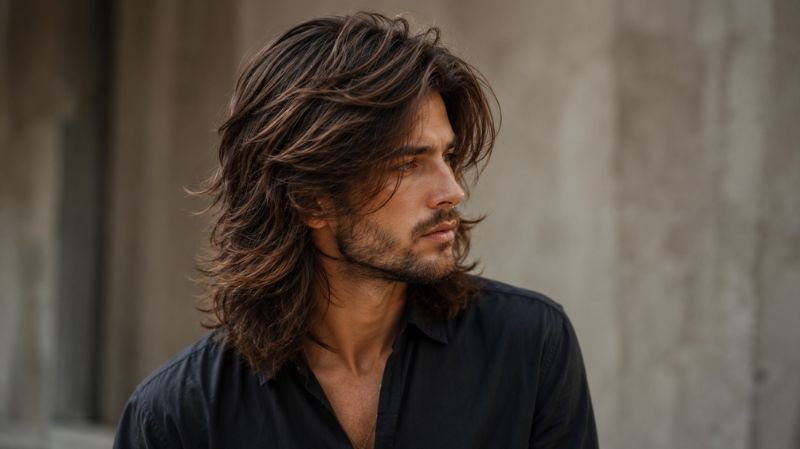
The modern shag is a natural choice if you want visible layers and a deliberately relaxed finish.
The style has deep roots in 1970s hair culture. The shag was characterized by progressively shorter layers toward the top and longer sections toward the bottom, creating movement and an intentionally undone silhouette.
Modern versions are generally softer and easier to wear than their most dramatic vintage counterparts.
Best for: Medium-thick, straight, or wavy hair
Look: Retro, relaxed, fashion-forward
Styling: Air-dry with texture cream or use a diffuser for waves
6. Layered Wavy Hair
Wavy hair and layering are natural partners.
Strategically placed layers give waves room to form instead of allowing the hair to collapse under its own weight. The goal is to enhance the existing wave pattern rather than force every section into a uniform shape.
Best for: Naturally wavy hair
Face shapes: Oval, square, round
Best finish: Natural texture
Apply styling cream to damp hair, scrunch gently, and let the hair dry without repeatedly touching it.
7. Long Layered Curly Hair
Curly hair often needs shape more than it needs additional styling products.
Long layers can prevent the curls from forming one dense triangular mass. However, curly hair should generally be layered according to its natural shrinkage and curl pattern.
A stylist who understands curls can account for how much shorter the hair will appear once dry.
Best for: Medium to tight curls
Key concern: Shrinkage and uneven curl distribution
Avoid asking for aggressive thinning simply because your hair feels thick. The wrong technique can disrupt the curl pattern and create unwanted frizz.
8. Long Layered Hair for Thick Hair
Thick hair can look impressive when it is long, but excessive density can also make the sides expand and the ends feel heavy.
A layered cut can remove selected weight while preserving the overall length.
This is where layered cut men often benefit most from a customized approach: the barber should identify where the density is creating problems before deciding how much weight to remove.
Best for: Dense straight, wavy, or curly hair
Goal: Weight control without sacrificing length
9. Long Layered Hair for Fine Hair
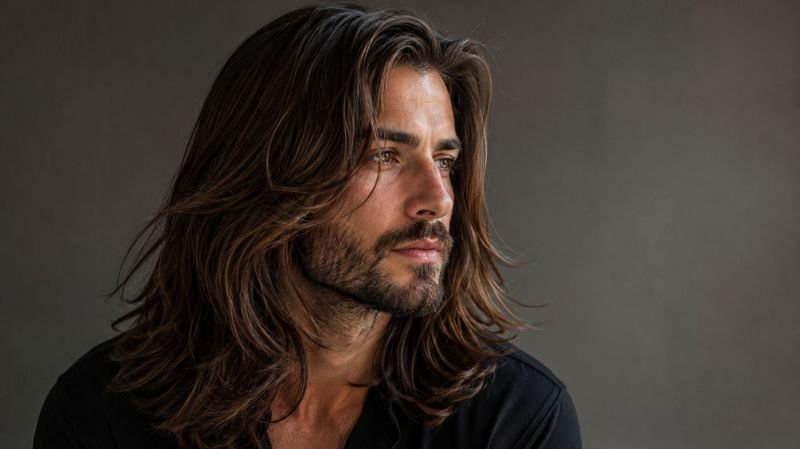
Fine hair requires a different strategy.
Heavy, aggressive layers can make the ends look thinner. Instead, longer, strategically placed layers can create movement while maintaining visual density.
For fine hair, volume usually comes from shape, styling direction, and controlled product use, not simply cutting more hair away.
Best for: Fine or low-density hair
Avoid: Excessive thinning and very short internal layers
10. Layered Bro Flow
The bro flow is essentially long hair designed to move backward naturally, often with subtle layers.
It works particularly well for men who do not want a sharply defined haircut but still want their long hair to look intentional.
Use a blow dryer on low or medium heat and guide the hair away from the face with your fingers.
11. Layered Curtain Hair
Curtain hair becomes more dimensional when the front is cut into graduated face-framing layers.
Instead of a straight curtain falling heavily over the forehead, the sections can separate naturally and curve toward the cheekbones.
Best for: Straight or wavy hair
Look: Soft, fashion-led, relaxed
A small amount of styling cream is usually enough. Heavy pomades can destroy the movement that makes this haircut work.
12. Long Layered Hair With Curtain Bangs
Curtain bangs provide a more obvious face-framing effect than a conventional middle part.
The front should gradually transition into the longer layers rather than looking like a separate fringe attached to the haircut.
This style is particularly useful if you want to change your appearance without dramatically reducing your overall length.
13. Long Layered Side Part
A side part adds asymmetry to long hair.
The longer top sections can sweep across the head while layers underneath prevent the style from becoming too heavy.
This is a useful option for men who want their long hair to look more polished at work but still retain enough length for casual styling.
Best for: Straight or slightly wavy hair
Finish: Refined and adaptable
14. Long Layered Side-Swept Fringe
A side-swept fringe can soften the forehead and add direction to long hair.
Longer layers should connect the fringe to the sides so the haircut feels continuous.
Blow-dry the front diagonally across the forehead, then use your fingers to separate the strands.
15. Layered Slick-Back Hair
Long slick-back hair does not need to be cut into one uniform length.
Long layers underneath can prevent the hair from becoming excessively dense while the surface remains long enough to comb backward.
For a modern interpretation, use a low-shine styling cream rather than a high-gloss product.
Best for: Straight or slightly wavy hair
Occasion: Formal, evening, professional
Maintenance: Moderate
16. Long Layered Hair With a Low Taper
If you want long hair without a completely full silhouette around the ears and neckline, a low taper can provide structure.
The important distinction is that the taper should complement the long layers rather than erase the haircut’s flow.
This works particularly well for men transitioning between shorter and longer hairstyles.
17. Long Hair With a Tapered Neckline
A clean neckline can make long hair look considerably more intentional.
Instead of fading large sections of the sides, the barber can maintain the length and simply clean the lower perimeter.
This is an excellent compromise if you want a natural long hairstyle but dislike an untidy neckline.
18. Long Layered Hair With an Undercut
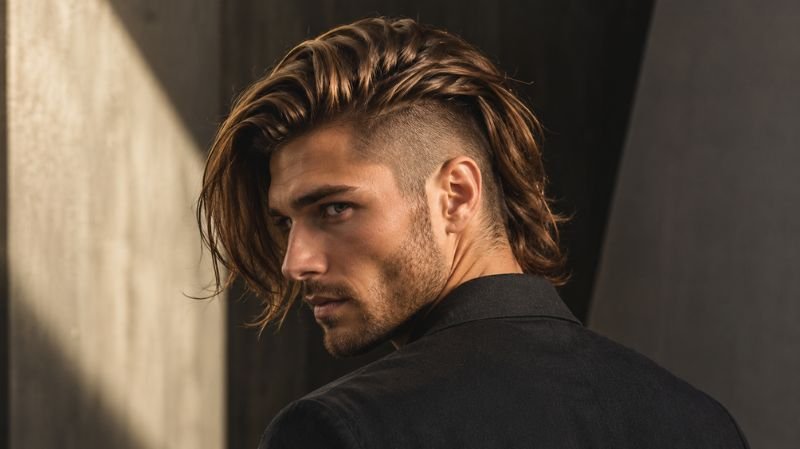
The undercut creates a dramatic separation between the long top and shorter sides.
It is less subtle than a taper and requires a stronger commitment to contrast.
Best for: Thick hair and fashion-forward styling
Avoid if: You want a conservative or seamless silhouette
Because the undercut removes significant side density, growing it back can take patience.
19. Layered Man Bun
A man bun becomes more interesting when the surrounding hair has subtle layers.
The layers create movement when the hair is worn down, while the length remains sufficient for tying it back.
Do not pull the bun excessively tight. Repeated tension can contribute to mechanical breakage.
20. Half-Up Layered Hairstyle
The half-up style is one of the easiest ways to showcase long layers.
Pull the upper section backward while leaving the lower layers loose around the shoulders.
This style works especially well for wavy and thick hair because the loose sections retain their natural movement.
21. Long Layered Ponytail
A ponytail can look much more intentional when the hair around the face and crown has subtle layers.
Keep the tie comfortably loose and avoid repeatedly positioning it in exactly the same place.
For a polished appearance, smooth the crown while allowing the ends to retain their natural texture.
22. Layered Surfer Hair
Surfer-inspired hair relies on relaxed texture rather than precise styling.
Long layers encourage the waves to separate and create that windblown appearance.
A small amount of sea-salt spray can enhance natural texture, but too much salt-based product can leave already-dry hair feeling rough.
23. Long Feathered Layers
Feathered layers are softer than a heavily choppy cut.
The hair is shaped so that the sections curve and blend away from the face, creating movement without obvious disconnected pieces.
The technique belongs to a long history of layered hair. During the 1970s, feathered and layered styles became widely recognizable across men’s and women’s fashion.
24. Long Messy Layers
Messy layers are designed to look intentionally imperfect.
The haircut should create enough separation that the hair can be styled with the fingers rather than requiring a comb.
Best for: Medium-thick hair
Styling time: Approximately a few minutes
Finish: Matte and textured
The trick is controlled messiness. If every section is equally chaotic, the haircut can simply look unmaintained.
25. Long Textured Layers
Textured layers are ideal if you want more definition without committing to an extreme shag or wolf cut.
The barber can preserve the overall length while creating controlled variation through the upper sections.
This is one of the most adaptable men’s hairstyles layered approaches because the texture can be subtle or pronounced.
26. Korean-Inspired Long Layered Hair
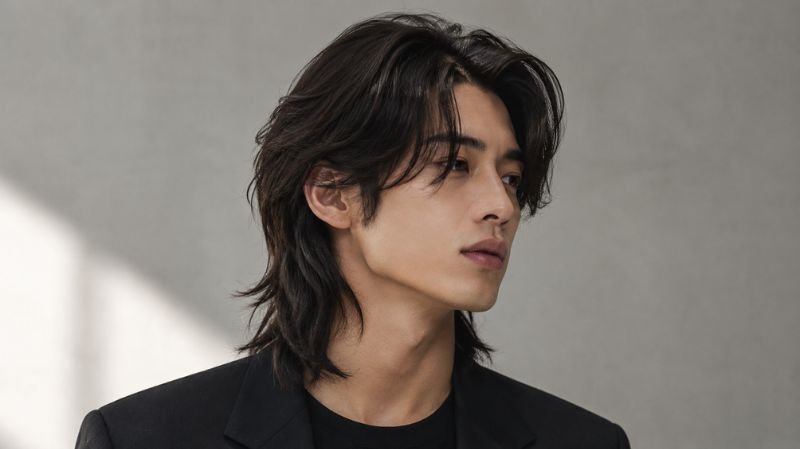
Korean-inspired men’s hair often emphasizes soft movement, face framing, and a lighter visual finish.
Long layers around the face can create a gentle curtain effect, while the back remains long enough for natural flow.
This style works particularly well with straight or slightly wavy hair.
27. Long Layered Hair With a Beard
Long layered hair and facial hair can create strong visual balance.
If the hair is very full, a heavily oversized beard can make the entire silhouette appear wider. A cleaner beard shape can therefore work better with voluminous layered hair.
Think of the hairstyle and beard as one composition rather than two separate grooming decisions.
28. Long Layered Hair With Natural Waves
This is a lower-maintenance version of layered wavy hair.
Rather than creating dramatic layers, the stylist follows the existing wave pattern and removes only enough weight to encourage movement.
It is particularly useful for men who want to wash, condition, air-dry, and go.
29. Long Layered Hair With a Middle-Part Flow
This style combines two reliable elements: long layers and a center part.
The part creates symmetry, while the layers prevent the hair from hanging uniformly on both sides.
For a contemporary finish, keep the crown relatively natural rather than forcing excessive volume.
30. Long Layered Mullet
A modern long mullet uses shorter layers around the crown and sides while retaining a visibly longer back.
The difference between this and a wolf cut is primarily in the silhouette and degree of separation. A wolf cut tends to blend shaggy volume with length, while a mullet often makes the short-front/long-back relationship more obvious.
31. Long Layered Hair With a Side Taper
A subtle side taper offers a cleaner outline without sacrificing the visual impact of long hair.
It is a strong option for men who like long hairstyles but want the area around the ears to look more controlled.
32. Long Layered Hair With Face-Framing Pieces
Face-framing pieces can completely change the appearance of long hair.
For a round face, longer pieces can help create vertical emphasis. For angular faces, softer curves can reduce visual harshness.
The exact placement should be personalized rather than based on a fixed measurement.
33. Long Layered Hair With a Soft Fringe
A soft fringe is less structured than a blunt fringe.
It works particularly well with naturally wavy or slightly textured hair because the irregular movement makes the front feel lighter.
Keep the fringe long enough to blend into the side layers.
34. Long Layered Hair With Natural Ends
Not every long haircut needs dramatic layers.
For men with fine hair or naturally straight hair, subtle layers near the bottom can create movement while preserving density.
This is often the safest option when your priority is keeping as much length and fullness as possible.
35. Very Long Layered Hair
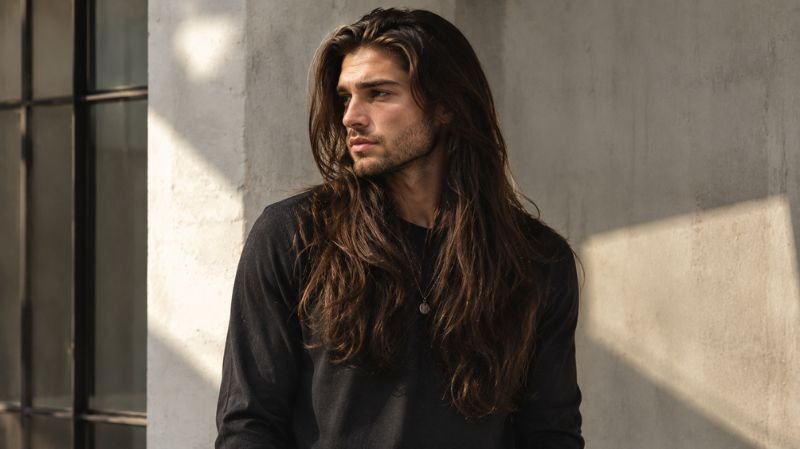
For hair that extends well past the shoulders, long layering becomes primarily about shape and weight distribution.
The safest approach is usually to maintain a strong perimeter while adding longer internal layers. Removing too much from the lower sections can make very long hair look thin.
This is the ultimate choice for men committed to growing their hair while still wanting a deliberate haircut rather than simply letting it grow unchecked.
Which Layered Haircut Should You Choose?
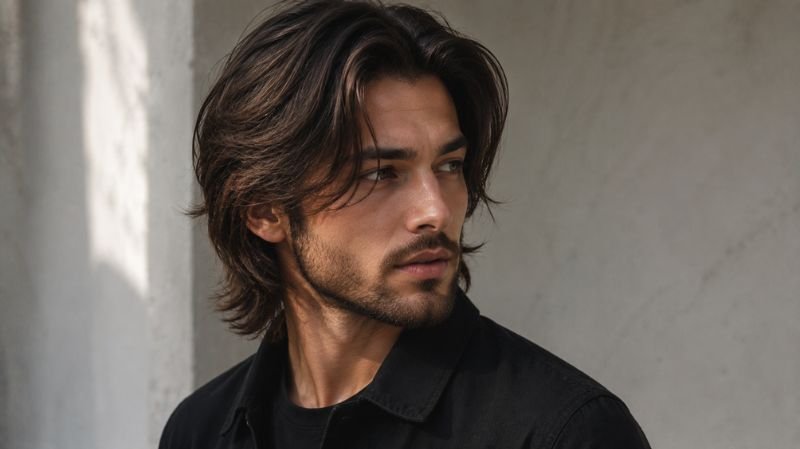
The best choice depends less on the name of the haircut and more on what you want your hair to do.
| Your Priority | Best Layered Option | Why It Works | Maintenance |
| Keep maximum length | Very long layered hair | Preserves perimeter length | Low–Moderate |
| Reduce thick-hair bulk | Long textured layers | Removes selected weight | Moderate |
| Add movement | Long layered flow | Encourages directional flow | Moderate |
| Enhance waves | Layered wavy hair | Gives waves room to form | Low–Moderate |
| Enhance curls | Long layered curls | Controls density and shape | Moderate |
| Fashion-forward look | Wolf cut | Strong texture and contrast | Moderate–High |
| Retro look | Long shag | Visible feathered movement | Moderate |
| Professional long hair | Layered side part | Controlled and adaptable | Moderate |
| Easy everyday styling | Bro flow | Natural movement does the work | Low |
| Dramatic contrast | Layered undercut | Long top versus short sides | High |
How Should You Choose Layers for Your Hair Type?
What Are the Best Layers for Thick Hair?
Thick hair generally benefits from weight removal, but that does not mean aggressively thinning every section.
The barber should identify where the density is causing the hair to expand or become difficult to control. Longer internal layers can reduce that weight while preserving the outside shape.
Best choices: Long textured layers, layered shag, wolf cut, layered flow.
What Are the Best Layers for Fine Hair?
Fine hair requires restraint.
If too much hair is removed, the ends can look sparse. A better approach is to preserve density while using subtle layers to create movement and styling lift.
Best choices: Long subtle layers, feathered layers, soft curtain layers.
What Are the Best Layers for Straight Hair?
Straight hair shows the architecture of a haircut clearly.
Longer blended layers can prevent it from looking flat, while face-framing pieces create visual movement.
Best choices: Long flow, middle part, curtain layers, slick-back layers.
What Are the Best Layers for Wavy Hair?
Wavy hair often benefits from layers that follow the natural wave pattern.
Too much weight can stretch waves out; too little can make them expand unpredictably.
Best choices: Layered waves, surfer layers, long shag, wolf cut.
What Are the Best Layers for Curly Hair?
Curly hair should be shaped according to its dry curl pattern.
The stylist needs to account for shrinkage, density, and curl direction. A layered cut can make curls more defined, but the wrong layer placement can create uneven volume.
Best choices: Long curly layers, shoulder-length curls, face-framing curly layers.
Which Layered Haircut Works Best for Your Face Shape?
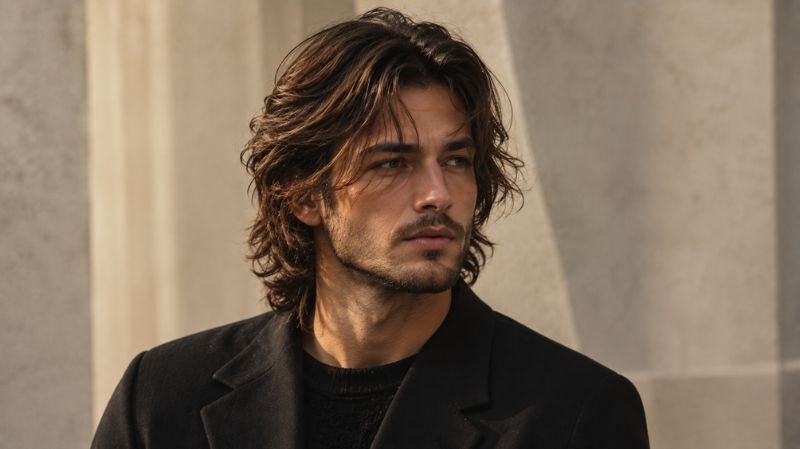
What Works Best for a Round Face?
Longer layers that create vertical movement can help visually elongate a rounder face.
Avoid adding excessive width directly around the cheeks if your goal is a slimmer-looking silhouette.
Good choices: Long layered flow, middle-part layers, long side-swept layers.
What Works Best for a Square Face?
Square faces can handle strong structure, but softer layers can prevent the hairstyle from becoming overly rigid.
Waves and feathered layers are particularly effective when you want contrast against angular facial features.
Good choices: Long shag, wavy layers, curtain layers.
What Works Best for an Oval Face?
Oval faces generally offer considerable flexibility.
You can experiment with middle parts, side parts, curtain layers, longer fringe, or a more dramatic wolf cut without needing to compensate heavily for facial proportions.
What Works Best for an Oblong Face?
Very tall hair at the crown can visually lengthen an already long face.
Instead, consider styles that create some width and movement around the sides.
Good choices: Long waves, curtain layers, side-swept fringe.
What Works Best for a Heart-Shaped Face?
Face-framing layers can help balance a narrower chin against a wider upper face.
A curtain or side-swept front can also soften the transition around the forehead and cheekbones.
What Is the Difference Between Layering and Texturizing?
Layering and texturizing are related but different techniques.
Layering changes the length relationship between sections of hair and is primarily used to create shape, movement, and weight distribution.
Texturizing refines the hair, often by reducing weight or creating separation at the ends. Modern cuts may use both techniques together.
This distinction matters when speaking to your barber. Saying “make it textured” does not necessarily mean the same thing as asking for layers.
How Should You Ask Your Barber for a Layered Haircut?
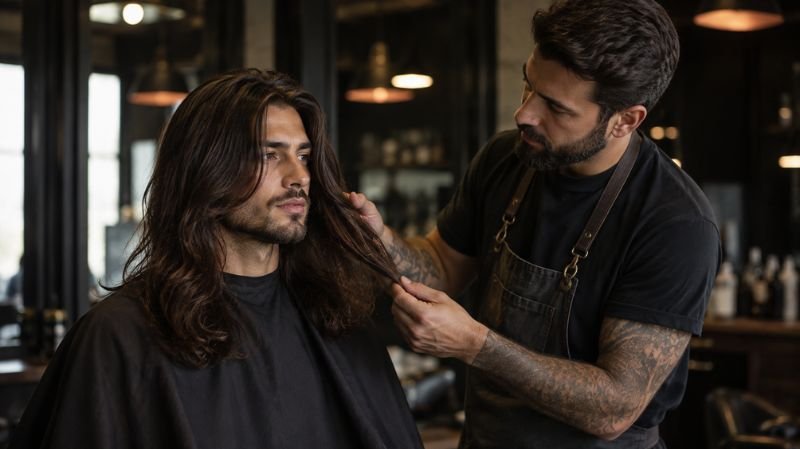
What Should You Tell Your Barber?
Do not simply say, “Give me layers.”
Instead, explain four things:
- How much length you want to keep
- Where you want movement
- How much bulk you want removed
- How you normally style your hair
For example:
“I want to keep my overall length, but I want long blended layers that remove some weight around the sides and create movement around the face. I still want the ends to look full.”
That gives your barber a much clearer starting point.
Should You Bring a Reference Photo?
Yes, bring two or three photographs showing the front, side, and back whenever possible.
More importantly, identify what you like about each image. Is it the length? The fringe? The amount of volume? The wave pattern? The face framing?
A reference photo is a communication tool, not a guarantee that your hair will reproduce the same result.
How Can You Style a Layered Haircut?
Should You Start With Damp Hair?
For most layered styles, slightly damp hair is the easiest starting point.
Towel-dry gently rather than aggressively rubbing the hair. Apply your chosen styling product evenly, concentrating product according to your hair’s needs.
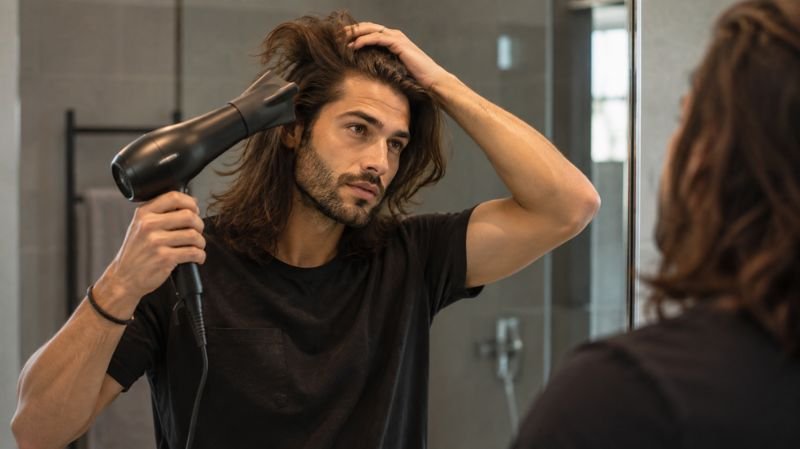
How Should You Blow-Dry Layered Hair?
Use your fingers when you want natural movement.
Lift the roots while directing the airflow in the direction you want the layers to fall. For longer hair, direct sections backward or away from the face to establish flow.
Avoid maximum heat unless necessary. The objective is shape, not simply drying the hair as quickly as possible.
Which Product Should You Use?
Choose the product according to the finish:
- Styling cream: Soft, natural control
- Texture clay: Definition and stronger separation
- Sea-salt spray: Beachy texture and movement
- Texture powder: Root lift and a dry finish
- Pomade: Smoother, more polished styles
- Argan oil: Dryness and frizz management
Using more products does not automatically create a better layered style. Too much product can make the hair clump together and hide the very layers you paid for.
How Often Should Men Trim Layered Hair?
There is no universal four-week rule for every long hairstyle.
Shorter layered styles with fades or precise outlines generally need more frequent maintenance. Long layered cuts can often go considerably longer if the perimeter and overall shape still look intentional.
A practical starting point is:
- Short layered styles: Around 3–5 weeks
- Medium layered styles: Around 4–7 weeks
- Long layered styles: Around 6–10 weeks
These are starting points rather than medical or technical rules. Your haircut’s shape, hair growth, split ends, and personal tolerance for an overgrown look matter more than a fixed calendar.
How Fast Does Men’s Hair Grow?
Scalp hair commonly grows around 0.5 to 1 inch per month, although individual growth rates vary. Cleveland Clinic notes that growth speed differs from person to person.
That matters when planning a long layered haircut.
If you cut away two inches while trying to preserve length, you cannot simply expect to regain that length immediately. Discuss the desired end length before the scissors come out.
For men growing from a short haircut, patience is part of the process.
What Is the History Behind Layered Haircuts for Men?
Layering has a much longer fashion history than today’s wolf cuts and social-media hairstyles suggest.
Vidal Sassoon’s approach in the 1960s and 1970s helped establish a broader philosophy of precision cutting designed around how hair naturally falls and moves. Sassoon’s heritage archive documents 1970s techniques that combined short and long layers within the same shape.
The 1970s then pushed layered men’s hair into mainstream fashion through shaggy, feathered, and longer silhouettes. David Cassidy became strongly associated with the men’s shag, while musicians and actors helped turn longer layered hair into a recognizable cultural statement.
The modern revival is less about reproducing the past exactly. Today’s layered cuts borrow the movement of those styles but combine it with cleaner outlines, natural texture, and more personalized proportions.
What Do Hair and Fashion Experts Say About Layered Styles?
A useful professional perspective comes from barbering education: layering should be understood as weight distribution, not simply as making random sections shorter. CADMEN’s 2026 barbering guidance specifically distinguishes layering from texturizing and explains that internal shorter lengths can lift the outer hair and create movement.
The fashion side tells a similar story. The shag’s recent revival has been connected with runway and celebrity styling, demonstrating how older layered silhouettes can be updated rather than copied. Vogue has highlighted the shag’s return and its association with feathery layers and low-maintenance styling.
British GQ also reported strong renewed interest in shag-inspired men’s hair and quoted barber Joe Mills recommending roughly four to five inches of length all over for a particular 1970s-inspired version.
The takeaway is simple: the trend is not “layers at any cost.” It is a movement with intention.
What Are the Most Common Layering Mistakes Men Make?
Is Too Much Layering a Problem?
Yes, over-layering can make the hair appear disconnected, especially when the perimeter is long but the interior has been cut dramatically shorter.
This is particularly important for fine hair.
Can Layers Make Thick Hair Look Worse?
They can if the weight is removed from the wrong areas.
A badly placed layer can make thick hair expand rather than settle. The solution is not necessarily fewer layers; it is better placement.
Can Layers Make Fine Hair Look Thinner?
Yes, if too much density is removed.
Fine hair often benefits from longer, conservative layers and a strong perimeter.
Should You Copy a Celebrity or Influencer Haircut?
Use the photograph as inspiration, not a blueprint.
Hair density, texture, growth pattern, face shape, and styling habits can be completely different from the person in the photograph.
What Is the Best Long Layered Haircut for a Low-Maintenance Routine?
For most men, the long layered flow, bro flow, subtle shoulder-length layers, or natural wavy layers are easier to live with than heavily structured cuts.
The more dramatic the layering, fade, fringe, or undercut, the more often you may need to restyle or reshape it.
If you want to wake up, add a small amount of product, and leave the house, prioritize a cut that follows your natural texture.
What Should You Avoid When Getting Long Layers?
Before your appointment, keep these principles in mind:
- Do not ask for aggressive thinning without understanding the result.
- Do not sacrifice several inches of length just to “refresh” the haircut.
- Do not assume a reference photo will translate identically to your hair.
- Do not choose a layer pattern before considering your natural texture.
- Do not overload long hair with heavy styling products.
- Do not ignore the neckline and face-framing sections.
- Do not judge the finished shape only when the hair is wet.
The best layered haircut should still make sense on an ordinary day—not only immediately after leaving the salon.
Final Takeaway
The best layered haircut is rarely the one with the most layers.
It is the one where length, density, texture, face shape, and styling routine work together.
For thick hair, strategic layers can remove weight without destroying fullness. For fine hair, conservative layering can create movement while protecting density. For waves and curls, the right layers can allow the natural pattern to become part of the haircut instead of something you have to fight every morning.
If you want a timeless result, start with a long layered flow or subtle face-framing layers. If you want something more fashion-forward, consider a shag or wolf cut. And if maximum length is your priority, ask for long internal layers while protecting the perimeter.
Before your next appointment, save two or three reference photos and decide one thing first: Do you want more movement, less bulk, more volume, or simply a better shape?
That answer will help your barber build the haircut around you—not around a trend.
FAQs
Are layered haircuts suitable for men with receding hairlines?
They can be, but the haircut should be designed around the hairline rather than attempting to hide it with excessive length. Face-framing layers, texture, or a softer fringe can sometimes create a more balanced appearance without forcing the hair forward.
Do layered haircuts require more styling than one-length hair?
Not necessarily. A well-designed layered cut can actually make styling easier because the haircut itself creates movement. However, heavily textured or fashion-forward cuts may require more daily shaping than subtle long layers.
Can I get layers while growing my hair out?
Yes. In fact, strategic layers can make the growing-out process look more intentional. The important part is telling the barber that length retention is a priority so the haircut does not gradually become shorter than you intended.
Are layers good for men’s hair that gets oily quickly?
Layers can help hair feel less visually heavy, but they do not change oil production. If your scalp becomes oily quickly, focus on an appropriate washing routine and avoid applying heavy styling products directly to the roots.
Can I have long layers with a professional dress code?
Absolutely. A subtle long-layered cut can look polished when the perimeter is clean and the hair is controlled. A low ponytail, low bun, side part, or restrained slick-back can make longer hair appropriate for many professional environments.
What is the difference between a wolf cut and a layered shag?
Both rely heavily on layers, but their silhouettes differ. A wolf cut usually emphasizes a fuller, shorter crown combined with a longer back, while a shag tends to create a more evenly distributed, feathered and choppy shape.
Can layered hair be styled without a blow dryer?
Yes. Air-drying is often ideal for naturally wavy or curly hair. Apply a lightweight product to damp hair, arrange the layers with your fingers, and allow the natural texture to determine the final shape.
Is a layered haircut suitable for men with very straight, flat hair?
Yes, but the layers should be carefully chosen. Long, subtle layers can create visual movement, while root-directed blow-drying and lightweight texture products can provide additional lift without making the hair look stiff.
How do I know if my barber removed too much weight?
Look at the ends and overall silhouette when the hair is dry. If the perimeter suddenly appears thin, the hair separates into disconnected pieces, or the style loses the density you wanted, too much weight may have been removed.
Can I switch from layered hair to a blunt haircut later?
Yes, although growing out or trimming away layers takes time. If you think you may want a blunt, dense shape later, tell your barber before getting heavily layered so the current cut does not remove more length than necessary.