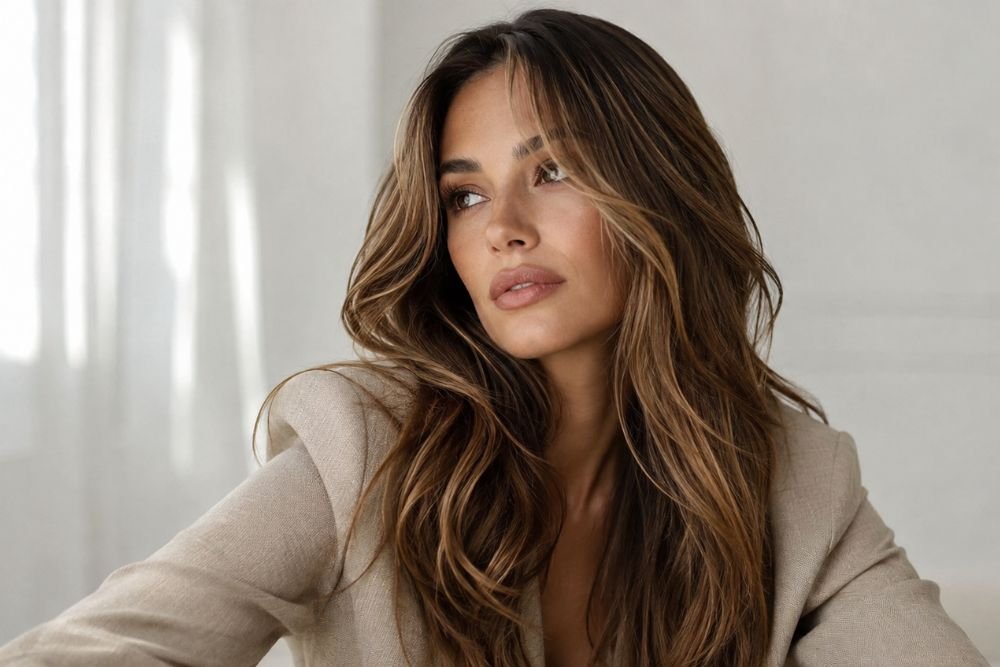
The best light brown hair ideas combine a flattering undertone with subtle dimension, rather than relying on a single flat shade. Honey, caramel, beige, ash, mocha, sandy brown, bronde, and soft auburn are especially versatile, while balayage, babylights, face-framing highlights, and color melts can make the result look more natural and easier to grow out.
If you want a fresh brunette update without committing to a dramatic transformation, light brown hair sits in an unusually versatile middle ground. You can make it warm and sun-kissed, cool and sophisticated, or neutral and barely lighter than your natural color.
The key is not simply choosing “light brown.” Your natural base, skin undertone, desired contrast, hair texture, and willingness to maintain the color all influence which version will look most convincing.
Why Is Light Brown Hair So Versatile?
Light brown hair can bridge the visual gap between brunette and blonde while retaining enough depth to look dimensional. That makes it particularly useful for someone who wants brightness without a full blonde transformation.
Professional color guidance also increasingly emphasizes dimension rather than one uniform shade. Wella’s 2026 light-brown guide, for example, spans cool ash tones, golden shades, and balayage variations, reflecting how broadly the category can be interpreted.
For practical purposes, think of light brown as a color family, not one exact shade.
It can include:
- Neutral beige brown
- Golden brown
- Honey brown
- Caramel brown
- Ash brown
- Mushroom brown
- Mocha brown
- Hazelnut brown
- Sandy brown
- Bronde
- Soft auburn-brown
That range is what makes light brown colour hair so adaptable across different complexions, hair lengths, and personal styles.
What Are the Best Light Brown Hair Ideas for 2026?
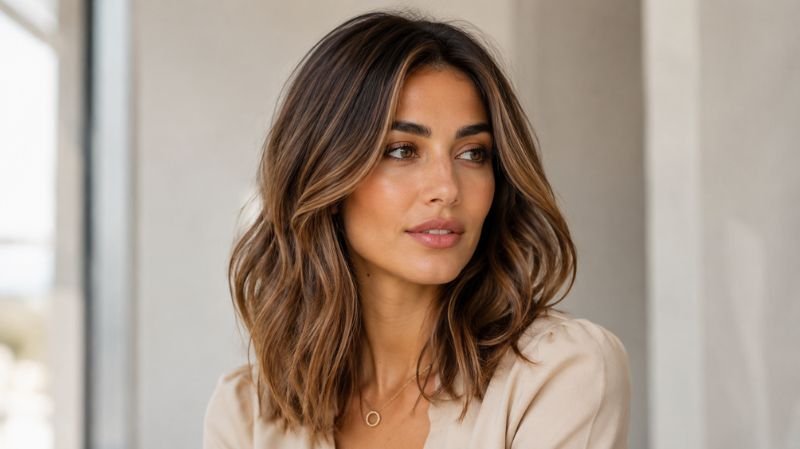
Here are 30 wearable options, ranging from understated natural color to more dimensional balayage and highlighted looks.
1. Soft Natural Light Brown
A soft natural light brown is the simplest option for someone who wants a noticeable refresh without an obvious “dyed” appearance.
Ask your colorist for a shade that stays relatively close to your natural depth, with a neutral or slightly warm finish. This works particularly well when the goal is healthy-looking, glossy hair rather than dramatic contrast.
Best for: First-time color clients and low-maintenance routines.
2. Honey Light Brown
Honey brown combines light brown with golden warmth, creating a softly illuminated finish.
It works beautifully with waves because movement catches the lighter tones and prevents the color from looking flat. If your natural hair is already warm, a honey gloss or subtle highlights may be enough.
Best for: Warm or neutral undertones.
3. Caramel Light Brown Balayage
Caramel balayage places lighter caramel pieces through a brown base instead of lifting the entire head.
The result is dimensional and relatively forgiving as it grows out. Current professional color guidance similarly highlights balayage as a way to create blended, dimensional light brown rather than a solid block of color.
Best for: Brunettes wanting warmth and brightness without going blonde.
4. Light Brown With Blonde Highlights
Fine blonde highlights can make light brown hair appear brighter while keeping the overall look brunette.
For a natural finish, keep the highlights strategically placed around the face and through the mid-lengths instead of creating uniform blonde stripes.
Best for: Anyone wanting visible brightness.
5. Light Ash Brown
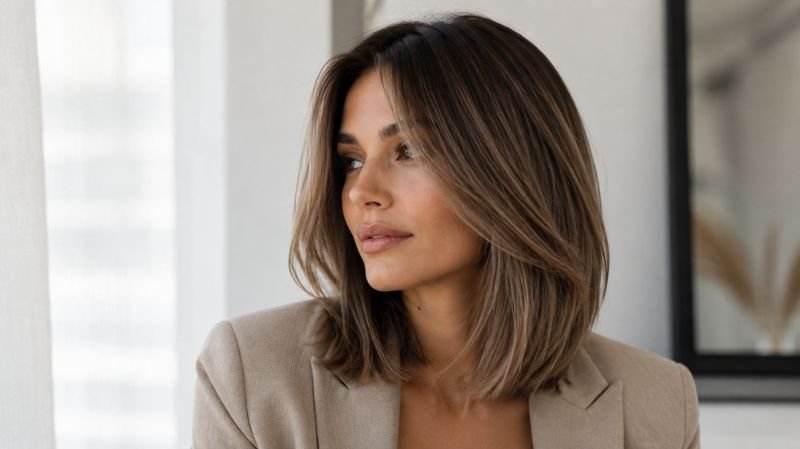
Ash brown removes much of the golden or orange appearance associated with warmer brunette colors.
It is especially useful when you prefer a muted, modern finish. However, the right result depends on your starting color and the amount of underlying warmth exposed during lightening.
Best for: Cool or neutral undertones.
6. Beige Light Brown
Beige brown occupies the neutral space between golden and ash.
It can look particularly sophisticated on sleek hair because the muted tonal variation creates a polished finish without excessive contrast.
Best for: Neutral undertones and understated styling.
7. Light Mocha Brown
Mocha brown adds richness while remaining lighter than traditional chocolate brown.
It is a useful choice if you want your hair to look lighter but still distinctly brunette. Pair it with soft layers or loose waves to reveal subtle tonal differences.
Best for: Medium-to-dark natural brunettes.
8. Light Hazelnut Brown
Hazelnut brown combines brown with soft golden or beige reflections.
It is warmer than mushroom brown but less overtly golden than some honey shades, making it a flexible middle-ground option.
Best for: Warm and neutral complexions.
9. Mushroom Light Brown
Mushroom brown is a cooler, muted interpretation of light brown.
Rather than emphasizing golden warmth, it uses taupe, beige, and ash influences. It can look especially elegant with a blunt bob or sleek shoulder-length cut.
Best for: Cool undertones and minimalist styling.
10. Praline Brown
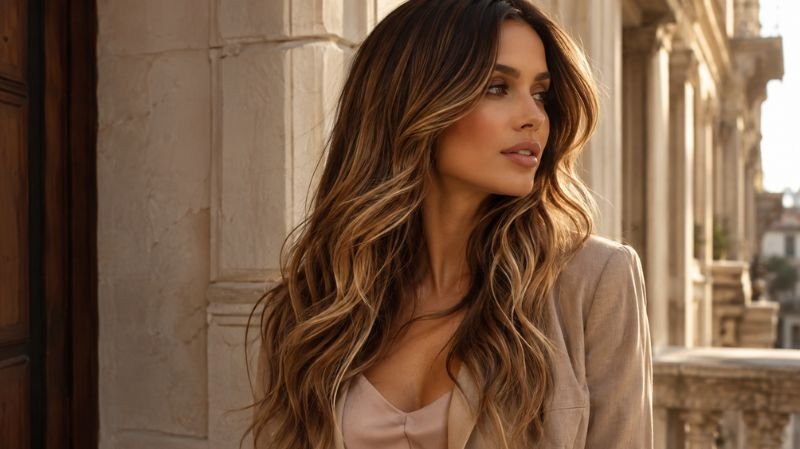
Praline brown blends brown with soft golden, caramel, and beige influences.
The appeal is its layered appearance: instead of one obvious color, the hair can reveal slightly different tones as it moves under natural or indoor light.
Best for: People who want warmth without a strongly copper finish.
11. Face-Framing Light Brown Highlights
Face-framing highlights concentrate lighter pieces around the front of the hair.
They can brighten the appearance of the face without requiring extensive lightening throughout the rest of the head.
For a natural effect, ask for a gradual transition rather than a sharply contrasting money piece.
Best for: Anyone wanting brightness with limited color placement.
12. Light Brown Babylights
Babylights are extremely fine highlights designed to mimic the delicate variation seen in naturally lightened hair.
Because the individual sections are subtle, they can be particularly effective when you want your light brown hair color ideas to look believable rather than obviously highlighted.
Best for: Fine, natural-looking dimension.
13. Light Brown Root Shadow
A darker root transitioning into light brown lengths creates depth while reducing the visual impact of regrowth.
This technique can be particularly useful if you don’t want to return to the salon frequently for root maintenance.
Best for: Low-maintenance color schedules.
14. Sandy Light Brown
Sandy brown combines soft beige and light brown tones for a slightly sun-washed effect.
It works beautifully with loose waves, textured layers, and relaxed styling because the color looks naturally varied rather than highly polished.
Best for: Neutral-to-cool undertones.
15. Light Brown Ombré
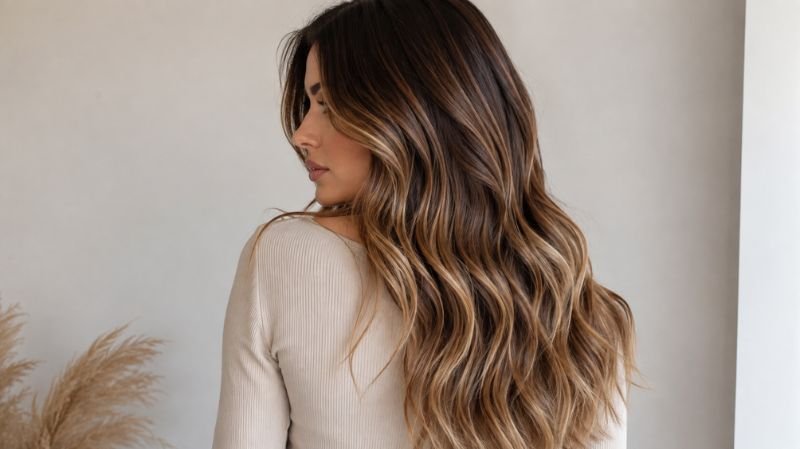
A light brown ombré gradually moves from a deeper root into lighter lengths and ends.
Unlike traditional highlights, the visual emphasis is strongest toward the bottom half of the hair.
Best for: Long hair and anyone wanting an obvious length-based dimension.
16. Light Brown Color Melt
A color melt blends several shades together so the transition between the root, mid-lengths, and ends is difficult to distinguish.
For example, a deeper neutral brown can melt into caramel and then soft light brown.
Best for: Multi-tonal, seamless color.
17. Light Brown With Caramel Lowlights
Not every dimensional style needs lighter pieces.
Caramel or medium-brown lowlights can add depth underneath lighter sections, making the overall color appear richer and more three-dimensional.
Best for: Thick hair or hair that looks flat after lightening.
18. Chocolate-to-Light-Brown Blend
A chocolate root or mid-length can transition into softer light brown through the ends.
The darker foundation preserves brunette richness while the lighter sections provide movement.
Best for: Dark brunettes considering a gradual change.
19. Light Brown With Soft Copper
A restrained copper influence can turn ordinary light brown into a warmer auburn-brown.
The important distinction is control: ask for soft copper or ginger-brown warmth if you want dimension rather than a vivid red result.
Best for: Warm undertones and autumn-inspired styling.
20. Golden Bronde
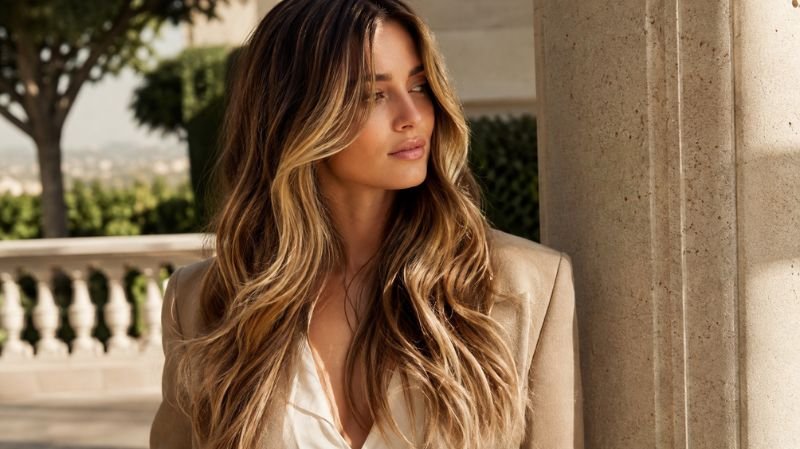
Bronde sits between brunette and blonde, making it an excellent choice when you cannot decide whether you want to remain brown or move lighter.
Subtle golden highlights can make the hair read lighter in sunlight while retaining brunette depth indoors.
Best for: Brunettes transitioning toward blonde.
21. Light Brown on Long Wavy Hair
Long waves are particularly effective for dimensional color because bends in the hair expose different tones.
A combination of neutral brown, caramel ribbons, and slightly lighter ends can create movement without requiring a high-contrast color pattern.
Best for: Long hair with natural or styled waves.
22. Light Brown Layered Hair
Layers allow highlights and lowlights to move independently through the hairstyle.
For example, slightly lighter pieces around the cheekbones can work with longer layers through the ends to create a softer, more fluid effect.
Best for: Medium-to-long layered cuts.
23. Light Brown Bob
A light brown bob demonstrates why color and haircut should be considered together.
A solid neutral shade can make a bob look clean and architectural, while subtle balayage can soften it and add movement.
Best for: Short, polished hairstyles.
24. Light Brown Lob With Balayage
A lob offers enough length for visible balayage while remaining easier to manage than very long hair.
Keep the root close to your natural depth and concentrate lighter pieces through the face-framing sections and ends.
Best for: A versatile medium-length transformation.
25. Light Brown Curly Hair
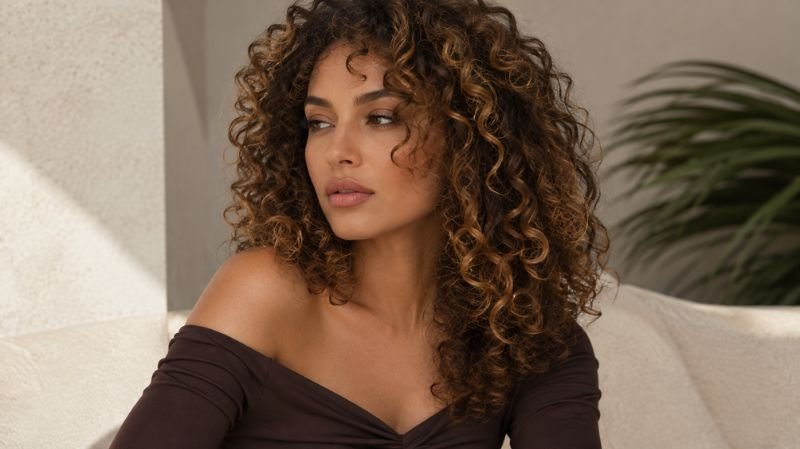
Curly hair benefits from strategic color placement because highlights can visually emphasize the shape of individual curls.
Avoid automatically lightening every curl. Selective placement can create dimension while keeping the overall color cohesive.
Best for: Naturally curly and coily textures.
26. Sleek Light Brown Hair With Gloss
A sleek hairstyle puts shine at the center of the look.
A neutral or slightly warm light brown paired with a professional gloss can make the hair appear smoother and more reflective.
Best for: Straight hair and minimalist beauty looks.
27. Light Brown With Subtle Money Pieces
Money pieces can be adapted for a softer result.
Instead of very bright blonde sections, choose a lighter caramel, beige, or golden brown that is only moderately brighter than the base.
Best for: Face-framing brightness without extreme contrast.
28. Sun-Kissed Light Brown
Sun-kissed brown imitates the effect of natural lightning.
Use several closely related shades rather than one dramatically lighter color. The result should appear brighter through the mid-lengths and around the face while retaining depth at the roots.
Best for: A natural summer-inspired finish.
29. Light Brown With Dark Roots
Dark roots can make lighter lengths look more dimensional and intentionally lived-in.
This is particularly effective when the transition is blended rather than sharply horizontal.
Best for: Low-maintenance color and naturally dark roots.
30. Dimensional Light Brown Balayage
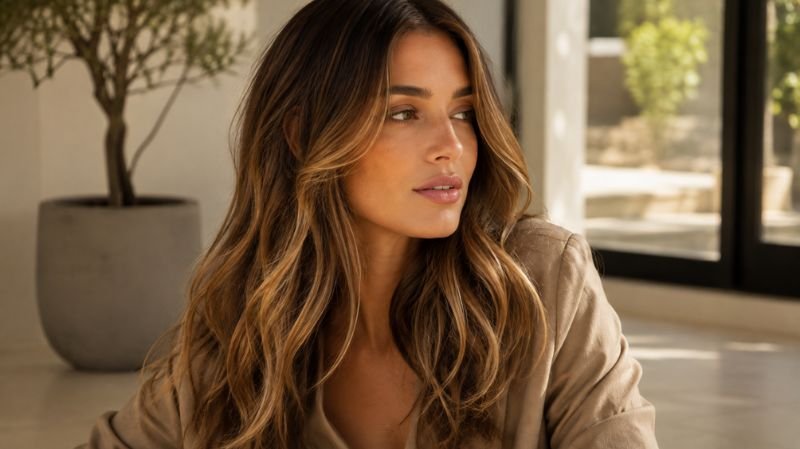
For the most versatile option, combine a natural brown base with carefully placed caramel, beige, honey, or ash pieces.
The objective isn’t to use every shade at once. Your colorist should select two or three compatible tones that work with your base and undertone.
Best for: Anyone wanting maximum dimension without becoming fully blonde.
Which Light Brown Hair Color Is Best for Your Skin Tone?
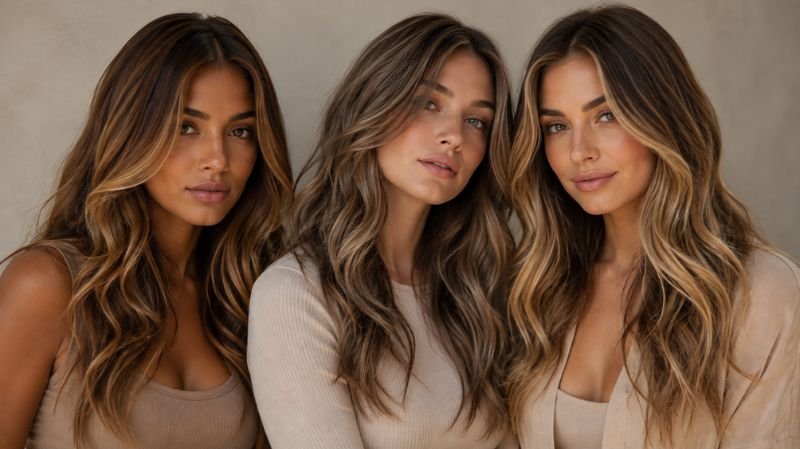
Your skin undertone is useful when choosing between warm, cool, and neutral light brown. It should not be treated as a rigid rule, though.
A recent Allure discussion with professional color experts similarly emphasizes that matching hair too closely to the complexion can remove contrast and make the result look flat; strategic dimension can help maintain definition.
Which Light Brown Shades Suit Warm Skin Tones?
Warm undertones generally pair naturally with shades containing golden, caramel, honey, hazelnut, or soft copper influences.
Consider:
- Honey brown
- Golden brown
- Caramel
- Hazelnut
- Warm mocha
- Cinnamon brown
- Soft auburn
If your skin already has substantial warmth, avoid automatically choosing the warmest possible brown. A neutral shade can sometimes provide more balanced contrast.
Which Light Brown Shades Suit Cool Skin Tones?
Cooler complexions can work particularly well with muted brown shades that contain ash, taupe, beige, or mushroom influences.
Consider:
- Ash brown
- Mushroom brown
- Beige brown
- Cool mocha
- Sandy brown
- Neutral brown
The goal is not necessarily to eliminate all warmth. It is to prevent unwanted orange or overly golden tones from dominating the final result.
Which Light Brown Shades Suit Neutral Skin Tones?
Neutral undertones give you more flexibility.
You can experiment with:
- Neutral light brown
- Praline
- Bronde
- Soft caramel
- Beige brown
- Golden brown
- Hazelnut
This is where the difference between a shade that is technically “light brown” and one that actually complements your complexion becomes important.
Which Light Brown Hair Color Is Best for Your Natural Hair?
Your starting level affects both the final shade and the amount of work required to reach it.
What Works for Naturally Light or Medium Brown Hair?
If your natural hair is already close to light brown, you may only need tonal adjustment, highlights, balayage, or glossing.
This is generally the easiest route to a natural-looking result because there is less contrast between the base and the desired shade.
What Works for Dark Brown Hair?
Dark brown hair can be taken toward light brown through strategically placed highlights or more extensive lightening.
Balayage can be preferable when you want dimension rather than an all-over lighter head.
Can Black Hair Become Light Brown?
Yes, but the process can be substantially more involved than coloring already-light brown hair.
Dark hair often reveals underlying warm pigments as it is lightened. That is why professional formulation and toning matter when the target is a neutral or cool light brown.
For a significant change, a consultation is safer than attempting to copy a photograph with a single box dye.
What Is the Difference Between Light Brown Highlights, Balayage, and Ombré?
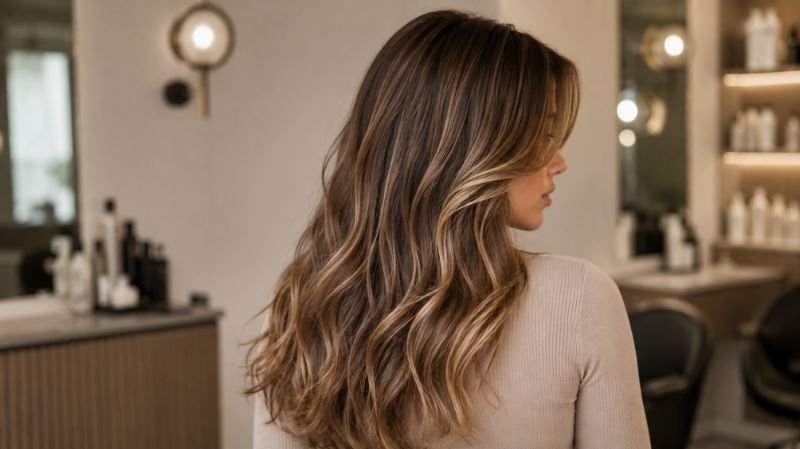
| Technique | How it looks | Maintenance | Best for |
| Highlights | Defined lighter pieces | Moderate | Noticeable brightness |
| Babylights | Very fine, subtle brightness | Moderate | Natural dimension |
| Balayage | Soft painted transition | Lower to moderate | Blended grow-out |
| Ombré | Darker root to lighter ends | Moderate | Stronger length-based contrast |
| Color melt | Seamless multi-shade transition | Moderate | Dimensional color |
| Root shadow | Deeper root with lighter lengths | Lower | Extending time between appointments |
The choice is therefore less about which technique is “best” and more about how much contrast and maintenance you want.
What Are the Best Light Brown With Highlights Hairstyles?
When searching for light brown with highlights hairstyles, think about where the lighter pieces will interact with your haircut.
For Long Hair
Try:
- Caramel balayage
- Golden highlights
- Soft ombré
- Bronde ribbons
- Face-framing pieces
Long waves can make tonal transitions especially visible.
For Bobs and Lobs
Try:
- Beige highlights
- Subtle babylights
- Neutral balayage
- Glossy all-over light brown
Shorter hair benefits from restraint because too many contrasting sections can make the color appear visually busy.
For Curly Hair
Try:
- Strategic balayage
- Honey highlights
- Caramel pieces
- Face-framing highlights
Placement should follow the natural pattern of the curls rather than treating curly hair like straight hair.
How Do You Choose Between Warm, Cool, and Neutral Light Brown?
Use this simple three-question framework:
- What does your natural hair do in sunlight?
Does it reveal gold, red, or orange? Or does it stay muted and ashy? - What jewelry usually complements your complexion?
If gold tends to harmonize with your complexion, warmer shades may feel intuitive; if silver looks more balanced, cooler shades may appeal. This is only a styling clue, not a diagnostic test. - How much contrast do you want?
Low contrast usually looks softer and more natural. Higher contrast creates a more noticeable transformation.
The best result usually sits at the intersection of undertone + natural base + desired maintenance.
How Can You Make Light Brown Hair Look More Natural?
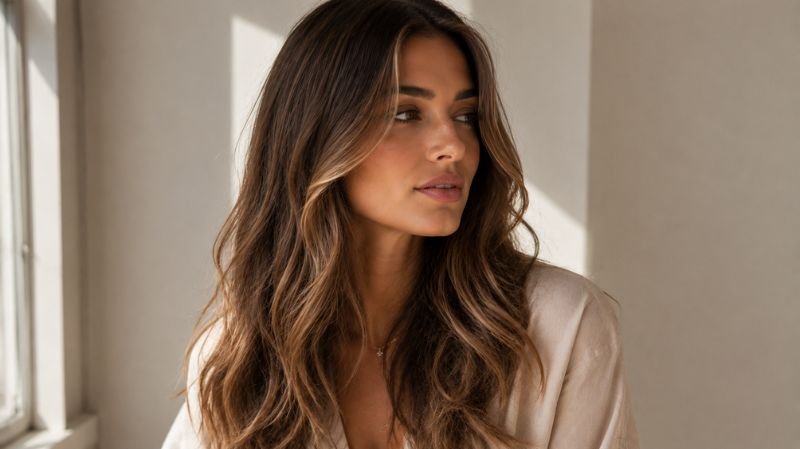
The biggest mistake is treating natural-looking color as a single shade.
Natural hair contains variation. A convincing salon result can recreate that visual depth through carefully selected tones.
Keep Some Root Depth
A natural root or subtle root shadow prevents the color from looking like a uniform cap.
Use Closely Related Tones
Instead of combining dramatically different colors, use neighboring tones such as:
- Beige + neutral brown
- Honey + caramel
- Mocha + chocolate
- Ash + mushroom
- Golden brown + hazelnut
Place Brightness Strategically
Concentrating lighter pieces around the face and mid-lengths can create the impression of overall brightness without requiring the entire head to be lifted.
Match the Color to Your Haircut
Color placement should support the haircut.
A layered style can handle dimensional ribbons, while a sharp bob may benefit from cleaner tonal consistency.
Is Light Brown Hair Low Maintenance?
It can be, but light brown is not automatically low maintenance.
A shade close to your natural color with balayage or a soft root transition generally requires less obvious upkeep than a high-contrast blonde highlight or all-over lightening.
A useful maintenance scale is:
Lowest maintenance:
Natural light brown → root shadow → soft balayage
Moderate maintenance:
Babylights → highlights → color melt
Higher maintenance:
Bright money pieces → strong blonde highlights → significant all-over lightening
Your maintenance needs will also depend on how quickly your roots become noticeable and whether you are correcting warmth or preserving a particular tone.
How Should You Maintain Light Brown Hair?
The maintenance routine depends on whether your color is warm, neutral, or cool.
How Can You Keep Light Brown Hair Glossy?
Prioritize:
- Color-safe cleansing
- Regular conditioning
- Heat protection
- Periodic professional glossing when appropriate
- Gentle handling of wet hair
- Regular trims
Gloss is particularly important because light brown can look dull when the surface of the hair becomes dry or rough.
How Can You Prevent Unwanted Brassiness?
Brassiness is not always a problem. Warmth can be intentional in honey, caramel, golden, and cinnamon shades.
If you specifically chose an ash or neutral brown, however, excessive orange or yellow can shift the result away from the intended tone. A stylist can determine whether you need toning rather than simply adding a strong at-home toning shampoo.
How Often Should Light Brown Hair Be Refreshed?
There is no universal schedule.
A root-shadow balayage may remain visually attractive as it grows, while a high-contrast highlight pattern can need attention sooner.
Your stylist should set the refresh interval based on the technique, natural root contrast, and whether the goal is maintaining tone or correcting regrowth.
What Should You Ask Your Hairstylist for Light Brown Hair?
Don’t simply show a photo and say, “I want this color.”
Bring the photograph, then explain what you actually like about it.
Ask:
- “Is this warm, cool, or neutral?”
- “How close is it to my natural color?”
- “Would balayage or highlights create this effect?”
- “Will I need bleach to achieve it?”
- “How will this grow out?”
- “How often would I need a refresh?”
- “Will this shade pull orange on my current hair?”
- “What would you change to make it work with my complexion?”
- “Can we create a softer version of this if I want lower maintenance?”
This conversation gives your colorist information that a photograph cannot.
What Does the History of Hair Color Tell Us About Today’s Light Brown Trend?
Hair coloring has a much longer history than today’s balayage vocabulary suggests.
People have used natural substances to alter hair color for centuries, but modern synthetic hair coloring developed in the early 20th century. L’Oréal’s historical record dates its foundation to 1909, when chemist Eugène Schueller established a company focused on hair dyes after developing his early formulations.
The significance for today’s consumer is that hair color has evolved from simply changing the color to engineering specific combinations of depth, tone, placement, and maintenance.
That explains why today’s light brown category can encompass everything from an all-over neutral brunette to highly customized balayage.
What Are Hair Color Experts Saying About Light Brown Hair?
Professional guidance consistently points toward customization rather than choosing a shade name in isolation.
Colorists quoted in current beauty coverage emphasize that the underlying pigment matters when selecting brunette shades, particularly when dark hair is being taken lighter. Warmth can emerge during lightning, so the final formula may need to compensate for those underlying tones.
Current professional color coverage also shows the breadth of the category: Wella’s 2026 guide includes both ash-based and golden light browns, reinforcing that modern light brown is not a single formula or temperature.
Fashion-editorial takeaway: the most sophisticated light brown hair usually looks intentional because the tone, placement, haircut, and finish work together. The goal isn’t to make every strand identical; it is to make the variation look designed.
What Is the Safest Way to Color Your Hair at Home?
If you use an at-home dye, follow the manufacturer’s directions rather than improvising the processing time or mixing products.
The U.S. Food and Drug Administration advises performing a skin patch test before each use, following package warnings, wearing gloves, avoiding dye on eyelashes or eyebrows, and rinsing the scalp thoroughly after coloring. The FDA also notes that some hair-dye ingredients can cause allergic reactions.
For a major change—especially going substantially lighter—professional color is the more predictable option because the starting pigment, previous color history, and desired tone all affect the process.
Can Light Brown Hair Be Achieved Without Bleach?
Sometimes, but it depends heavily on your starting hair.
If your hair is already light enough, depositing a different brown tone or using a gloss may achieve the desired result without significant lightening.
If the goal requires lifting substantially darker hair, lightening may be necessary. Previous permanent color can also complicate the process.
The important distinction is between depositing color and lifting existing pigment.
What Is One Practical Example of Choosing a Light Brown Shade?
Consider someone with naturally medium brown hair who wants to look brighter but does not want obvious blonde highlights.
Instead of choosing an all-over golden brown, a practical salon brief would be:
“Keep my natural depth at the root, add subtle beige and caramel balayage through the mid-lengths, and make the pieces around my face slightly brighter.”
That description communicates depth, tone, placement, and maintenance preference—four details far more useful to a colorist than simply saying “light brown.”
Are There Any Hair-Color Safety Details You Should Not Ignore?
Yes. Hair dye is a cosmetic product, but it can still cause skin reactions.
The FDA recommends a patch test every time before using hair dye and advises stopping use if a reaction occurs. It also warns against using hair dye on eyebrows or eyelashes because of the risk of serious eye injury.
If your scalp is irritated, your hair has recently undergone significant chemical processing, or you have previously reacted to hair dye, discuss the situation with a qualified professional before proceeding.
Which Light Brown Hair Idea Should You Choose?
If you want the easiest starting point, use your lifestyle as the deciding factor:
For the lowest maintenance:
Choose natural light brown, root-shadow brown, or soft balayage.
For warmth:
Choose honey, caramel, golden brown, or hazelnut.
For cool sophistication:
Choose ash, mushroom, beige, or cool mocha.
For brightness:
Choose blonde highlights, face-framing pieces, or bronde.
For a noticeable but still brunette transformation:
Choose dimensional balayage, color melt, or a chocolate-to-light-brown blend.
For a short haircut:
Choose a bob or lob with controlled highlights rather than excessive contrast.
For curls and waves:
Use strategic dimensional placement so the color follows the movement of the texture.
Final Thoughts
The appeal of light brown hair is its ability to look dramatically different without necessarily feeling dramatic.
You can brighten a brunette with honey ribbons, cool things down with mushroom brown, create softness with beige balayage, or move toward blonde through bronde. The best result is usually the one that respects your natural depth and fits the amount of maintenance you are genuinely willing to do.
If you’re saving light brown color hairstyles for your next appointment, don’t choose only by the shade name. Save two or three reference photos and tell your colorist what you like about each—tone, brightness, root depth, highlight placement, or overall finish.
Ready for your next color appointment? Pick your favorite three looks from these 30 light brown hair color ideas, then use the comparison framework above to narrow them down by undertone, maintenance, and natural hair color before showing them to your stylist.
Frequently Asked Questions
Is light brown hair considered brunette?
Yes. Light brown generally falls within the brunette family, although some shades—particularly bronde—can visually approach blonde.
What is the difference between light brown and dark blonde?
The boundary is not always exact because salon color systems classify shades by depth and tone differently. Light brown generally retains a stronger brown visual character, while dark blonde tends to read more blonde or neutral-golden.
Does light brown hair make you look younger?
Hair color alone does not determine whether someone looks younger. However, strategically placed brightness around the face can create a softer, more illuminated appearance.
Can light brown hair cover gray hair?
It can, depending on the percentage of gray, the desired coverage, and the coloring system used. A professional can determine whether permanent color, blending, highlights, or another approach is most appropriate.
Does light brown hair fade quickly?
The answer depends on the coloring technique, porosity, washing habits, heat exposure, and formula. A closely matched natural brown can appear consistent longer than a high-contrast highlighted look.
What eye colors pair well with light brown hair?
Light brown can complement every eye color. Golden and caramel tones can emphasize warm eyes, while cooler beige and ash shades can create contrast with blue or green eyes.
Is light brown hair good for fine hair?
Yes. Subtle highlights and lowlights can create the visual impression of dimension in fine hair. However, excessive lightening can compromise hair condition, so placement and chemical processing should be controlled.
Is balayage better than all-over light brown color?
Neither is universally better. Balayage is useful when you want dimension and softer regrowth, while all-over color is better when you want a consistent change in the overall hair color.
What is the most natural-looking light brown shade?
A natural-looking result usually stays reasonably close to the person’s existing depth and uses subtle tonal variation. Neutral brown, beige brown, soft honey, and understated caramel are common starting points.
Should you bring a celebrity photo to your colorist?
Yes, but use it as visual inspiration rather than an exact specification. Your natural hair, previous color, skin undertone, texture, and haircut may require a modified version of the same look.