If you’ve ever been invited to an event, meeting, or dinner with the instruction to dress “smart casual,” you’re not alone in wondering what that actually means. It’s one of the most commonly used, and most misunderstood, dress codes in modern men’s fashion.
Unlike formal wear or business attire, there isn’t a strict uniform. Instead, the smart casual dress code is about balance: looking polished without appearing overdressed, and relaxed without looking sloppy. It’s the style that reflects today’s lifestyle, where work, social life, and personal expression blend seamlessly.
Whether you’re heading to the office, a date, or a semi-formal gathering, understanding smart casual attire helps you dress confidently for almost any occasion.
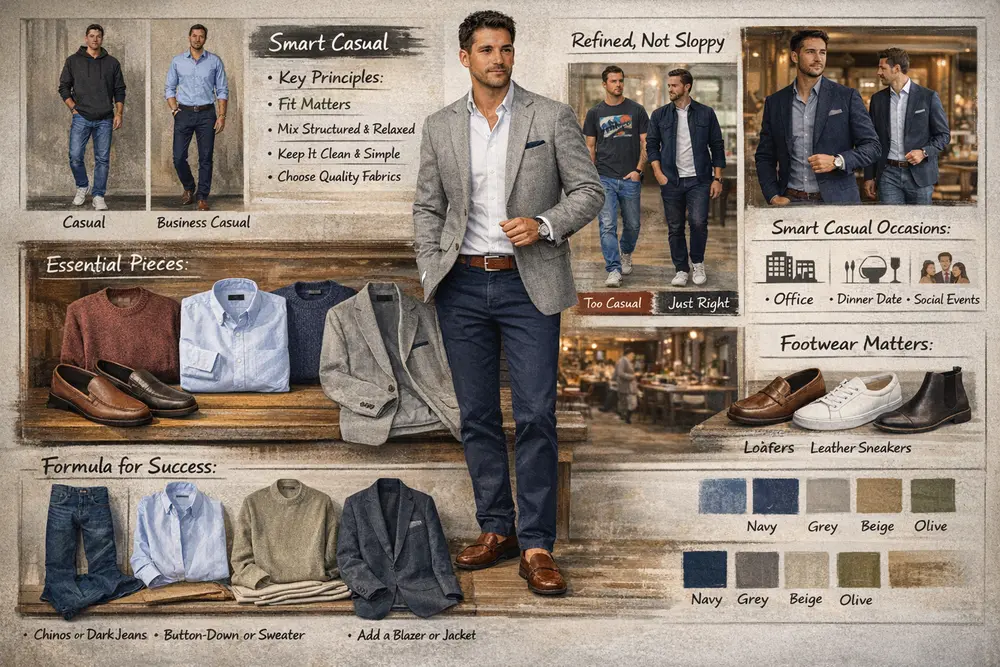
Smart casual for men is a dress code that combines tailored, polished clothing like blazers, chinos, and button-down shirts with relaxed elements such as knitwear or dark jeans. The goal is to create a clean, refined look that feels comfortable yet intentional, less formal than a suit but more elevated than everyday casual wear.
What Does Smart Casual Really Mean?
At its core, smart casual is about intentional dressing. It’s not just throwing on nice clothes, it’s choosing pieces that work together to create a balanced appearance.
Think of it this way:
- Casual = comfort-first
- Formal = structure-first
- Smart casual = balance-first
This dress code evolved as workplaces became less rigid and social environments more flexible. Today, it’s often the default expectation because it allows men to look professional without sacrificing personality or comfort.
Smart Casual vs Other Dress Codes
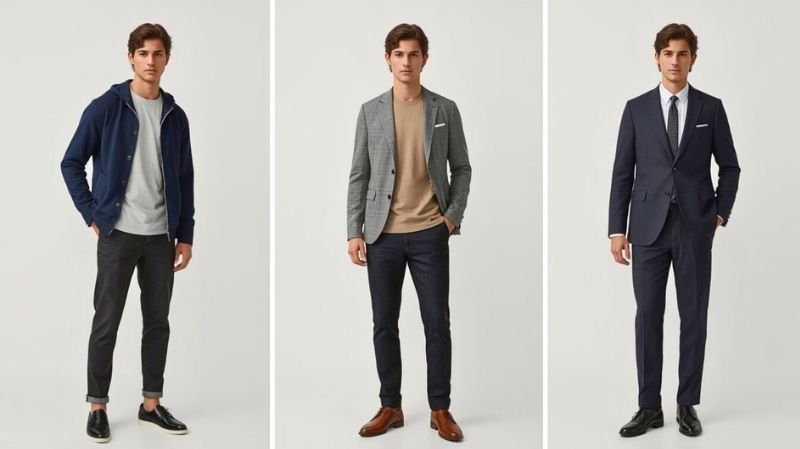
Understanding what smart casual is becomes easier when you know what it isn’t.
Smart Casual vs Casual
Casual clothing is meant for relaxation, hoodies, athletic sneakers, graphic tees.
Smart casual refines those ideas with cleaner silhouettes, structured fabrics, and elevated basics.
Smart Casual vs Business Casual
Business casual leans more professional. Smart casual allows creativity and personal style while still looking neat.
Smart Casual vs Formal
Formal wear demands suits, ties, and dress shoes. Smart casual removes the rigidity while keeping the polish.
Key Principles of the Smart Casual Dress Code
Before building outfits, understand these essential guidelines:
1. Fit Matters More Than Brand
Even simple clothing looks elevated when tailored properly.
2. Mix Structured and Relaxed Pieces
A blazer with jeans. A knit sweater with chinos. Balance is everything.
3. Keep It Clean and Minimal
Avoid loud prints, heavy distressing, or overly trendy pieces.
4. Choose Quality Fabrics
Texture adds sophistication, think cotton, wool blends, suede, and linen.
5. Dress With Purpose
Smart casual should always look like you meant to dress that way.
Essential Wardrobe Staples for Smart Casual Style
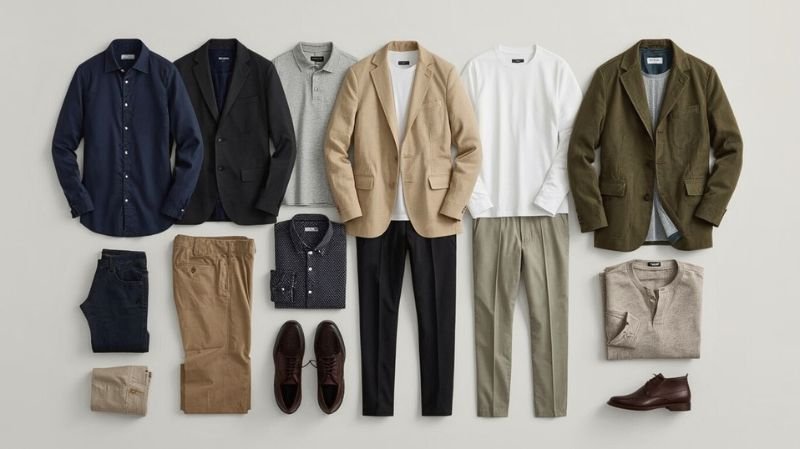
Tops That Work Effortlessly
- Oxford shirts
- Polo shirts
- Lightweight sweaters
- Crisp button-downs
- Minimal crew-neck T-shirts (layered)
These pieces create a polished base without feeling formal.
Bottoms That Anchor the Look
- Chinos (the backbone of smart casual attire)
- Dark, well-fitted jeans
- Tailored trousers
- Neutral-colored slacks
Avoid ripped denim, baggy fits, or athletic joggers.
Outerwear That Elevates Instantly
- Unstructured blazers
- Casual jackets
- Overshirts
- Lightweight coats
A single layer can transform an outfit from casual to smart casual instantly.
Shoes That Complete the Look
- Loafers
- Minimal leather sneakers
- Derby shoes
- Chelsea boots
Footwear is often what determines whether an outfit feels intentional.
How to Build a Smart Casual Outfit (Simple Formula)
Follow this reliable structure:
- Start with a refined base → chinos or dark denim.
- Add a structured top → button-down or knitwear.
- Layer thoughtfully → blazer, jacket, or overshirt.
- Choose elevated footwear → loafers or clean sneakers.
- Keep accessories minimal → watch, belt, subtle details.
This formula works across seasons and occasions.
Smart Casual in Action
Michael, a marketing consultant, was invited to a client networking dinner. The invitation said “smart casual,” which initially confused him. Instead of defaulting to a suit, he built an outfit using the balance approach:
- Navy chinos
- White Oxford shirt
- Lightweight grey blazer
- Brown leather loafers
- Classic watch
The result? He looked approachable yet professional, perfectly aligned with the environment. Not overdressed, not under dressed. Just right.
That’s exactly what the smart casual dress code is designed to achieve.
When Should Men Wear Smart Casual?
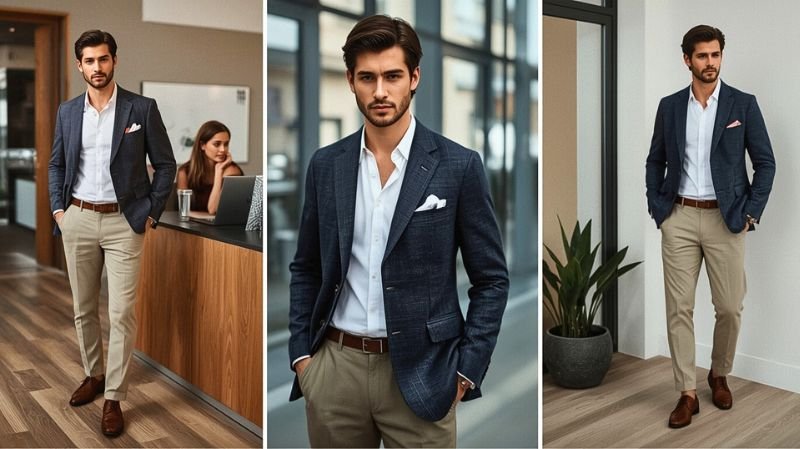
Smart casual attire is appropriate for a wide range of situations:
- Modern workplaces
- Business-casual offices
- Dinner dates
- Networking events
- Casual weddings
- Social gatherings
- Travel days
- Weekend outings where style matters
It’s arguably the most versatile dress code a man can master.
Best Colors for Smart Casual Outfits
Neutral tones dominate because they create effortless coordination:
Core Colors to Build Around
- Navy
- Grey
- White
- Beige
- Olive
- Black (used sparingly)
Why Neutrals Work
They mix easily, look mature, and allow textures to stand out instead of loud colors.
You can add personality through subtle accents like muted blues, earthy greens, or warm browns.
Seasonal Smart Casual Styling
Spring & Summer Smart Casual
- Lightweight fabrics like cotton and linen
- Lighter color palettes
- Breathable layers
- Loafers or minimal sneakers
Fall & Winter Smart Casual
- Layered textures (wool, knits)
- Structured outerwear
- Boots and heavier fabrics
- Rich, deeper tones
Common Mistakes to Avoid With Smart Casual
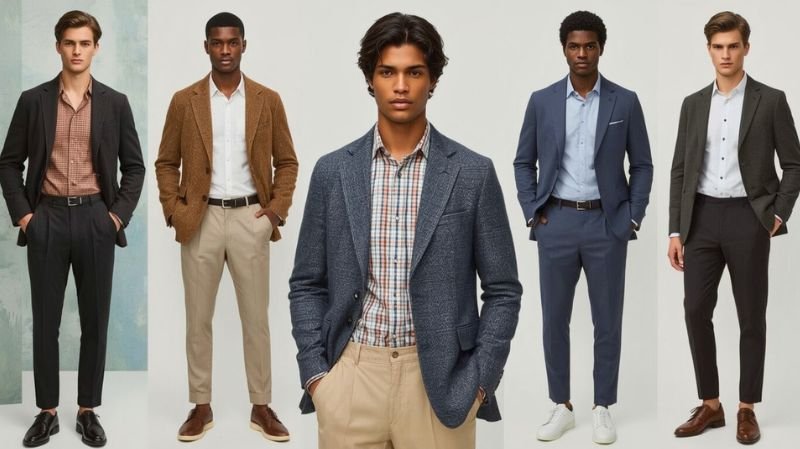
Many men miss the mark by leaning too far in one direction.
Avoid These Pitfalls:
- Wearing athletic wear or gym sneakers
- Choosing overly formal suits
- Ignoring proper fit
- Wearing loud logos or graphics
- Mixing too many styles at once
- Looking wrinkled or unkempt
Smart casual should always look effortless but deliberate.
Why Smart Casual Matters in Modern Men’s Style
The rise of flexible workplaces and lifestyle-driven fashion has made smart casual the new default. It allows men to:
- Transition easily between professional and social settings
- Build versatile capsule wardrobes
- Express personal style without breaking dress norms
- Invest in fewer, better-quality pieces
- Feel confident without feeling restricted
In today’s world, knowing how to dress smart casual is less of an option and more of a life skill. Modern workplaces and social environments have increasingly adopted smart casual because it reflects how professionals actually live and work today. With the rise of hybrid offices, creative industries, and flexible schedules, strict formal wear has given way to clothing that supports both productivity and personal expression.
Style experts often describe smart casual as a “functional uniform” for the contemporary man, one that allows seamless movement between meetings, travel, and social settings without requiring a full outfit change. This shift isn’t about dressing down; it’s about dressing with intention, choosing versatile pieces that communicate confidence, adaptability, and awareness of context.
Conclusion
The smart casual dress code isn’t about strict fashion rules, it’s about mastering balance. It allows men to look polished without appearing overdressed and relaxed without seeming careless. By combining structured pieces with comfortable essentials, you create a style that works across workplaces, events, and everyday life.
Once you understand the formula, dressing well becomes easier, faster, and more consistent. Instead of chasing trends, you build a wardrobe that’s timeless, versatile, and confidence-boosting.
Smart casual isn’t just a dress code, it’s the modern standard for men who want to look put-together in a world that values both professionalism and individuality.
Start refining your wardrobe today:
- Audit what you already own, you likely have the basics.
- Invest in versatile staples like chinos, quality shirts, and smart footwear.
- Focus on fit, fabric, and simplicity.
- Build outfits using the smart-casual balance formula.
Master this one dress code, and you’ll be prepared for nearly every occasion life throws your way.
Frequently Asked Questions (FAQs)
Is smart casual just wearing jeans?
No. Jeans must be dark, clean, and paired with refined pieces like a blazer or structured shirt to qualify as smart casual attire.
Can sneakers be worn with smart casual?
Yes, but only minimal, clean sneakers. Athletic or bulky styles break the polished balance.
Do you need a blazer for smart casual?
Not always. A well-fitted sweater, overshirt, or structured jacket can achieve the same effect.
Is a T-shirt acceptable in a smart casual outfit?
Yes, if it’s plain, high-quality, and styled intentionally under tailored layers.
What’s the biggest difference between casual and smart casual?
Casual prioritizes comfort alone. Smart casual combines comfort with presentation.
Can smart casual be worn to work?
Absolutely. Many modern offices adopt the smart casual dress code because it looks professional without feeling rigid.
Are accessories important in smart casual styling?
They should be subtle, a watch, belt, or simple leather detail enhances the look without overpowering it.