The iconic 1920s suit fashion represents one of the most transformative periods in men’s style, marking a decisive shift away from rigid Victorian formality toward comfort, confidence, and self-expression. Emerging in the aftermath of World War I, the 1920s suit reflected a world eager to celebrate life, prosperity, and modernity. Men no longer dressed solely to conform; they dressed to project personality, success, and independence.
This decade—often called the Roaring Twenties or the Jazz Age—gave birth to a suit style that remains influential even a century later. Defined by sharp tailoring, relaxed silhouettes, bold fabrics, and distinctive accessories, the 1920s suit was not just clothing; it was a cultural statement that aligned with social liberation, artistic innovation, and economic growth.
Historical background: Why the 1920s Changed Men’s Fashion
The roots of the 1920s suit lie in dramatic social change. After the hardships of World War I, societies in Europe and the United States embraced optimism and reinvention. Industrial progress, urbanization, and rising middle-class wealth allowed more men to participate in fashion trends that were once reserved for elites.
Traditional stiff collars, heavily structured jackets, and conservative cuts began to feel outdated. Men wanted clothes that allowed movement, matched their modern lifestyles, and reflected a new sense of freedom. Tailors responded by softening silhouettes, experimenting with proportions, and introducing styles that balanced elegance with practicality. This period laid the foundation for modern menswear as we know it today.
Defining characteristics of the iconic 1920s suit
The 1920s suit is instantly recognizable because of several defining features that set it apart from earlier and later styles. While details varied across regions and social classes, certain elements became emblematic of the era.
Key features of 1920s suit fashion include:
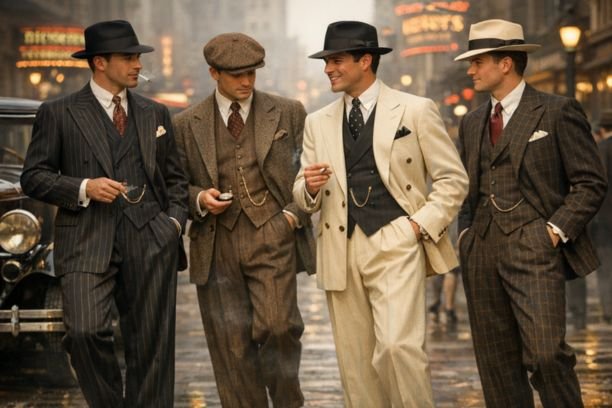
- Double-breasted jackets: A hallmark of the decade, these jackets conveyed authority and sophistication while offering a strong, masculine silhouette.
- Wide-legged, high-waisted trousers: Designed for comfort and movement, these trousers often featured pleats and cuffs, creating a relaxed yet refined look.
- Shorter jacket lengths: Jackets were slightly shorter than previous eras, contributing to a youthful, modern appearance.
- Bold fabrics and patterns: Tweed, wool, herringbone, pinstripes, and plaids added texture and personality to men’s outfits.
- Three-piece construction: Waistcoats were common, reinforcing the polished appearance while allowing flexibility when jackets were removed.
These elements worked together to produce a suit that felt confident without being restrictive, stylish without being impractical.
The role of accessories in completing the look
Accessories were essential to iconic 1920s suit fashion and played a crucial role in defining a man’s overall appearance. Hats, in particular, became a symbol of personal style and social identity. The fedora, flat cap, and newsboy cap were widely worn, each projecting a different image—from urban sophistication to working-class charm.
Pocket watches, tie pins, and patterned neckties added detail and individuality, while two-tone leather shoes or polished oxfords completed the ensemble. These accessories allowed men to personalize their suits, making fashion more expressive than ever before.
Hollywood and pop culture influence
The growing power of Hollywood during the 1920s significantly amplified the popularity of this suit style. Silent film stars and early talkie actors became global fashion icons, influencing how men dressed both on and off screen. Films depicting wealth, romance, and ambition showcased impeccably tailored suits that audiences admired and sought to replicate.
A real-life example is actor Rudolph Valentino, whose suave appearance and tailored suits helped popularize elegant menswear across the United States and Europe. His influence demonstrated how cinema could turn fashion into aspiration, making the 1920s suit a symbol of success and charisma.
Real-life influence beyond entertainment
Outside of Hollywood, influential figures in business, literature, and even crime shaped the perception of the 1920s suit. Writers like F. Scott Fitzgerald described characters whose tailored clothing symbolized wealth and ambition, reinforcing the connection between style and status. At the same time, notorious figures from the Prohibition era were often photographed in sharp suits and hats, unintentionally turning tailored menswear into a symbol of rebellion and confidence. These real-world examples helped embed the 1920s suit into public imagination as both respectable and daring.
How the 1920s suit solved men’s fashion problems
From an audience perspective, the appeal of the 1920s suit lies in how it addressed practical and stylistic challenges that men faced at the time—and still face today. Prior to the 1920s, suits were often uncomfortable, overly formal, and restrictive. The new designs solved these issues by offering:
- Greater freedom of movement through wider cuts and softer tailoring
- Versatility for both professional and social settings
- A balance between elegance and comfort
- Opportunities for self-expression through patterns and accessories
Even today, men searching for timeless style solutions often turn to 1920s-inspired suits because they deliver comfort without sacrificing sophistication.
Adapting iconic 1920s suit fashion for modern wear
The enduring relevance of the 1920s suit lies in its adaptability. Modern men can incorporate elements of this classic style without looking outdated. For example, pairing a vintage-inspired double-breasted blazer with modern slim-fit trousers creates a balanced, contemporary look. A three-piece suit with subtle pinstripes can be worn at weddings, formal events, or themed gatherings while still feeling refined. The key is moderation—borrowing the structure, fabrics, or patterns of the 1920s while maintaining modern tailoring standards.
Modern styling tips inspired by the 1920s:
- Choose structured jackets with a relaxed fit rather than extreme slim cuts
- Opt for textured fabrics like tweed or wool blends
- Use accessories such as pocket squares or classic hats sparingly
- Focus on tailoring to ensure a clean, flattering silhouette
Why the 1920s suit still ranks in modern fashion
From an SEO and audience-solution perspective, the 1920s suit continues to rank highly in fashion discussions because it addresses timeless style questions: How can men dress elegantly without looking stiff? How can vintage fashion be worn today? The answers often point back to this era. Designers regularly revisit 1920s aesthetics on modern runways, proving that the style resonates across generations. Its association with confidence, progress, and individuality keeps it relevant in contemporary wardrobes.
Caring for and Preserving Vintage-Inspired or Authentic Suits
For those who invest in authentic vintage pieces or high-quality reproductions, proper care is essential. Wool and tweed fabrics require gentle handling, breathable storage, and minimal dry cleaning. Rotating suits, using padded hangers, and seeking professional tailoring services help preserve both structure and longevity. These practices ensure that the elegance of the 1920s suit can be enjoyed for years, making it a sustainable and meaningful fashion choice.
The Lasting Legacy of Iconic 1920s Suit Fashion
Ultimately, the iconic 1920s suit fashion represents more than a historical trend—it symbolizes a turning point in how men dress and express themselves. Its influence can be seen in modern tailoring, luxury menswear, and even casual fashion. By blending comfort, style, and personality, the 1920s suit redefined masculinity and elegance. Whether worn as a full vintage ensemble or adapted into modern outfits, it remains a powerful example of how fashion can transcend time, offering solutions for style-conscious men in every generation.
Conclusion
The iconic 1920s suit fashion stands as a timeless symbol of transformation, confidence, and modern masculinity. Born from an era of social freedom and cultural reinvention, it reshaped men’s fashion by introducing comfort, versatility, and self-expression without sacrificing elegance. From its relaxed tailoring and bold fabrics to its enduring influence on modern menswear, the 1920s suit continues to offer practical style solutions for today’s audience.
Whether embraced in its classic form or adapted with contemporary touches, this iconic fashion remains relevant because it answers a universal need—looking refined while feeling comfortable and confident. Its lasting legacy proves that true style is not confined to a single decade but evolves while preserving the spirit of individuality and sophistication that defined the Roaring Twenties.