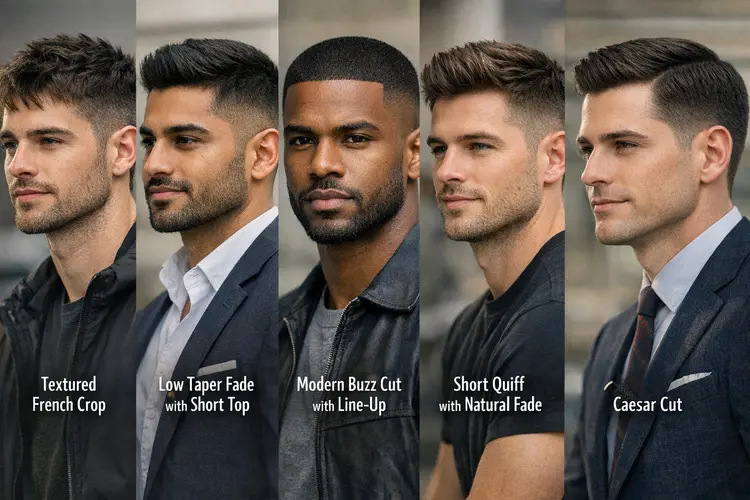
Choosing between a taper and a fade can completely change your appearance, maintenance routine, and even how professional or trendy your haircut looks. While many people, and even some barbers, use these terms interchangeably, taper and fade haircuts are not the same.
Understanding the difference helps you communicate clearly with your barber and ensures you leave the chair with a cut that actually suits your face shape, lifestyle, and style goals.
Whether you’re considering a classic taper fade haircut, a bold skin fade, or a polished low taper hairstyle, this guide breaks down everything you need to know.
What is the difference between a taper and a fade?
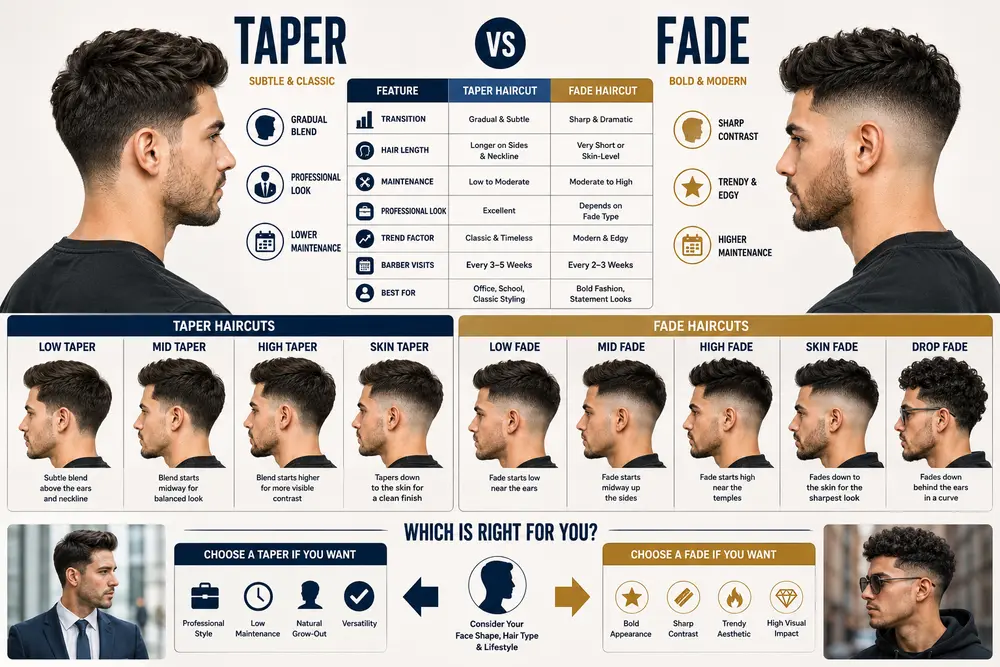
A taper gradually shortens the hair from the top down to the neckline and sideburns for a subtle, natural look, while a fade creates a more dramatic transition, often blending hair into the skin for sharper contrast. Tapers are more classic and professional, while fades are bolder, trendier, and require more maintenance.
Why Understanding Taper vs Fade Matters
A haircut is more than just grooming, it shapes first impressions. According to grooming trend reports from major barbering platforms and style publications, fade variations remain among the most requested men’s cuts globally, while low taper fade haircut styles are rapidly growing due to their versatility in both professional and casual settings.
If you’ve ever asked for a “taper fade” without fully knowing what it means, you’re not alone. Search trends consistently show “taper fade,” “low taper hairstyle,” and “what is a taper” among top hairstyle-related searches because men want clarity before making a style decision.
Taper vs Fade: Quick Comparison Table
| Feature | Taper Haircut | Fade Haircut |
| Transition Style | Gradual and subtle | Sharp and dramatic |
| Hair Length | Longer on sides and neckline | Often very short or skin-level |
| Maintenance | Low to moderate | Moderate to high |
| Professional Look | Excellent | Depends on fade type |
| Trend Factor | Classic and timeless | Modern and edgy |
| Barber Visits | Every 3–5 weeks | Every 2–3 weeks |
| Best For | Office, school, classic styling | Bold fashion, statement looks |
What Is a Taper?
If you’re wondering what a taper is, think of it as a haircut that gradually decreases hair length as it moves down the head, especially around the neckline and sideburns. The top remains fuller while the edges become cleaner and shorter.
Unlike fades, tapers do not usually expose much scalp unless you specifically request a skin taper.
Key Characteristics of a Taper:
- Smooth, gradual blending
- Longer hair on top and sides
- Natural-looking neckline
- Conservative yet stylish
- Easier grow-out phase
Why Tapers Are So Popular
A taper works well in nearly every setting:
- Corporate workplaces
- School environments
- Weddings and formal events
- Everyday low-maintenance styling
Real-Life Example:
Imagine a marketing executive who needs to look polished Monday through Friday but still stylish on weekends. A low taper hairstyle gives him clean edges without looking overly aggressive, making it ideal for boardrooms and social events alike.
Types of Taper Haircuts
Low Taper
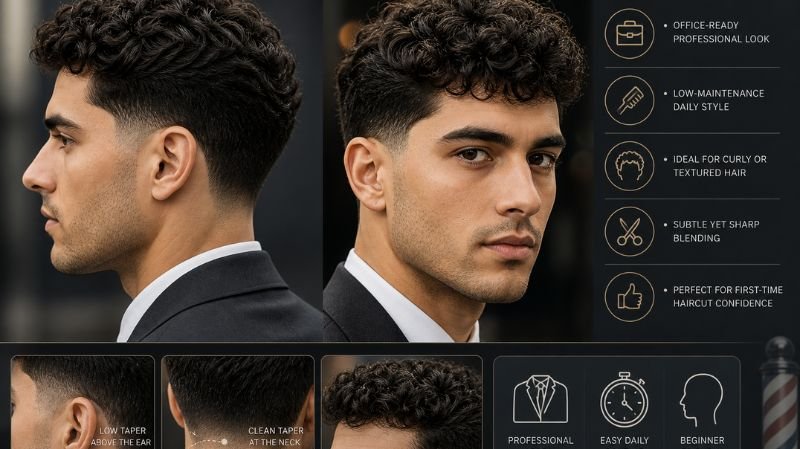
The low taper starts just above the ears and neckline for minimal contrast.
Best For:
- Professional appearance
- Curly or textured hair
- First-time taper wearers
Popular Keyword Inclusion:
The low taper fade haircut has become especially popular because it combines the subtlety of a taper with slightly sharper blending.
Mid Taper
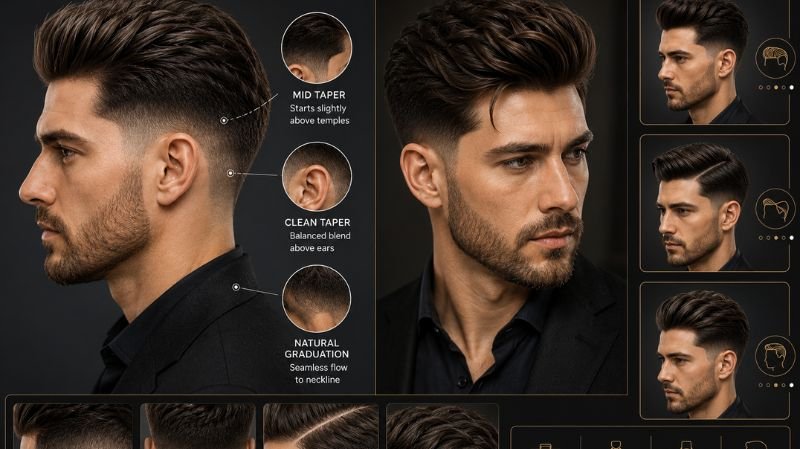
A balanced option offering slightly more contrast than a low taper.
Best For:
- Medium-length hairstyles
- Pompadours
- Side parts
High Taper
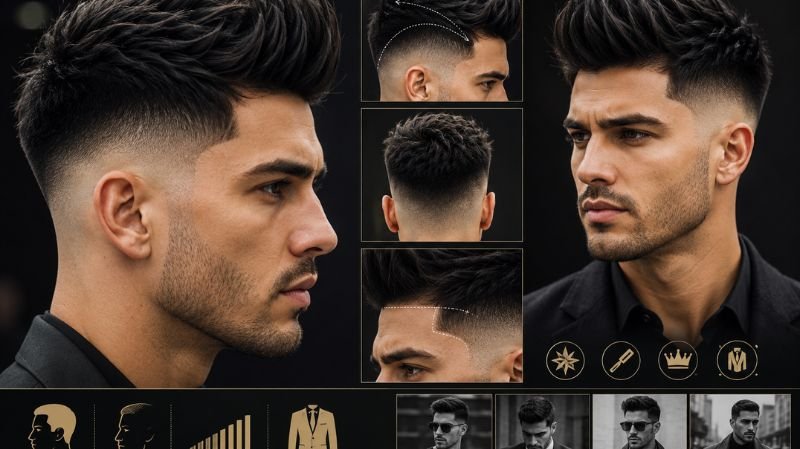
Begins higher above the ears, creating more visible structure.
Best For:
- High-top cuts
- Sharp jawlines
- Fashion-forward looks
Skin Taper
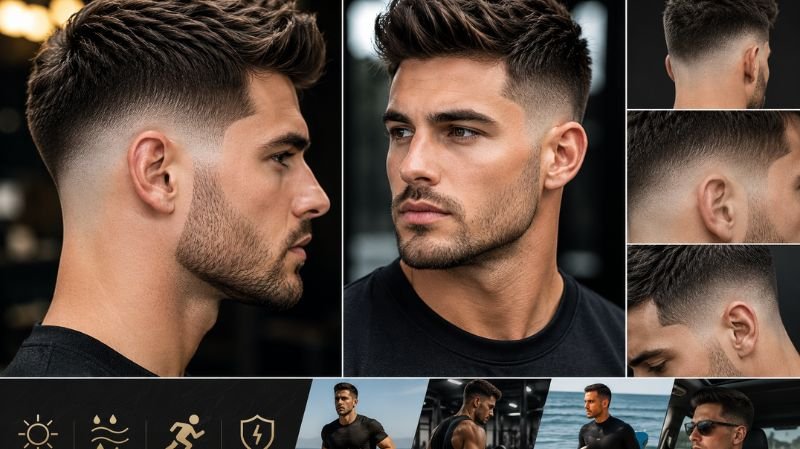
Hair tapers all the way down to visible skin near the neckline.
Best For:
- Summer cuts
- Athletic lifestyles
- Modern edge
What Is a Fade Haircut?
A fade is a more aggressive version of length blending. Hair transitions quickly from longer sections to very short or bald sections, often around the sides and back.
In simple terms:
A fade emphasizes contrast, while a taper emphasizes subtlety.
Types of Fade Haircuts
Low Fade
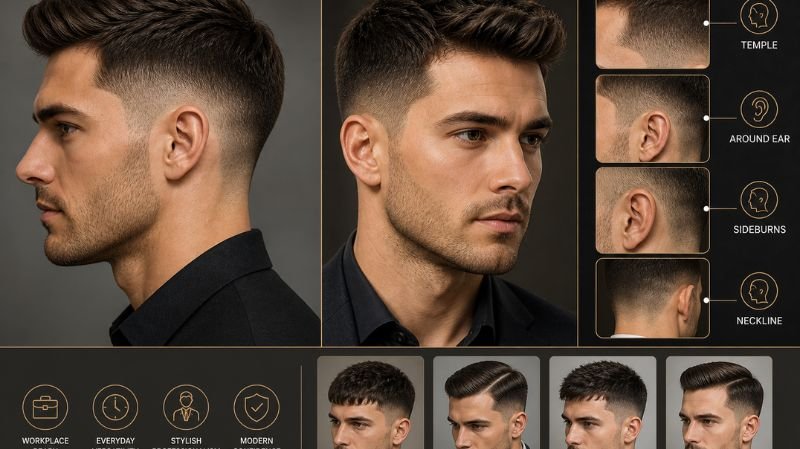
Start near the ears for moderate sharpness.
Ideal For:
- Crew cuts
- Textured crops
- Professional but stylish looks
Mid Fade
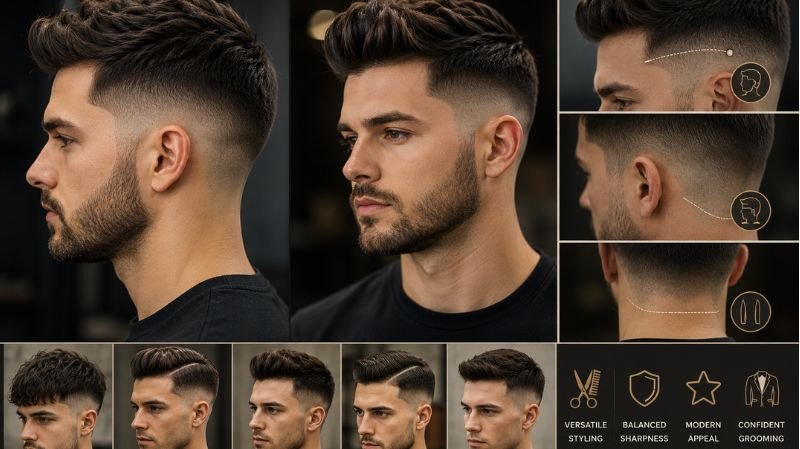
Start midway up the sides.
Ideal For:
- Versatility
- Balanced edge
- Modern men’s cuts
High Fade
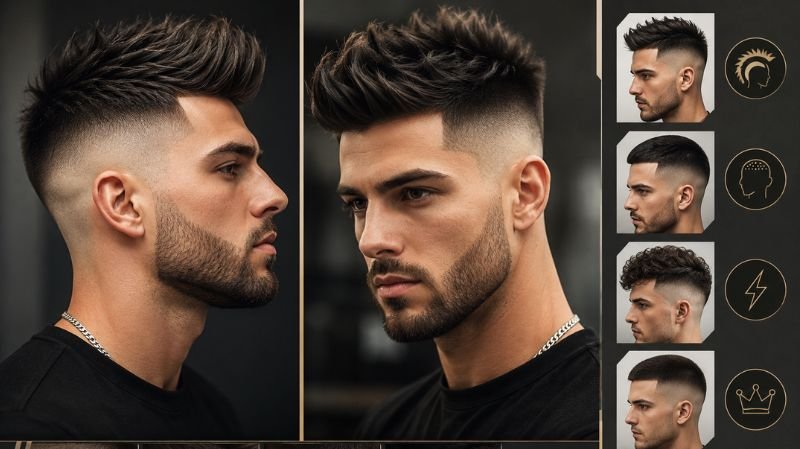
Begins near the temples for maximum contrast.
Ideal For:
- Faux hawks
- Buzz cuts
- Statement hairstyles
Skin Fade
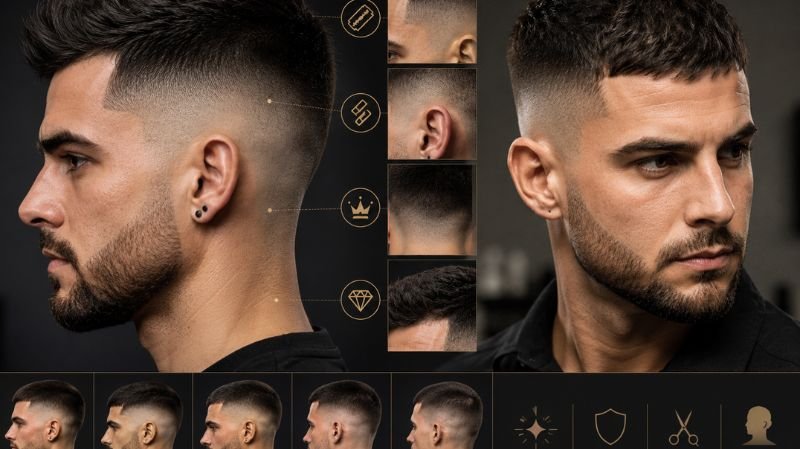
Blends all the way into the skin.
Ideal For:
- Sharpest finish
- Minimalist top styles
- High-maintenance grooming
Drop Fade
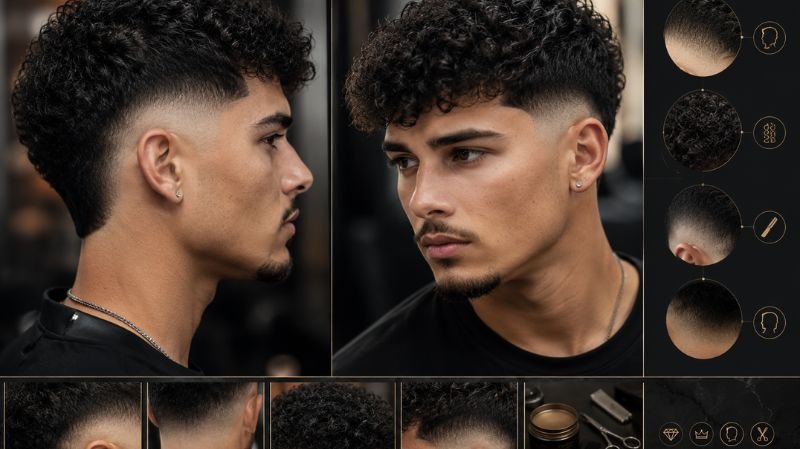
Curves behind the ears for contour.
Ideal For:
- Curly hair
- Artistic cuts
- Personalized style
What Is a Taper Fade?
The term taper fade often confuses people because it’s used broadly. Technically, taper and fade are separate techniques, but “taper fade haircut” has become a catch-all phrase for styles that combine gradual tapering with fade-like blending.
Important Barber Tip:
If you ask for a taper fade, bring photos. Different barbers interpret the term differently.
Authority Insight: What Professional Barbers Say
Top barbers consistently emphasize that communication matters more than terminology. According to industry grooming educators, showing reference images improves haircut satisfaction significantly because haircut naming conventions vary by region and barbering style.
In practical terms:
Your best haircut comes from visual clarity, not just vocabulary.
Taper vs Fade: Which Is Better for Your Face Shape?
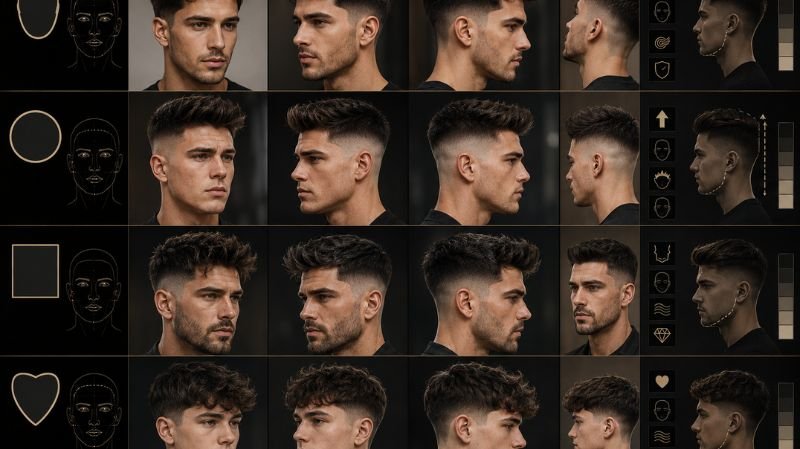
Oval Face
- Taper: Excellent
- Fade: Excellent
- Recommendation: Either works well
Round Face
- Taper: Good
- Fade: Better for elongation
- Recommendation: Mid or high fade
Square Face
- Taper: Great
- Fade: Great
- Recommendation: Depends on desired boldness
Heart Face
- Taper: Better
- Fade: Can overexpose forehead
- Recommendation: Low taper
Hair Type Matters: Which Cut Works Best?
Straight Hair
- Fade highlights sharp lines
- Taper keeps classic flow
Curly Hair
- Low taper hairstyle is often preferred
- Maintains texture while cleaning edges
Thick Hair
- Fade reduces bulk
- Taper preserves shape
Thin Hair
- Taper often appears fuller
- High fades may exaggerate thinning
Maintenance Comparison: Taper vs Fade
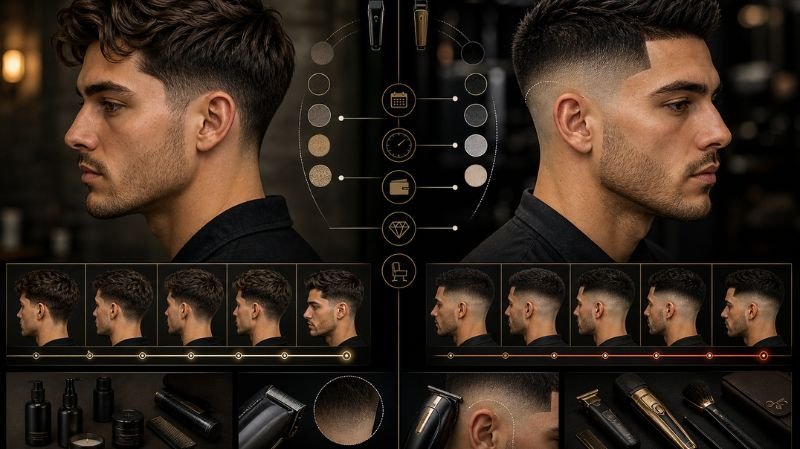
Taper Maintenance:
- Barber every 3–5 weeks
- Easier DIY styling
- Better grow-out
Fade Maintenance:
- Barber every 2–3 weeks
- Requires sharper upkeep
- Contrast fades quickly
Cost Factor:
Because fades require more frequent touch-ups, they can cost more annually than tapers.
Taper vs Fade for Professional Settings
For office jobs, interviews, and conservative environments:
Best Choice: Taper
Why?
- Softer appearance
- Less scalp exposure
- Cleaner grow-out
For trend-driven industries:
Best Choice: Fade
Why?
- Strong visual statement
- Fashion-forward
- Social-media popular
Celebrity & Trend Influence in 2026
Social media platforms, especially style-focused communities, continue pushing:
- Low taper fade haircut
- Burst fade
- Skin fade textured crop
- Modern taper fade haircut
Athletes, musicians, and influencers often favor fades, while executives and polished professionals lean toward tapers.
Common Mistakes to Avoid
Don’t:
- Say “taper fade” without reference photos
- Ignore your face shape
- Choose high fades if you want low maintenance
- Forget neckline style
Do:
- Use pictures
- Ask about maintenance
- Consider job environment
- Match cut to hair texture
Final Verdict: Taper or Fade?
Choose a Taper If You Want:
- Professional style
- Low maintenance
- Natural grow-out
- Versatility
Choose a Fade If You Want:
- Bold appearance
- Sharp contrast
- Trendy aesthetic
- High visual impact
Conclusion
When comparing taper vs fade, there’s no universal winner, only the best fit for your personal style, maintenance preferences, and face shape.
If you want timeless sophistication, a taper is your best move. If you’re after sharp, modern energy, a fade delivers. For many men, the sweet spot is often a low taper fade haircut because it balances professionalism with trend.
Before your next barber visit:
Know your face shape, understand your maintenance commitment, and bring visual references. A great haircut doesn’t just change your hair, it upgrades your confidence.
Ready to upgrade your look? Save your favorite taper or fade styles, consult a skilled barber, and choose the haircut that matches your personality, not just the trend.
FAQs
1. Is a taper better than a fade?
A taper is better for low maintenance and professional settings, while a fade is better for bold, trendy looks.
2. What is a low taper fade haircut?
A low taper fade haircut blends subtle tapering near the neckline with fade-like sharpness around the ears.
3. How long does a taper last?
Typically 3–5 weeks before needing a touch-up.
4. How long does a fade last?
Usually 2–3 weeks for a sharp appearance.
5. Which haircut is best for curly hair?
A low taper hairstyle often works best because it maintains texture while keeping edges clean.
6. Is taper fade a real haircut?
“Taper fade” is a broad barber term rather than one exact style.
7. Which is more professional: taper or fade?
A taper is generally considered more workplace-friendly.
8. Can I combine taper and fade?
Yes, many modern cuts blend tapering and fading techniques.
9. Does a fade make you look younger?
Often yes, because fades can create a fresher, sharper aesthetic.
10. What should I tell my barber?
Specify taper or fade type, desired height (low/mid/high), neckline preference, and show photos.