How to choose a wedding dress becomes much easier when you make the decisions in the right order: define your wedding setting and personal style, establish a realistic total budget, then narrow down silhouette, fabric, neckline and fit. The right gown should not only look beautiful in photographs but also feel comfortable, move naturally and work with the practical realities of your wedding day.
Instant Answer: How Do You Choose the Right Wedding Dress?
Start by considering your venue, season, personal style and budget before falling in love with a particular gown. Then compare silhouettes, necklines and fabrics, try several different shapes, test how each dress moves, and leave enough time for ordering and professional alterations.
The goal is not to find the dress that follows every bridal trend. It is to find a gown that feels like you, photographs beautifully, suits the setting and allows you to enjoy the entire day without constantly adjusting it.
Start With Your Wedding, Not the Dress
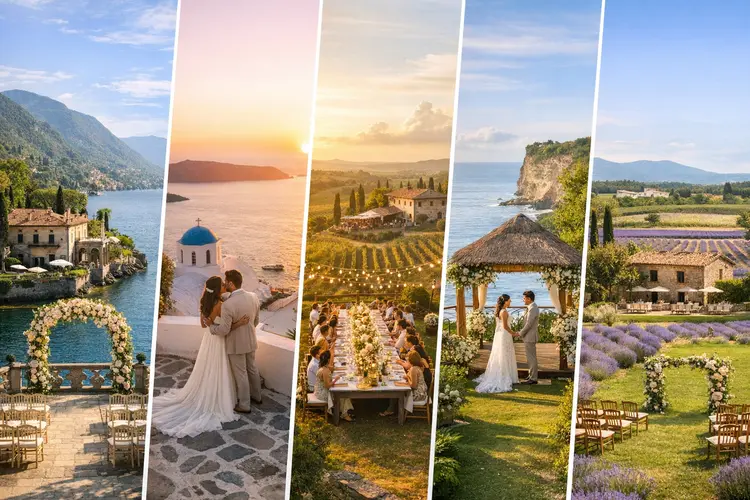
Before looking at wedding dresses, picture the environment in which you will actually wear yours. The venue, season, ceremony style and reception plans can immediately eliminate gowns that look beautiful on a hanger but make little practical sense for your celebration.
A cathedral ceremony, outdoor garden wedding and destination beach celebration create very different styling conditions. Thinking about those conditions first gives you a useful filter before thousands of gowns begin competing for your attention.
Consider Your Venue
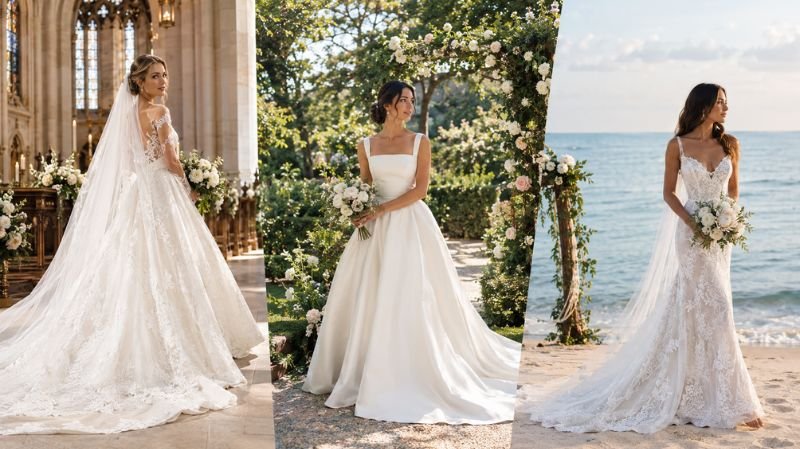
Your venue does not dictate your dress, but it provides valuable context. A dramatic cathedral-length train can feel beautifully proportioned in a grand ballroom, while the same train may become difficult to manage across sand, gravel or uneven outdoor paths.
For a formal indoor wedding, structured fabrics, fuller skirts and statement trains can complement the architecture. For an outdoor celebration, lighter construction, manageable trains and fabrics that tolerate movement can make more sense.
Think About the Ceremony and Reception Together
Some weddings involve one location, while others require walking between a ceremony, cocktail area and reception space. A dress that works beautifully for a short ceremony can become less practical when you are expected to walk, mingle and dance for several additional hours.
Consider the entire day rather than only the aisle moment. If you expect extensive dancing, outdoor photographs or transportation between locations, mobility should be part of your dress criteria from the beginning.
Let the Season Influence Your Choices
Climate affects how comfortable a gown feels, particularly when the dress has several layers or a structured construction. A heavily layered gown may feel very different during a summer outdoor ceremony than it does inside an air-conditioned bridal salon.
Instead of treating fabrics as strictly “summer” or “winter” choices, consider the entire construction. Lining, underlayers, sleeve coverage, embellishment and the venue’s temperature can all affect how warm or breathable a gown feels.
Set Your Wedding Dress Budget Before Shopping
The most useful wedding dress budget is not simply the maximum price you are willing to pay for the gown. It is the amount you can comfortably spend on the finished bridal look, including the expenses that appear after you have chosen the dress.
Your budget may need to cover the gown, alterations, veil, shoes, jewelry, undergarments, accessories and potentially professional steaming or preservation. The exact costs vary significantly by market, designer, construction and the complexity of the alterations.
Create a Total Bridal Look Budget
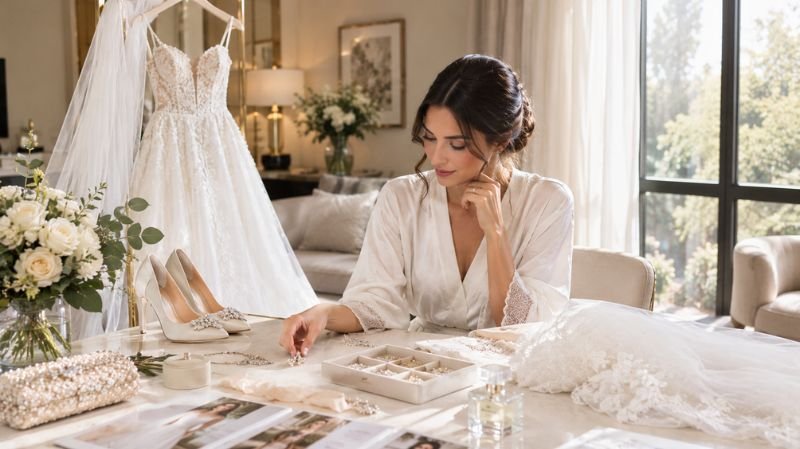
Use a simple framework before booking appointments:
| Expense | Included in your planning? |
| Wedding gown | Yes |
| Alterations | Yes |
| Veil or headpiece | If wearing one |
| Bridal shoes | Yes |
| Undergarments or shapewear | If required by the gown |
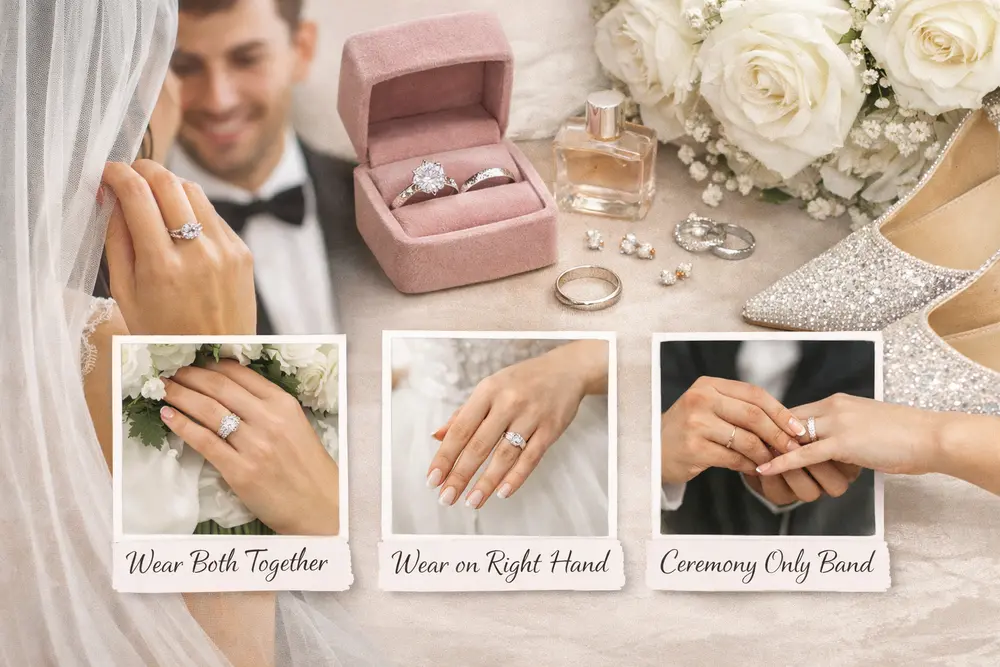
| Jewelry | If part of the bridal look |
| Overskirt, sleeves or detachable pieces | If applicable |
| Steaming or pressing | Ask the boutique |
| Cleaning and preservation | Optional post-wedding cost |
The important point is to ask what is included in the quoted gown price. A dress can appear affordable until you discover that extensive alterations or additional components are necessary to achieve the look you saw in the sample.
Do Not Choose a Budget Formula Just Because It Is Popular
There is no universal percentage of your wedding budget that every bride should spend on a dress. Your priorities, income, wedding size, location and overall plans are personal, so a fixed percentage can be misleading.
A better approach is to establish an absolute amount that feels financially comfortable and then work backward from the complete look. This prevents the common mistake of spending the entire clothing budget on the gown itself.
How to Save Without Sacrificing Style
If your budget is limited, focus on the elements that make the greatest visual difference. A well-fitted simple gown can look considerably more polished than a heavily embellished dress that requires compromises in fit.
Consider sample gowns, off-the-rack options, simpler construction, fewer layers, understated embellishment or detachable accessories. The Knot’s current affordable-dress coverage also demonstrates that bridal gowns are available across a wide range of price points, including options below $600 and $200.
Understand Wedding Dress Silhouettes
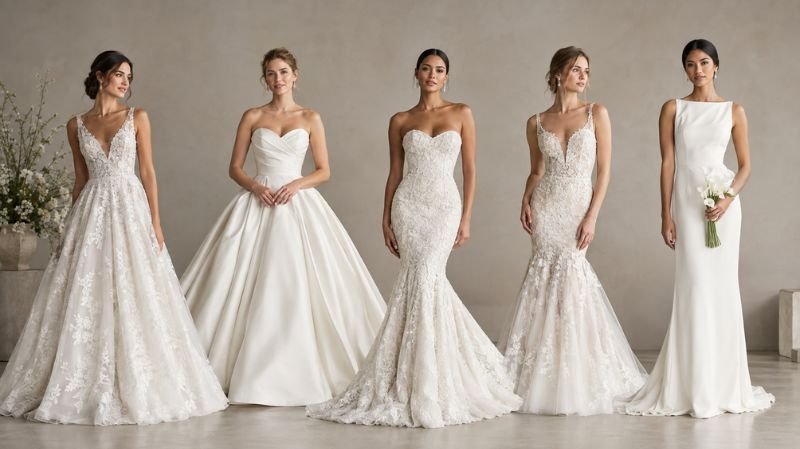
A wedding dress silhouette describes the overall shape of the gown. Learning the basic silhouettes helps you communicate with a bridal consultant and, more importantly, understand how different constructions change the way a dress looks and moves.
Do not treat silhouette terminology as a set of rules about which bodies are “allowed” to wear particular styles. Proportion, construction, fabric, neckline, personal preference and professional alterations can all change the final effect.
A-Line Wedding Dresses
An A-line gown has a relatively fitted bodice and gradually widens toward the hem. Because the skirt expands progressively rather than dramatically, the silhouette can feel balanced, versatile and easy to move in.
A-line wedding dresses work across many wedding settings, from garden ceremonies to formal receptions. They are particularly useful when you want some skirt volume without the scale of a traditional ball gown.
Ball Gown Wedding Dresses
The ball gown combines a fitted or structured bodice with a substantially fuller skirt. It creates a dramatic silhouette and can be especially effective in formal or spacious venues.
Because the skirt contains considerable fabric, check how easily you can walk, sit and navigate your venue. A magnificent ballroom gown should still allow you to move comfortably between the ceremony, photographs and reception.
Mermaid Wedding Dresses
A mermaid gown is fitted through much of the torso and hips before opening dramatically toward the lower skirt. Its defining feature is the contrast between the close-fitting upper portion and the pronounced flare.
The silhouette can create a striking, sculptural effect, but movement deserves particular attention. Walk several steps, sit down and practice climbing a small set of stairs before deciding whether the shape suits your wedding-day routine.
Fit-and-Flare Wedding Dresses
Fit-and-flare gowns follow the body through the bodice and hips before gradually or noticeably widening toward the hem. Compared with some mermaid designs, the flare can begin higher and create a different balance of structure and movement.
This silhouette is useful when you want a defined shape without the visual scale of a ball gown. Construction matters enormously, so compare the actual gown rather than judging the silhouette from a photograph.
Sheath and Column Wedding Dresses
Sheath and column gowns create a long, streamlined profile with comparatively little skirt volume. They can work beautifully for minimalist, modern, destination and intimate weddings.
Because there is less volume to disguise construction issues, precision of fit becomes especially important. Check the gown from the front, side and back and make sure the fabric falls smoothly without pulling.
Empire Waist Wedding Dresses
An empire waist has a raised waistline positioned near or just below the bust, with the skirt flowing downward from that point. The result is softer and less waist-defined than many traditional bridal silhouettes.
This construction can create a relaxed, romantic appearance. The exact effect depends on the fabric, bodice construction and skirt volume, so trying the gown on is more informative than relying on a style label.
Wedding Dress Silhouette Comparison
| Silhouette | Visual Character | Movement | Often Suits |
| A-line | Balanced, gently flared | Generally easy | Versatile weddings |
| Ball gown | Dramatic, voluminous | Depends on skirt | Formal venues |
| Mermaid | Sculpted, dramatic | More restricted | Glamorous looks |
| Fit-and-flare | Defined, shaped | Moderate | Modern or romantic styles |
| Sheath/Column | Sleek, streamlined | Generally easy | Minimalist settings |
| Empire | Soft, flowing | Generally easy | Relaxed or romantic weddings |
The most useful question is not “Which silhouette is best?” It is “Which silhouette gives me the visual effect and freedom of movement I actually want?”
Choose a Dress for Your Proportions, Not a Body-Type Rulebook
Traditional bridal advice often assigns dresses to categories such as pear, hourglass, apple or rectangle. These descriptions can provide a starting point, but they should never become restrictions.
A better styling approach is to examine proportion and emphasis. Ask where the dress creates structure, where the eye is drawn and how the neckline, waistline and skirt work together.
Use the Waistline to Change the Visual Balance
A natural waist emphasizes the narrowest area of many gowns and creates a clearly defined transition between bodice and skirt. A dropped waist lengthens the bodice visually and can produce a more fashion-forward silhouette.
An empire waist moves the visual transition upward and creates a longer, flowing skirt. None is inherently more flattering; the choice depends on the proportions and visual effect you prefer.
Use the Neckline Strategically
A neckline can change the perceived proportion of the upper body just as dramatically as the skirt changes the lower half. A V-neck can create a vertical visual line, while a square neckline introduces a stronger horizontal shape.
A high neckline can feel refined and architectural, whereas an off-the-shoulder neckline emphasizes the shoulders and collarbone. Think about the neckline as part of the gown’s overall composition rather than as an isolated feature.
Remember That Fit Matters More Than the Label
Two dresses with the same silhouette can look completely different because of their fabric, boning, seam placement, neckline and construction. A technically “ideal” silhouette will not look its best if the bodice is pulling or the waist is positioned incorrectly.
This is why trying on several constructions is more useful than deciding your body shape once and shopping from a chart. Your measurements provide information; the fitting room provides the evidence.
Choose the Right Wedding Dress Fabric
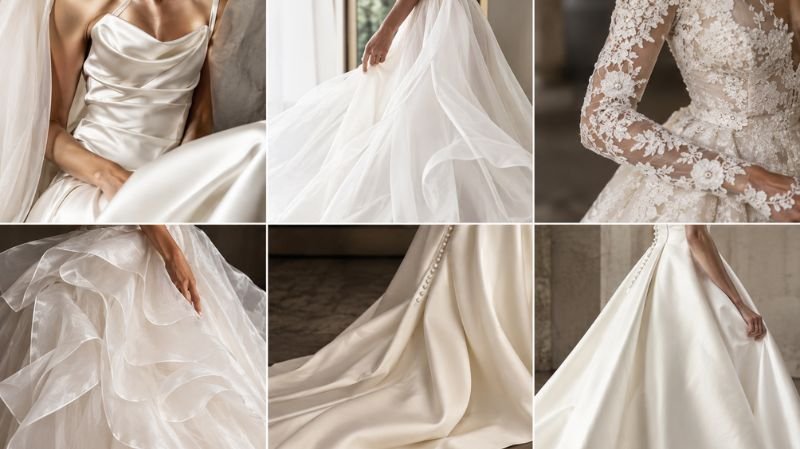
Fabric influences far more than appearance. It affects weight, drape, structure, movement, texture, shine and how the gown photographs under different lighting conditions.
When comparing gowns, do not simply ask whether you like satin, lace or chiffon. Ask what the particular fabric is doing in the actual dress.
Satin
Satin is known for its smooth surface and characteristic sheen. Depending on the fiber and construction, satin can create a structured, polished appearance or a softer drape.
Because smooth surfaces can reveal construction and creasing more readily than textured fabrics, inspect a satin gown under different lighting. Look for how the fabric falls when you stand still and move.
Crepe
Crepe generally has a matte or subtly textured surface and can produce an elegant, streamlined appearance. It is particularly effective in column, sheath and minimalist designs.
Its clean surface makes the quality of fit especially important. If you choose crepe, pay close attention to pulling around the bust, waist and hips.
Chiffon
Chiffon is lightweight and fluid, making it useful for soft, flowing skirts and layered designs. It can create movement without the visual weight of a heavily structured skirt.
For outdoor weddings, consider how wind will interact with lightweight layers. Fluid fabric can look beautiful in motion but may require thoughtful styling and secure construction.
Organza
Organza is lightweight but comparatively crisp, which allows designers to create volume without relying entirely on heavy fabric. It can produce airy skirts, structured layers and sculptural details.
Its crisp character makes it particularly useful when you want volume that feels lighter than a traditional heavy skirt.
Lace
Lace is a surface design rather than a single type of fiber, so its appearance and hand can vary significantly. Chantilly, corded, embroidered and other lace effects can create very different visual impressions.
Rather than choosing “lace” as a category, examine its scale and placement. A delicate lace overlay can feel romantic and understated, while dense lace or heavily embellished appliqué can create a much stronger statement.
Mikado
Mikado is a structured silk or synthetic fabric used frequently in modern bridalwear. Its substantial hand can support clean architectural shapes, polished skirts and dramatic silhouettes.
It can be particularly effective when you want a minimalist gown with enough structure to hold a strong shape.
Choose the Neckline, Sleeves and Back as One Composition
The neckline should not be selected independently from the rest of the gown. The neckline, sleeve treatment and back create one visual frame around your face, shoulders and upper body.
Think about how those three elements work together rather than choosing each from separate inspiration images.
Popular Wedding Dress Necklines
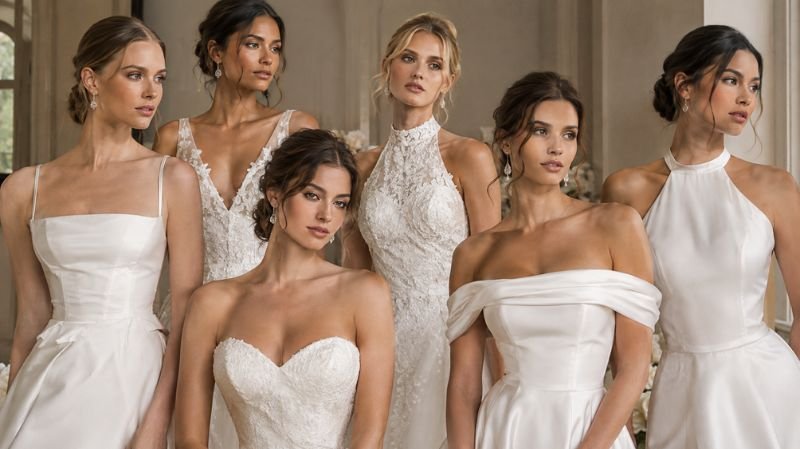
| Neckline | Visual Effect | Styling Consideration |
| Sweetheart | Soft and romantic | Works well with strapless constructions |
| Straight | Clean and modern | Creates a strong horizontal line |
| V-neck | Elongated and open | Depth varies considerably by design |
| Square | Structured and architectural | Pairs well with clean bodices |
| Scoop | Soft and rounded | Often feels understated |
| High neck | Refined and covered | Strong with minimalist or vintage styling |
| Off-the-shoulder | Romantic and shoulder-focused | Consider arm movement and support |
| Halter | Modern and directional | Can create strong shoulder emphasis |
The same neckline can read completely differently depending on the fabric and construction. A structured square neckline in mikado has a different character from a soft square neckline in lace.
Think About Your Wedding Jewelry Too
If you already know you want a statement necklace, heavily embellished neckline and ornate earrings, your gown may become visually crowded. A simpler neckline can create more space for accessories.
Conversely, a minimalist gown can provide a strong foundation for dramatic earrings, a cathedral veil or architectural hair accessories. Styling is often about deciding where you want the visual focus to sit.
Match the Dress to the Venue and Season
Venue compatibility is one of the most useful filters when choosing a gown because it connects aesthetics with practical movement.
The objective is not to follow strict rules but to create harmony between the gown and the environment.
Church or Cathedral Wedding
A formal religious or historic setting can accommodate structured silhouettes, sleeves, fuller skirts and longer trains. If the ceremony has specific dress expectations, confirm them before committing to a gown.
A detachable overskirt, cape or veil can also provide a more formal ceremony appearance without requiring the same level of coverage throughout the reception.
Garden Wedding
Garden weddings naturally lend themselves to gowns that move comfortably over grass, pathways and outdoor surfaces. Lighter skirts and manageable trains can reduce practical difficulties.
Pay particular attention to them. A dress that is perfect on a polished boutique floor may require different handling when the ceremony involves grass, gravel or uneven ground.
Beach Wedding
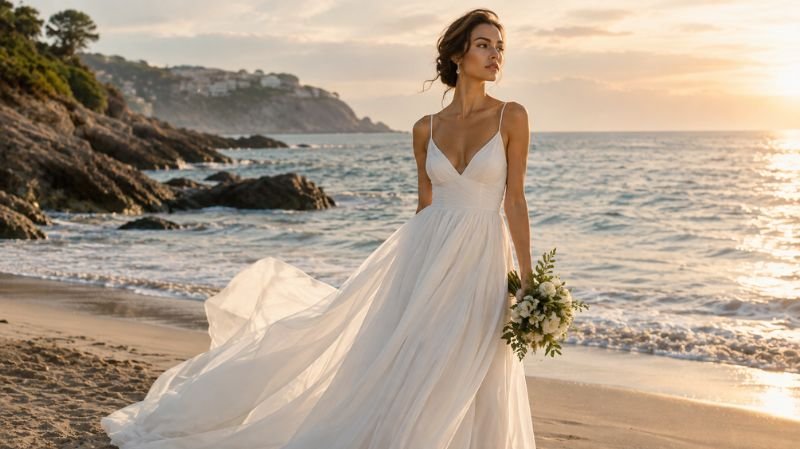
A beach setting often rewards mobility and lighter construction. Flowing skirts, simpler trains and fabrics that move naturally can complement the environment.
Wind should be part of the styling conversation. Secure closures, thoughtful veiling and manageable layers matter when the ceremony takes place beside the water.
Ballroom Wedding
A ballroom gives you more freedom to explore scale. Full skirts, dramatic trains, structured fabrics and elaborate embellishment can work especially well in a large architectural space.
The key is proportion. A highly detailed gown can become visually overwhelming in a small reception room, while a very simple dress can sometimes disappear within a vast formal setting unless styling adds enough visual presence.
Destination Wedding
Destination weddings introduce another factor: transportation. Before choosing a gown, find out how it will be packaged, transported, steamed and stored at the destination.
A delicate gown with extensive embellishment or a large structured skirt may require more preparation than a simpler design. Your travel plans should therefore be part of the dress decision.
Think About Movement Before You Say Yes
One of the biggest weaknesses in generic wedding-dress advice is that it focuses heavily on how a gown looks while standing still. Your wedding day is not a static photoshoot.
You will walk, sit, hug people, eat, use the restroom, climb steps, pose for photographs and potentially dance for hours.
Perform the Wedding-Day Movement Test
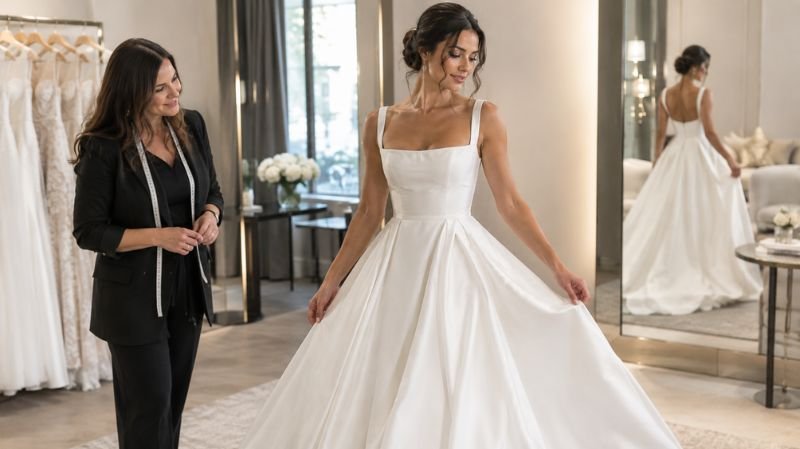
Before making a final decision, try to:
- Walk at a normal pace.
- Sit in a chair.
- Walk up and down stairs if possible.
- Raise both arms.
- Bend carefully.
- Turn around.
- Take several long steps.
- Practice sitting with the skirt arranged naturally.
- Mimic a few simple dance movements.
You are not testing whether the dress survives an obstacle course. You are discovering whether the gown works with the movements you will actually make.
Check the Dress From Every Angle
Ask someone to photograph the gown from the front, side and back. Look at those images later rather than relying entirely on the mirror.
This can reveal details that are easy to miss in a fitting room, including how the neckline sits, whether the waist remains level and how the train looks when you walk.
Know What Wedding Dress Alterations Can Change
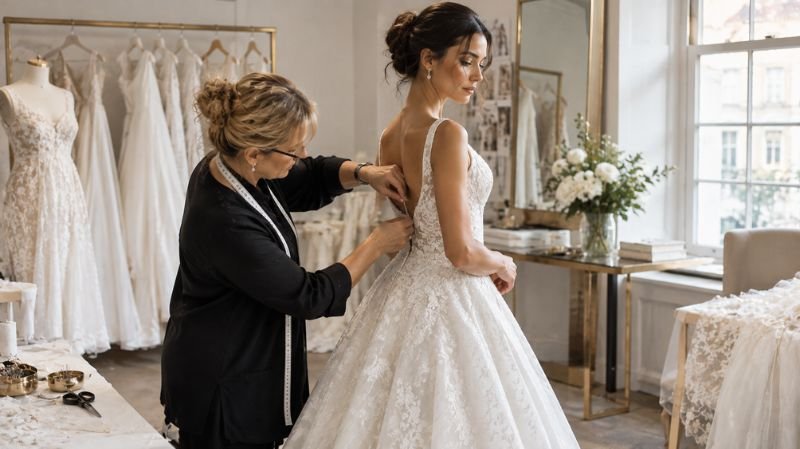
Alterations are not an afterthought. They are a normal part of achieving the intended fit of a bridal gown.
The Knot’s bridal alterations guidance similarly emphasizes alterations as a key part of achieving a precise fit. The amount of work required varies according to the gown’s construction and the adjustments needed.
Common Bridal Alterations
Alterations may include:
- Hemming
- Taking in or letting out seams where possible
- Adjusting straps
- Modifying the neckline
- Reshaping the bust area
- Adding or adjusting a bustle
- Shortening sleeves
- Adding cups or support
- Repositioning embellishment after structural changes
Not every alteration is equally simple. A hem on a plain skirt is fundamentally different from shortening a heavily embellished, multi-layered gown.
Ask About Alterations Before Buying
Before paying a deposit, ask:
- Who will perform the alterations?
- Is the alteration service included?
- What work is considered additional?
- When will the first fitting occur?
- How many fittings are expected?
- What happens if the gown arrives late?
- What happens if the delivered gown has a manufacturing issue?
Get important terms in writing rather than relying on a verbal explanation.
When Should You Start Wedding Dress Shopping?
A common bridal-shopping recommendation is to begin around 9–12 months before the wedding, although the appropriate timeline depends on the designer, boutique, ordering model and whether you are buying off the rack.
Kleinfeld currently advises beginning the overall process around 12–18 months before the wedding and generally ordering the gown around 9–12 months before the wedding. The exact timing should always be confirmed with the boutique handling your specific gown.
A Practical Wedding Dress Timeline
| Time Before Wedding | What to Do |
| 12–18 months | Research designers, styles and boutiques |
| 9–12 months | Shop and ideally order a made-to-order gown |
| 6–8 months | Confirm delivery expectations and alteration plans |
| 2–3 months | Begin or schedule alterations according to the gown |
| 4–6 weeks | Check fit and remaining adjustments |
| 1–2 weeks | Final fitting and complete-look check |
| Wedding week | Steam, transport and store carefully |
If your wedding is less than six months away, do not assume you have missed your opportunity. Ask boutiques about ready-to-wear, sample, discontinued or rush-order options.
Prepare Properly for Your Bridal Appointment
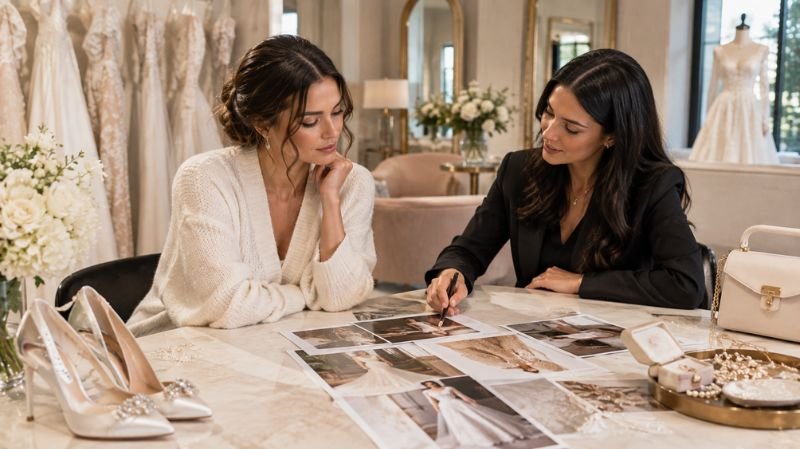
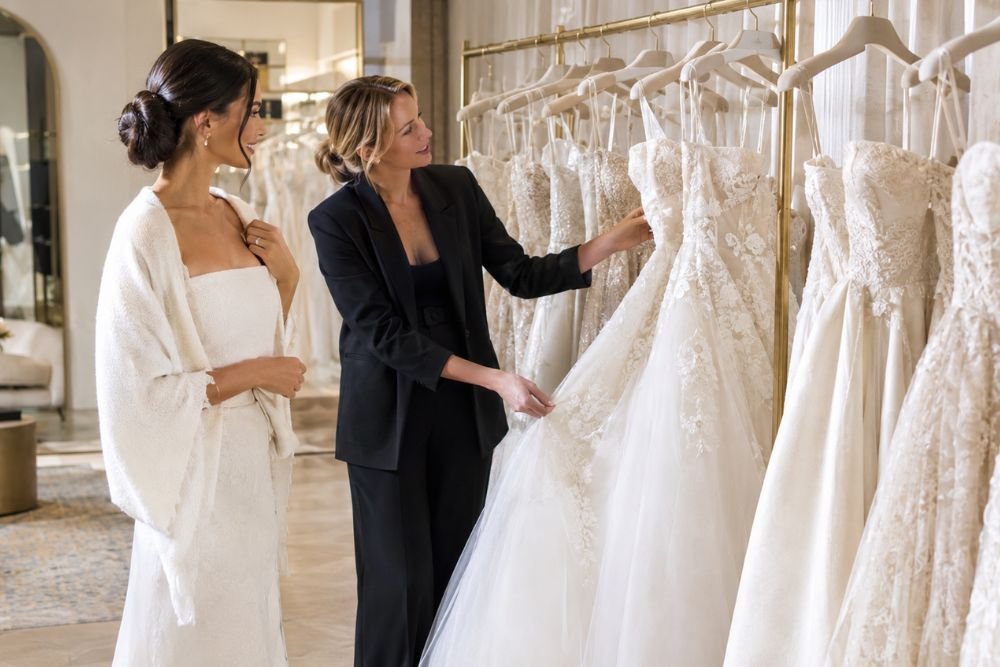
A good appointment is less about bringing a huge entourage and more about bringing useful information.
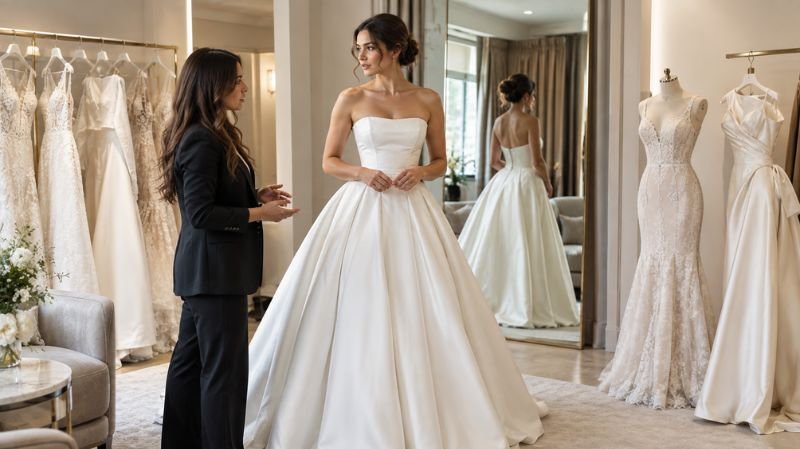
Take your wedding date, venue details, approximate budget and a small collection of inspiration images. If you have already chosen your shoes or jewelry, those can also help establish the intended styling direction.
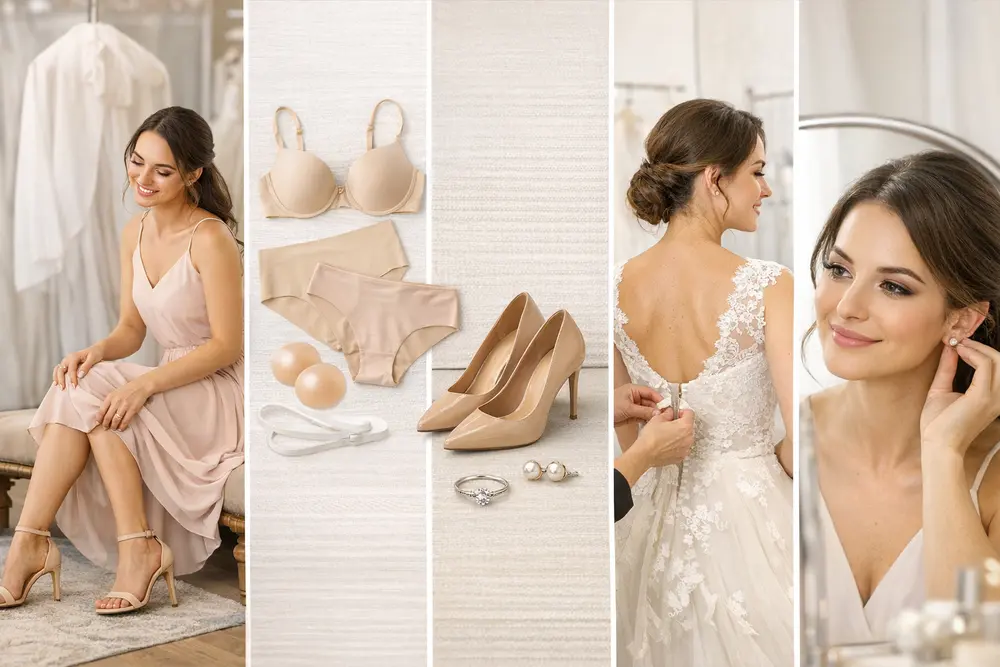
What to Bring Wedding Dress Shopping
Useful items include:
- Inspiration photographs
- Your wedding date
- Venue photographs or details
- Your realistic budget
- Nude or seamless underwear
- A strapless bra if relevant
- Shoes with a similar heel height
- Important accessories you already own
- A phone for photographs, if the boutique permits them
You do not need to arrive with your entire bridal wardrobe. The purpose of the appointment is to discover what works, not prove that you already know the answer.
Bring the Right People
More opinions do not necessarily produce a better decision. A small group of people who understand your taste can provide useful feedback without turning the appointment into a committee meeting.
Choose people who will tell you how the dress looks while still respecting the fact that you are the person wearing it.
How Many Wedding Dresses Should You Try On?
There is no scientifically established “correct” number of gowns every bride should try. Current bridal sources commonly describe ranges such as four to seven or six to ten, but these are practical observations rather than a universal rule.
Instead of setting a quota, use your appointments to compare meaningful variables. Try different silhouettes and fabrics early, then concentrate on the elements that consistently make you feel comfortable and confident.
A Better Way to Shop
Your first few gowns can function as research. Try an A-line, a fitted silhouette, a fuller gown and one style that you would not normally choose.
Pay attention to what changes when the silhouette changes. You may discover that the neckline you love in photographs is less comfortable than expected or that a silhouette you dismissed creates exactly the proportions you wanted.
How to Choose a Wedding Dress Without Getting Overwhelmed
Wedding dress shopping becomes difficult when every gown is evaluated against every other gown. A simple decision framework can make the process much clearer.
After each appointment, score each serious contender against five practical criteria:
| Question | Why It Matters |
| Do I love the overall silhouette? | Establishes the foundation |
| Does it feel comfortable? | Determines day-long wearability |
| Can I move naturally? | Tests real-world practicality |
| Does it suit my venue and season? | Creates visual and practical harmony |
| Does the total cost fit my budget? | Prevents financial regret |
You can also add one personal question: Does this still feel like me?
That question matters because bridal fashion can create pressure to become a different version of yourself for one day. A gown should elevate your personal style rather than erase it.
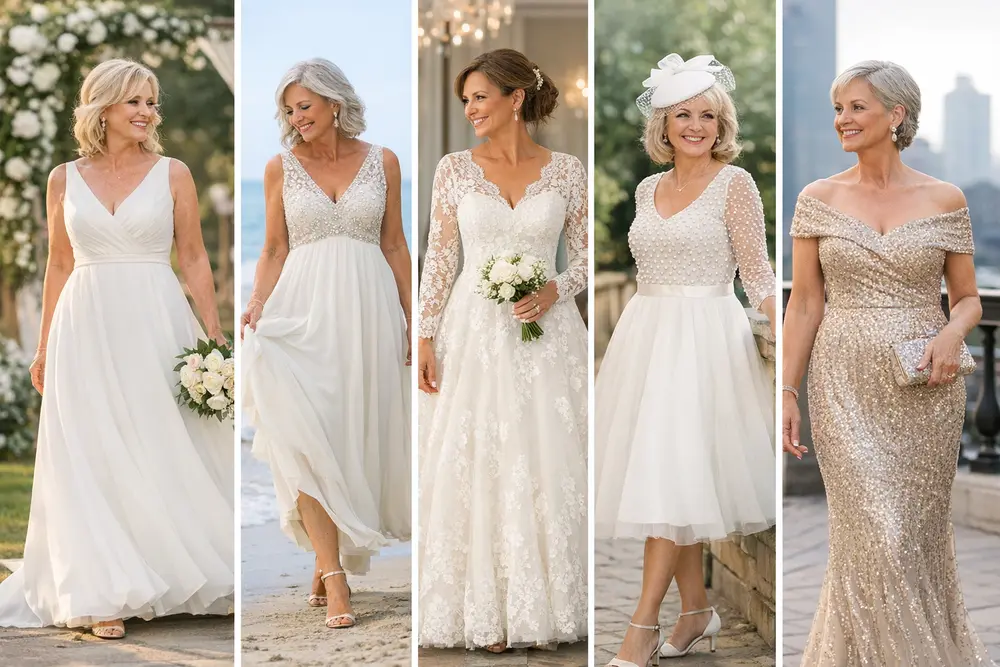
How to Choose Wedding Gowns Bridal Dresses for Different Bridal Styles
The phrase wedding gowns bridal dresses covers an enormous range of aesthetics, from minimalist courthouse gowns to elaborate couture-inspired ball gowns. Instead of shopping by a single trend, identify the visual language you want.
For a Classic Bride
Look for balanced proportions, timeless necklines, controlled embellishment and fabrics with a polished finish. A structured A-line, classic ball gown or streamlined column can all work depending on the venue.
For a Modern Minimalist Bride
Consider clean construction, restrained embellishment and fabrics such as crepe, mikado or polished satin. The quality of the cut becomes especially important because there are fewer decorative details to distract from the silhouette.
For a Romantic Bride
Soft lace, flowing layers, delicate appliqué, floral details and gentle draping can create a romantic effect. Keep the proportions controlled so the gown remains sophisticated rather than visually overloaded.
For a Glamorous Bride
Look for sculptural silhouettes, dramatic trains, strategic sparkle or luxurious surface detail. Glamour does not necessarily require maximum embellishment; one strong element can have more impact than several competing ones.
For a Bohemian Bride
Fluid construction, organic textures, lightweight layers and relaxed silhouettes can complement an informal outdoor celebration. The setting should still determine the final degree of embellishment and train length.
Consider a Second Look or Transformable Gown
A second reception outfit is not the only way to change your bridal look. Some gowns incorporate removable sleeves, overskirts, capes or other detachable elements.
This approach can provide a dramatic ceremony appearance followed by a lighter reception configuration without purchasing two completely separate dresses.
The practical advantage is flexibility. Before choosing a transformable gown, test both configurations yourself and confirm how quickly and securely the components can be removed or attached.
Wedding Dress Shopping Mistakes to Avoid
Shopping Without a Total Budget
Looking at gowns without knowing your maximum spend can create unnecessary disappointment. Establish the total bridal-look budget before your first serious appointment.
Choosing Only From Photographs
Professional photography, lighting, posing and retouching can change how a gown appears. Always prioritize the actual fit and construction when making the final decision.
Assuming Your First Silhouette Is the Only One
The silhouette you imagine wearing may not be the silhouette that feels best on your body. Trying a controlled range of shapes can reveal useful information quickly.
Ignoring the Back
Your wedding dress will be photographed from behind during the ceremony, entrances, exits and many reception moments. Evaluate the back with the same attention you give the front.
Forgetting the Hem
A floor-length gown needs to work with the shoes you will actually wear. Bring the intended shoes or a pair with the same heel height to your fitting.
Leaving Alterations Until the Last Minute
A gown that needs several structural adjustments deserves time. Ask about the alteration schedule before purchasing rather than assuming every change can be completed quickly.
Choosing a Dress You Cannot Move In
A beautiful photograph cannot compensate for a gown that makes you spend the reception pulling, lifting or adjusting the dress.
Red Flags to Watch for at a Bridal Boutique
A professional shopping experience should include clear information about the gown, ordering process, expected delivery and costs.
Be cautious if you encounter unexplained charges, unclear delivery dates, pressure to purchase immediately or vague answers about alterations.
Questions Worth Asking Before You Buy
What is the expected delivery date?
A specific timeline helps you determine whether there is adequate time for fitting and alterations.
What is included in the price?
Clarify whether detachable pieces, customization, accessories or other components cost extra.
What happens if the gown arrives with an issue?
Ask how defects, damage or incorrect specifications are handled.
Who performs the alterations?
Find out whether the boutique has an in-house specialist or works with an independent tailor.
What are the payment and cancellation terms?
Read the agreement carefully before paying a deposit.
Your Final Wedding Dress Checklist
Before committing to a gown, confirm all of the following:
- The gown fits your overall wedding style.
- The silhouette gives you the proportions you want.
- You can sit comfortably.
- You can walk normally.
- You can move your arms.
- The neckline feels secure.
- The bust provides appropriate support.
- The gown works with your shoes.
- The train is practical for your venue.
- The fabric suits the season and setting.
- Alteration requirements are understood.
- Alteration costs are included in your budget.
- The expected delivery date is confirmed.
- Accessories have been considered.
- The final total remains within your budget.
- You still feel like yourself wearing it.
Final Thoughts
Learning how to choose a wedding dress is less about discovering one universally perfect silhouette and more about understanding how fashion decisions interact. Your venue influences the scale, your budget defines the realistic options, your silhouette establishes the shape, and the fabric determines much of the gown’s movement and character.
The strongest choice is usually the gown that succeeds across several dimensions at once: it reflects your personal style, fits properly, works within your budget and allows you to move through your wedding day naturally.
Do not let a body-shape chart, social-media trend or someone else’s idea of the “perfect bride” make the decision for you. Try thoughtfully, ask detailed questions, evaluate the gown from every angle and give professional alterations the time they deserve.
Ready to start shopping? Save this guide, build your bridal appointment checklist and take your venue, budget and favorite inspiration images with you. The right dress is not simply the one that looks beautiful on the hanger—it is the one that works beautifully when you are actually living your wedding day.
Frequently Asked Questions
What should I prioritize first when choosing a wedding dress?
Start with the practical framework of venue, season, budget and personal style. Once those are established, silhouette, fabric, neckline and details become much easier to evaluate.
Is it better to buy a wedding dress that is slightly too big?
A gown that can be professionally taken in may provide more alteration flexibility than one that is already too tight, but sizing should follow the designer’s measurement chart and the boutique’s guidance. Do not intentionally order a dramatically different size based on a plan to change your body before the wedding.
Should I choose my wedding dress before choosing accessories?
Not necessarily. It is useful to know your general accessory direction, but the gown usually establishes the foundation of the bridal look. Once the dress is chosen, you can select a veil, jewelry, shoes and hair accessories that complement rather than compete with it.
What wedding dress details make a gown look expensive?
There is no single detail that determines whether a gown looks luxurious. Precise construction, clean finishing, appropriate proportions, quality materials and professional alterations often have more visual impact than simply adding more embellishment.
Should I choose a wedding dress based on current bridal trends?
Trends can provide inspiration, but they should not be the sole basis for a major purchase. If you love a current trend, incorporate it in a way that still works with your personal style, venue and comfort requirements.
Can I change a wedding dress after buying it?
Some changes are possible, but the feasibility depends heavily on the gown’s construction, seam allowances, embellishment, fabric and design. Ask an experienced bridal alterations specialist before assuming a major modification can be made.
What should I do if I love two completely different wedding dresses?
Compare the gowns using the same criteria rather than trying to decide emotionally between two photographs. Consider fit, comfort, venue, movement, total cost, alterations and which version of yourself you genuinely want to present on the wedding day.
Is a long wedding dress train practical?
It can be, particularly for a formal ceremony, but practicality depends on the venue and how the train is constructed. Ask about a bustle or other method of securing the train after the ceremony so you can move more freely during the reception.
Can a petite bride wear a ball gown?
Absolutely. Height alone does not determine whether a ball gown works. The proportion of the bodice, waist placement, skirt volume, neckline and tailoring can all be adjusted to create a balanced result.
Is comfort really important when choosing a wedding dress?
Yes. Your wedding dress may be worn through several hours of standing, walking, sitting, photographs, meals and dancing. A gown that looks beautiful but restricts normal movement can become a practical problem long after the initial excitement of trying it on has passed.