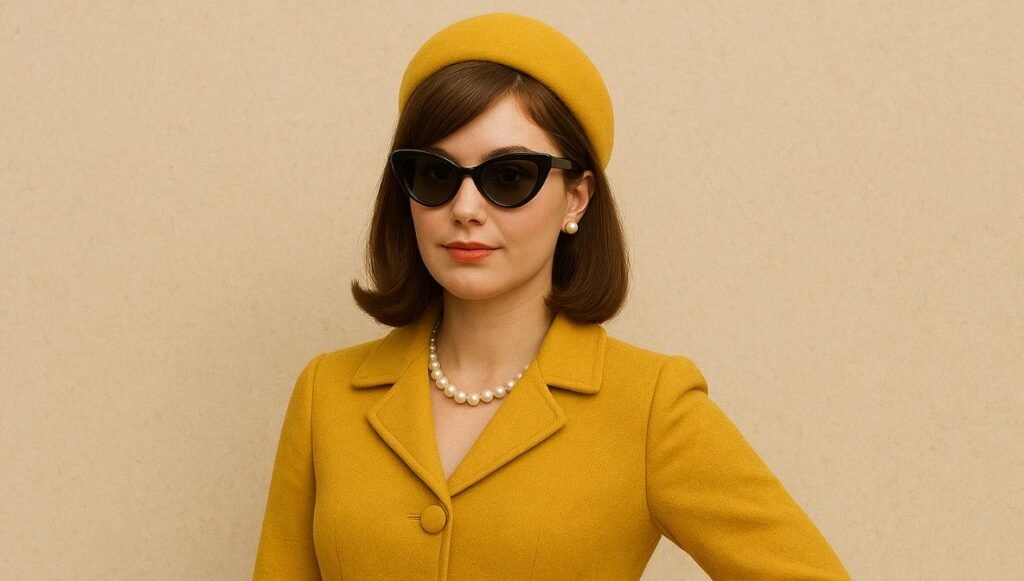
How to wear a fur coat comes down to balancing its texture and volume with the right clothing, footwear, and accessories. Pair a fur coat with straight-leg jeans for everyday wear, tailored trousers for a polished look, or a slip dress for an elegant evening outfit. The most versatile fur coat outfits let the outerwear stand out while keeping the rest of the look intentional and comfortable.
Fast Answer: How to Style a Fur Coat
- For casual outfits: Pair a fur coat with straight-leg jeans, a simple knit, and ankle boots or sneakers.
- For a polished look: Choose tailored trousers, a fitted top, and loafers or pointed-toe boots.
- For evening: Layer a cropped fur jacket over a slip dress or wear a long coat over a streamlined dress.
- For balanced proportions: Offset a voluminous coat with cleaner lines, or pair a cropped coat with high-waisted or wide-leg bottoms.
- For long-term wear: Choose a coat that fits comfortably over your usual layers and follow its specific care label.
Fur outerwear can feel glamorous without being reserved for special occasions. Whether you own a vintage fur coat, a modern faux-fur jacket, or a long statement piece, the right combinations can make it work with clothes you already wear.
The following outfit ideas cover casual days, work-appropriate styling, dinner dates, parties, and colder-weather layering.
How to Wear a Fur Coat: The Basics
Before building different outfits, consider three elements: silhouette, texture, and proportion. These determine whether a fur coat complements your clothing or overwhelms the overall look.
Let the Fur Coat Be the Focal Point
Fur has a distinctive surface that naturally draws attention. With a dramatic, shaggy, patterned, or brightly colored coat, a simple base of denim, knitwear, or tailored separates often creates the most versatile result.
A neutral coat gives you more freedom to experiment with prints and accessories. A statement coat generally benefits from a quieter base, although contrasting colors and textures can work beautifully when they are balanced deliberately.
Balance Volume With Structure
A plush coat adds visual volume around the shoulders, torso, and sometimes the hips. Pairing it with structured trousers, a defined waist, or a relatively streamlined top can create a more intentional silhouette.
That does not mean you must always wear skinny jeans with oversized fur. Wide-leg trousers and relaxed denim can look equally effective; the important thing is to consider where the coat ends, how the fabrics drape, and how much volume the complete outfit creates.
Match the Coat Length to the Outfit
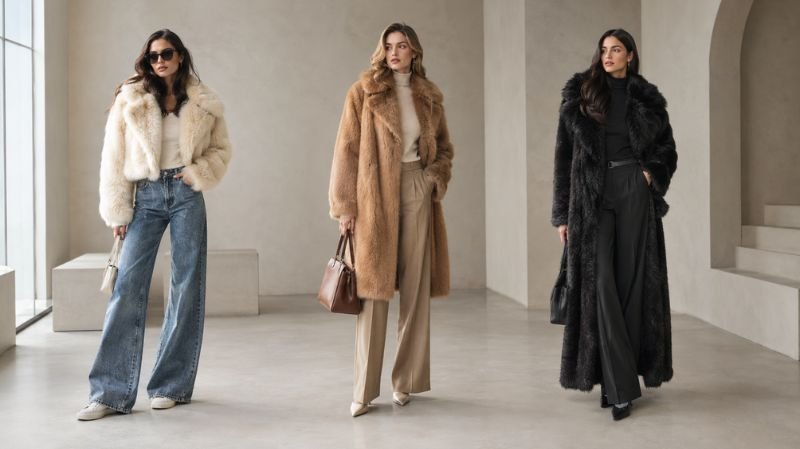
Cropped fur jackets work especially well with high-waisted trousers, jeans, and dresses that benefit from a shorter outer layer. Mid-length coats offer everyday versatility, while long coats create a continuous line over dresses, matching separates, and streamlined winter outfits.
These are styling guidelines rather than rigid rules. Your height, preferred fit, footwear, and the coat’s actual cut all affect the final result.
Mix Textures With Intention
Fur pairs naturally with denim, leather, satin, wool, and fine-gauge knitwear because these materials create different surface finishes. A plush coat over smooth leather trousers, for example, gives the outfit contrast without requiring multiple statement pieces.
For an easier approach, choose one dominant texture and let the others support it. A fur coat, heavily embellished top, metallic skirt, and oversized statement bag can compete for attention unless the combination is carefully coordinated.
15 Stylish Fur Coat Outfit Ideas
These 15 fur coat outfits range from practical everyday combinations to more expressive evening looks. Each formula can be adapted to your coat’s color, length, and fit rather than requiring an entirely new wardrobe.
1. Fur Coat With Straight-Leg Jeans and Ankle Boots
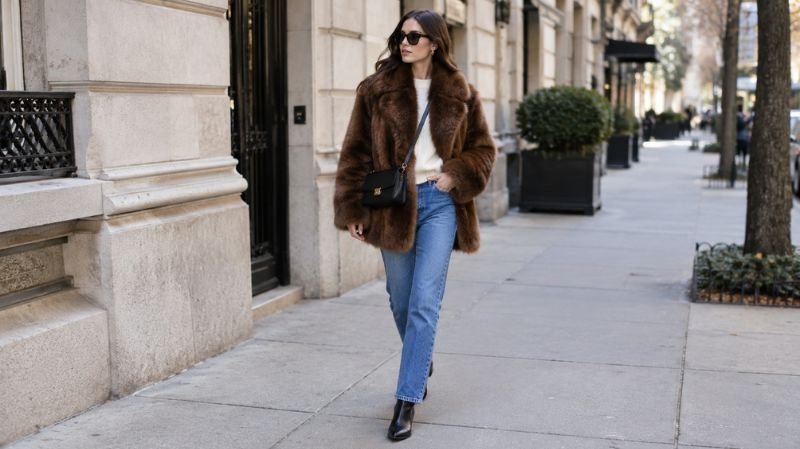
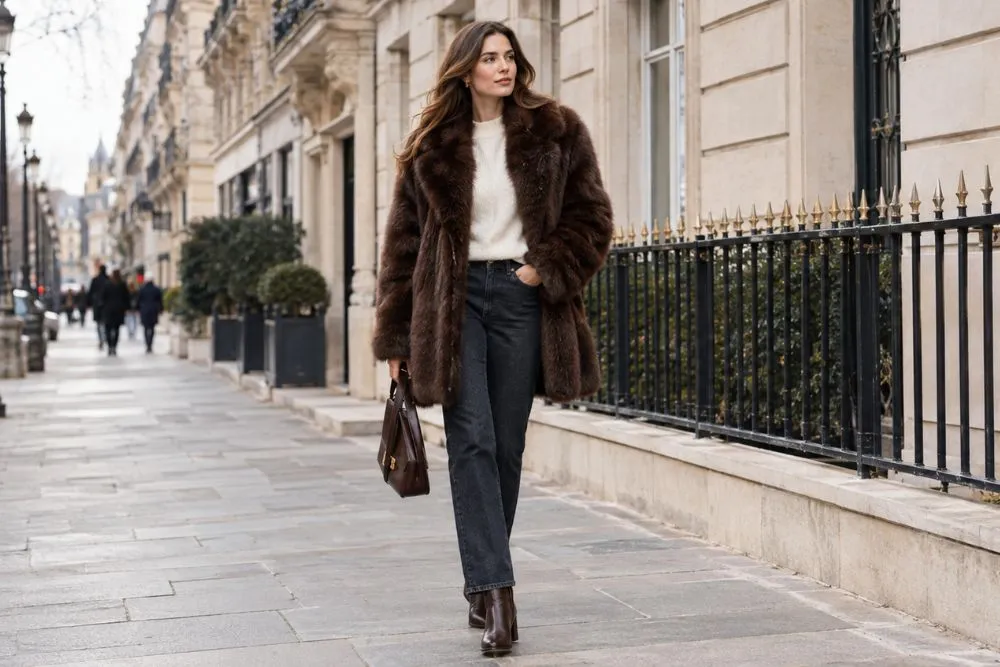
Straight-leg jeans are a reliable starting point when you’re learning how to style a fur coat for everyday wear. The denim keeps the outfit relaxed, while the coat adds texture and makes a basic combination feel more considered.
How to put it together:
- Outerwear: Brown, black, or cream fur coat.
- Top: White T-shirt, fine-knit sweater, or fitted turtleneck.
- Bottoms: Straight-leg blue or black jeans.
- Shoes: Leather ankle boots with a flat, block, or modest heel.
Choose a slightly tucked-in top if you want to define the waist. For a softer daytime look, add a simple crossbody bag and understated earrings rather than layering on several statement accessories.
Best for: Everyday errands, casual lunches, shopping, and city outings.
2. An All-Black Outfit With a Fur Coat
An all-black outfit creates a clean backdrop for a textured fur coat. The combination works particularly well when the coat has a distinctive pile or oversized silhouette that you want to emphasize without introducing additional colors.
Start with a black turtleneck and tailored trousers, then finish with black ankle boots or pointed-toe shoes. For depth, combine matte knitwear with leather accessories or trousers that have a subtle sheen.
If the coat is also black, pay attention to differences in texture and shape. These small contrasts prevent the outfit from appearing flat, even when every piece belongs to the same color family.
Best for: Dinner plans, evening events, city wear, and smart-casual occasions.
3. A Neutral Monochrome Fur Coat Outfit
Cream, ivory, beige, camel, and taupe create a tonal outfit that feels cohesive without relying on a single exact shade. A neutral fur coat is especially useful when you want texture to provide interest instead of bold prints.
Pair a cream coat with a beige knit, tailored trousers, and shoes in a complementary neutral. Alternatively, combine a camel coat with chocolate-brown accessories for a warmer palette.
The trick is to vary the tones or textures slightly. If all the pieces are similar in color, a ribbed sweater, smooth trousers, and a fluffy coat can create definition without breaking the monochrome effect.
Best for: Brunch, daytime events, smart-casual dressing, and winter travel.
4. Fur Coat With Leather Trousers
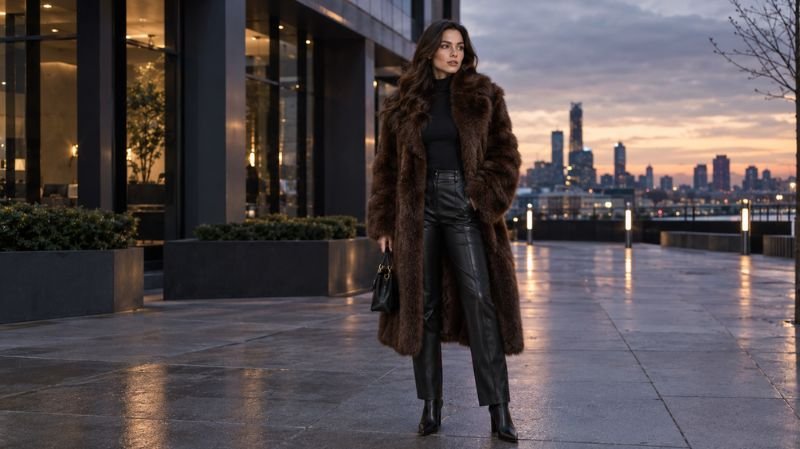
Leather or faux-leather trousers provide a sleek contrast to a plush fur coat. The combination feels expressive while remaining relatively easy to assemble from a few pieces.
Choose straight-leg or gently tapered trousers with a fitted top, then add a brown, black, or deep burgundy coat. Ankle boots work well for a practical finish, while heeled boots make the outfit more suited to evening plans.
If your coat is oversized, keep the top underneath relatively streamlined. If it is cropped, wider leather trousers can create a more dramatic silhouette without making the outfit look top-heavy.
Best for: Dinner, concerts, evening outings, and fashion-forward casual wear.
5. A Cropped Fur Jacket With Wide-Leg Jeans
A cropped fur jacket is a useful alternative to a long coat when you want the texture of fur without as much visual weight. Its shorter hem can create a clear transition between the upper and lower halves of the outfit.
Pair it with high-waisted wide-leg jeans and a fitted top or fine knit. Add loafers, sneakers, or heeled boots depending on the occasion and the length of the jeans.
Check where the jacket ends relative to your waistband. A hem that works with the rise of your trousers usually looks more deliberate than one that cuts across an awkward point in the outfit.
Best for: Casual outings, weekend dressing, and relaxed street-style looks.
6. Fur Coat With Tailored Trousers
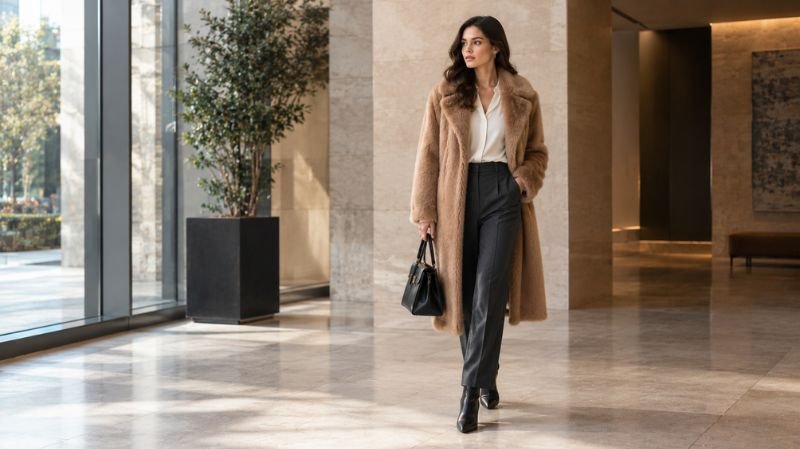
Tailored trousers give a fur coat a more refined direction. This combination is particularly useful when jeans feel too casual but a dress seems unnecessarily formal.
Choose trousers with a clean front, a well-defined waistband, and enough room to move comfortably. A fine-knit sweater, simple blouse, or fitted long-sleeved top provides a smooth layer beneath the coat.
Loafers and structured bags reinforce the tailored feel, while heeled ankle boots create a sharper finish. For an office setting, check your workplace’s dress code and choose a coat and base outfit that feel appropriate for the environment.
Best for: Smart-casual offices, business lunches, galleries, and daytime events.
7. Fur Coat With a Satin Midi Skirt
A satin midi skirt introduces fluid movement and a subtle sheen that contrasts with the softness of fur. It is a useful option when you want a feminine silhouette without relying on a fitted dress.
Pair a black or brown fur coat with a satin skirt in black, champagne, burgundy, or another complementary shade. A fine-knit top keeps the layers simple, while boots or closed-toe heels complete the look.
Pay attention to the skirt’s cut and the coat’s hem. A straight or gently flared skirt can work with a voluminous coat, especially when the top underneath helps establish a clear waistline.
Best for: Dinner, celebrations, date nights, and dressy daytime occasions.
8. A Cropped Fur Jacket Over a Slip Dress
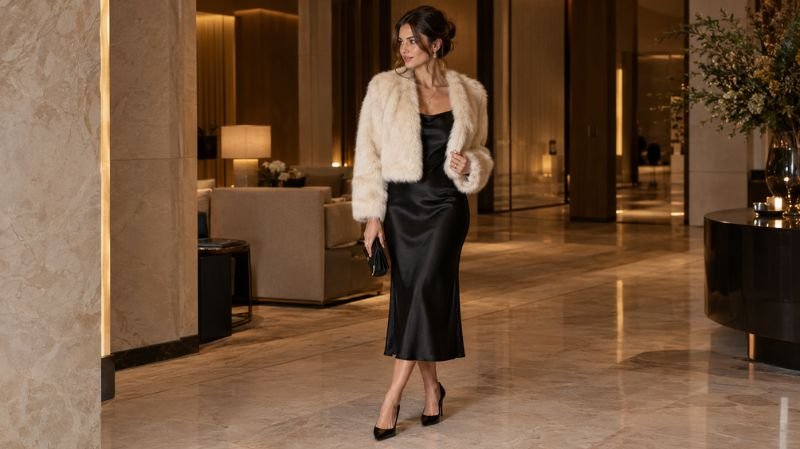
A slip dress and cropped fur jacket create a strong contrast between fluid fabric and plush outerwear. The shorter jacket also leaves more of the dress visible, which helps preserve its line.
For a classic combination, choose a black, cream, or chocolate-brown jacket over a satin slip dress. Add delicate jewelry and shoes that suit the formality of the occasion.
If the evening is cold, consider thermal base layers or tights where appropriate rather than assuming the coat alone will provide enough warmth. The outfit should feel as comfortable as it looks.
Best for: Date nights, cocktail events, dinners, and evening celebrations.
9. A Little Black Dress With a Fur Coat
A little black dress offers a simple foundation for a statement coat. Because the dress is relatively understated, you can experiment with a longer silhouette, a rich brown shade, or a coat with a more pronounced texture.
For a streamlined result, choose a dress with a clean neckline and minimal embellishment. Add knee-high boots or heels, then carry a compact bag that suits the event.
For a more modern interpretation, avoid matching every accessory exactly. A black dress with a brown coat and complementary dark shoes can look more dimensional than an entirely coordinated set of black accessories.
Best for: Dinner dates, evening parties, and special occasions.
10. A Casual Fur Coat Outfit With Sneakers and Denim
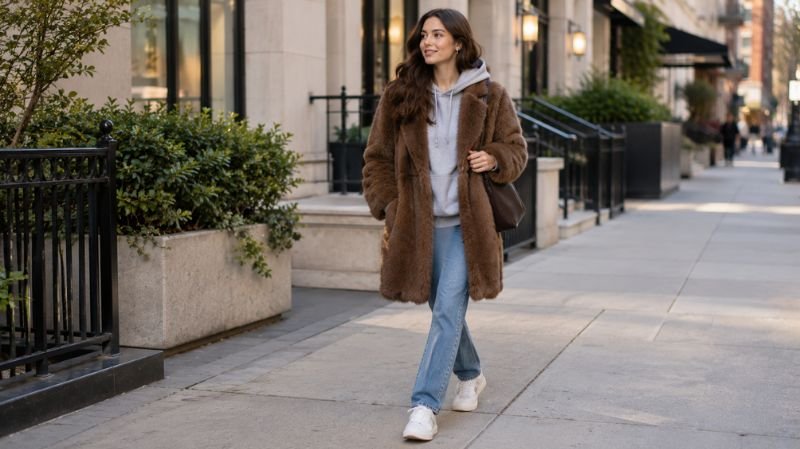
One of the easiest ways to make a fur coat feel wearable is to combine it with familiar casual pieces. Sneakers, denim, and a hoodie reduce the formality of a plush coat without removing its visual impact.
Start with straight-leg jeans, a plain hoodie or crewneck sweatshirt, and clean sneakers. Add a cropped or mid-length fur coat, or wear a longer coat open over the outfit.
Keep the proportions comfortable rather than forcing a fitted silhouette. If both the coat and hoodie are oversized, check that the layers sit smoothly together and that the sleeves do not bunch uncomfortably.
Best for: Weekend outings, travel days, casual lunches, and relaxed city wear.
11. A Retro-Inspired Fur Coat With Flared Jeans
Flared jeans bring a vintage-inspired feel to fur outerwear, particularly when paired with a caramel, chocolate, or tan coat. A fitted knit helps balance the wider leg and creates a clear line through the torso.
Choose jeans that fall naturally over your footwear without dragging on the ground. Heeled boots can add height, but flat shoes work if the hem is adjusted to the correct length.
For a restrained retro look, add a simple leather belt and a small shoulder bag. If the coat already has a strong vintage silhouette, you do not need to add multiple period-inspired accessories.
Best for: Weekend outings, casual dinners, and vintage-inspired dressing.
12. A Belted Fur Coat With a Defined Waist
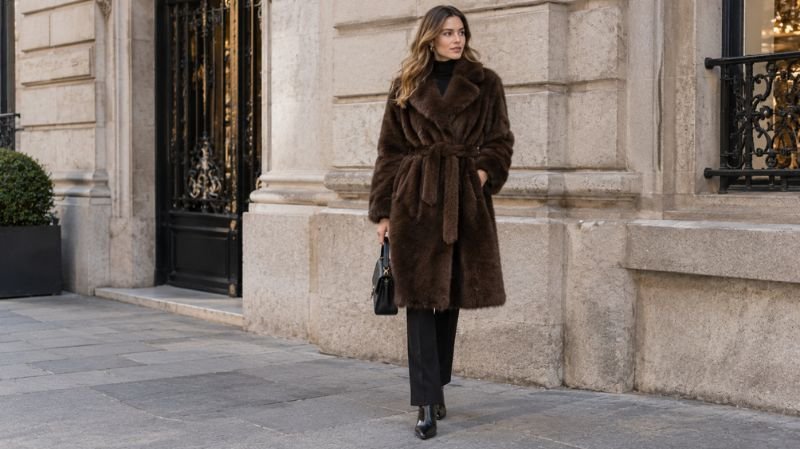
A belt can change the silhouette of a fur coat by emphasizing the waist and creating more definition through the torso. This approach is especially useful with coats designed to close with a belt or styles that already have a waist tie.
Wear the coat over a simple knit and straight-leg trousers, or use it to define the shape of a dress underneath. A narrow or medium-width belt often provides a subtle change, while a wider belt creates a more pronounced focal point.
Avoid cinching a coat so tightly that it pulls at the shoulders, distorts the pile, or makes the fabric bunch unevenly. The goal is to shape the outfit, not compromise the garment’s fit.
Best for: City dressing, dinners, and polished winter outfits.
13. A Fur Coat With a Mini Skirt and Tall Boots
A mini skirt and tall boots create a clear contrast between a short hemline and a substantial outer layer. This combination works well with a cropped or mid-length fur coat, depending on the proportions you prefer.
Pair the skirt with opaque tights and a fitted sweater for cooler weather. Knee-high boots offer a continuous line through the legs, while ankle boots create a more segmented look.
For added practicality, choose a skirt that allows comfortable movement and tights suitable for the temperature. A shorter skirt does not have to mean sacrificing warmth or ease of movement.
Best for: Parties, weekend outings, and fashion-forward daytime looks.
14. A Fur Coat Over a Tailored Suit
Layering a fur coat over a suit combines structured tailoring with a softer, more tactile outer layer. It is an effective option when you want the outfit to feel formal without relying on an evening dress.
Choose a coat with enough room to fit over the suit jacket without pulling at the shoulders or restricting your arms. A simple top, matching trousers, and polished shoes help keep the overall silhouette cohesive.
A black coat works with charcoal, navy, and black tailoring, while brown or camel fur can complement cream, gray, and earth-toned suits. Check the full outfit while standing and sitting to make sure the layers remain comfortable.
Best for: Business events, formal lunches, professional dinners, and tailored evening looks.
15. A Printed or Colorful Fur Coat as the Statement Piece
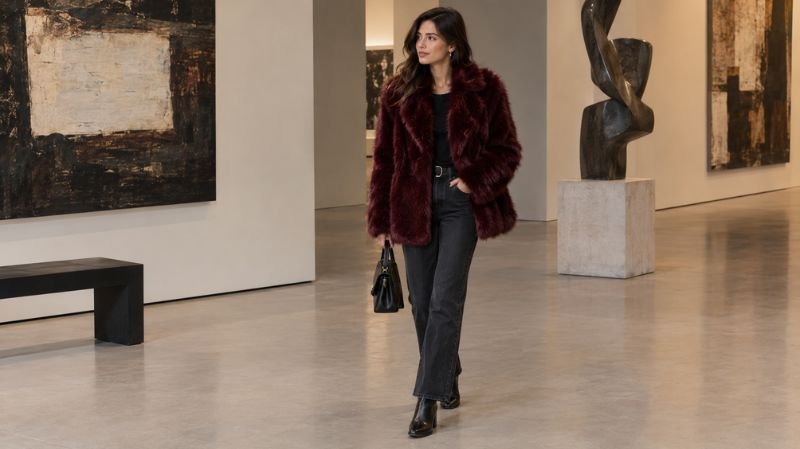
A printed or brightly colored fur coat can become the defining feature of an outfit. Leopard print, burgundy, deep green, and other expressive shades work particularly well when the remaining pieces provide a calm visual base.
For a leopard-print coat, try a black knit, dark denim, and simple boots. For a burgundy or green coat, use neutral separates that allow the color to stand out without introducing competing patterns.
You can also experiment with contrast, such as a colorful coat over a tonal outfit in a complementary shade. The key is to choose a clear color direction rather than adding several unrelated statement pieces.
Best for: Parties, creative events, weekend outings, and expressive personal style.
How to Style a Fur Coat by Color
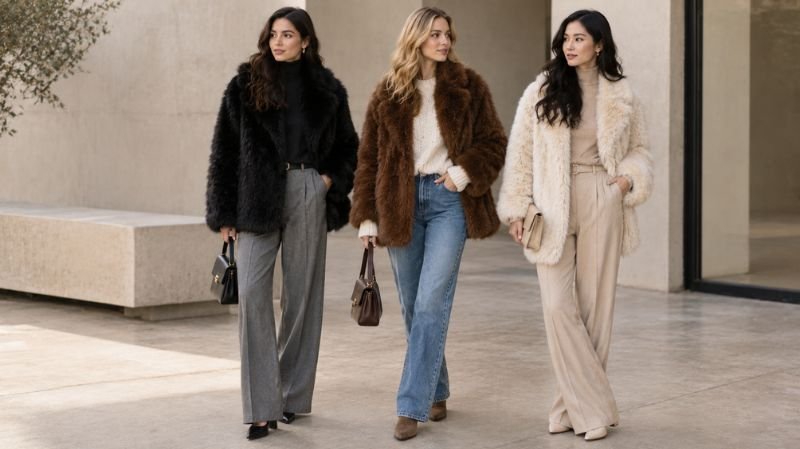
The color of your coat affects which combinations feel cohesive, contrasting, or dramatic. You do not need to match every garment; instead, choose a palette that supports the coat’s undertone and overall intensity.
| Fur coat color | Colors to pair it with | Styling direction |
| Black | White, gray, denim, burgundy | Sleek, versatile, evening-ready |
| Brown | Cream, camel, black, blue denim | Warm, relaxed, vintage-inspired |
| White or cream | Beige, taupe, chocolate, charcoal | Soft, tonal, refined |
| Gray | Black, white, navy, pale blue | Cool-toned, understated |
| Burgundy | Black, cream, charcoal, dark denim | Rich, expressive, evening-friendly |
| Leopard print | Black, chocolate, dark denim | Bold outerwear with a simple base |
How to Wear a Black Fur Coat
A black fur coat is one of the easiest options to integrate into a wardrobe because it works with both neutral and contrasting colors. Try black trousers for a streamlined look, blue denim for daytime, or a cream dress for a stronger color contrast.
For an outfit with more depth, mix matte and reflective surfaces rather than relying on color changes alone. Black knitwear, leather boots, and plush outerwear can look distinct even when the palette remains monochromatic.
What to Wear With a Brown Fur Coat
Brown fur coats pair naturally with cream knitwear, blue denim, chocolate accessories, and warm neutral trousers. The result can feel casual with jeans or more polished with tailored separates.
For a deeper palette, combine chocolate brown with black or burgundy. For a lighter outfit, introduce ivory or beige near the face to create contrast against a dark coat.
How to Style a White or Cream Fur Coat
White and cream coats work well with tonal outfits, charcoal tailoring, and dark denim. A cream coat over a beige sweater and tailored trousers creates a softer result, while black trousers provide a sharper contrast.
Consider how easily the coat will show dirt, especially around the cuffs, collar, and front edges. If you plan to wear it frequently, a slightly darker neutral may be more practical for your routine.
How to Wear a Gray or Colorful Fur Coat
Gray coats complement black, white, navy, and denim, making them useful for understated outfits. A colorful coat requires a little more planning, but a simple base outfit makes it easier to incorporate expressive shades.
Try a burgundy coat with charcoal trousers or a jewel-toned coat with a black dress. If the color is especially vivid, repeat it only in small details—or leave it as the sole statement color.
How to Choose the Right Fur Coat for Your Outfit
The best coat is not necessarily the longest, fluffiest, or most expensive. Consider the clothing you intend to wear underneath, the climate, how often you will use the coat, and how much movement you need.
| Coat style | Works particularly well with | What to consider |
| Cropped fur jacket | High-waisted jeans, wide-leg trousers, dresses | Hem placement and waist definition |
| Mid-length fur coat | Straight jeans, tailored trousers, skirts | Everyday versatility and ease of movement |
| Long fur coat | Dresses, monochrome outfits, streamlined separates | Overall volume, weight, and walking comfort |
| Oversized fur coat | Relaxed denim, fine knits, structured bottoms | Room through shoulders and sleeves |
| Fitted fur coat | Tailored trousers, pencil skirts, simple dresses | Comfortable layering and fastening |
Cropped Fur Jackets for Casual Looks
Cropped jackets work well when you want the coat to frame the upper half of your outfit. They are particularly easy to pair with high-waisted denim, wide-leg trousers, and dresses with a defined waist.
Before choosing one, check the jacket’s hem against your usual trousers and skirts. A slight change in length can significantly affect how the proportions look.
Mid-Length Fur Coats for Everyday Wear
A mid-length coat can cover more of your outfit while remaining relatively easy to wear for errands, commuting, and casual events. It works with jeans, tailored trousers, midi skirts, and many knee-length dresses.
Look for enough room to layer a sweater underneath without pulling across the back or restricting your arms. A coat that feels comfortable when buttoned is more useful than one that only looks good worn open.
Long Fur Coats for Dramatic Outfits
Long fur coats create a strong vertical line and can make simple clothing look more formal. They work especially well over streamlined dresses, coordinated trousers, or tonal outfits.
Pay attention to the hem and footwear when walking. The coat should not drag, catch under your shoes, or make stairs difficult to navigate.
Oversized vs. Fitted Fur Coats
An oversized coat creates a relaxed silhouette and accommodates layering, while a fitted coat gives more definition through the shoulders and waist. Neither is inherently more flattering; the best choice depends on the intended outfit and your comfort.
When trying a coat, wear the sweater or blazer you expect to use underneath. Raise your arms, sit down, and fasten the coat to make sure the fit works in real life.
What Shoes and Accessories Look Best With a Fur Coat?
Shoes and accessories influence the formality of a fur coat more than you might expect. A coat worn with sneakers and denim reads differently from the same coat paired with heeled boots and a satin dress.
Best Shoes to Wear With a Fur Coat
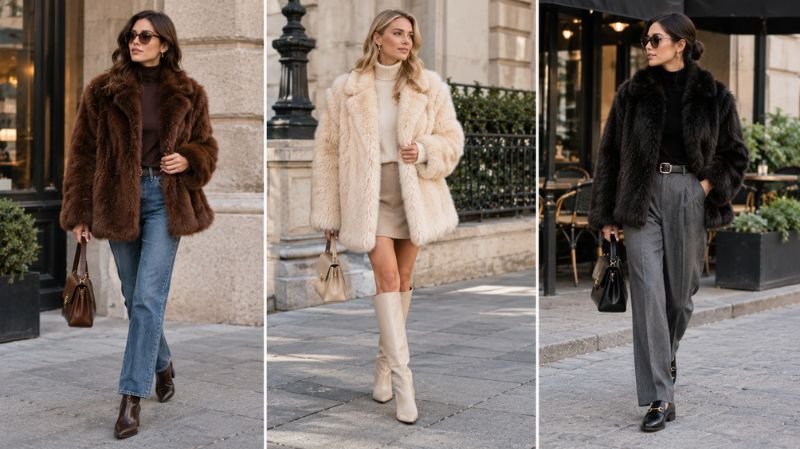
Ankle boots
A versatile choice for jeans, tailored trousers, and midi skirts. Choose a heel height that suits your walking needs and the occasion.
Sneakers
Best for dressing down a plush coat with denim, relaxed trousers, or a sweatshirt. Minimal designs keep the outfit uncomplicated.
Loafers
Useful for smart-casual outfits with straight-leg jeans, tailored trousers, and fine knitwear.
Knee-high boots
A strong match for mini skirts, dresses, and streamlined winter outfits. Check the skirt and coat lengths together.
Heels and pumps
Ideal for eveningwear, tailored trousers, and special occasions when you want a more formal finish.
Bags, Belts, and Jewelry That Complement Fur
Structured handbags provide a clean contrast to a soft or oversized coat. Smaller shoulder bags and compact evening bags also work well when a large bag would add unnecessary bulk.
A belt can define the waist on a coat designed to be belted, while simple earrings or a delicate necklace can complement the texture without competing with it. Be mindful of shoulder-bag straps and sharp jewelry that repeatedly rub against delicate fur.
Scarves, Hats, and Winter Layers
Choose scarves and hats according to the coat’s neckline, texture, and warmth. A simple wool scarf may be all you need with a dramatic coat, while a more understated jacket can accommodate a textured scarf or statement hat.
For layering, start with a thin thermal base layer, add a knit or blouse, and finish with the coat. Make sure the combined layers allow you to move freely and close the coat comfortably.
How to Wear a Fur Coat Without Looking Overdressed
A fur coat can be striking, but the styling does not have to be elaborate. The easiest way to make it feel appropriate for everyday wear is to build the outfit around the occasion rather than the coat alone.
Keep the Base Outfit Simple When the Coat Is Bold
A printed, brightly colored, or highly textured coat often looks balanced with plain knitwear, dark denim, and uncomplicated shoes. This allows the outerwear to remain distinctive without making every part of the outfit compete for attention.
For a quieter coat, you can experiment with patterned trousers, brighter colors, or more expressive accessories. Think of the coat and the rest of the outfit as a conversation: each should contribute without drowning out the other.
Avoid Unnecessary Bulk
Too many thick layers can restrict movement and make the outfit feel cumbersome. Choose thin, warm base layers where practical, and check that the coat fits comfortably over the clothing you actually wear in winter.
You can still combine oversized pieces successfully. The key is to examine the complete silhouette rather than assuming that every oversized garment must be paired with a fitted one.
Choose Accessories That Suit the Occasion
For daytime, sneakers, loafers, and a practical bag can make fur outerwear feel relaxed. For evening, heeled boots, a compact bag, and understated jewelry can shift the same coat into a dressier context.
Avoid adding accessories purely because the coat looks glamorous. A considered outfit often feels more polished when every item has a clear purpose.
Wearing Fur Coats Across Different Seasons
Fur coats are generally associated with colder weather, but the right styling depends on the garment’s weight, construction, and the conditions in which you plan to wear it. A lightweight cropped jacket may suit a cool evening, while a dense, long coat may be uncomfortable outside winter temperatures.
Fall and Mild Weather
During cooler autumn weather, try a cropped fur jacket over a fine-knit top, a lightweight dress, or tailored trousers. Leave the coat open when the temperature allows, but avoid treating a heavy winter coat as an all-season garment.
Winter and Colder Days
Layer a fur coat over a knit sweater, thermal base layer, and suitable trousers or tights. Select footwear with appropriate traction for the weather, and remember that a fur coat’s appearance alone does not establish its insulation or wind resistance.
Indoor Events and Evening Occasions
For a dinner or formal event, a lighter coat or cropped jacket can provide a finishing layer over a dress. Consider where you will store the coat once indoors, particularly if the garment is bulky or delicate.
How to Care for a Fur Coat
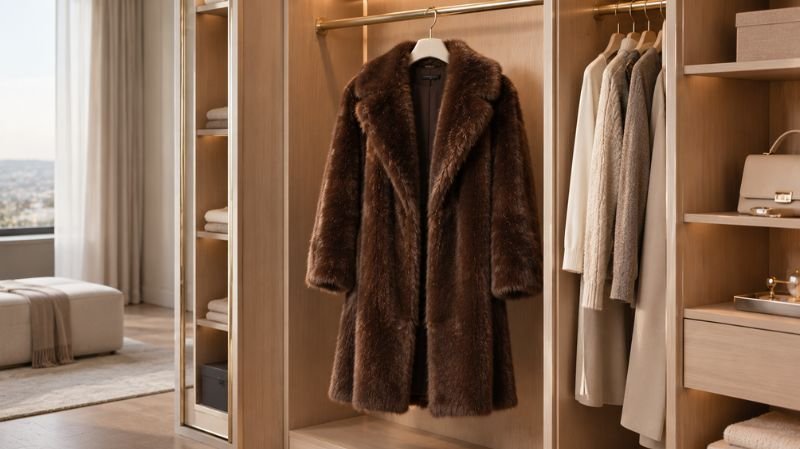
Good fur coat styling starts with a garment that retains its shape and texture. Real fur and faux fur require different care approaches, so identify the material and check the care label before cleaning or storing your coat.
Caring for Real Fur
Real fur has a leather backing that can be affected by heat, dryness, and unsuitable cleaning methods. The American Fur Council recommends specialized fur care, broad-shouldered hangers, and storage that prevents the garment from being crushed. Its guidance also advises against ordinary dry cleaning for real-fur garments.
For an expensive, vintage, or delicate coat, consult a qualified fur-care professional. If the garment becomes thoroughly wet or develops a tear, avoid applying direct heat or attempting an improvised repair.
Caring for Faux Fur
Faux fur is typically made from synthetic textile fibers, but the appropriate cleaning method varies by construction. Some garments require professional cleaning, while others permit gentle washing according to the care label.
For example, Sandro’s faux-fur care guide recommends professional cleaning for its faux-fur pieces and advises storing them away from direct sunlight. Follow the instructions for your own garment rather than assuming that all faux fur is machine washable.
Storing Your Coat Between Seasons
Hang the coat on a suitable hanger in a clean, dry space where it will not be crushed. Keep it away from prolonged direct sunlight and avoid storing it while damp.
For real fur that needs seasonal storage, seek guidance from a specialist. For faux fur, use the manufacturer’s instructions to determine whether a breathable garment bag or another storage method is appropriate.
Conclusion
Learning how to wear a fur coat is less about following a single trend and more about understanding proportion, texture, and the occasion. A coat can elevate everyday denim, complement tailored trousers, or add a dramatic layer to an evening dress without requiring a completely new wardrobe.
Start with one combination that suits your routine, then experiment with different footwear, colors, and silhouettes. The most successful fur coat outfits are the ones that feel comfortable, reflect your personal style, and work with the clothes you already own.
Ready to style your fur coat differently? Choose your favorite outfit formula from this guide, recreate it with pieces in your wardrobe, and experiment with one new combination this season. Save the guide for your next winter outfit refresh, and share which look you would wear first.
Frequently Asked Questions
1. What looks best with a fur coat?
Straight-leg jeans, tailored trousers, fine-knit sweaters, satin skirts, and simple dresses all pair well with fur coats, depending on the occasion.
2. Can you wear a fur coat with jeans?
Yes, straight-leg, wide-leg, and flared jeans can all work; choose the cut based on your coat’s length and overall silhouette.
3. What shoes should you wear with a fur coat?
Ankle boots, loafers, sneakers, knee-high boots, and heels all work, with the best choice depending on the outfit’s formality and the weather.
4. How do you wear a fur coat casually?
Pair it with denim, a basic top or hoodie, and sneakers or flat boots to make the coat feel more relaxed.
5. What should you wear under a fur coat?
Choose a T-shirt, fine-knit sweater, turtleneck, blouse, or thermal layer according to the temperature and the coat’s fit.
6. How do you style a long fur coat?
Wear a long fur coat over a streamlined dress, tailored trousers, or a simple monochrome outfit, and check the hem against your footwear.
7. Can you wear a fur coat to work?
Yes, where your workplace dress code allows it; pair a relatively understated coat with tailored trousers, a simple top, and polished shoes.
8. How do you make a fur coat look modern?
Combine it with contemporary basics such as relaxed denim, clean-lined knitwear, tailored separates, or simple leather accessories.
9. Are fur coats still in style in 2026?
Fur and faux-fur outerwear continue to appear in 2026 fashion coverage, including street-style and outfit guides, but the best choice depends on your personal style and wardrobe.
10. How should you clean a fur coat?
Check the garment’s care label first; real fur generally requires a specialist, while faux fur may need professional cleaning or another method specified by its manufacturer.