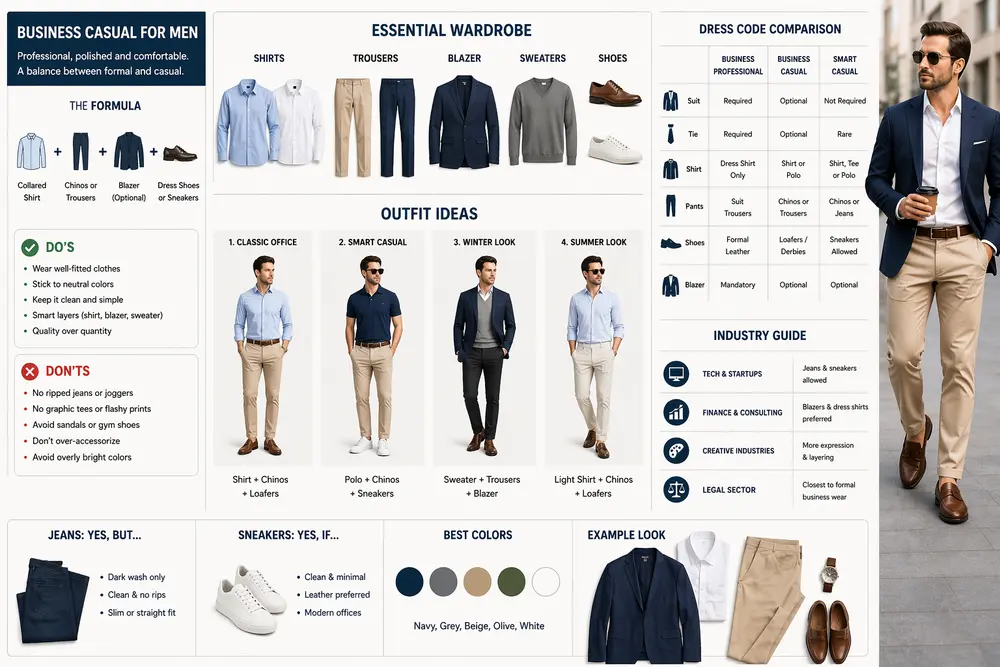
Business casual is one of the most misunderstood dress codes in modern menswear. It sits between formal business attire and relaxed casual wear, blending professionalism with comfort. In simple terms, it allows men to look polished at work without wearing a full suit and tie every day.
Across industries like finance, tech, law, and creative fields, business casual men styling has become the default workplace standard. However, the exact definition varies by company culture, location, and job role.
Today, even terms like corporate casual dress code men and corporate casual dress code men (commonly searched variations) are used interchangeably with business casual, though they often lean slightly more relaxed depending on the organization.
What is the business casual dress code for men?
Business casual for men is a professional dress code that removes the need for a suit and tie while still maintaining a polished appearance. It typically includes chinos or dress trousers, collared shirts (like Oxford shirts or polos), and leather shoes or clean sneakers.
A blazer is optional but recommended for a more formal look. The goal is to appear neat, structured, and office-ready without being overly formal.
Authority Insight
Fashion analysts and workplace studies consistently show that over 70% of modern workplaces in the U.S. now follow business casual or smart casual standards (based on corporate dress code surveys from HR industry reports).
This shift accelerated after hybrid work models became common, where comfort and professionalism needed to coexist. This means mastering business casual is no longer optional, it’s essential for career presentation and first impressions.
What You’ll Learn in This Guide
- Clear definition of business casual dress code
- Rules, do’s, and don’ts
- Essential wardrobe pieces
- Outfit ideas for every season
- Industry-specific dress code differences
- Common mistakes men make
- FAQs
What Is Business Casual for Men?

Business casual is a hybrid dress code combining formal business wear with casual elements. It avoids the rigidity of suits while maintaining professionalism.
Core Idea:
Look professional enough for meetings but comfortable enough for daily office work.
Typical Business Casual Formula:
- Chinos or dress trousers
- Oxford shirt, dress shirt, or polo
- Blazer or sport coat (optional)
- Leather shoes or minimal sneakers
Business Casual Dress Code Rules for Men
Do’s
- Wear well-fitted clothing (tailoring matters most)
- Stick to neutral colors: navy, grey, white, black, olive
- Keep outfits clean and wrinkle-free
- Layer smartly (shirts + blazers + sweaters)
- Prioritize simplicity and minimalism
Don’ts
- Avoid ripped jeans or joggers
- No graphic t-shirts or flashy prints
- Avoid sandals or athletic sneakers (in formal offices)
- Don’t over-accessorize
- Avoid overly bright or neon colors
Essential Business Casual Clothing Items for Men
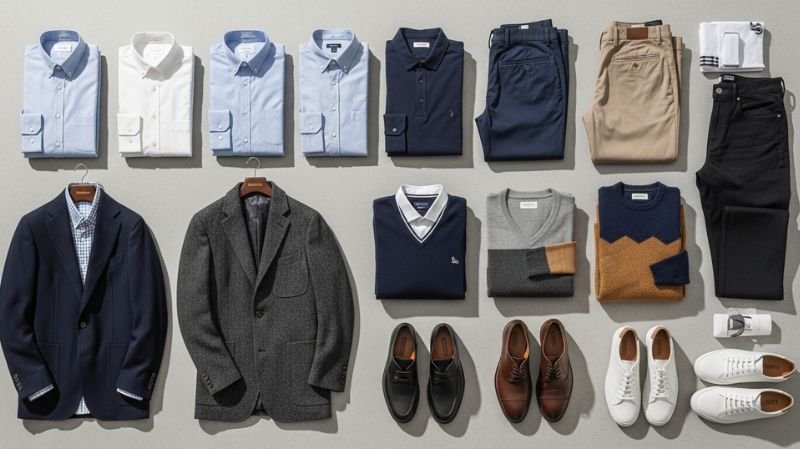
Essential Business Casual Clothing Items for Men include versatile wardrobe staples like Oxford shirts, chinos, blazers, and leather shoes that create a polished yet relaxed professional look.
1. Shirts
- Oxford shirts (must-have staple)
- Button-down shirts
- Polos (for relaxed offices)
2. Trousers
- Chinos (most versatile option)
- Wool trousers (formal business casual)
- Dark jeans (in relaxed workplaces)
3. Blazers
- Navy or charcoal blazer
- Unstructured sport coats
4. Sweaters
- Crew neck or V-neck sweaters
- Merino wool or cashmere
5. Footwear
- Oxfords
- Loafers
- Chukka boots
- Clean low-top sneakers (modern offices)
Quick Comparison Table: Dress Codes Explained
| Category | Business Professional | Business Casual | Smart Casual |
| Suit | Required | Optional | Not required |
| Tie | Required | Optional | Rare |
| Shirt | Dress shirt only | Shirt or polo | Shirt, tee, or polo |
| Pants | Suit trousers | Chinos or trousers | Chinos or jeans |
| Shoes | Formal leather | Loafers/derbies | Sneakers allowed |
| Blazer | Mandatory | Optional | Optional |
Business Casual Outfit Ideas for Men
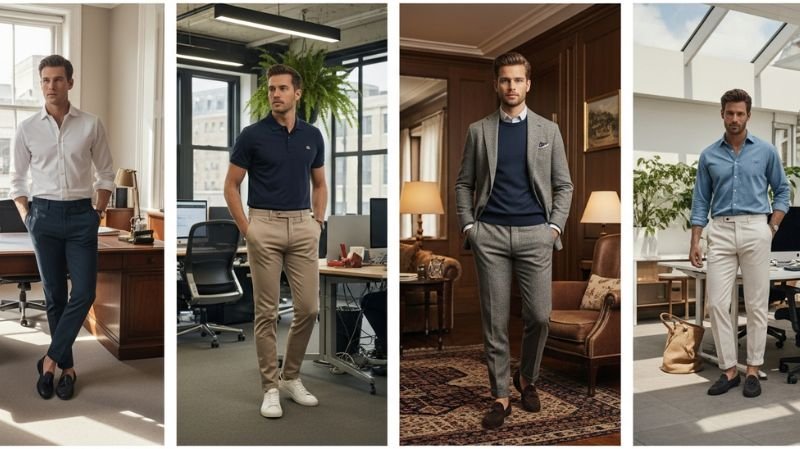
Business Casual Outfit Ideas for Men combine smart staples like chinos, Oxford shirts, blazers, and loafers to create versatile looks suitable for office, meetings, and after-work settings.
1. Classic Office Look
Oxford shirt + chinos + loafers
Safe, professional, universally accepted
2. Modern Smart Casual Office
Polo shirt + slim chinos + white sneakers
Ideal for tech and startups
3. Winter Business Casual
Sweater + wool trousers + blazer
Warm, structured, professional
4. Summer Business Casual
Light shirt + cotton chinos + loafers
Breathable and clean
Can You Wear Jeans for Business Casual?
Yes, but only dark, clean, slim or straight-fit jeans. Avoid ripped or light-wash denim.
Example:
Dark indigo jeans + blazer + white shirt = acceptable business casual in most modern workplaces.
Are Sneakers Business Casual?
In modern offices, yes, but with conditions:
- Must be clean and minimal
- Prefer white, black, or grey leather sneakers
- Not suitable for finance or law firms
What Shoes Are Best for Business Casual?
- Oxford shoes (most formal option)
- Derby shoes
- Loafers (most versatile)
- Chukka boots (stylish & seasonal)
Corporate Casual Dress Code Men vs Business Casual
The terms often overlap, but:
- Corporate casual dress code men → slightly more formal, closer to office professionalism
- Business casual → broader and more flexible
In finance and legal industries, corporate casual leans closer to suits without ties.
Industry-Based Dress Code Differences
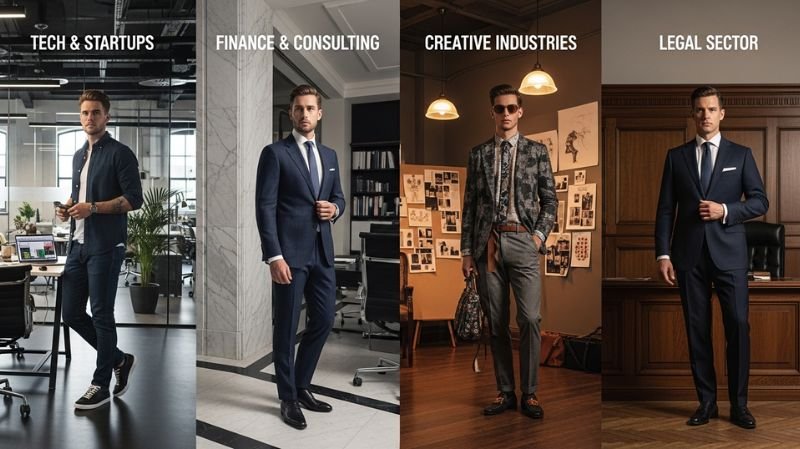
Industry-Based Dress Code Differences refer to how business casual standards vary across sectors like tech, finance, law, and creative fields, each defining different levels of formality and styling expectations.
Tech & Startups
- Jeans allowed
- Sneakers common
- Relaxed but neat appearance
Finance & Consulting
- Blazers expected
- Dress shirts preferred
- Leather shoes mandatory
Creative Industries
- More expressive outfits
- Patterns and textures allowed
- Stylish layering encouraged
Legal Sector
- Closest to formal wear
- Minimal casual flexibility
Common Mistakes Men Make
- Wearing gym-style sneakers
- Overly baggy clothing
- Ignoring grooming standards
- Mixing too many styles
- Wearing outdated shoes
Example
A marketing executive in Atlanta wears:
- Navy blazer
- White Oxford shirt
- Slim grey chinos
- Brown loafers
This outfit works perfectly for client meetings, office days, and after-work dinners, showing how versatile business casual can be in real corporate environments.
Modern Evolution of Business Casual
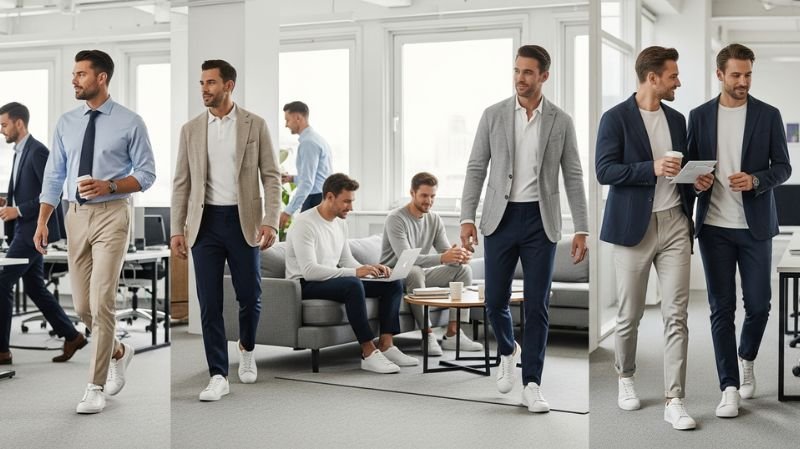
Business casual has evolved significantly:
- No-tie culture is now standard
- Sneakers are acceptable in modern workplaces
- Minimalist styling dominates
- Comfort-driven fabrics are preferred
Hybrid work culture has permanently changed workplace fashion expectations.
Authority-Style Summary
Business casual is no longer just a “dress-down” version of formal wear, it has become a strategic professional identity. In modern workplaces, appearance directly influences perception, credibility, and confidence.
Studies in corporate psychology show that employees who dress appropriately for their environment are often perceived as more competent and reliable. This makes mastering business casual not just a style choice, but a career advantage.
Conclusion
Business casual is more than just a workplace dress code, it’s a reflection of professionalism, adaptability, and personal style. Whether you’re working in a corporate office, startup, or creative agency, understanding how to balance comfort with structure gives you a clear advantage.
From chinos and Oxford shirts to loafers and blazers, every piece plays a role in building a versatile wardrobe. The key is not overthinking it, focus on fit, simplicity, and confidence.
As modern workplaces continue to evolve, mastering business casual ensures you always look appropriate, polished, and career-ready.
If you’re building your wardrobe, start with essential staples like chinos, Oxford shirts, and a navy blazer. Then gradually add seasonal and industry-specific pieces to refine your style.
FAQs
1. What is business casual attire for men?
Business casual attire for men includes chinos or dress trousers, collared shirts like Oxfords or polos, and leather shoes, optionally paired with a blazer for a polished look.
2. What is below business casual?
Below business casual is simply casual wear, including jeans, t-shirts, hoodies, and sneakers.
3. Can I wear jeans for business casual?
Yes, dark, clean, and well-fitted jeans are acceptable in many modern offices.
4. Is a polo shirt business casual?
Yes, polo shirts are widely accepted in business casual environments, especially in relaxed industries.
5. Are chinos business casual?
Yes, chinos are one of the most standard and universally accepted business casual trousers.
6. Do I need to wear a tie for business casual?
No, ties are generally optional or unnecessary in business casual settings.
7. What shoes are considered business casual?
Loafers, oxfords, derbies, chukka boots, and clean sneakers (in modern offices) are acceptable.
8. Can sneakers be business casual?
Yes, minimal and clean leather sneakers are acceptable in tech and creative industries.
9. What is business casual for interviews?
A blazer, dress shirt, chinos, and leather shoes is the safest interview outfit.
10. What should I avoid in business casual dressing?
Avoid ripped jeans, graphic tees, sandals, gym shoes, and overly bright or flashy outfits.