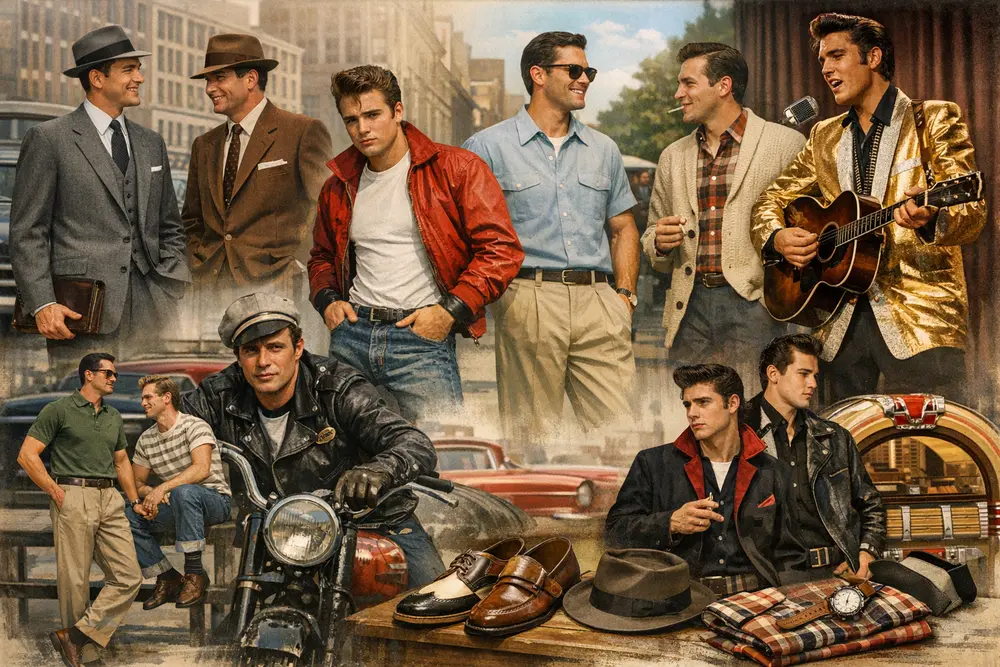
The 1950s marked one of the most transformative decades in style history. After the hardships of World War II, societies across America and Europe entered a period of economic growth, cultural optimism, and social change. Clothing was no longer just about necessity—it became a powerful expression of identity, confidence, and aspiration.
While many discussions of fashion in the 1950s focus on women’s silhouettes and couture houses, men’s style quietly underwent a revolution of its own. This decade introduced a unique blend of structure and rebellion, formality and freedom. From sharply tailored business suits to the effortless cool of denim and leather jackets, 1950s menswear laid the foundation for what we now call “modern classic style.”
Today’s minimalist wardrobes, tailored fits, and smart-casual looks all trace their roots back to this pivotal era.
The Cultural Shift That Shaped 1950s Men’s Fashion
The decade was shaped by three major forces:
- Post-war prosperity gave men access to better-quality clothing and more variety.
- The rise of youth culture created a generation that dressed differently from their fathers.
- Hollywood and music icons influenced everyday style more than traditional tailors.
For the first time, fashion was not dictated solely by the elite. Working-class youth, college students, and suburban professionals all helped redefine what it meant to dress well.
This democratization made fashion in the 1950s more diverse than any previous era.
Key Characteristics of 1950s Men’s Style
The defining features of 1950s menswear can be summarized as:
- Clean, structured silhouettes
- Emphasis on grooming and presentation
- High-quality natural fabrics like wool and cotton
- Neutral tones balanced with controlled color accents
- A mix of elegance and emerging casualwear
Men were expected to look polished, but not stiff. This balance remains central to modern menswear philosophy.
The Classic 1950s Suit: Symbol of Respectability
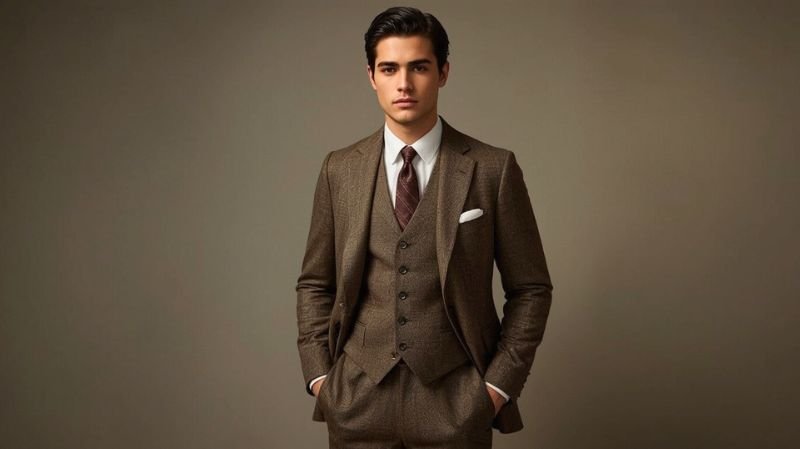
Business culture thrived in the 1950s, and the suit became a daily uniform rather than an occasional outfit.
Typical Features of a 1950s Suit:
- Single-breasted jackets
- Natural shoulders (less padding than the 1940s)
- Narrow lapels
- Pleated trousers
- Conservative shades like charcoal, navy, and brown
The famous “gray flannel suit” symbolized stability and ambition in the corporate age.
These suits reflected discipline, but also confidence in a new era of opportunity.
Casualwear Revolution: The Birth of Modern Smart-Casual
Outside the office, men embraced comfort in ways never seen before. Leisure time expanded, and wardrobes adapted.
Popular Casual Pieces Included:
- Polo shirts and knitwear
- Short-sleeve button-down shirts
- Chinos and flat-front trousers
- Lightweight jackets
- Loafers instead of formal lace-ups
This shift introduced the foundation of today’s weekend wardrobe. Much of today’s smart-casual dress codes can be traced directly to fashion in the 1950s.
Hollywood’s Influence on Men’s Style
Cinema redefined masculinity. Instead of aristocrats setting trends, movie stars became the new style leaders.
James Dean – The Rebel Archetype
Dean’s uniform, white T-shirt, jeans, and a red jacket, became an international symbol of youthful rebellion. His look proved that simplicity could be powerful.
Marlon Brando – Rugged Masculinity
Brando popularized the leather jacket and biker aesthetic, turning workwear into mainstream fashion.
Elvis Presley – Rock-and-Roll Glamour
Elvis blended performance energy with tailored flair, encouraging men to experiment with color, movement, and personality.
The Rise of Youth Subcultures
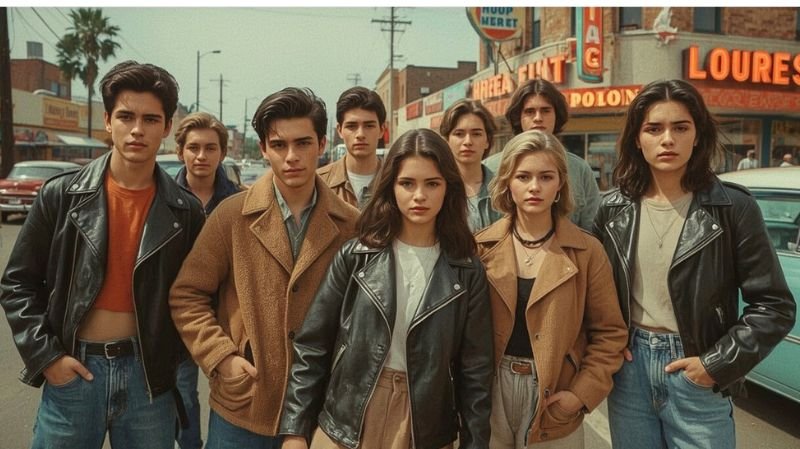
For the first time, young men created styles separate from adult expectations.
Teddy Boys (Britain)
- Velvet-collared jackets
- Slim trousers
- Quiff hairstyles
- Edwardian-inspired tailoring
American Greasers
- Denim jeans
- White tees
- Leather jackets
- Slicked-back hair
These subcultures marked the moment when fashion became a voice of rebellion rather than conformity.
Everyday Wardrobe Staples of the 1950s Man
A typical middle-class man’s wardrobe included:
- Oxford cloth shirts
- Cardigans and V-neck sweaters
- Pleated trousers
- Fedora hats
- Pocket watches or wristwatches
- Polished leather shoes
Even casual outfits were coordinated and intentional. Grooming mattered just as much as clothing.
Fabrics, Colors, and Patterns That Defined the Decade
Materials reflected durability and quality:
- Wool for suits and coats
- Cotton for shirts and summer wear
- Tweed for colder climates
Color palettes leaned toward:
- Navy
- Gray
- Olive
- Tan
- Deep burgundy accents
Patterns like checks and plaids added character without overwhelming the look.
Footwear Trends That Completed the Look
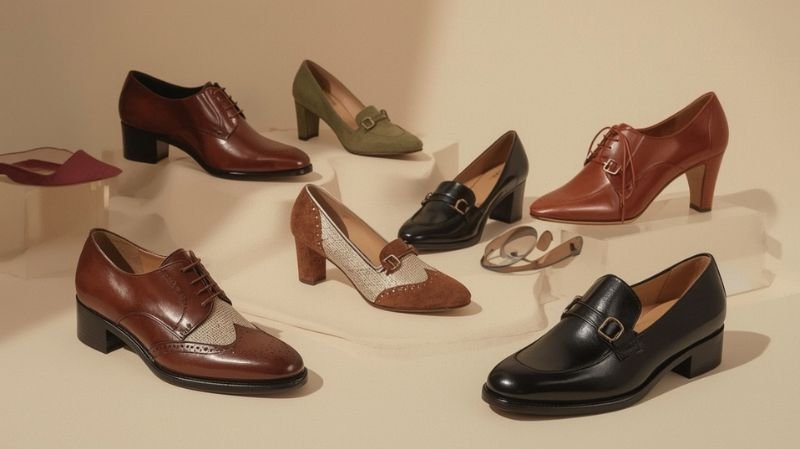
Shoes became an essential style marker.
- Oxfords for formal wear
- Loafers for casual sophistication
- Saddle shoes among younger men
- Work boots transitioning into fashion statements
This footwear diversity mirrored the broader evolution of fashion in the 1950s, where function met style.
A Day in the Life of a 1950s Professional
Imagine a mid-level office manager in 1956 London:
- Morning: Gray flannel suit, crisp white shirt, narrow tie
- Afternoon commute: Fedora hat and polished Oxfords
- Evening outing: Knit polo, tailored slacks, loafers
His wardrobe wasn’t large, but each piece was versatile, well-made, and intentional. This idea of a compact yet refined wardrobe is exactly what modern capsule dressing promotes today.
How 1950s Menswear Influences Modern Fashion
Many of today’s biggest style movements echo this decade:
- Tailored minimalism mirrors 1950s suiting
- Streetwear borrows from greaser aesthetics
- Smart-casual dressing evolved directly from 1950s leisurewear
- Vintage revival trends repeatedly revisit this era
Designers continue referencing the decade because it balanced tradition with innovation.
How to Recreate a 1950s-Inspired Look Today
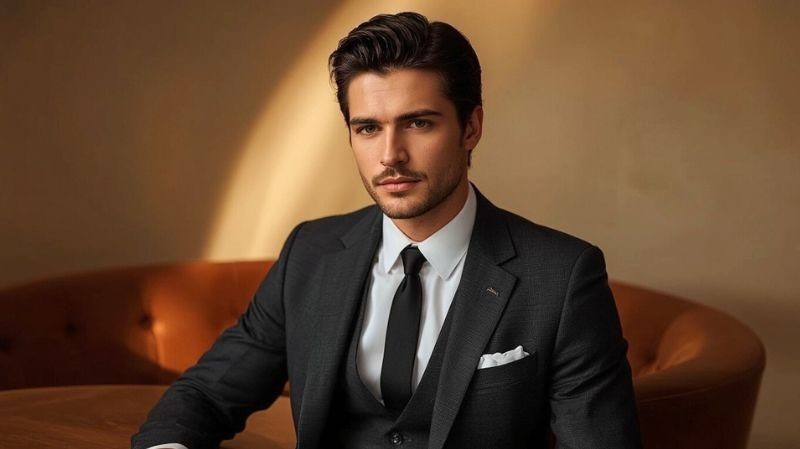
You don’t need a costume to capture the spirit.
Start With These Steps:
- Choose structured, well-fitted clothing
- Stick to timeless neutral colors
- Invest in classic leather shoes
- Add one vintage-inspired item (watch, jacket, or knitwear)
- Keep grooming sharp and clean
The goal is refinement, not nostalgia.
Why the 1950s Remains One of the Most Influential Fashion Eras
The 1950s gave men permission to express themselves through clothing while maintaining dignity and elegance. It bridged the gap between rigid tradition and personal style, something still central to how men dress today.
In many ways, modern menswear is simply an evolution of fashion in the 1950s, refined for contemporary lifestyles.
Conclusion
The 1950s were not just another decade in fashion—they were the blueprint for the modern male wardrobe. This era redefined masculinity through clothing, blending refinement with individuality. It introduced the balance we still seek today: polished but effortless, structured yet expressive.
Understanding fashion in the 1950s is not about revisiting the past—it’s about recognizing where today’s style foundations began. From boardrooms to streetwear, echoes of this decade remain everywhere.
If you want to build a wardrobe that never goes out of style, take inspiration from the 1950s. Focus on fit, quality, and timeless essentials rather than fast-moving trends.
FAQs
What did men typically wear in the 1950s?
Men commonly wore tailored suits for work and polished casualwear such as chinos, knit shirts, and loafers during leisure time.
Why was 1950s fashion important for men?
It introduced youth-driven style, relaxed dress codes, and the concept of fashion as self-expression rather than strict social uniform.
How did Hollywood influence 1950s menswear?
Film stars popularized casual clothing like denim, leather jackets, and T-shirts, making them socially acceptable beyond manual labor settings.
Were 1950s clothes formal compared to today?
Yes, daily dress standards were more polished, but the decade also introduced the first wave of modern casualwear.
Is 1950s men’s fashion still relevant?
Absolutely. Many staples, tailored suits, minimalist outfits, and smart-casual styling, originate directly from this era.