
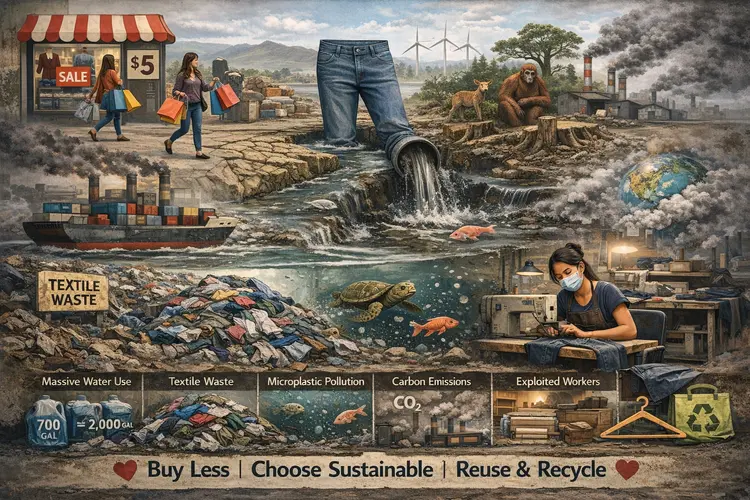
Fast fashion has transformed how we buy and wear clothes. New styles appear almost daily, prices remain tempting, and trends move faster than ever before. While this model has made fashion more accessible, it has also created serious environmental and social consequences that are often hidden behind low price tags and glossy marketing.
Understanding the fast fashion environmental impact is essential if we want to make more responsible choices—for ourselves and for the planet.
What Is Fast Fashion?
Fast fashion refers to the rapid production of inexpensive clothing designed to replicate the latest runway or celebrity trends. These garments are manufactured, marketed, and distributed at high speed so brands can capitalize on short-lived fashion moments.
This business model prioritizes:
- Speed over quality
- Low production costs
- High-volume manufacturing
- Frequent trend turnover
The term gained popularity in the early 1990s when brands began shrinking production timelines from months to weeks. Today, some companies can design, produce, and sell a new garment in under two weeks.
While this system keeps consumers constantly engaged, it comes at a steep cost to the environment.
The Environmental Impact of Fast Fashion
The environmental damage caused by fast fashion is extensive and multi-layered. From raw material extraction to garment disposal, every stage leaves a footprint.
1. Massive Water Consumption
One of the most alarming effects of fast fashion is its excessive use of water.
To put it into perspective:
- Producing one cotton shirt can require around 700 gallons of water
- Manufacturing a single pair of jeans may use 2,000 gallons or more
Cotton farming alone places immense pressure on freshwater resources, especially in water-scarce regions. Rivers, lakes, and groundwater reserves are diverted to support mass textile production, often leaving local communities facing shortages.
In addition, textile dyeing processes generate polluted wastewater filled with chemicals that frequently end up in rivers and streams, harming aquatic ecosystems and drinking water supplies.
2. Textile Waste and Landfill Overflow
Fast fashion encourages consumers to buy more and wear items fewer times. As a result, clothing has become increasingly disposable.
Key issues include:
- Short garment lifespans due to poor quality
- Trend-driven purchases that quickly go out of style
- Limited recycling infrastructure for textiles
Millions of tons of clothing end up in landfills every year. Synthetic fabrics like polyester can take hundreds of years to decompose, releasing harmful substances into the soil as they break down.
This growing waste problem is one of the clearest answers to the question: why is fast fashion bad for the environment?
3. Microplastic Pollution
Many fast fashion items are made from synthetic fibers such as polyester, nylon, and acrylic. When these garments are washed, they shed tiny plastic fibers known as microplastics.
These microplastics:
- Flow into wastewater systems
- Bypass filtration plants
- Enter oceans, rivers, and marine food chains
Over time, microplastics accumulate in marine life, posing risks to ecosystems and potentially human health. Once released, they are nearly impossible to remove from the environment.
4. Carbon Emissions and Climate Change
The fashion industry is one of the largest contributors to global carbon emissions. Energy-intensive manufacturing processes, long-distance transportation, and fossil-fuel-based materials significantly increase its climate impact.
Fast fashion relies on:
- Continuous production cycles
- Overseas manufacturing and shipping
- Petroleum-based synthetic fibers
All of this contributes to rising greenhouse gas emissions, making the industry a major driver of climate change.
5. Energy-Intensive Production Processes
Transforming raw materials into finished garments requires enormous amounts of energy. Synthetic fibers are derived from petroleum, while conventional cotton farming depends heavily on fertilizers and pesticides.
These processes:
- Consume non-renewable resources
- Release toxic emissions into the air
- Pose health risks to agricultural workers
Although alternatives like organic cotton, hemp, linen, and lyocell exist, they are still underutilized in mainstream fast fashion.
The True Cost of a Cheap T-Shirt
Consider a basic cotton T-shirt priced at a surprisingly low cost. Behind that single item lies a long chain of environmental damage:
- Water-intensive cotton farming depletes local water supplies
- Chemical dyes pollute nearby rivers
- Factory production consumes fossil fuels
- Overseas shipping increases carbon emissions
- The shirt is worn a few times, then discarded
What seems like an affordable purchase often represents a hidden environmental debt paid by ecosystems and future generations.
Social and Environmental Impacts Go Hand in Hand
The environmental damage caused by fast fashion is closely linked to social issues, particularly in developing countries where most garments are produced.
Many workers face:
- Unsafe working conditions
- Extremely low wages
- Excessive working hours
In regions with weak environmental regulations, factories may dump untreated wastewater directly into rivers or burn waste materials openly. These practices harm both people and the environment, reinforcing a cycle of exploitation.
Why Is Fast Fashion Bad for the Planet Long-Term?
The long-term consequences of fast fashion extend beyond pollution and waste.
They include:
- Accelerated climate change
- Loss of biodiversity
- Depleted natural resources
- Increased global inequality
If current consumption patterns continue, the environmental burden will only intensify, making sustainable development increasingly difficult.
Is Slow Fashion the Solution?
Slow fashion offers a thoughtful alternative to the fast fashion model. It emphasizes quality, durability, ethical production, and environmental responsibility.
Key principles of slow fashion include:
- Producing fewer, better-quality garments
- Using sustainable materials
- Ensuring fair labor practices
- Encouraging mindful consumption
Secondhand shopping, clothing rental services, and recycling programs also play an important role in reducing fashion waste.
What Can Consumers Do to Reduce Fast Fashion’s Environmental Impact?
While industry-wide change is necessary, individual actions matter too.
Consumers can:
- Buy fewer but higher-quality pieces
- Choose sustainable or ethical brands
- Support secondhand and vintage shopping
- Extend the life of clothing through proper care
- Avoid impulse trend-based purchases
Small changes in buying habits can collectively make a meaningful difference.
Conclusion
The fast fashion environmental impact is impossible to ignore. While the industry has made clothing more affordable and accessible, it has done so at the expense of the planet and vulnerable communities.
Understanding why fast fashion is bad empowers consumers to make better choices and demand accountability from brands. Moving toward sustainable fashion isn’t about perfection—it’s about progress, awareness, and intention.
Fashion should express creativity and identity, not environmental destruction. By slowing down consumption and supporting responsible alternatives, we can help shape a future where style and sustainability coexist.
Fast fashion thrives on convenience, but sustainability thrives on awareness. Start by questioning where your clothes come from, how they’re made, and how long you’ll wear them. Choose thoughtfully, shop responsibly, and share this knowledge with others—because real change in fashion begins with informed consumers.
Frequently Asked Questions (FAQs)
Why is fast fashion bad for the environment?
Fast fashion leads to excessive water use, pollution, textile waste, carbon emissions, and microplastic contamination, making it highly damaging to ecosystems.
What is the biggest environmental problem caused by fast fashion?
Textile waste and water pollution are among the most severe issues, along with greenhouse gas emissions from production and transportation.
Are sustainable fashion brands more expensive?
Some sustainable brands have higher upfront costs, but their clothing often lasts longer, making them more cost-effective over time.
How can individuals reduce the impact of fast fashion?
Buying less, choosing quality over quantity, shopping secondhand, and supporting ethical brands can significantly reduce environmental harm.
Is slow fashion realistic for everyday consumers?
Yes. Even small steps—like reducing impulse purchases or extending clothing life—align with slow fashion principles.