1970s men’s fashion remains one of the most influential periods in style history. Even decades later, its impact is visible across luxury runways, high-street brands, and modern streetwear. From wide lapels and flared trousers to silk shirts and platform shoes, the decade celebrated boldness, individuality, and self-expression. Today’s renewed interest in vintage aesthetics has brought 70s outfits for men back into the spotlight, inspiring fresh interpretations of classic silhouettes.
The seventies marked a major turning point in menswear. Traditional rules loosened, experimentation flourished, and men began using fashion as a personal statement rather than simply a uniform. Whether influenced by music, counterculture, disco nightlife, or emerging subcultures, 1970s men’s fashion was fearless, expressive, and unapologetically bold.
The Spirit of 70s Men’s Fashion
The 1970s built on the rebellious energy of the late 1960s but took it in a more expressive and theatrical direction. Fashion became louder, fabrics more tactile, and silhouettes more dramatic. Musicians, actors, and cultural icons played a huge role in shaping trends, turning personal style into a cultural movement.
Key characteristics of the era included:
- Dramatic shapes and proportions
- A mix of tailored and relaxed clothing
- Experimental fabrics and textures
- Fashion inspired by music, nightlife, and counterculture
Men no longer dressed only for practicality. Instead, clothing became a form of identity.
Defining Elements of 70s Men’s Style
Tailoring Takes Center Stage
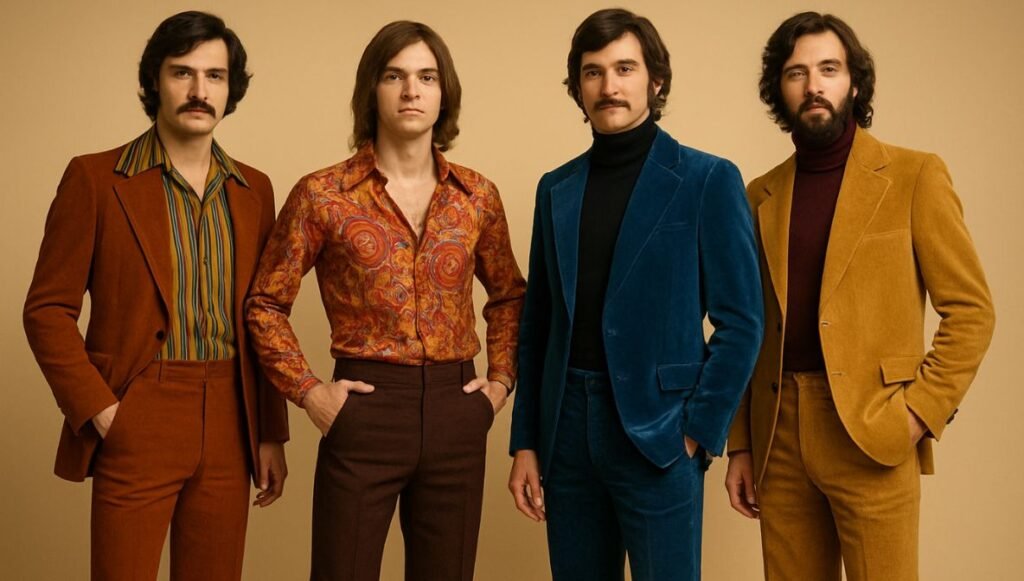
Tailoring was a cornerstone of 1970s menswear, but it looked very different from earlier decades. Suits became more expressive, with distinctive cuts that emphasized flair.
Common tailoring features included:
- Shorter suit jackets with shaped waists
- Bold, wide lapels
- High-waisted trousers
- Flared or wide-leg pant openings
Men embraced suits not just for formal occasions but as everyday fashion statements.
Iconic 70s Men’s Clothing Pieces
Bell-Bottoms and Flared Pants
Flared trousers were one of the most recognizable elements of 70s outfits for men. Slim through the thigh and dramatically wide at the hem, these pants created movement and presence.
Popular styles included:
- Denim bell-bottom jeans
- Polyester disco trousers
- Wide-leg dress pants
They were worn casually with T-shirts or dressed up with silk shirts and tailored jackets.
Wide Lapels and Oversized Collars
Nothing says 1970s menswear quite like oversized lapels and shirt collars. Jackets, blazers, tuxedos, and even casual shirts featured exaggerated proportions.
Why wide lapels mattered:
- They symbolized confidence and rebellion
- They visually broadened the chest
- They broke away from conservative tailoring norms
Though considered bold by today’s standards, wide lapels defined the decade’s look.
Turtlenecks and Roll Necks
Turtlenecks were a staple of sophisticated 70s fashion. They balanced elegance with practicality and worked across casual and formal outfits.
Men paired turtlenecks with:
- Tailored trousers
- Blazers and sports coats
- Denim for a relaxed look
Classic black was popular, but rich tones like burgundy, teal, and mustard also stood out.
Fashion Colors of the 1970s
While the decade is remembered for bold patterns, neutral tones played an important role in men’s wardrobes.
Popular color choices included:
- Brown, beige, and tan
- Grey, black, and white
- Earthy greens and rust tones
These neutrals made it easy to mix statement pieces like printed shirts, plaid jackets, or vibrant accessories.
Disco Fashion: Glamour and Confidence
As disco culture took over nightlife, men’s fashion followed suit. Disco style was sleek, body-conscious, and unapologetically flashy.
Signature disco elements:
- Shiny silk or polyester shirts
- Open collars and deep V-necks
- Fitted trousers with flared hems
- Platform shoes
Disco fashion celebrated movement, confidence, and individuality, especially on the dance floor.
Corduroy: A 70s Essential Fabric
Corduroy was everywhere in the 1970s. Its soft texture and durability made it suitable for both casual and smart outfits.
Common corduroy items included:
- Trousers and suits
- Jackets and blazers
- Vests
Earthy shades like brown, olive, navy, and grey dominated, making corduroy a versatile staple.
The Rise of the Silk Shirt
Silk shirts represented luxury and confidence in 70s men’s fashion. Their glossy finish and fluid drape added sophistication to any look.
Men wore silk shirts:
- Buttoned up for formal occasions
- Partially unbuttoned for nightlife
- With jeans, trousers, or suits
These shirts blurred the line between elegance and sensuality.
Denim’s Cultural Power in the 70s
Denim became more than just workwear during the 1970s. It symbolized rebellion, creativity, and freedom.
Key denim trends included:
- Flared jeans
- Double denim outfits
- Jackets with embroidery or patches
Denim was embraced by musicians, artists, and everyday men looking to challenge traditional fashion norms.
Hippie Style and Counterculture Influence
Hippie fashion carried into the early 1970s, rooted in anti-establishment values and self-expression.
Typical hippie elements:
- Loose-fitting shirts
- Bell-bottom jeans
- Natural fabrics
- Long hair and facial hair
Tie-dye prints, floral patterns, and handmade accessories reflected a connection to freedom and individuality.
Patterned Knitwear and Statement Sweaters
Knitwear in the 1970s was far from boring. Men embraced bold patterns and textures to add personality to their outfits.
Popular knit styles included:
- Stripes and geometric designs
- Argyle and floral patterns
- Sweater vests and cardigans
These pieces allowed men to experiment while staying comfortable.
Seventies Men’s Suits
The 70s suit evolved to reflect the decade’s bold attitude. Unlike conservative earlier styles, these suits were expressive and fashion-forward.
Key features:
- Wide lapels
- Shorter jacket lengths
- Flared or wide trousers
- Bold ties and accessories
Three-piece suits and colorful fabrics added even more personality.
Muscle Culture and Body-Conscious Fashion
The 1970s also saw the rise of fitness and bodybuilding culture. Men began showcasing their physiques through fitted clothing.
This trend influenced:
- Tight T-shirts
- Slim-cut shirts
- Disco fashion
Fashion became a way to highlight strength, masculinity, and confidence.
Velvet, Glam Rock, and High Drama
Velvet became synonymous with luxury in 70s menswear. Glam rock pushed fashion even further with theatrical designs.
Glam rock staples included:
- Velvet jackets
- Metallic fabrics
- Sequined tops
- Platform boots
This style celebrated individuality and blurred traditional gender norms in fashion.
Punk Style: A Sharp Contrast
By the late 1970s, punk fashion emerged as a rebellion against mainstream trends.
Defining punk elements:
- Skinny jeans
- Leather jackets
- Distressed clothing
- DIY details like pins and studs
Punk rejected the glamour of disco, replacing it with raw attitude and defiance.
Accessories That Defined the 70s
Accessories completed the look and often made the outfit.
Popular men’s accessories:
- Aviator sunglasses
- Fedoras and wide-brim hats
- Silk scarves
- Braided belts
These finishing touches elevated even simple outfits.
Shoes of the 1970s
Footwear was bold and diverse, matching the decade’s expressive style.
Common shoe choices:
- Platform shoes
- Loafers and moccasins
- Work boots
- Sneakers
Platform shoes, in particular, became a signature of disco and glam fashion.
What Did Men Wear in the 70s?
In summary, 70s men’s fashion was defined by:
- Bold silhouettes and textures
- Fearless color and pattern choices
- A blend of tailoring and casual wear
- Strong influence from music and subcultures
Leather jackets, flared trousers, silk shirts, wide lapel suits, and platform shoes defined the decade.
The Legacy of 70s Men’s Fashion Today
Modern menswear continues to borrow heavily from the 1970s. High-waisted trousers, turtlenecks, wide-leg pants, and textured fabrics have all made a comeback. Designers reinterpret these elements with modern tailoring while preserving the spirit of self-expression.
The seventies proved that fashion could be bold, personal, and transformative—a legacy that still shapes men’s style today.
Freddie Mercury and the Power of 70s Men’s Fashion
One of the most influential real-life examples of 1970s men’s fashion in action is Freddie Mercury, the legendary frontman of Queen. During the mid to late 1970s, Mercury embodied the era’s fearless approach to style, blending theatrical flair with sharp tailoring and stage-ready confidence.
Freddie Mercury’s wardrobe reflected several defining elements of 70s menswear:
- Fitted silk and satin shirts with deep necklines
- High-waisted flared trousers that emphasized movement on stage
- Bold colors, metallic fabrics, and statement accessories
- Platform shoes that added height and drama
What made Mercury’s style truly impactful was how it aligned with the decade’s core philosophy: fashion as self-expression. He did not follow rigid rules; instead, he used clothing to amplify his personality, performance, and presence. His influence extended far beyond music, shaping how men viewed confidence, glamour, and individuality in fashion.
Even today, designers, performers, and fashion enthusiasts draw inspiration from Mercury’s 70s looks, proving how deeply that era continues to resonate in modern menswear.
Conclusion
1970s men’s fashion was more than a collection of trends—it was a cultural shift that redefined how men dressed and expressed themselves. The decade encouraged experimentation, blurred traditional boundaries, and welcomed bold choices across silhouettes, fabrics, and colors. From flared trousers and wide lapels to silk shirts and platform shoes, every element reflected confidence and creativity.
What makes 70s fashion timeless is its versatility. Whether through tailored suits, casual denim, disco glamour, or countercultural styles, the decade offered something for every personality. This freedom continues to influence modern fashion, where individuality and self-expression remain central.
Today’s revival of 70s-inspired clothing proves that the era’s impact is far from fading. Modern menswear continues to reinterpret its key elements—wide-leg trousers, textured fabrics, statement collars, and relaxed tailoring—while adapting them to contemporary lifestyles.
Ultimately, the legacy of 1970s men’s fashion lies in its boldness. It taught generations that style does not have to be restrained to be refined and that confidence is the most powerful accessory a man can wear.
Frequently Asked Questions
What did men commonly wear in the 1970s?
Men wore flared pants, patterned shirts, wide-lapel suits, leather jackets, turtlenecks, and platform shoes.
What should I wear to a 70s-themed party?
Bell-bottoms with a bold shirt, a wide-lapel suit, or a disco-inspired outfit with shiny fabric works perfectly.
Was 70s fashion more hippie or disco?
Both. Early 70s leaned toward hippie style, while the late 70s embraced disco glamour.