Fabric embellishment has always been a powerful way to transform simple textiles into eye-catching designs. From royal garments in ancient times to runway-ready couture today, stone embellishments continue to play a significant role in fashion. Among all embellishment choices, white stones stand out for their elegance, versatility, and timeless appeal.
As we move into 2026, the methods used to add white stones on fabric have evolved significantly. Modern fashion demands not only beauty but also durability, sustainability, and efficiency. Whether you’re a fashion designer, boutique owner, DIY enthusiast, or part of a textile manufacturing brand, understanding these updated methods can help you choose the right technique for your needs.
In this guide, we’ll explore traditional, modern, and innovative methods to add white stones on fabric in 2026, along with practical tips, real-world insights, and future trends.
Understanding White Stone Embellishments
White stones used in fabric embellishment are decorative elements that enhance texture, shine, and visual appeal. They are commonly seen in bridal wear, festive outfits, performance costumes, luxury accessories, and even home décor textiles.
Popular types of white stones include:
- Crystal stones
- Rhinestones
- Faux diamonds
- Pearls and pearl-finish stones
- Glass and acrylic stones
Their neutral color makes them easy to pair with almost any fabric shade, which is why white stones remain a favorite across global fashion markets.
Key Factors to Consider Before Adding White Stones
Before choosing a method to apply white stones, it’s essential to consider a few practical factors:
- Fabric type (delicate, thick, stretchable, or synthetic)
- End use of the garment (daily wear, bridal, stage performance)
- Durability requirements (wash resistance, long-term use)
- Production scale (handcrafted vs mass production)
- Budget and time constraints
Choosing the wrong method can lead to stones falling off, fabric damage, or poor finishing—issues no brand or designer wants in 2026’s competitive market.
Traditional Methods of Adding White Stones on Fabric
Despite technological advancements, traditional methods still hold value, especially for handcrafted and premium garments.
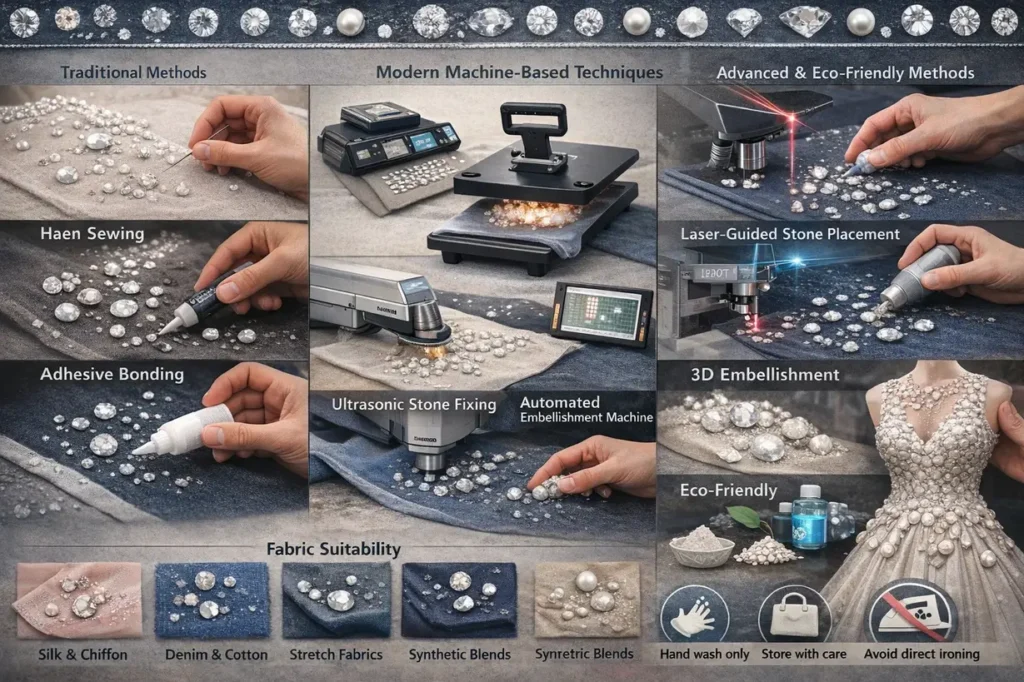
Hand Sewing Techniques
Hand sewing involves stitching stones directly onto fabric using needle and thread. This method is commonly used in embroidery-heavy outfits such as bridal lehengas or couture gowns.
Advantages:
- Strong and long-lasting attachment
- Ideal for heavy stones
- Gives a handcrafted, premium feel
Limitations:
- Time-consuming
- Not suitable for mass production
- Requires skilled labor
Adhesive Bonding Methods
Fabric-safe adhesives have long been used to attach stones, especially for DIY projects and lightweight garments.
Pros:
- Easy to apply
- Cost-effective
- Suitable for beginners
Cons:
- Lower durability
- Stones may loosen after multiple washes
- Not ideal for high-end or long-term wear
Modern Machine-Based Stone Application Techniques (2026)
With fashion production becoming faster and smarter, machine-based techniques dominate in 2026.
Heat-Press Stone Setting
Heat-fix stones come with a heat-activated adhesive layer that melts when pressed, bonding the stone to fabric.
Why it’s popular in 2026:
- Fast and efficient
- Consistent stone placement
- Ideal for bulk production
Heat-press methods are widely used in fast fashion, sportswear, and customized apparel businesses.
Ultrasonic Stone Fixing
Ultrasonic technology uses high-frequency vibrations to bond stones to fabric without glue or stitching.
Key benefits:
- No visible adhesive residue
- Gentle on delicate fabrics
- High precision and clean finish
This method is increasingly preferred for luxury garments and sensitive materials like silk and chiffon.
Automated Embellishment Machines
AI-powered machines are redefining fabric embellishment in 2026. These systems can detect fabric type, adjust pressure, and place stones automatically.
Advantages include:
- Extremely accurate designs
- Reduced labor costs
- Faster turnaround time
- Minimal material wastage
This technology is particularly beneficial for large apparel manufacturers and export-oriented brands.
Advanced and Innovative Methods Emerging in 2026
Fashion technology continues to push boundaries, and embellishment techniques are no exception.
Laser-Guided Stone Placement
Laser-guided systems ensure perfect alignment, even for intricate patterns.
Why it matters:
- Ideal for complex geometric or logo designs
- Enhances design symmetry
- Reduces human error
3D Surface Embellishment Techniques
3D embellishment allows stones to be layered at different heights, creating a textured, dimensional effect.
This method is gaining popularity in:
- Haute couture
- Fashion week collections
- Statement stage costumes
Eco-Friendly Stone Attachment Methods
Sustainability is no longer optional in 2026. Brands are increasingly shifting to:
- Water-based adhesives
- Low-energy heat fixation
- Recyclable stones and materials
These methods reduce environmental impact while maintaining design quality.
DIY vs Professional Stone Application
Not every project needs professional equipment, but not every garment should be DIY either.
DIY methods work best for:
- Small projects
- Personal customization
- Temporary fashion pieces
Professional methods are ideal for:
- Commercial garments
- Bridal and luxury wear
- Long-term durability
Understanding this balance helps designers avoid unnecessary costs or quality issues.
Best Fabrics for White Stone Embellishment
Different fabrics respond differently to embellishment techniques.
Common fabric compatibility:
- Cotton & denim: Heat-fix, sewing
- Silk & chiffon: Ultrasonic, hand sewing
- Synthetic blends: Heat-press, automated machines
- Stretch fabrics: Specialized adhesives or ultrasonic methods
Common Mistakes to Avoid
Even experienced designers can make mistakes when applying white stones.
Avoid:
- Using incorrect adhesive for the fabric
- Overheating delicate textiles
- Poor stone spacing and alignment
- Ignoring care and wash instructions
These mistakes can reduce garment lifespan and affect brand reputation.
Maintenance and Care of Stone-Embellished Fabrics
Proper care ensures the stones remain intact and shiny.
Helpful tips:
- Hand wash or gentle cycle only
- Avoid harsh detergents
- Store garments flat or inside protective covers
- Do not iron directly over stones
How a Boutique Brand Adapted in 2026
A mid-sized bridal boutique in Mumbai transitioned from hand-sewn embellishments to ultrasonic stone fixing in early 2026. The result was a 30% reduction in production time and fewer customer complaints about loose stones. By adopting modern methods, the brand maintained its luxury appeal while scaling operations more efficiently—a clear example of how technology enhances craftsmanship rather than replacing it.
Future Trends in Fabric Stone Embellishment
Looking ahead, the future of white stone embellishment includes:
- Smart textiles with embedded decorative elements
- On-demand customization using AI machines
- Increased focus on sustainable materials
- Lightweight stones with enhanced brilliance
Conclusion
In 2026, adding white stones on fabric is no longer limited to just needle and thread. From traditional craftsmanship to AI-powered automation, designers now have a wide range of methods to choose from. The right technique depends on fabric type, design purpose, production scale, and sustainability goals.
What remains unchanged is the charm of white stones—they continue to symbolize elegance, refinement, and timeless beauty. By staying informed about modern methods, fashion professionals can create designs that are not only beautiful but also durable and future-ready.
If you’re a designer, brand owner, or fashion enthusiast looking to elevate your fabric designs in 2026, now is the time to explore modern stone embellishment techniques. Experiment, innovate, and embrace technology to stay ahead in the evolving fashion landscape. Bookmark this guide, share it with your creative team, and start crafting designs that truly shine.