Braids are more than just a hairstyle, they’re timeless, practical, and endlessly versatile. Whether you’re heading to work, the gym, a wedding, or simply managing second-day hair, knowing how to braid hair properly can transform your look in minutes. From simple three-strand plaits to trendy easy braid hairstyles, mastering the basics ensures your braid stays neat, polished, and long-lasting.
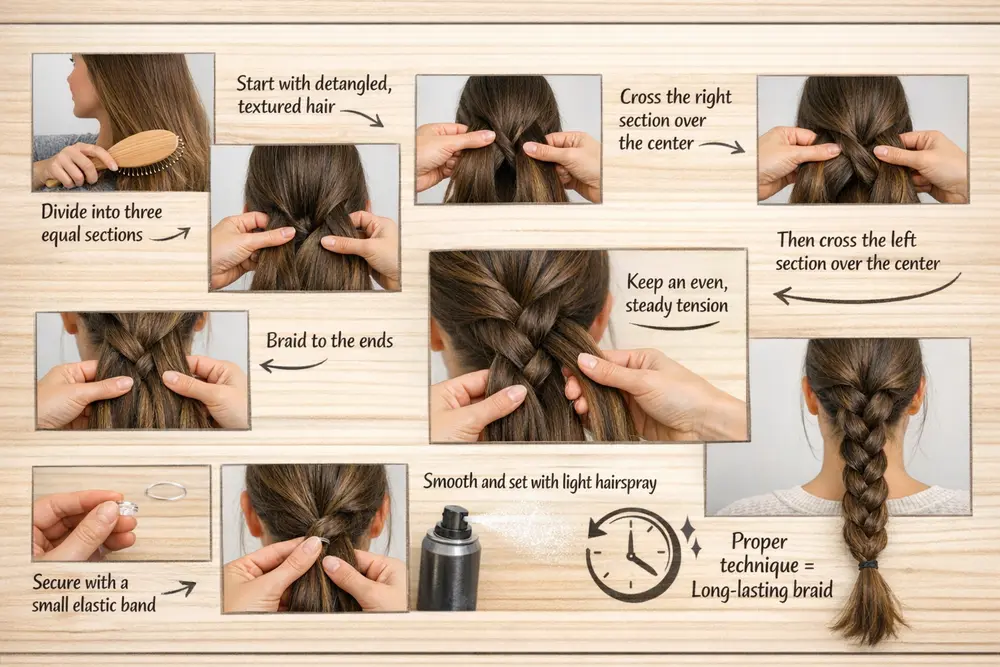
To braid hair properly for a neat, long-lasting style, start with clean, fully detangled hair that has slight texture (freshly washed hair can be slippery, so a bit of dry shampoo helps). Divide the hair into three equal sections. Cross the right section over the center, then the left over the new center, and continue alternating this pattern while keeping steady, even tension.
Keep your hands close to the scalp at the beginning to avoid bumps, and don’t pull too tight to prevent discomfort or breakage. Braid all the way to the ends, secure with a small elastic, and lightly smooth flyaways with oil or hairspray. Consistent section size and balanced tension are the keys to a braid that looks polished and stays intact all day.
How do you braid hair properly for a neat and long-lasting style?
To braid hair properly:
- Start with detangled, slightly textured hair.
- Divide the hair into three equal sections.
- Cross the right section over the center, then the left over the new center.
- Maintain even tension throughout the braid.
- Continue alternating until you reach the ends.
- Secure with a small elastic.
- Finish with light hairspray to prevent frizz.
Keeping consistent tension and clean sections is the key to a braid that looks polished and stays intact all day.
Why Proper Braiding Technique Matters
Many people think braiding is simply crossing strands over each other. However, technique determines:
- How long the braid lasts
- Whether it looks smooth or messy
- If it causes tension or hair breakage
- How comfortable it feels throughout the day
A poorly balanced braid can look bulky, pull uncomfortably at the scalp, or unravel within hours. When done correctly, a braid can last from morning to night, sometimes even multiple days.
Essential Tools You May Need
You technically only need hair and your hands to braid, but these tools enhance the final result:
Basic Tools:
- Hairbrush or wide-tooth comb
- Rat-tail comb (for clean parting)
- Small clear elastics
- Bobby pins
- Hair clips
Optional Styling Products:
- Dry shampoo (adds texture and grip)
- Lightweight styling cream
- Conditioning oil (for dry ends)
- Hairspray (light hold)
- Edge control for sleek finishes
Braids actually work better on slightly textured hair rather than freshly washed slippery strands. A touch of dry shampoo can improve grip significantly.
Step-by-Step: How to Braid Hair Properly
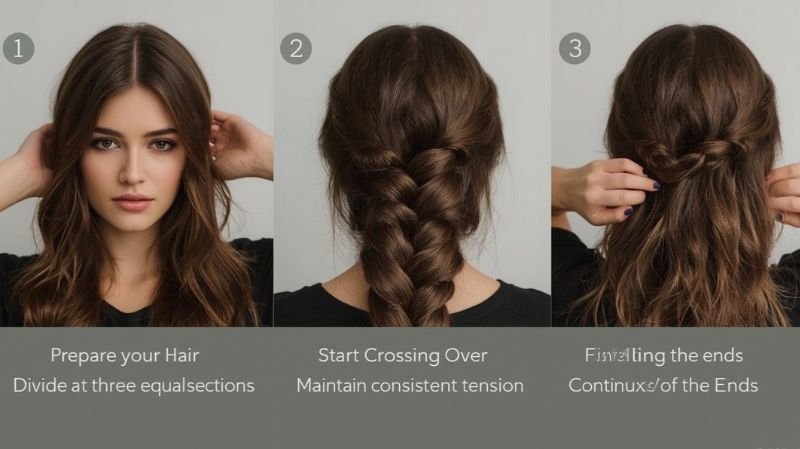
Let’s break this down into a beginner-friendly method that works for nearly all hair types.
Step 1: Prepare Your Hair
- Detangle gently.
- Remove knots completely.
- Sweep hair in the direction you want the braid to sit.
- Secure the rest of your hair out of the way if needed.
Hair is more fragile when wet. Avoid tight braiding on wet hair to prevent breakage.
Step 2: Divide Into Three Equal Sections
Using your fingers or a comb:
- Separate the hair into three even sections.
- Hold two sections in one hand, one in the other.
- Keep your grip firm but relaxed.
Even sections ensure a balanced braid. Uneven sections cause a lopsided look.
Step 3: Start Crossing Over
Now begin the basic braid pattern:
- Move the right section over the center.
- Move the left section over the new center.
- Repeat: Right over center → Left over center.
This alternating pattern forms the classic three-strand braid.
Step 4: Maintain Consistent Tension
Consistency is everything.
- Don’t pull too tight.
- Avoid slack between crosses.
- Keep your hands close to the scalp at the start.
Loose beginnings create bumps near the top of the braid.
Step 5: Continue to the Ends
Repeat the crossing pattern until:
- You run out of hair
- Sections become uneven
Then secure with a small elastic wrapped multiple times.
Step 6: Finishing Touches
For a polished look:
- Gently pull outer edges (called “pancaking”) for volume.
- Smooth flyaways with a light oil.
- Use light hairspray to set.
Quick Comparison Table: Tight vs. Balanced Braiding
| Factor | Overly Tight Braid | Proper Balanced Braid |
| Comfort | Causes scalp pain | Comfortable all day |
| Appearance | Too flat, stressed | Natural and polished |
| Hair Health | Risk of breakage | Minimal damage |
| Longevity | May loosen unevenly | Holds shape evenly |
| Volume | Limited flexibility | Can adjust with pancaking |
Google favors comparison tables because they simplify complex decisions, and this one highlights why technique matters.
From Frustration to Flawless
Sarah, a college student, struggled with braiding her hair before morning classes. Her braids would unravel during lectures, and she assumed her hair was “too fine.”
After adjusting just two things, using dry shampoo for grip and maintaining steady tension, her braid stayed intact for an entire 10-hour day. The difference wasn’t her hair type. It was technique.
This proves that anyone can braid hair effectively with the right approach.
Common Mistakes to Avoid
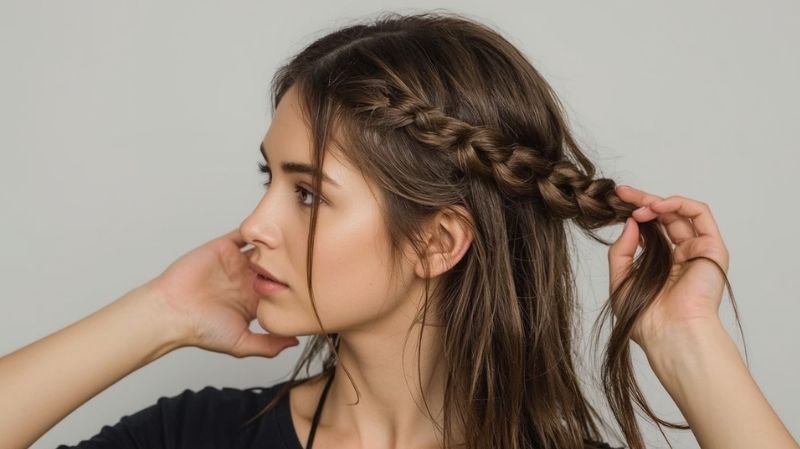
Even simple braids can go wrong. Watch out for:
- Uneven sections
- Starting too loosely at the scalp
- Pulling excessively tight
- Braiding soaking wet hair
- Skipping detangling
Correcting these small mistakes drastically improves results.
How to Make Braids Last Longer
Want your braid to endure humidity, wind, and long days?
Daily Tips:
- Avoid excessive touching.
- Use light setting spray.
- Keep hands away from the braid.
Night Routine:
- Wrap in a silk scarf.
- Use a satin pillowcase.
- Loosen slightly before sleeping.
Refresh Without Redoing:
- Smooth roots with dry shampoo.
- Re-elastic the ends if loose.
- Tuck stray hairs with bobby pins.
Easy Braid Hairstyles You Can Try
Once you master the basic technique, you can expand into stylish variations:
- Two small front braids
- Side braid
- French braid
- Dutch braid
- Crown braid
- Fishtail braid
- Rope twist
Many easy braid hairstyles build on the same three-strand foundation. Master the basics first, and the rest becomes easier.
Authority Insight: Why Professional Stylists Prioritize Technique
According to leading hairstyling professionals, braid longevity depends more on tension control than product use. Proper distribution of hair weight reduces stress on follicles and prevents traction damage. This is why certified stylists emphasize section precision and balanced hand positioning when teaching foundational braiding techniques.
In professional training environments, muscle memory development is considered essential, not speed. Practicing small sections repeatedly builds the control necessary for complex braid designs.
How to Braid Different Hair Types
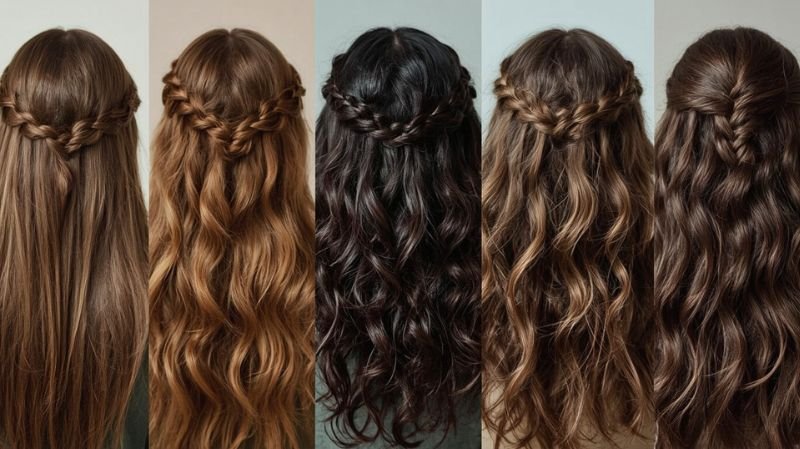
Straight Hair
- Add texture spray.
- Avoid slippery conditioners before braiding.
Fine Hair
- Use volumizing dry shampoo.
- Keep sections slightly tighter (not painful).
Thick Hair
- Divide into smaller workable sections.
- Use strong elastics.
Curly or Wavy Hair
- Braid while slightly damp for defined finish.
- Use anti-frizz serum lightly.
Natural or Coily Hair
- Moisturize first.
- Avoid excessive tension.
- Section carefully to prevent breakage.
Practice Tips for Beginners
Developing muscle memory is key.
Practice:
- While watching TV
- During downtime
- Without looking in a mirror
The goal is balance and rhythm, not speed.
Keep first stitches close to the scalp to avoid bulk at the top.
Conclusion
Braiding is more than a technique, it’s a skill that grows with practice. The first braid may feel awkward, but each attempt builds confidence and control. Once you understand tension, sectioning, and balance, your braids transform from basic to beautifully structured.
Whether you’re experimenting with easy braid hairstyles for everyday wear or simply learning how to braid hair neatly for the first time, remember this: precision beats speed, and consistency beats complexity.
Start small. Practice often. Adjust your grip. Improve each time.
Your hands will eventually move automatically, and that’s when braiding becomes effortless.
Ready to Elevate Your Hairstyle Game?
If you found this guide helpful:
✔ Practice one braid today
✔ Try a side braid variation
✔ Share this guide with someone learning to braid
✔ Explore more hairstyle tutorials
Master the basics now, and unlock endless styling possibilities.
Would you like me to now create:
- A Pinterest-optimized version?
- A downloadable braid practice checklist?
- Or internal SEO linking suggestions to boost ranking?
FAQs
1. How do beginners braid their own hair?
Beginners should start with a simple three-strand braid. Divide hair into three equal sections, cross the right over the center, then the left over the center. Repeat until finished. Focus on even tension and clean sections rather than speed. Practicing small front sections helps build coordination.
2. Is it better to braid wet or dry hair?
It’s generally better to braid slightly dry or damp hair rather than soaking wet hair. Wet hair is more elastic and prone to breakage. Slight texture helps braids hold longer and appear fuller.
3. How tight should a braid be?
A braid should feel secure but comfortable. If you experience scalp pain, headaches, or tension bumps, it’s too tight. Proper braids maintain structure without excessive pulling.
4. How long can you keep braids in?
Basic three-strand braids can last one to three days depending on hair type and maintenance. Protective styles may last longer but require scalp care and moisture maintenance.
5. Does braiding damage hair?
Braiding itself does not damage hair when done correctly. Damage occurs from excessive tension, tight elastics, or repeated stress on the same scalp areas.
6. Why does my braid look uneven?
Uneven braids usually result from:
- Unequal sections
- Inconsistent tension
- Skipping detangling
- Changing hand positioning mid-braid
Consistency fixes most issues.