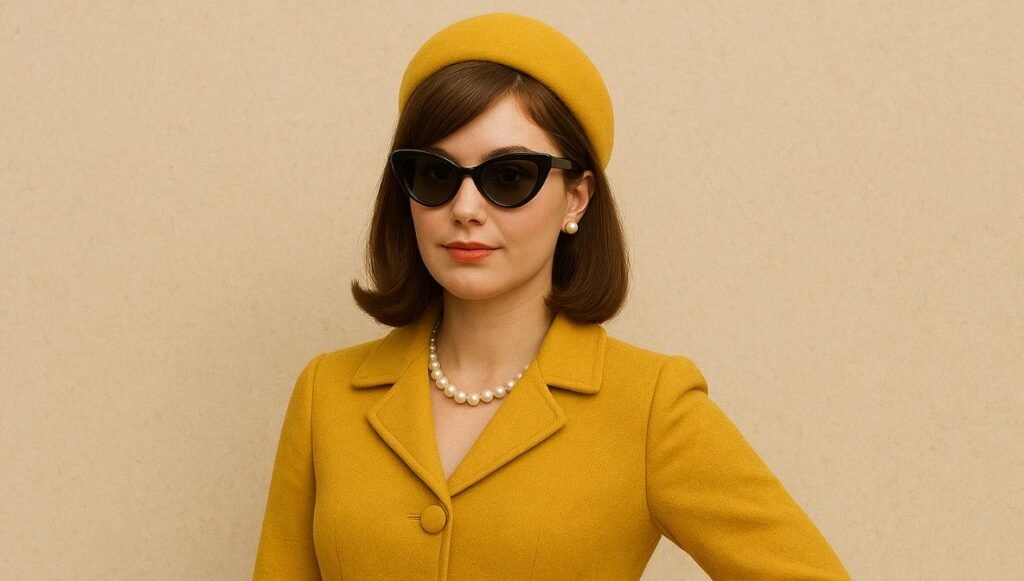
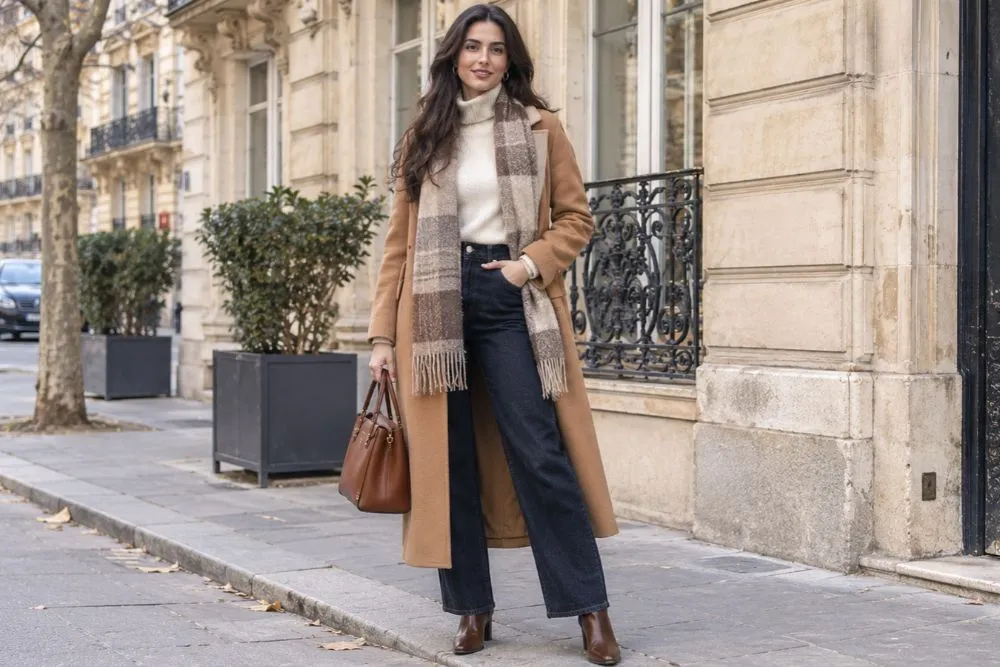
Winter outfit ideas for women should combine warmth, comfort, and personal style without making everyday dressing feel complicated. From oversized sweaters and straight-leg jeans to elegant wool coats, knitted dresses, and layered skirts, the best winter outfits use thoughtful proportions, insulating layers, and complementary textures to create looks that work in cold weather.
Whether you prefer casual everyday clothing, polished office looks, or sophisticated evening outfits, these 25 winter outfit ideas will help you put together stylish combinations using pieces you may already own.
What Makes a Great Winter Outfit?
A great winter outfit does more than look attractive. It should provide enough warmth for the weather, allow comfortable movement, and work for the activities planned that day.
The secret is combining three elements: a comfortable base layer, an insulating middle layer, and weather-appropriate outerwear. You can then use footwear, accessories, color, and proportions to give the outfit its personality.
Before buying new clothes, take inventory of your wardrobe. A versatile wool coat, a few well-fitting sweaters, reliable denim, warm tights, and practical boots can create numerous combinations without requiring an entirely new winter wardrobe.
Quick winter styling formula: Start with a fitted or lightweight base, add a sweater or cardigan, choose an outer layer suited to the temperature, and finish with weather-appropriate shoes and accessories.
25 Stunning Winter Outfit Ideas for Women
The following winter outfits cover different aesthetics, occasions, and temperatures. Each combination includes practical styling suggestions so you can recreate the look with similar pieces rather than needing the exact clothing shown.
1. Oversized Sweater with Straight-Leg Jeans
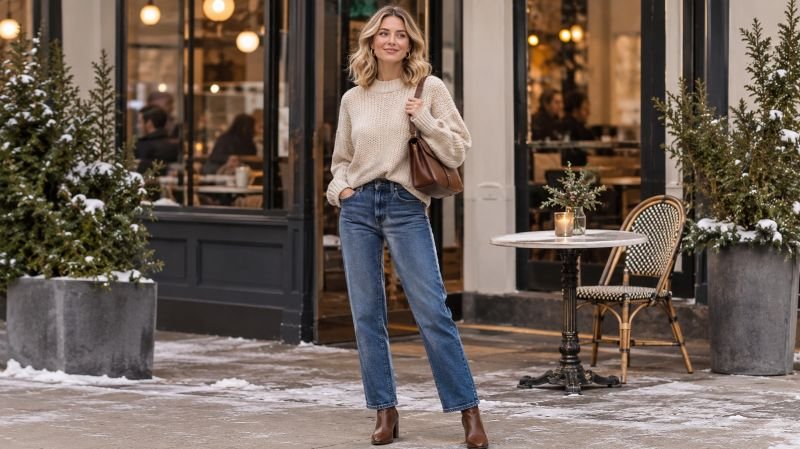
An oversized sweater and straight-leg jeans make one of the easiest winter outfit combinations to wear repeatedly. The relaxed knit creates a cozy appearance, while the structured denim keeps the overall silhouette balanced.
Choose a cream, charcoal, oatmeal, or chocolate-brown sweater and pair it with medium-wash or dark-wash jeans. Add leather ankle boots and a long wool coat when temperatures drop.
Styling tip: Try a front tuck to create a little waist definition without losing the relaxed feel of the sweater. If your knit is particularly bulky, choose jeans with a clean, straight silhouette rather than adding another oversized layer.
2. Long Wool Coat with Turtleneck and Wide-Leg Trousers
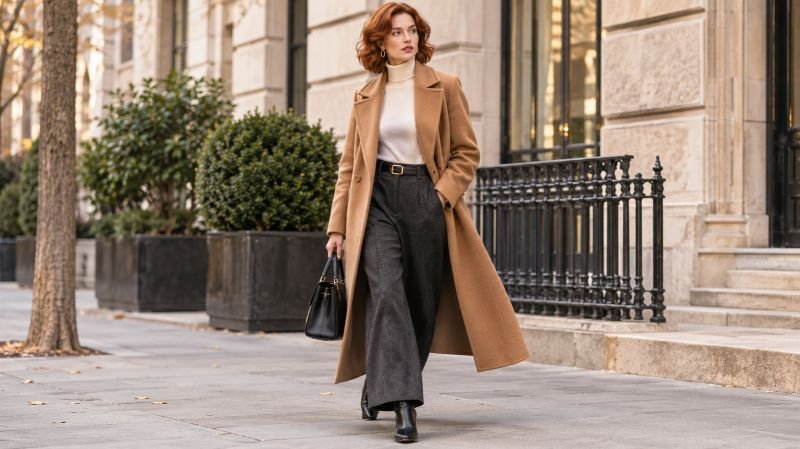
For a sophisticated winter look, combine a long wool coat with a fitted turtleneck and wide-leg tailored trousers. This outfit works especially well when you want something polished enough for the office but comfortable enough for everyday wear.
A camel, charcoal, or black coat provides a versatile foundation. Wear it over a cream or black turtleneck, then add tailored trousers and leather loafers or heeled ankle boots.
Styling tip: Pay attention to trouser length. The hem should fall neatly over your shoes without dragging along wet pavements. A structured handbag and understated earrings complete the outfit.
3. Puffer Jacket with Leggings and Chunky Sneakers
A puffer jacket with leggings is a practical choice for casual winter days, errands, outdoor walks, and travel. The jacket provides a protective outer layer, while stretchy leggings allow comfortable movement.
Choose a longer puffer for more coverage or a cropped style if you prefer a sportier silhouette. Wear it with a thermal or long-sleeved top, fleece-lined leggings when appropriate, and supportive sneakers.
Styling tip: Match the leggings with a similar-toned base layer to create a streamlined appearance. Add a beanie and warm socks for extra comfort. For snow or icy conditions, replace ordinary sneakers with shoes designed for winter traction.
4. Teddy Coat with Skinny Jeans and Ankle Boots

A teddy coat brings texture and softness to a winter wardrobe. Its plush appearance makes even a simple combination of jeans and a basic top look more considered.
Wear a beige or brown teddy coat over a fitted sweater and dark skinny jeans. Black leather ankle boots provide contrast and balance the volume of the outerwear.
Styling tip: Because teddy coats can add visual volume, keep the layers underneath relatively streamlined. A fitted top and slim or straight-leg jeans create a balanced outfit without making the look feel restrictive.
5. Monochromatic Winter Outfit in Neutral Shades
A monochromatic outfit uses variations of one color family to create a cohesive appearance. In winter, cream, beige, camel, gray, and chocolate brown are particularly versatile choices.
Try an oatmeal sweater with taupe trousers and a camel coat. Alternatively, combine a cream turtleneck, ivory wide-leg pants, and a light beige wool jacket.
The key is to introduce different textures so the outfit does not look flat. Wool, ribbed knitwear, suede, leather, and smooth tailoring can add depth even when the colors are similar.
Styling tip: If you wear several light-colored pieces, choose footwear and bags in a slightly darker shade to create definition.
6. Leather Jacket with Knit Sweater and Black Jeans
A leather jacket adds structure to cozy winter clothing and creates an effortless combination of casual and edgy styling. It is particularly useful during milder winter weather when a heavy coat may feel unnecessary.
Layer a fine-gauge sweater or turtleneck beneath a black or dark-brown leather jacket. Pair it with black straight-leg jeans and ankle boots for a coordinated finish.
For colder days, add a thin thermal layer underneath the knit or wear a longer insulated coat over the leather jacket when the fit allows.
Styling tip: A slightly relaxed leather jacket works well with fitted knitwear. Avoid forcing thick sweaters underneath a close-fitting jacket, as restricted movement can make layering uncomfortable.
7. Chunky Knit Sweater with a Pleated Midi Skirt
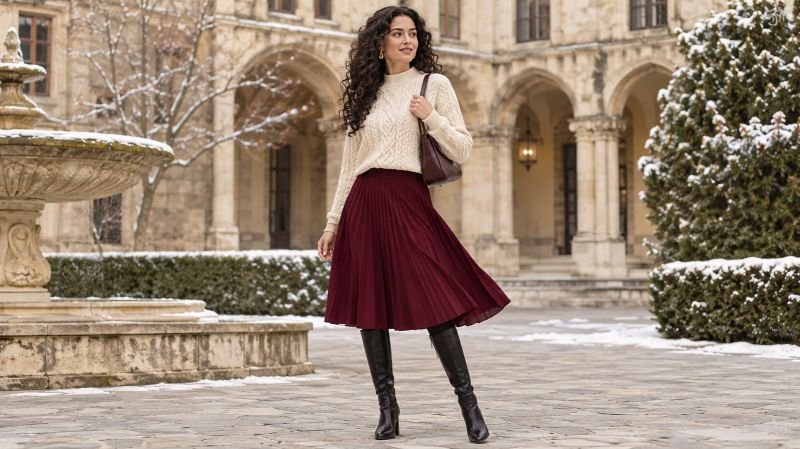
A chunky sweater paired with a pleated midi skirt creates an appealing contrast between cozy knitwear and flowing fabric. It is a feminine alternative to the usual jeans-and-sweater combination.
Choose a charcoal, burgundy, or cream sweater and combine it with a black, brown, or metallic pleated skirt. Add opaque tights and knee-high boots to make the outfit more suitable for cold weather.
Styling tip: A slightly tucked or cropped sweater helps define the waist. If your sweater is oversized, consider a skirt with a more controlled shape to prevent too much fabric from competing.
8. Turtleneck Dress with Knee-High Boots
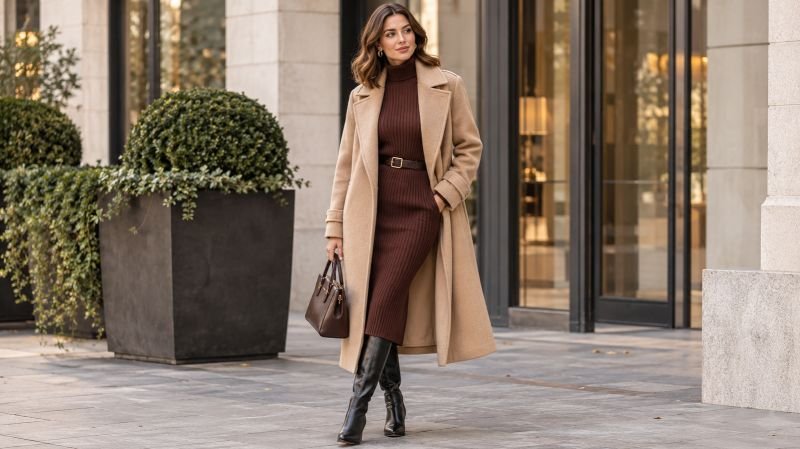
A turtleneck dress is a convenient one-piece option when you want a polished winter outfit without combining several separate garments. Its continuous silhouette also makes accessorizing straightforward.
Choose a ribbed knit midi dress in black, gray, burgundy, or chocolate brown. Pair it with knee-high boots and a tailored long coat.
For additional warmth, wear thermal tights underneath. A leather belt can define the waist if the dress has a relaxed fit.
Styling tip: Check the thickness and stretch of the knit before choosing your underlayers. A dress that fits comfortably over a thermal base will be more practical than one that becomes tight or bunches up.
9. Blazer with Sweater and Tailored Trousers
A blazer, sweater, and tailored trousers create a smart winter combination that works for professional environments, meetings, and casual dinners.
Start with a fine-knit crewneck or turtleneck beneath a wool-blend blazer. Add straight-leg or wide-leg trousers and finish with loafers or ankle boots.
A gray blazer with black trousers creates a classic appearance, while a brown blazer with cream knitwear offers a softer alternative.
Styling tip: If you plan to wear a coat over your blazer, check the shoulder and sleeve fit first. Layering should not pull across the back or restrict your arms.
10. Cardigan with Wide-Leg Jeans and Ankle Boots
A cardigan with wide-leg jeans is a comfortable option for relaxed winter days. It provides the coziness of knitwear while offering more styling flexibility than a traditional pullover.
Wear a buttoned cardigan over a fitted T-shirt or lightweight turtleneck. Choose high-waisted wide-leg jeans and add leather ankle boots.
A cropped cardigan can emphasize the waist, while a longer cardigan creates a softer, more relaxed silhouette.
Styling tip: When wearing wide-leg denim, choose boots with enough structure to sit neatly beneath the hem. Avoid excessively long jeans that drag on wet or snowy ground.
11. Faux Fur Coat with Slim-Fit Pants
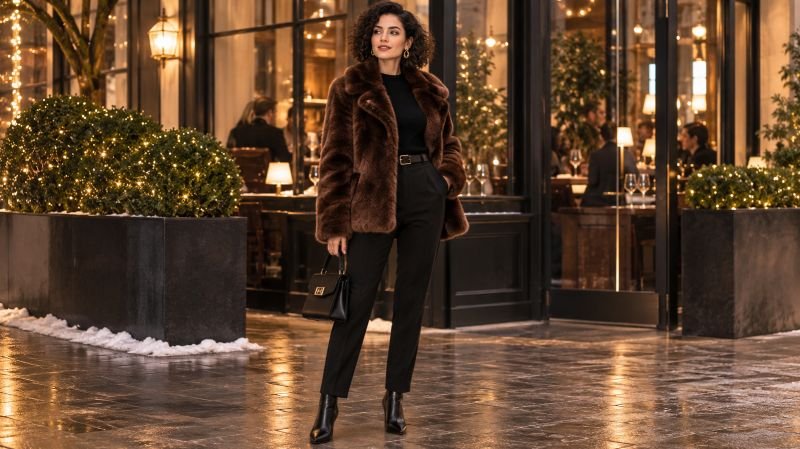
A faux fur coat can turn a simple outfit into a statement look. Its textured surface creates visual interest, making it a useful choice for dinner dates, evening events, and dressier winter outings.
Pair a chocolate-brown or black faux fur coat with a fitted knit top and slim-fit trousers. Pointed-toe ankle boots and a structured handbag provide a refined finish.
For a more casual interpretation, wear the coat with dark denim and a simple sweater.
Styling tip: Let the coat remain the focal point. Keep the rest of the outfit relatively simple, especially when the outerwear has a prominent texture or oversized shape.
12. Denim Jacket with Layered Knitwear
A denim jacket can still have a place in winter dressing, particularly in milder conditions. The trick is to treat it as a styling layer rather than relying on it as your only source of warmth.
Wear a denim jacket over a lightweight sweater or thermal top. Add dark denim or corduroy trousers, a warm scarf, and weather-appropriate boots.
For extra insulation, layer a roomier coat over the jacket if the two pieces fit comfortably together.
Styling tip: A denim jacket works particularly well with contrasting textures. Try pairing classic blue denim with a ribbed sweater, wool scarf, or corduroy trousers.
13. All-Black Winter Outfit with Statement Boots
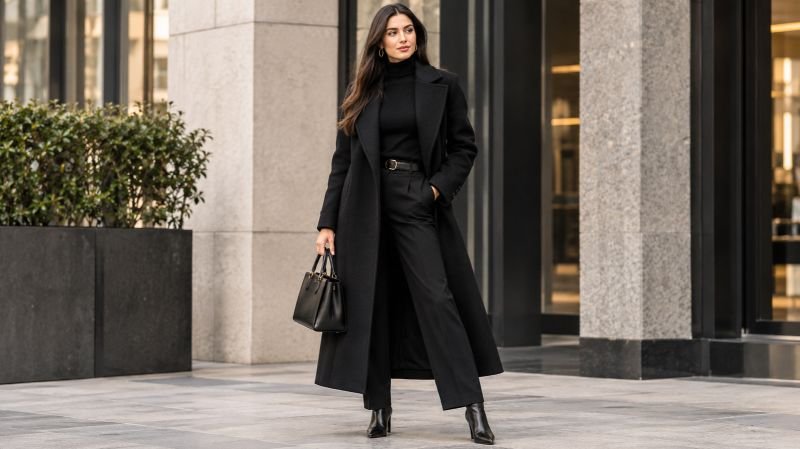
An all-black winter outfit is a reliable choice for anyone who prefers minimal, understated clothing. It is also easy to adapt for work, travel, shopping, and evening occasions.
Combine a black turtleneck with black tailored trousers and a long black coat. Add leather boots and a structured bag for a polished finish.
To prevent the outfit from looking visually flat, combine different materials such as matte wool, smooth leather, ribbed knitwear, and textured accessories.
Styling tip: Experiment with different shades of black and charcoal rather than trying to make every garment an identical color. Texture and fabric finish can provide enough contrast.
14. Cable-Knit Sweater with Leather Pants
A cable-knit sweater and leather trousers offer an interesting contrast between soft and structured materials. The knit adds a cozy, traditional winter feel, while leather introduces a more contemporary edge.
Choose a cream or gray cable-knit sweater and pair it with black leather or faux-leather trousers. Add ankle boots and a long wool coat for colder days.
This combination works particularly well for casual dinners, weekend outings, and occasions when jeans feel too ordinary.
Styling tip: If the sweater is oversized, a straight or tapered trouser silhouette can help balance the outfit. For a more relaxed appearance, try a half-tuck rather than fully tucking in a bulky knit.
15. Plaid Coat with Turtleneck and Straight-Leg Jeans
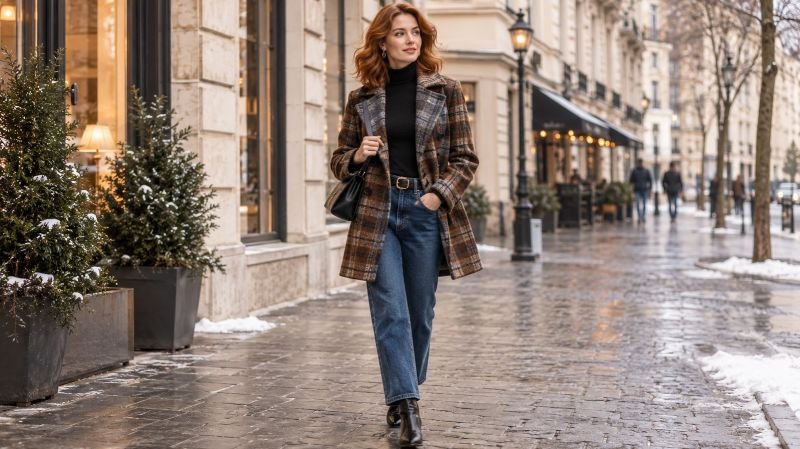
A plaid coat brings pattern and personality to otherwise simple winter clothing. It is a particularly useful statement piece because it can transform basic denim and knitwear into a complete-looking outfit.
Wear a checked wool coat over a black or cream turtleneck, then add straight-leg jeans and leather boots. Neutral accessories allow the coat’s pattern to remain the main focus.
For a more traditional appearance, choose muted brown, gray, or navy checks. For a bolder look, try a larger plaid pattern with contrasting colors.
Styling tip: Avoid combining too many competing prints. When your coat already features a noticeable pattern, keep your sweater, trousers, and accessories relatively understated.
16. Sweater Dress with Tights and Tall Boots
A sweater dress with tights and tall boots is an easy solution for days when you want a complete outfit without spending too much time coordinating separate pieces.
Choose a fitted or relaxed sweater dress in charcoal, cream, burgundy, or navy. Add opaque tights and knee-high boots, then layer a long coat over the dress.
A belt can add definition to a relaxed dress, while a crossbody bag makes the outfit practical for everyday use.
Styling tip: Consider the relationship between dress length and boot height. A midi dress that falls close to the boot shaft creates a different appearance from a shorter dress with a visible section of tights.
17. Longline Coat with Hoodie and Relaxed Jeans

A longline coat layered over a hoodie creates a modern high-low combination. It mixes the relaxed feel of streetwear with the structure of traditional outerwear.
Choose a gray, black, or camel coat and layer it over a neutral hoodie. Add relaxed-fit jeans and clean sneakers for casual days.
If the weather is especially cold, wear a thermal shirt underneath the hoodie and choose a coat with adequate insulation.
Styling tip: Keep the hoodie comfortable beneath the coat. A very thick hood can create unwanted bulk around the neck, so a medium-weight sweatshirt often works better.
18. Cropped Puffer Jacket with High-Waisted Trousers
A cropped puffer jacket paired with high-waisted trousers creates a balanced silhouette. The shorter jacket visually defines the waist, while the trousers provide a longer, uninterrupted line through the legs.
Try a black, cream, or olive puffer over a fitted thermal top or lightweight sweater. Add high-waisted tailored trousers and chunky boots.
This is a particularly useful combination for casual outings when you want warmth without wearing a long, heavy coat.
Styling tip: Check where the jacket ends relative to the waistband of your trousers. A comfortable overlap helps prevent gaps when you move, sit, or reach overhead.
19. Matching Knit Set with a Long Wool Coat
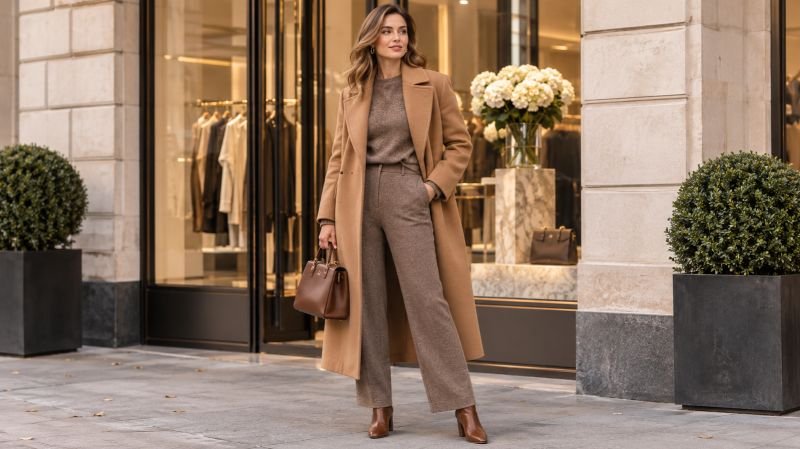
Matching knit sets make winter dressing simpler because the top and bottom are already designed to work together. Adding a long wool coat gives the combination more structure and makes it suitable for outings beyond the home.
Try a gray, cream, or camel knit set with a contrasting coat. Finish with knee-high boots or sleek ankle boots, depending on the shape and length of the skirt or trousers.
You can also wear the sweater separately with jeans or style the matching bottoms with a different knit.
Styling tip: Check the fabric weight and fit before choosing a set. A knit that stretches comfortably without becoming transparent or losing its shape will generally be more versatile.
20. Turtleneck with Corduroy Pants and Chelsea Boots
Corduroy trousers are a useful alternative to denim when you want to introduce more texture into your winter wardrobe. Their distinctive ridged surface gives a simple outfit additional depth.
Combine brown, olive, or black corduroy trousers with a fitted cream turtleneck. Add Chelsea boots and a wool coat to create a comfortable outfit for everyday activities.
For a more relaxed look, choose straight-leg corduroys. Tailored versions create a more polished appearance.
Styling tip: Consider the wale, or the width of the raised ribs, when choosing corduroy. Fine-wale fabric often creates a subtler, dressier appearance, while wider ribs produce a more noticeable texture.
21. Oversized Blazer with Mini Skirt and Winter Tights
An oversized blazer and mini skirt create a structured yet playful winter outfit. Adding opaque tights and tall boots makes the combination more practical for colder weather.
Choose a tailored blazer in black, charcoal, or brown. Wear it over a fitted knit top and coordinate it with a mini skirt in wool, tweed, or a heavier fabric.
Complete the look with opaque tights and knee-high boots.
Styling tip: If you want more warmth, use thermal tights or add a thin base layer underneath your top. For freezing conditions, choose a longer insulated coat instead of relying on the blazer alone.
22. Shearling Jacket with Straight-Leg Denim
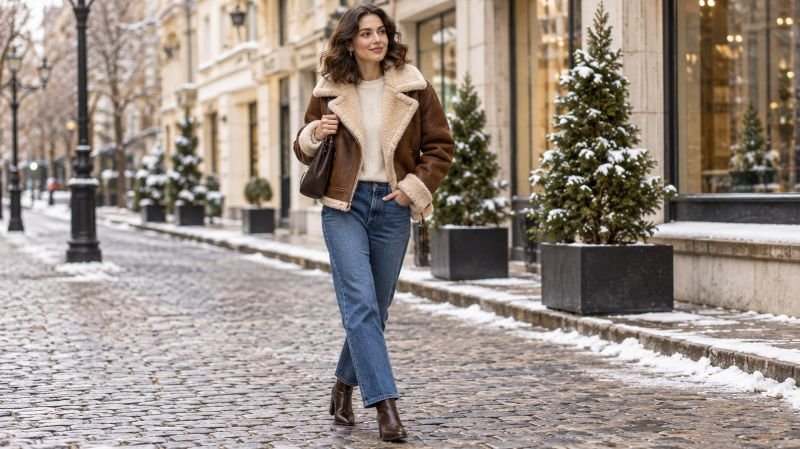
A shearling jacket offers a distinctive winter look with a combination of structured outerwear and a soft, textured finish. It works particularly well with straightforward denim because the jacket already provides plenty of visual interest.
Pair a brown or black shearling-style jacket with a lightweight sweater, straight-leg jeans, and ankle boots.
For an everyday look, choose classic blue denim. Dark denim creates a slightly more polished combination.
Styling tip: Pay attention to the jacket’s lining, construction, and fit. The appearance of shearling does not automatically indicate how warm a particular garment will be.
23. Burgundy Sweater with Tailored Black Trousers

A burgundy sweater and black tailored trousers create a simple outfit with enough color to stand out without feeling overly bold. The combination is suitable for work, casual dinners, and weekend plans.
Choose a fine-knit or medium-weight burgundy sweater and pair it with straight-leg or wide-leg black trousers. Add black leather boots and a matching handbag.
You can also introduce cream or gold-toned accessories to soften the contrast.
Styling tip: If the trousers have a high waist, try a partial tuck to define your proportions. A long black coat provides an easy finishing layer.
24. Elegant Winter Outfit with a Midi Skirt and Long Coat
A midi skirt with a long coat is a versatile option when you want an elegant winter outfit without relying on trousers. It can work for dinners, office settings, and special daytime occasions.
Pair a satin, wool, or heavier pleated midi skirt with a fitted sweater or turtleneck. Add tights and boots, then layer a long coat over the combination.
For a more sophisticated palette, consider chocolate brown, charcoal, burgundy, or black.
Styling tip: Pay attention to the skirt’s fabric and movement. Lightweight satin may need a warm base layer and appropriate tights, while a heavier wool-blend skirt can offer more substantial coverage.
25. Cozy Winter Outfit with a Quilted Jacket and Knitwear
A quilted jacket and knitwear make a useful combination for casual winter activities. The jacket adds a distinctive texture, while the sweater provides a comfortable middle layer.
Choose an olive, navy, black, or brown quilted jacket. Wear it over a crewneck sweater or turtleneck and pair it with dark jeans or corduroy trousers.
Complete the outfit with practical boots, a scarf, and a crossbody bag.
Styling tip: For wet or snowy conditions, check whether the jacket has a water-resistant outer fabric and suitable insulation. Quilting alone does not guarantee protection against rain or cold.
How to Style Winter Outfits Without Looking Bulky
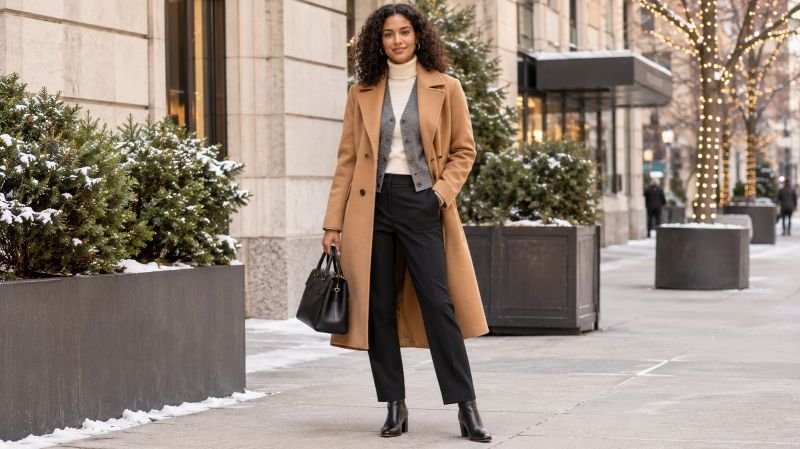
Staying warm does not mean wearing several oversized garments at once. The best winter styling approach is to combine layers of different weights, balance proportions, and choose fabrics according to the weather.
Master the Art of Layering
Layering is one of the most useful techniques for cold-weather dressing because each garment serves a different purpose. Rather than depending on one extremely thick coat, combine lightweight layers that can be added or removed as temperatures change.
A practical three-layer system includes:
- Base layer: A fitted thermal top, lightweight merino sweater, or long-sleeved shirt that sits comfortably against the skin.
- Insulating layer: A wool sweater, cardigan, fleece, or insulated vest that helps retain body heat.
- Outer layer: A coat or jacket that protects against wind, rain, and snow.
This approach is supported by REI’s cold-weather layering recommendations, which explain the different functions of base, insulating, and outer layers.
For everyday outfits, try a thin turtleneck under a cardigan, followed by a wool coat. The combination creates warmth without requiring multiple bulky sweaters.
Balance Oversized and Fitted Clothing
Proportion is just as important as color when putting together winter clothes ideas. Wearing several oversized garments together can make an outfit look shapeless, particularly when the individual pieces have little structure.
Instead, balance volume between the upper and lower halves of your outfit.
- Pair an oversized sweater with straight-leg or slim trousers.
- Wear wide-leg jeans with a fitted turtleneck or cropped cardigan.
- Combine a voluminous puffer with streamlined leggings.
- Balance a fitted knit dress with a structured oversized coat.
You do not have to wear fitted clothing to achieve a balanced silhouette. The goal is to create a deliberate shape through the relationship between different garments.
Mix Different Winter Textures
Texture can make a simple winter outfit look more interesting without adding unnecessary accessories or complicated patterns.
Try combining materials that create a noticeable contrast:
- Wool with smooth leather.
- Cable-knit sweaters with denim.
- Suede jackets with cotton trousers.
- Satin skirts with chunky knitwear.
- Faux fur outerwear with simple tailored clothing.
Wool is particularly useful in cold-weather wardrobes because its fiber structure helps trap insulating air, while its moisture-management properties contribute to comfort.
Expert styling insight: Limit an outfit to two or three prominent textures. This creates visual depth while allowing the clothing to work together rather than compete for attention.
Choose Colors That Complement Each Other
Winter dressing does not have to revolve around black, gray, and navy. Rich seasonal shades can make everyday outfits feel more distinctive.
Consider these combinations:
| Color combination | Styling direction |
| Camel + cream | Soft, sophisticated and timeless |
| Burgundy + charcoal | Rich and polished |
| Chocolate brown + beige | Warm and understated |
| Navy + gray | Classic and versatile |
| Forest green + black | Refined with a deeper color contrast |
| Burgundy + pale blue | A more playful winter combination |
If you prefer a minimalist wardrobe, start with neutral clothing and introduce one accent color through a sweater, scarf, handbag, or pair of boots.
Use Belts to Define Your Silhouette
A belt is a simple way to change the appearance of a winter outfit, particularly when wearing long coats, oversized cardigans, or relaxed sweater dresses.
A medium-width leather belt can define the waist over a knit dress, while a slim belt can add structure to tailored trousers.
You can also use a belt over an open coat when the garment is designed to accommodate it. Avoid pulling a thick coat too tightly, as this can distort its shape and restrict movement.
Winter Wardrobe Essentials Every Woman Should Own
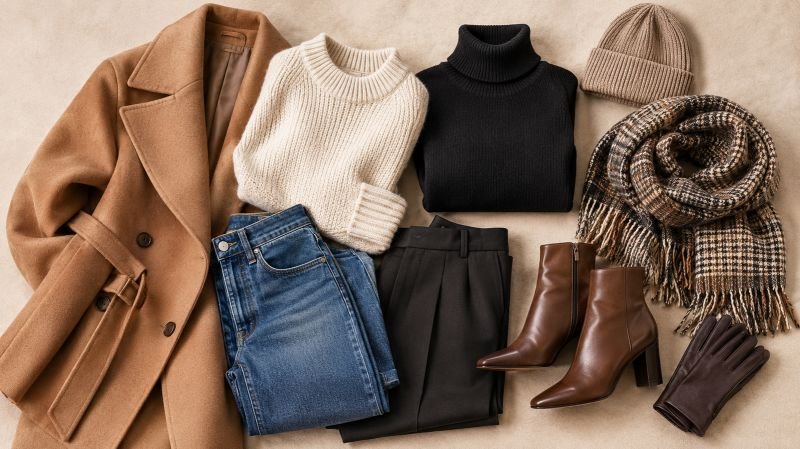
Building a functional winter wardrobe is easier when you invest in versatile garments that work with multiple outfits. You do not need dozens of seasonal purchases; a small collection of well-chosen pieces can create a much wider range of looks.
Winter Coats and Jackets
Outerwear has a major influence on both the appearance and practicality of a winter outfit. Choose according to the conditions you regularly experience rather than buying a coat simply because it looks fashionable.
- Wool coat: A versatile option for dry, chilly days and polished outfits.
- Puffer jacket: Useful when you need substantial insulation in colder weather.
- Teddy coat: Adds a soft, textured appearance to casual and dressy combinations.
- Shearling jacket: Offers a distinctive outerwear look with a cozy finish.
- Quilted jacket: A practical option for everyday layering in milder conditions.
A useful wardrobe strategy is to own one versatile everyday coat and one outer layer suited to your coldest or wettest conditions.
Sweaters, Turtlenecks and Cardigans
Knitwear forms the foundation of many winter outfits. Having different weights and silhouettes makes it easier to dress for changing temperatures.
Consider keeping these styles in rotation:
- A neutral crewneck sweater for everyday outfits.
- A fitted turtleneck for layering under coats and blazers.
- A chunky cable-knit sweater for relaxed looks.
- A cardigan for adjustable warmth.
- A fine-knit sweater for wearing beneath tailored jackets.
Look at fabric composition, construction, and care instructions when choosing knitwear. Merino wool, for example, is a useful natural-fiber option for comfortable base layers.
Jeans, Trousers and Winter Skirts
A variety of bottom silhouettes helps prevent your winter wardrobe from becoming repetitive.
Straight-leg jeans are versatile for casual outfits, while wide-leg trousers create a more tailored appearance. Corduroy adds texture, and wool or heavier-fabric skirts offer alternatives to denim.
For skirts, consider the fabric weight, lining, and length. Pair shorter styles with suitable tights and boots when additional coverage is needed.
Winter Boots and Comfortable Shoes
Footwear should complement your clothing while providing enough protection for the conditions outside.
Useful winter footwear options include:
- Knee-high boots: Work well with sweater dresses, skirts, and fitted trousers.
- Ankle boots: Versatile with jeans, tailored trousers, and casual dresses.
- Chelsea boots: An easy option for everyday styling.
- Insulated winter boots: Better suited to snowy and particularly cold conditions.
- Weather-resistant walking shoes: Useful for rainy days and outdoor activities.
For wet or icy conditions, prioritize water protection, a secure fit, and a grippy outsole rather than choosing footwear based on appearance alone.
Scarves, Gloves, Hats and Other Accessories
Accessories can change the character of an outfit while providing useful additional coverage.
A wool scarf adds texture to a simple coat, leather gloves create a polished finish, and a knit beanie works particularly well with casual winter clothing.
For especially cold conditions, prioritize warmth over decorative details. The National Weather Service recommends covering exposed skin and wearing several warm layers, including appropriate head and hand protection.
How to Dress for Different Winter Temperatures
Not every winter day requires the same outfit. A mild, sunny afternoon calls for a different combination from a windy morning or a day with snow and freezing rain.
The most useful approach is to consider temperature, wind, precipitation, and how long you will be outdoors.
What to Wear on Mild Winter Days
When the weather is cool rather than freezing, lightweight knitwear and versatile outerwear are often enough.
Try straight-leg jeans with a long-sleeved top, a cardigan, and a medium-weight coat. Add loafers or ankle boots, depending on the weather.
Other useful combinations include:
- A sweater with tailored trousers and loafers.
- A denim jacket over a lightweight knit.
- A midi skirt with tights and ankle boots.
- A cardigan with jeans and comfortable sneakers.
The advantage of these outfits is flexibility. You can remove a layer when moving indoors without having to change your entire look.
What to Wear When It Is Freezing Outside
When temperatures fall significantly, prioritize insulation and coverage rather than relying on a thick-looking outfit alone.
Start with a thermal base layer, add a sweater or fleece, and finish with an insulated coat appropriate for the conditions. Wear warm socks, gloves, a hat, and a scarf to cover exposed areas.
Choose full-length trousers and insulated boots, particularly if you expect to spend extended periods outside.
The National Weather Service advises wearing multiple loose-fitting, warm layers and water-repellent outer garments in severe winter conditions. It also recommends removing excess layers if sweating becomes an issue, since damp clothing can contribute to chilling.
How to Dress for Rainy and Snowy Winter Weather
Rain and snow require more than warm knitwear. Your outer layer and footwear should protect you from moisture as well as low temperatures.
Choose a waterproof or suitably weatherproof coat, depending on the expected conditions. Wear closed boots with appropriate traction, and avoid trousers that drag along wet pavements.
For snowy conditions, insulated boots and warm socks are more practical than ordinary fashion sneakers. If your clothing becomes wet, change into dry garments as soon as possible.
One important distinction: a wool coat may be suitable for dry cold weather, but it should not automatically be treated as waterproof. For persistent rain or wet snow, a properly designed weatherproof outer layer is a better choice.
Conclusion
Creating stylish winter outfits does not require an entirely new wardrobe or complicated styling techniques. The right combination of comfortable knitwear, versatile outerwear, well-fitting trousers, dresses, and practical accessories can make cold-weather dressing much easier.
Experiment with different silhouettes, mix textures, and introduce seasonal colors to give familiar wardrobe staples a fresh appearance. Whether you prefer casual jeans-and-sweater combinations, elegant wool coats, or feminine knit dresses, choose outfits that reflect your personal style while keeping you comfortable.
Ready to refresh your winter wardrobe? Start with your favorite pieces, try a few new combinations from these 25 ideas, and save the looks you would love to recreate. Share this article with a friend who needs a little winter styling inspiration!
Frequently Asked Questions
1. What Are the Best Winter Outfit Ideas for Women?
Some of the best winter outfit combinations include oversized sweaters with straight-leg jeans, wool coats with tailored trousers, puffer jackets with leggings, sweater dresses with knee-high boots, and chunky knits with midi skirts.
Choose combinations based on your personal style, daily activities, and local weather conditions.
2. How Can Women Look Stylish in Winter?
Focus on combining complementary colors, different textures, and balanced silhouettes. A well-fitted sweater, tailored trousers, and a structured coat can create a polished appearance without requiring complicated styling.
Accessories such as scarves, leather boots, belts, and handbags can make simple outfits look more complete.
3. What Should Women Wear in Winter to Stay Warm?
Start with a comfortable thermal or moisture-managing base layer, add an insulating sweater or fleece, and finish with an outer layer appropriate for the weather.
Warm socks, insulated footwear, gloves, and a hat also help provide coverage. For particularly cold or wet conditions, choose clothing designed for insulation and weather protection rather than relying on ordinary fashion garments.
4. How Can I Make a Winter Outfit Look Classy?
Choose timeless pieces such as a long wool coat, fitted turtleneck, tailored trousers, leather boots, and a structured handbag.
Neutral shades like camel, cream, charcoal, black, and chocolate brown make coordinating individual garments easier. Pay attention to fit, fabric condition, and the proportions of each piece.
5. What Are the Best Cute Winter Clothes Ideas for Everyday Wear?
Some cute winter clothes ideas include oversized sweaters with jeans, teddy coats with leggings, matching knit sets, cardigan outfits, and sweater dresses with boots.
For a playful appearance, experiment with colorful scarves, patterned knitwear, interesting bags, and contrasting textures while keeping the overall outfit comfortable.
6. How Do You Layer Clothes Without Looking Bulky?
Begin with a lightweight base layer and gradually add thicker garments. Avoid combining several extremely oversized pieces unless that is the silhouette you intentionally want.
For example, wear a fitted turtleneck beneath a chunky cardigan and finish with a coat that has enough room through the shoulders and sleeves.
7. What Shoes Look Best with Winter Outfits?
Ankle boots, knee-high boots, Chelsea boots, and insulated winter boots are versatile choices.
Ankle boots work well with jeans and tailored trousers, while knee-high boots complement sweater dresses and midi skirts. For snow and icy conditions, prioritize footwear with suitable insulation and traction.
8. What Colors Are Best for Winter Outfits?
Popular winter wardrobe colors include black, gray, navy, cream, camel, burgundy, chocolate brown, and forest green.
You can combine neutral shades for a minimalist appearance or introduce brighter colors through sweaters, scarves, handbags, and other accessories.
9. How Can I Style Jeans in Winter?
Pair jeans with a chunky sweater, turtleneck, cardigan, or fitted thermal top. Add a wool coat or puffer jacket depending on the weather.
Straight-leg and wide-leg jeans work particularly well with ankle boots, while slim jeans can be worn with knee-high boots. Choose suitable socks and base layers when temperatures become especially low.
10. What Are the Must-Have Winter Wardrobe Essentials?
A practical winter wardrobe should include a versatile coat, an insulated jacket, comfortable sweaters, a turtleneck, jeans, tailored trousers, suitable boots, warm tights, and cold-weather accessories.
The best collection is one in which individual pieces can be combined in multiple ways, making it easier to create different winter outfits without constantly purchasing new clothes.