
Selvedge jeans are jeans made from denim woven with a self-finished edge, traditionally on a narrow shuttle loom. That distinctive edge, often marked by a red, white, or other colored thread, prevents the fabric from unraveling and can be seen inside the outer seam when the hem is turned up.
But what makes selvedge denim interesting goes beyond its recognizable edge. Its appeal lies in traditional weaving techniques, distinctive fabric textures, and the craftsmanship behind denim that can develop character through years of wear.
Whether you’re discovering what is selvedge for the first time or considering your first pair of selvedge denim jeans, understanding how the fabric is made will help you appreciate what makes it different—and decide whether it deserves a place in your wardrobe.
What Does Selvedge Mean?
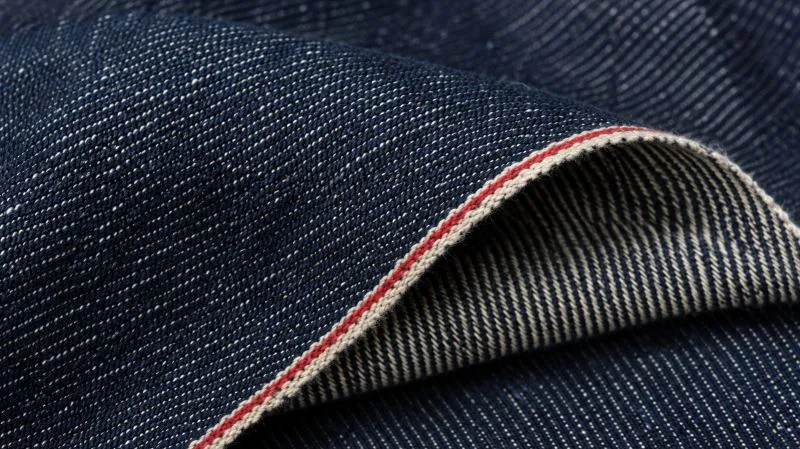
Selvedge is another spelling of selvage, a textile term derived from “self-edge.” Both words describe the finished border formed along the sides of woven fabric.
In denim manufacturing, this border is created when the weft yarn travels across the fabric and turns back at the edge during shuttle weaving.
The result is a compact, woven boundary that helps prevent the fabric edge from unraveling. It is part of the original cloth rather than an additional strip stitched onto the jeans afterward.
Selvedge denim is also sometimes called self-edge denim. In American fashion and textile terminology, both spellings are widely understood.
What Makes Selvedge Denim Different?
The main difference is how the fabric is woven and how its edges are constructed.
Traditional shuttle looms carry a small supply of weft yarn across the warp threads and back again. This continuous movement forms the characteristic finished edge.
Modern shuttleless looms use different weft-insertion systems and generally produce wider fabric more efficiently. Their fabric edges are typically cut and secured during garment manufacturing.
However, the weaving method does not automatically determine whether the finished jeans are comfortable, durable, or stylish. Yarn selection, dyeing, fabric weight, finishing, and garment construction all contribute to the final result.
Why Is Selvedge Denim Considered Premium?
Selvedge denim is often associated with premium jeans because traditional shuttle-loom production is slower and generally less efficient for large-scale manufacturing.
Many specialist denim makers also pay particular attention to yarn irregularities, indigo dyeing, fabric texture, and finishing. These decisions can produce denim with a distinctive appearance and an appealing aging process.
But there is an important distinction: selvedge is a construction characteristic, not a quality certification.
A well-made pair of non-selvedge jeans can outperform a poorly constructed pair of expensive selvedge jeans.
How Is Selvedge Denim Made?
Selvedge denim begins with the same basic textile principle as conventional denim: interlacing two sets of yarns to create a woven fabric.
What makes the traditional process distinctive is the machinery used to bring those yarns together.
Understanding Traditional Shuttle Looms
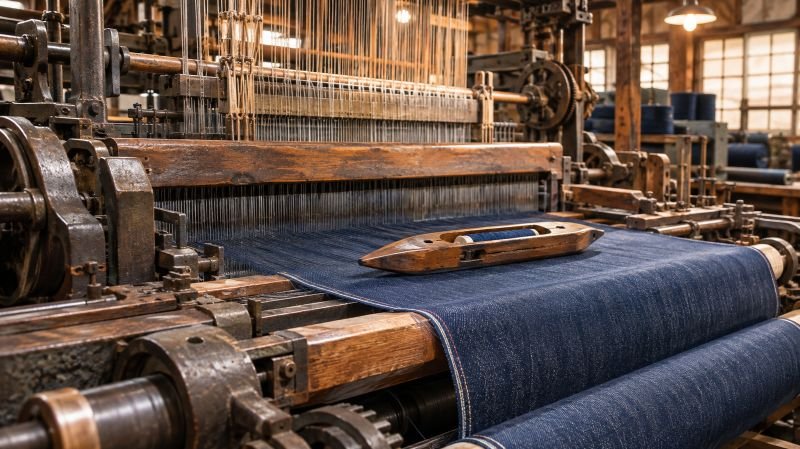
A shuttle loom uses a moving shuttle to carry the weft yarn horizontally through the lengthwise warp yarns.
As the shuttle reaches one side, the weft turns around and travels back across the fabric. This creates a continuous woven structure with a finished edge on both sides.
Traditional shuttle looms generally produce narrower fabric than modern industrial denim looms. This narrower width is one reason manufacturers must plan their garment patterns carefully when working with selvedge cloth.
The Japan External Trade Organization (JETRO) describes how Japanese shuttle-loom weaving can be adjusted to create distinctive fabric textures through variations in weaving speed and technique.
How the Self-Finished Edge Is Created
The selvedge edge forms naturally as the weft yarn travels back and forth through the warp.
Unlike a cut fabric edge, it does not require the same type of additional edge finishing to prevent unraveling.
This is why the edge is so recognizable when jeans are cuffed. The visible strip is the original woven border of the denim fabric.
Traditional Shuttle Looms vs. Modern Projectile Looms
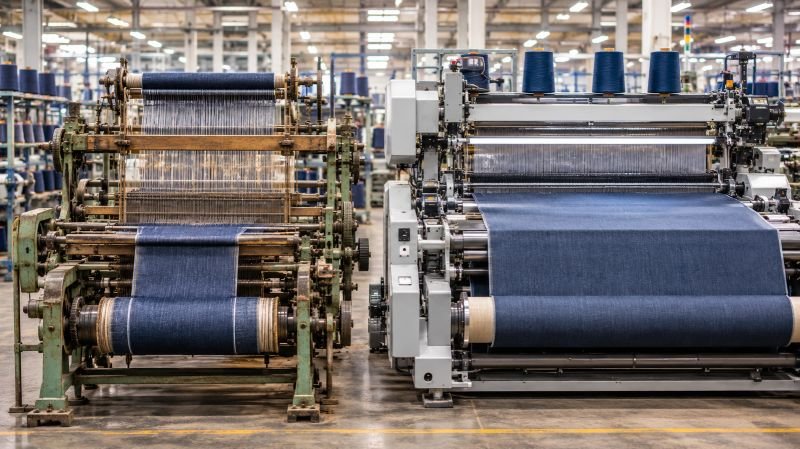
Both types of machinery produce denim, but they differ in how they insert the weft yarn and how efficiently they manufacture wide fabric.
| Feature | Shuttle loom | Modern shuttleless loom |
| Weft insertion | Moving shuttle | Projectile, rapier, air-jet, or other systems |
| Fabric width | Generally narrower | Generally wider |
| Fabric edges | Naturally woven selvedge | Usually cut or otherwise finished |
| Production | Generally slower | Generally faster |
| Manufacturing focus | Traditional narrow-width weaving | Efficient large-scale production |
| Denim applications | Specialist and conventional denim | Conventional and specialist denim |
Modern shuttleless looms are not inherently inferior. They made it possible to produce wider quantities of denim efficiently and serve the enormous demand for everyday jeans.
The distinction is about manufacturing methods, not a simple division between good and bad denim.
Why Selvedge Denim Takes More Time to Produce
Traditional shuttle looms generally weave at lower production speeds than modern high-speed equipment.
Their narrower fabric also creates additional considerations when manufacturers arrange pattern pieces and plan fabric consumption.
However, actual production time and cost depend on the mill, loom, yarn, fabric specifications, and production volume. It would be misleading to assume every selvedge fabric takes the same amount of time to manufacture.
How to Identify Selvedge Jeans
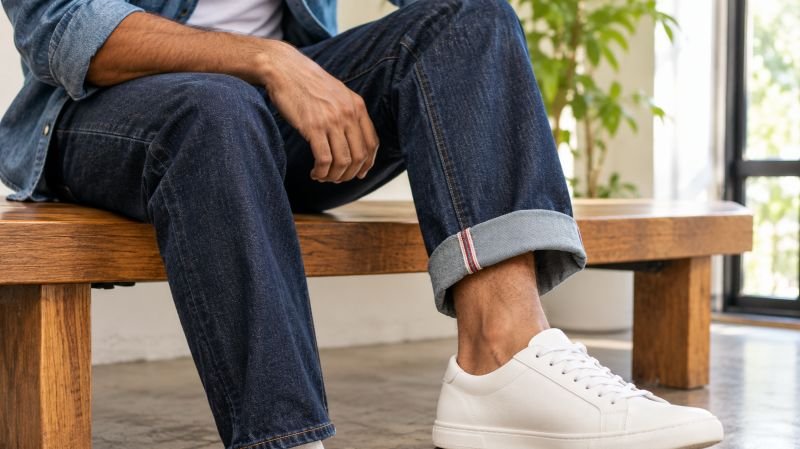
The easiest way to identify selvedge jeans is to turn up the bottom of one leg and inspect the inside of the outer seam.
Look for a clean, tightly woven fabric edge, often accompanied by a contrasting colored thread.
Look for the Colored Selvedge ID Along the Outseam
The colored stripe is commonly called a selvedge ID.
Red is particularly recognizable because of its historical association with Levi’s denim. However, selvedge identification threads can be red, white, blue, yellow, green, pink, or other colors.
Some fabrics also feature plain white edges without a contrasting identification thread.
Therefore, a red line is not a requirement for genuine selvedge denim.
Check the Inside of the Cuffed Hem
Follow these steps to inspect a pair of jeans:
- Turn up the bottom of one pant leg.
- Locate the outer leg seam.
- Examine the edge of the denim inside that seam.
- Look for a continuous woven border rather than a cut edge secured with overlock stitching.
- Check the opposite leg for the same construction.
The distinguishing feature is the woven self-finished edge, not simply the presence of colored stitching.
Understand Different Selvedge Edge Colors
Different mills and denim manufacturers use different identification threads.
These colors can help distinguish fabric designs, manufacturers, or particular denim specifications. However, there is no universal color code that identifies a particular country, quality grade, or price category.
Can You Identify Selvedge Denim Without Cuffing Jeans?
Yes, although inspecting the inside seam is more reliable.
You can check the product description for terms such as selvedge, selvage, shuttle-loom denim, or redline denim.
Some premium denim manufacturers also provide close-up photographs of the fabric edge.
If a product listing simply says “premium denim,” that does not establish that the jeans are selvedge. When the distinction matters, look for explicit fabric-construction details.
Selvedge Denim vs. Regular Denim: What’s the Difference?
The biggest difference between selvedge and regular denim is the way the fabric is woven and finished at its edges.
Selvedge denim has a self-finished woven border, while conventional non-selvedge denim generally has cut edges that require additional finishing during garment construction.
Neither type is automatically better. The right choice depends on your preferences for fabric texture, appearance, construction, price, and fit.
| Comparison | Selvedge denim | Regular non-selvedge denim |
| Weaving | Traditionally shuttle-loom woven | Commonly shuttleless-loom woven |
| Fabric edge | Self-finished woven border | Cut edge |
| Production | Generally slower | Generally more efficient |
| Appearance | Often has a visible ID when cuffed | Usually has an overlocked seam finish |
| Texture | Can be smooth, slubby, or textured | Can also have varied textures |
| Fabric weight | Available in light to heavyweight options | Available in light to heavyweight options |
| Price | Often more expensive | Available at almost every price point |
| Quality | Depends on fabric and construction | Depends on fabric and construction |
Weaving Method and Fabric Construction
Traditional selvedge denim is woven with a shuttle loom that creates a continuous finished edge.
Most modern non-selvedge denim is produced on shuttleless looms, which can manufacture wider fabric more efficiently.
The difference becomes particularly important when jeans manufacturers plan their fabric layouts. Selvedge cloth has a usable woven border that can be incorporated into the outer leg seam.
Appearance and Edge Finishing
The most recognizable difference appears when you turn up the jeans.
Selvedge jeans can reveal a clean woven edge, often with a contrasting identification thread. Regular jeans generally show a stitched finish covering the cut fabric edges.
However, the outside appearance of the jeans does not have to be dramatically different. Both can feature classic five-pocket designs, straight legs, slim fits, wide legs, and contemporary silhouettes.
Durability and Overall Quality
It is tempting to assume that selvedge denim automatically lasts longer because of its tightly finished edge.
That conclusion is too simplistic.
The self-finished edge helps prevent unraveling along the original fabric border. However, overall garment durability also depends on fabric strength, yarn quality, seam construction, stitching, stress-point reinforcement, and how the jeans are worn.
A heavyweight non-selvedge pair with excellent construction can be more durable than lightweight selvedge jeans with weaker seams.
Price and Manufacturing Differences
Selvedge jeans often carry a higher price because of their production methods, specialist fabric development, smaller production runs, and brand positioning.
But the price difference is not universal.
A basic pair of selvedge jeans may cost less than a highly engineered non-selvedge designer pair. Always evaluate the actual fabric and garment rather than relying on the selvedge label.
Selvedge Denim vs. Raw Denim: Are They the Same?

No. Selvedge and raw denim describe two different characteristics of denim.
Selvedge refers to how denim is woven, whereas raw denim refers to its finishing condition. Raw denim has not undergone the usual garment washing or artificial fading treatments before being sold.
This distinction is particularly important when shopping for premium jeans because the two terms frequently appear together.
What Is Raw Denim?
Raw denim, also called dry denim, is denim sold without the usual post-production washing or distressing treatments.
It generally retains a darker, more uniform indigo appearance and can feel relatively stiff when new.
As you wear and wash it, the fabric gradually softens and develops areas of color variation. These changes depend on the dyeing method, yarn characteristics, fabric construction, wear patterns, and washing habits.
Raw denim is popular among people who enjoy watching their jeans develop individual fading patterns instead of purchasing an artificially distressed finish.
Key Differences Between Selvedge and Raw Denim
| Feature | Selvedge denim | Raw denim |
| Meaning | Weaving and edge construction | Finishing and washing condition |
| Main characteristic | Self-finished fabric edge | Unwashed or untreated denim |
| Appearance | Often identifiable inside the outseam | Usually dark and relatively uniform |
| Feel | Can be soft or rigid | Often firmer when new |
| Fading | Depends on dye, yarn, finishing, and wear | Can develop natural wear-related fading |
| Washing | May be washed or raw | Requires care appropriate to its finish |
Can Jeans Be Both Raw and Selvedge?
Absolutely, a pair of jeans can be made from raw selvedge denim, combining traditional shuttle-loom construction with an unwashed finish.
However, there are four possible combinations:
- Raw selvedge: Shuttle-loom denim that has not been garment washed.
- Washed selvedge: Shuttle-loom denim that has been washed or treated.
- Raw non-selvedge: Unwashed denim made on a shuttleless loom.
- Washed non-selvedge: Conventional denim that has undergone washing or finishing.
This is why reading the product description matters. A selvedge label alone does not tell you whether the jeans will feel stiff, shrink significantly, or develop pronounced fading.
What Is the Difference Between Sanforized and Unsanforized Denim?
Sanforization is a controlled fabric-shrinking treatment used to reduce the amount of shrinkage that occurs after jeans are washed.
Sanforized denim is generally more predictable in terms of sizing. It can still shrink slightly, but it usually does not require the same initial shrinkage management as unsanforized denim.
Unsanforized denim, sometimes called loomstate or shrink-to-fit denim, has not undergone this pre-shrinking process.
| Type | What it means | What buyers should know |
| Sanforized | Mechanically pre-shrunk fabric | Generally more predictable after washing |
| Unsanforized | Fabric has not undergone sanforization | Can shrink considerably during the first soak or wash |
| One-wash | Garment or fabric has received an initial wash | Some initial shrinkage has already occurred |
Do not assume that every raw selvedge pair is unsanforized. Raw and sanforized can coexist.
Before buying unsanforized jeans, check the manufacturer’s shrinkage guidance and sizing recommendations. Shrinkage varies by fabric and finishing process, so a universal percentage is not reliable.
What Makes Selvedge Jeans Special?
Selvedge jeans appeal to denim enthusiasts because they connect traditional textile production with modern everyday fashion.
Their attraction is not limited to the colored edge. The fabric itself can have interesting textures, distinctive indigo shades, and a character that changes with regular wear.
Traditional Craftsmanship and Heritage
Before modern high-speed weaving became widespread, shuttle looms were a standard way of manufacturing denim.
As demand for jeans increased, mills increasingly adopted wider and more efficient machinery.
Levi Strauss & Co.’s own denim history provides a documented example of this transition. The company records the use of Amoskeag denim for early 501 jeans, its move to Cone Mills fabric around 1915, and the development of red selvedge denim for its 501 jeans in 1927.
By around 1984, Levi Strauss & Co. had shifted toward wider, more economical fabric production for its mainstream 501 jeans.
This history helps explain why selvedge denim became associated with vintage jeans and traditional manufacturing.
Unique Denim Textures and Fading
One reason denim enthusiasts appreciate specialist selvedge fabrics is their potential for distinctive surface character.
Some mills deliberately use irregular or slub yarns, creating subtle variations in the fabric’s surface.
Other fabrics are woven to achieve a relatively smooth, uniform appearance.
The fading potential depends on several interconnected factors:
- Yarn construction: Ring-spun, irregular, and slub yarns can influence surface texture.
- Indigo dyeing: The dyeing method affects the depth and appearance of the blue.
- Weaving: Fabric structure influences how the surface looks and feels.
- Finishing: Washing and other treatments influence the fabric’s initial appearance.
- Wear: Movement, friction, and washing contribute to changes over time.
A useful distinction is that the selvedge edge does not itself produce better fading. The yarn, dye, fabric construction, and finishing are much more directly responsible for the denim’s aging characteristics.
Fabric Weight and Construction
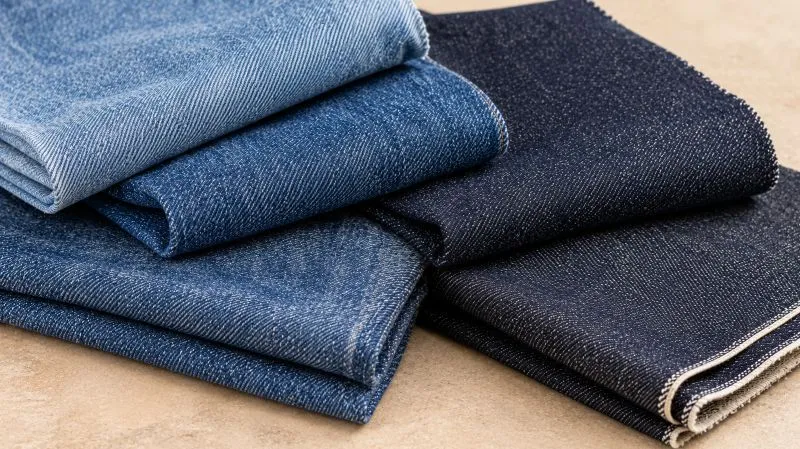
Denim weight is generally measured in ounces per square yard (oz/yd²).
It helps describe how substantial the fabric is, although it does not independently determine quality or durability.
Here is a practical editorial breakdown of common denim-weight categories:
| Denim weight | General feel | Suitable for |
| Under 10 oz | Lightweight and relatively airy | Warm weather and softer jeans |
| 10–12 oz | Light to medium | Everyday comfort |
| 12–14 oz | Medium-weight | Versatile everyday denim |
| 14–16 oz | Medium-heavy | Structured denim enthusiasts |
| 16–20 oz | Heavyweight | People who enjoy substantial, rigid denim |
| Above 20 oz | Very heavyweight | Specialist denim enthusiasts |
These are approximate editorial categories, not an official textile classification. Actual comfort depends on weave, yarn, finishing, and garment fit.
A common mistake is choosing the heaviest denim available because it sounds more premium.
In reality, a 12-ounce pair may be much more enjoyable for everyday wear in a warm climate than a rigid 21-ounce pair.
The Appeal of Japanese Selvedge Denim
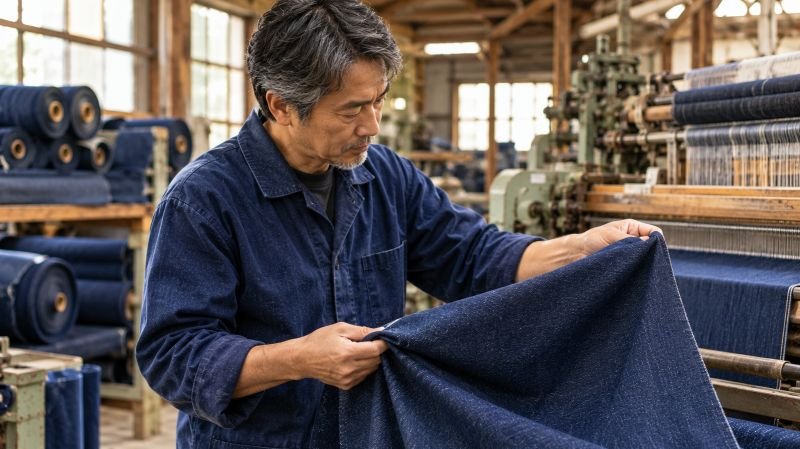
Japanese denim has developed a particularly strong reputation among denim collectors and fashion enthusiasts.
Regions around Okayama and Hiroshima have established textile histories, and Japan’s denim industry developed substantial technical expertise as domestic jeans production expanded during the 1960s.
According to the Japan External Trade Organization, the Seto Inland Sea region has a long history of cotton and indigo production, while Japanese denim manufacturers have developed expertise across spinning, dyeing, weaving, sewing, and processing.
Japanese mills are particularly appreciated for experimenting with weaving techniques, yarn irregularities, indigo dyeing, and fabric finishing.
However, Japanese origin is not a guarantee of superior denim. Excellent selvedge fabrics are also produced elsewhere, and individual mill specifications matter more than a country label alone.
Why Are Selvedge Jeans So Expensive?
Selvedge jeans often cost more than conventional denim because traditional shuttle-loom production is slower, the fabric is narrower, and specialist denim manufacturing can involve more expensive materials and smaller production runs.
However, the premium is not simply the cost of the red stripe inside the cuff.
Slower and More Traditional Weaving Processes
Shuttle looms generally operate at lower production speeds than modern shuttleless machinery.
This can increase the time and resources required to produce a given quantity of denim.
For specialist manufacturers, additional attention to yarn selection, indigo dyeing, weaving settings, and fabric finishing can also contribute to production costs.
Narrower Fabric Width and Material Usage
Traditional selvedge looms produce narrower fabric rolls than many modern industrial looms.
This affects how jeans manufacturers arrange their cutting patterns. They need to work within the available fabric width while preserving the selvedge edge in the finished garment.
The narrower width can affect fabric utilization, although the actual amount of waste depends on the pattern, garment size, cutting layout, and manufacturing process.
Production Scale and Manufacturing Costs
Some selvedge jeans are produced in smaller batches using specialist mills and more labor-intensive manufacturing processes.
Other costs can include:
- Premium cotton and specialized yarns.
- Indigo dyeing and fabric development.
- Additional finishing processes.
- Quality control and garment construction.
- Brand positioning and distribution.
Not every selvedge manufacturer uses the same production model, so the price difference varies considerably.
Does a Higher Price Always Mean Better Jeans?
No. A high price does not automatically guarantee better fabric, construction, comfort, or longevity.
Before spending more, evaluate the actual garment rather than purchasing the selvedge label alone.
A well-fitting pair with quality stitching, suitable fabric weight, and reliable construction is often a better investment than an expensive pair that does not suit your lifestyle.
Are Selvedge Jeans Worth Buying?
Selvedge jeans are worth considering if you appreciate traditional denim manufacturing, distinctive fabric details, and the possibility of owning jeans that develop character through regular wear.
However, they are not essential for a stylish or functional wardrobe.
The best choice depends on how you dress, how frequently you wear jeans, your climate, and how much you want to spend.
Benefits of Wearing Selvedge Jeans
- Distinctive fabric construction
The self-finished edge gives selvedge denim a recognizable detail that distinguishes it from conventional denim.
- Traditional manufacturing
People who appreciate textile craftsmanship may enjoy the connection to traditional shuttle-loom weaving.
- Variety of fabric character
Selvedge denim is available in different weights, textures, dyeing techniques, and finishes.
- Potential for personalized fading
When purchased in a raw finish, some selvedge jeans can gradually develop individual fading patterns through wear.
- Versatile styling
Selvedge jeans are available in numerous cuts and washes, making them suitable for casual and smart-casual outfits.
Potential Drawbacks to Consider
Selvedge denim is not perfect for everyone.
- Higher prices: Some specialist pairs cost considerably more than conventional jeans.
- Stiffer fabrics: Raw and heavyweight versions may feel uncomfortable initially.
- Shrinkage concerns: Unsanforized denim requires careful sizing.
- Limited fabric availability: Some specialist fabrics and fits are harder to find.
- No automatic quality advantage: The selvedge edge does not guarantee superior construction.
Who Should Invest in Selvedge Denim?
Selvedge jeans can be a good choice for:
- Denim enthusiasts: People interested in fabric construction, weaving, and denim heritage.
- Minimalist dressers: Those who prefer timeless denim cuts and understated details.
- Vintage fashion lovers: People drawn to classic workwear-inspired clothing.
- Raw denim enthusiasts: Wearers who enjoy gradual fading and fabric changes.
- Quality-conscious shoppers: People willing to investigate fabric specifications and garment construction rather than buying based on trends.
If you primarily want soft, stretchable, low-maintenance jeans, conventional washed denim may be a more practical option.
What to Check Before Buying Your First Pair
Buying your first pair of selvedge jeans can feel confusing because product descriptions often include technical denim terminology.
Use these considerations to make a more informed purchase.
| What to check | What to look for | Why it matters |
| Selvedge construction | A genuine self-finished edge | Confirms the fabric construction |
| Fabric weight | A weight appropriate for your lifestyle | Influences warmth, structure, and feel |
| Sanforization | Sanforized or unsanforized | Helps predict shrinkage |
| Fabric finish | Raw, one-wash, or washed | Determines the initial feel and appearance |
| Fit | Waist, rise, thigh, leg opening | Determines everyday comfort |
| Composition | Cotton and any stretch fibers | Affects flexibility and feel |
| Construction | Stitching, seams, pockets, hardware | Helps assess garment quality |
| Care instructions | Manufacturer’s washing guidance | Helps maintain the garment |
My buying recommendation: If you are new to selvedge denim, start with a sanforized, medium-weight pair in a straight or relaxed-straight fit.
It offers a relatively approachable introduction to the fabric without requiring you to deal with the more complicated shrinkage of unsanforized denim or the stiffness of very heavyweight denim.
How to Style Selvedge Jeans
Selvedge jeans are surprisingly versatile. Their styling potential depends more on their cut, wash, and fabric weight than on the selvedge edge itself.
The key is to balance the denim with the rest of your outfit.
Casual Everyday Outfits

For an easy everyday look, pair dark indigo selvedge jeans with a plain white T-shirt, a relaxed cotton shirt, or a simple sweatshirt.
White sneakers create a clean, contemporary appearance, while canvas shoes give the outfit a more relaxed feel.
For women, straight-leg or relaxed selvedge jeans work particularly well with fitted tops, oversized shirts, and simple knitwear.
Styling tip: Keep the accessories understated when wearing dark denim. A leather belt and clean footwear are often enough to complete the outfit.
Smart-Casual Outfits
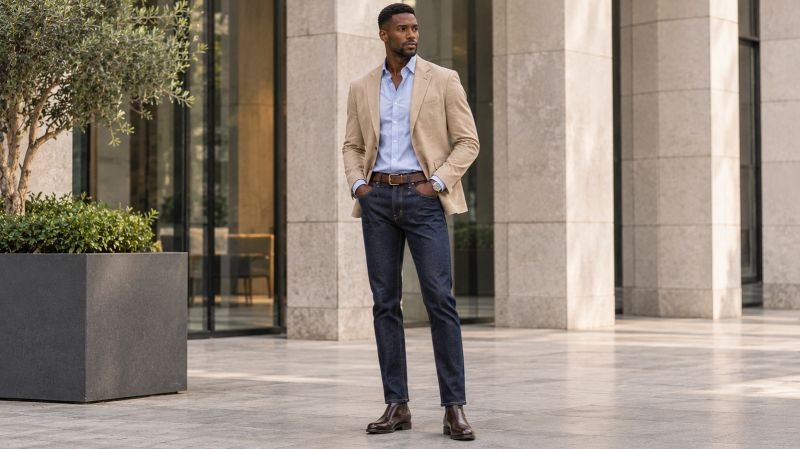
Selvedge jeans can also work in smart-casual wardrobes.
Choose a clean, dark-wash pair with minimal distressing and combine it with an Oxford shirt, fine-knit sweater, or unstructured blazer.
Men can finish the look with leather loafers, Chelsea boots, or minimalist leather sneakers.
Women can combine dark straight-leg denim with a tailored blazer, a tucked-in blouse, and ankle boots.
Styling tip: Avoid overly distressed denim when aiming for a polished appearance. A clean finish creates a more refined outfit.
Styling Selvedge Jeans With Boots and Sneakers
Footwear changes the overall impression of denim.
| Footwear | Styling effect | Best pairing |
| Leather boots | Classic workwear appeal | Straight-leg or relaxed denim |
| Chelsea boots | Polished and streamlined | Slim-straight denim |
| White sneakers | Clean and contemporary | Straight-leg denim |
| Canvas sneakers | Relaxed casual style | Regular or relaxed fits |
| Loafers | Refined smart-casual look | Dark, clean denim |
How to Cuff Selvedge Jeans to Show the Edge
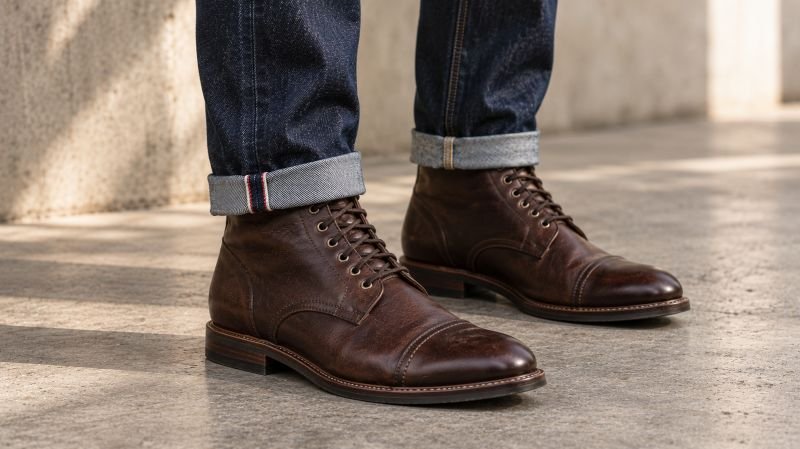
Cuffing is one of the easiest ways to showcase the selvedge detail.
However, the cuff should complement the jeans’ proportions rather than overwhelm the outfit.
Single cuff: Fold the hem upward once to create a clean, understated turn-up. This works well with straight-leg jeans.
Double cuff: Fold the hem twice for a more prominent display of the selvedge edge. It is particularly useful when the jeans are slightly longer than necessary.
Small cuff: Create a narrow turn-up when wearing sneakers or low-profile shoes. It keeps the overall silhouette neat.
One important detail: you do not need to cuff every pair of selvedge jeans. If the length and proportions look better without a turn-up, wear them uncuffed.
How to Wash and Care for Selvedge Jeans

Caring for selvedge denim is not complicated, but it is important to distinguish between raw and washed denim.
Selvedge jeans do not automatically require special washing because of their woven edge. The care routine depends more on the fabric’s finish, dye, shrinkage characteristics, and manufacturer’s instructions.
How Often Should You Wash Selvedge Denim?
There is no universal washing schedule.
Some raw denim enthusiasts delay their first wash to encourage more pronounced wear-related fading. However, waiting several months is not necessary for everyone.
Wash your jeans when they become visibly dirty, develop persistent odors, or simply need refreshing.
Regular hygiene and appropriate garment care matter more than following arbitrary no-wash challenges.
Best Washing Practices to Preserve Color
For raw or dark indigo selvedge jeans, follow these practical steps:
- Check the manufacturer’s care label.
- Turn the jeans inside out.
- Fasten the buttons or zipper.
- Wash separately when significant indigo bleeding is expected.
- Use cold water and a mild detergent suitable for denim.
- Choose a gentle washing cycle or follow the manufacturer’s hand-washing instructions.
- Avoid bleach and unnecessary harsh treatments.
Indigo transfer can occur, particularly with dark raw denim. Keep new jeans away from light-colored upholstery, bags, and clothing until you understand how much color they release.
How to Dry and Store Selvedge Jeans
Air drying is generally a sensible choice for denim.
After washing, reshape the jeans and hang them or lay them flat to dry according to the care label.
Avoid unnecessary high heat because it can contribute to shrinkage and may affect the fabric’s shape.
Store your jeans in a dry, well-ventilated wardrobe. Folding or hanging them are both suitable options.
How to Handle Shrinking and Fading
Shrinkage is particularly important with unsanforized denim.
Before the first wash, check whether the manufacturer recommends soaking the jeans and how much shrinkage to expect.
For sanforized jeans, shrinkage is generally more limited, although it is not necessarily zero.
Fading is also affected by the type of indigo dyeing, yarn construction, fabric finishing, friction, and washing frequency.
If you want to maintain a dark, consistent appearance, wash your jeans when necessary using gentle methods. If you enjoy natural fading, allow normal wear to influence the fabric rather than using aggressive treatments.
Conclusion
Selvedge denim is more than a fashionable detail hidden inside a pair of jeans. It represents a traditional weaving method that continues to appeal to people who appreciate textile craftsmanship, distinctive fabric textures, and classic denim construction.
However, the most important thing to understand is that selvedge does not automatically mean better.
The weaving method tells you how the fabric was constructed, but the yarn, dyeing, finishing, weight, stitching, and fit determine much of the finished garment’s character and performance.
If you are buying your first pair, look beyond the colored edge. Choose a comfortable fit, a suitable fabric weight, and a finish that matches your lifestyle.
Ready to explore better denim? Start by checking the fabric specifications, understanding the difference between raw and selvedge, and choosing a pair that you will genuinely enjoy wearing.
Frequently Asked Questions
1. Are selvedge jeans better than regular jeans?
Not necessarily. Selvedge jeans are made using a particular weaving method that creates a self-finished edge. Their overall quality depends on the yarn, dyeing, fabric weight, finishing, stitching, and construction. Well-made regular denim can be just as durable and comfortable.
2. Do all selvedge jeans have a red line?
No. Red is a recognizable selvedge identification color, but manufacturers also use white, blue, yellow, green, pink, and other colors. Some selvedge fabrics have a plain white edge without a contrasting stripe.
3. Are selvedge jeans always raw denim?
No. Selvedge describes how the fabric is woven, while raw describes its finishing condition. Selvedge jeans can be raw, rinsed, or washed before sale.
4. Do selvedge jeans stretch with wear?
They can. Cotton denim may relax and give slightly through regular wear, particularly around the waistband, seat, and knees. The amount of stretching depends on the fabric construction, cotton yarn, weight, and whether stretch fibers are included.
5. Do selvedge jeans shrink after washing?
They can, but the amount depends on whether the denim is sanforized or unsanforized. Sanforized denim generally experiences less shrinkage, while unsanforized denim can shrink considerably during its first soak or wash.
6. Are Japanese selvedge jeans better?
Japanese selvedge denim is highly regarded for its weaving traditions, textile craftsmanship, and fabric development. However, Japanese origin does not automatically guarantee better quality. Evaluate the mill, fabric specifications, finishing, and garment construction.
7. How long do selvedge jeans last?
There is no fixed lifespan. Well-constructed selvedge jeans can last for years with appropriate care, but longevity depends on fabric strength, stitching, fit, frequency of wear, and maintenance. Selvedge construction alone does not guarantee a longer-lasting garment.
8. Can women wear selvedge jeans?
Absolutely. Selvedge denim is not restricted to men’s clothing. Women can find selvedge jeans in straight-leg, wide-leg, slim, relaxed, and other silhouettes. The best choice depends on personal style, comfort, and fit preferences.
9. Should you cuff selvedge jeans?
Cuffing is optional. It is a popular styling choice because it reveals the selvedge edge, but it is not necessary. You can wear selvedge jeans uncuffed if that creates a better silhouette or works better with your footwear.
10. Are selvedge jeans comfortable for everyday wear?
Yes, depending on the fabric. Lightweight and washed selvedge jeans can be comfortable from the beginning, while heavyweight raw versions may require a break-in period. Choosing the right weight and fit makes a significant difference.