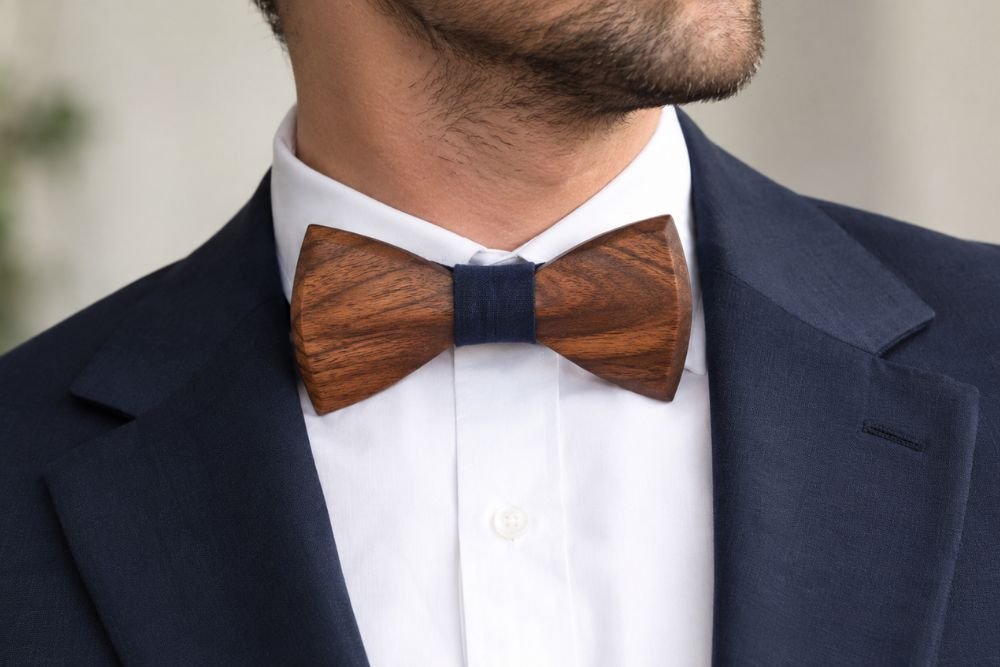
A wooden bow tie is a distinctive alternative to a traditional fabric bow tie, combining the familiar bow shape with natural wood grain, carved details, and contemporary construction. It works particularly well with weddings, smart-casual outfits, creative events, and formal occasions where the dress code allows personal expression.
Choose a wooden bow tie according to its wood tone, shape, size, fastening, and the formality of your outfit. Light woods suit relaxed and contemporary looks, while darker woods such as walnut or wenge create a richer appearance with suits and wedding attire.
What Is a Wooden Bow Tie?
A wooden bow tie is a neck accessory made primarily from wood, usually combined with fabric, elastic, leather, or another flexible fastening system. Unlike a conventional fabric bow tie, its central bow retains a structured silhouette rather than depending on folded textile to create the shape.
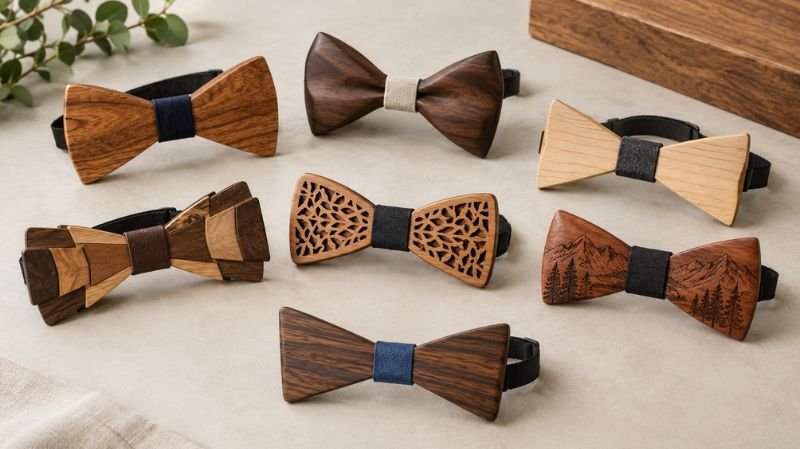
Modern designs range from simple natural-wood silhouettes to laser-cut patterns, engraved motifs, contrasting fabric centers, and multi-piece constructions. Some manufacturers use hardwoods such as walnut, oak, maple, beech, pear, and zebrano, demonstrating how dramatically the finished appearance can vary.
The construction also explains why wooden bow ties are usually easy to wear. Many current designs use adjustable elastic or fabric straps rather than requiring the wearer to tie the bow manually. BeWooden, for example, lists a typical wooden bow tie at approximately 23 grams and 12.5 × 4.5 cm, although dimensions vary by maker.
Why Are Wooden Bow Ties So Popular?
The biggest attraction is visual texture. A fabric bow tie can display color, weave, or pattern, while wood introduces grain, natural variation, carved surfaces, and a more sculptural shape.
That makes a wooden bow tie particularly useful when the rest of an outfit is relatively simple. A plain white shirt and navy blazer, for example, give the bow tie enough visual space to become the intentional focal point rather than one competing pattern among several.
There is also a craftsmanship element. Handmade examples can differ slightly in grain and appearance, and some makers offer personalization, engraving, multiple wood species, or interchangeable fabric centers.
Wooden Bow Tie Designs and Styles
Classic Wooden Bow Tie
The classic design keeps the familiar symmetrical bow silhouette while replacing most or all of the fabric with wood. It is the easiest style to introduce into a wardrobe because the recognizable shape keeps the unusual material from becoming overwhelming.
Choose a relatively simple grain and understated finish if you want the accessory to work with several outfits. This is particularly effective with white, pale-blue, cream, or other solid shirts.
Butterfly Wooden Bow Tie
The butterfly shape has fuller wings and a more traditional bow-tie appearance. It can look especially balanced with a spread or semi-spread collar because the larger bow fills the space around the neck without appearing visually lost.
A fuller wooden butterfly works best when the rest of the outfit has enough structure to support it. Think tailored jackets, waistcoats, dress shirts, or polished wedding separates rather than very casual athletic clothing.
Batwing Wooden Bow Tie
A batwing design is narrower and more streamlined than a fuller butterfly silhouette. Its cleaner geometry makes it a useful choice for someone who wants the character of wood without an overly decorative appearance.
Pair a darker batwing bow tie with a crisp white shirt and a charcoal or navy jacket for a restrained modern look. The simplicity lets the wood grain provide visual interest.
Articulated Wooden Bow Tie
An articulated bow tie uses multiple connected wooden pieces rather than one rigid bow. The construction can introduce movement and a more intricate appearance while preserving the defining wooden character.
This is worth considering if comfort and flexibility are priorities. Before purchasing, check how the pieces are connected and how the neck fastening is adjusted rather than assuming every articulated design will feel the same.
Engraved and Laser-Cut Wooden Bow Ties
Engraving and laser cutting can transform a plain wooden bow tie into a personalized accessory. Designs may include geometric patterns, initials, city skylines, symbols, or other motifs.
The key styling rule is balance. If the bow tie already has a detailed pattern, keep the shirt and pocket square comparatively quiet so the outfit has a clear visual hierarchy.
Wooden Bow Ties With Fabric Centers
Many wooden designs combine rigid wooden wings with a fabric center or knot. This creates an important bridge between the texture of wood and the softness of traditional menswear accessories.
Use the center fabric strategically. A navy, burgundy, forest-green, cream, or muted neutral center can connect the bow tie to the rest of an outfit without requiring every accessory to match exactly.
Best Wood Types for a Wooden Bow Tie
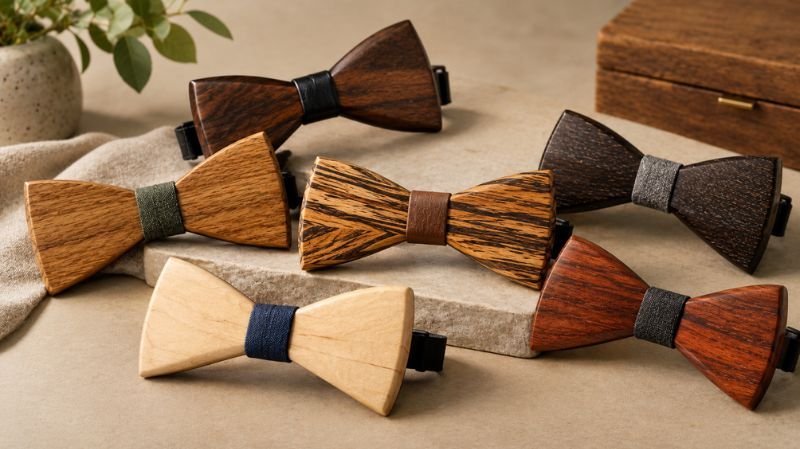
There is no universally “best” wood for every wearer. The right choice depends more on color, grain, weight, finish, outfit, and personal style than on the species name alone.
| Wood | Visual character | Works especially well with |
| Walnut | Rich brown, refined grain | Navy, gray, cream, brown |
| Maple | Light and clean | White, blue, beige, modern outfits |
| Oak | Warm, recognizable grain | Earth tones, rustic weddings, casual tailoring |
| Beech | Relatively light and understated | Minimalist outfits |
| Pear | Smooth, subtle appearance | Brown, cream, muted colors |
| Zebrano | Strong contrasting grain | Simple outfits and statement styling |
| Wenge | Very dark and dramatic | Formal tailoring and evening looks |
| Padauk | Warm reddish-orange character | Navy, charcoal, neutral tailoring |
These examples reflect woods currently used by established wooden-bow-tie makers, although availability and finish vary between manufacturers. BeWooden lists beech, oak, apple, walnut, zebrano and mahogany among its materials, while other makers offer woods including cherry, padauk, wenge and zebrawood.
How Wood Grain and Finish Change the Look
The same bow-tie shape can appear completely different when produced in different woods. Light grain tends to create a cleaner, more contemporary effect, while dark or strongly figured grain makes the accessory appear richer and more noticeable.
A polished finish can make the piece feel dressier, while a visibly natural or matte finish often works better with linen, denim, tweed, cotton, and other relaxed textures. Always consider the entire outfit rather than selecting wood in isolation.
How to Wear a Wooden Bow Tie
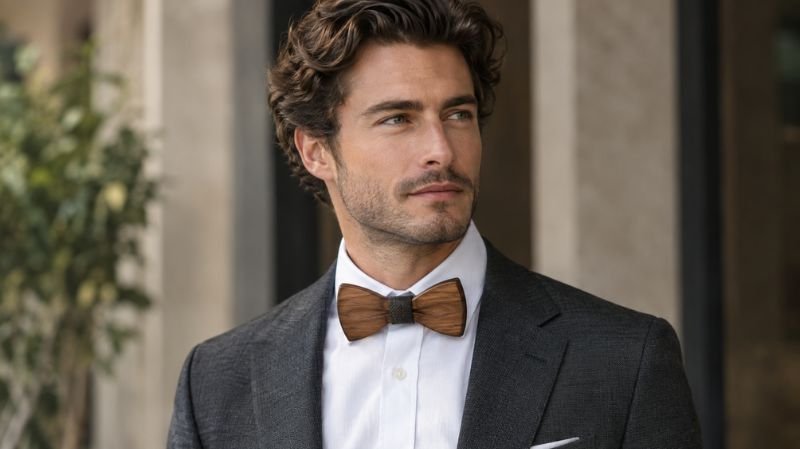
The easiest approach is to treat the wooden bow tie as a statement accessory, not as an excuse to make every part of the outfit equally distinctive. Start with the shirt, establish the level of formality, and then select the wood color and bow shape.
A useful rule is contrast without chaos. A light wooden bow tie can stand out against a darker shirt, while a dark walnut or wenge bow can create definition against white or pale-blue shirting.
Choose the Right Shirt
A crisp white shirt is the most versatile starting point because it creates a neutral background for almost any natural wood tone. Light-blue shirts are similarly useful, especially with walnut, oak, or medium-brown wood.
For a more relaxed outfit, consider chambray, denim, linen, or an understated check. If the shirt already has a strong pattern, choose a simpler wooden bow tie so the textures complement rather than compete.
Wooden Bow Tie With a Navy Suit
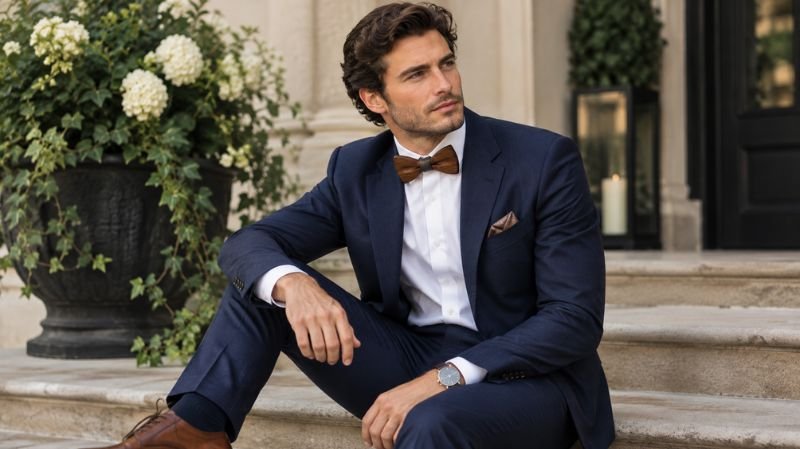
Navy is one of the easiest suit colors to combine with wood because blue and natural brown tones create clear but not aggressive contrast. Walnut, cherry, oak, and darker woods can all work particularly well.
Keep the shirt white or light blue if the bow tie has a prominent grain. Brown leather shoes and a restrained pocket square can reinforce the warm character without turning the outfit into a theme costume.
Wooden Bow Tie With a Gray Suit
Gray gives you more flexibility because it acts as a neutral foundation. A dark wooden bow tie can create contrast, while lighter maple or ash-style finishes produce a softer contemporary appearance.
For a wedding or evening event, pair a charcoal suit with a darker wood bow tie and white shirt. For daytime wear, a mid-gray suit with lighter wood and brown leather accessories creates a more relaxed balance.
Wooden Bow Tie With a Casual Outfit
A wooden bow tie does not have to be reserved for tailoring. Current styling guides commonly pair wooden bow ties with combinations such as denim shirts, chinos, jeans, suspenders, waistcoats, and casual jackets.
The secret is keeping the silhouette intentional. A chambray shirt, chinos, leather shoes, and a simple wooden bow tie can look considered, whereas adding several novelty accessories at once can make the outfit feel costume-like.
Wooden Bow Tie With Suspenders
Suspenders naturally complement the handcrafted character of wood, particularly for rustic weddings, vintage-inspired outfits, and relaxed tailoring. Leather or neutral fabric suspenders can echo the natural tones without literally matching the bow tie.
If the bow tie contains an intricate engraving or strong wood grain, choose plain suspenders. The goal is to create a relationship between the accessories, not identical visual patterns.
How to Wear a Wooden Bow Tie to a Wedding
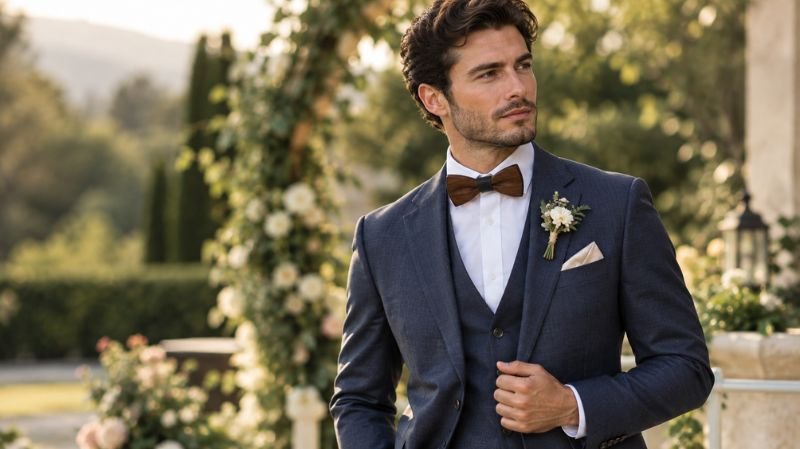
A wooden bow tie can be particularly effective at weddings because the material photographs well and can connect naturally with rustic, outdoor, woodland, heritage, or handcrafted themes. It can also work at more conventional weddings when the design is restrained.
For a groom, consider darker walnut, wenge, or another refined wood with a white shirt and navy, charcoal, or neutral tailoring. For groomsmen, consistency matters more than individuality, so use the same bow shape and fastening while allowing small differences in grain where appropriate.
Wedding-party suppliers actively market wooden bow ties for groomsmen and personalized occasions, while individual products commonly offer choices in wood, fabric center, or engraving. These are product-specific features rather than universal characteristics of every wooden bow tie.
Rustic Wedding
Rustic weddings provide one of the easiest settings for natural wood. Pair a medium or dark wood bow tie with suspenders, a textured waistcoat, white or cream shirting, and brown leather footwear.
Avoid over-coordinating every element in exactly the same shade of brown. Variation in wood grain, leather, fabric, and metal creates a more sophisticated result than a deliberately matched “woodland” costume.
Modern Wedding
For a contemporary ceremony, simplify the accessories. A clean maple, walnut, or dark-stained bow tie with a tailored navy or gray suit creates a modern look without relying on rustic styling cues.
A geometric laser-cut pattern can work here as well, particularly when the rest of the outfit is solid. BeWooden, for example, uses laser-added geometric detailing on some designs and recommends certain patterned pieces with a white dress shirt.
Can You Wear a Wooden Bow Tie With a Tuxedo?
This is where the invitation’s dress code matters more than the accessory trend. Traditional black-tie guidance calls for a black bow tie, and authoritative etiquette sources emphasize the conventional hand-tied bow tie for strict black-tie dress.
A wooden bow tie is therefore better suited to creative black tie, festive formalwear, or events without a strict traditional dress code than to an invitation explicitly requiring conventional black tie. Emily Post describes creative black tie as retaining a black-tie foundation while allowing more expressive accessories.
If the invitation simply says “formal” rather than “black tie,” you have more room to interpret the look. In that situation, a sophisticated dark wooden bow tie can be considered alongside the venue, time of day, wedding style, and overall level of formality.
How to Match a Wooden Bow Tie With a Pocket Square
Do not automatically choose a pocket square made from the exact same fabric or color as the bow tie. Repeating one small element can be effective, but copying the accessory precisely can make the outfit look overly coordinated.
Instead, repeat one visual characteristic. A walnut bow tie might work with a cream pocket square, while a navy fabric center can be echoed subtly in a blue-edged square.
How to Choose the Right Wooden Bow Tie
The best wooden bow tie is the one whose proportion, material, fastening, and visual intensity suit both your body and your wardrobe.
Choose the Right Size and Proportion
The bow should look intentional in relation to your face and collar rather than appearing dramatically oversized or lost beneath the shirt collar. Current manufacturers commonly produce wooden bow ties around the dimensions of traditional bow ties, but exact sizing differs by design.
Your collar is particularly important. A larger spread collar can support a fuller butterfly shape, while a narrower collar often looks cleaner with a more streamlined bow.
Choose the Right Shape for Your Face
The goal is visual balance rather than following rigid rules about face shape. If your features are fuller or softer, a structured bow with clear angles can add definition; if your features are already angular, a softer or fuller silhouette can create balance.
Most importantly, look at the bow relative to your face and collar together. Proportion is more useful than trying to follow a universal “face-shape chart.”
Choose the Right Color
Light wood creates a fresh, contemporary effect and is particularly easy to use with blue, white, cream, and beige. Medium brown woods feel warmer and more traditional.
Dark wood creates stronger contrast and can make a simple suit appear more formal. Wenge, walnut, and other dark finishes are therefore useful when you want the bow tie to look polished rather than playful.
Check the Fastening
Look for an adjustable strap that sits comfortably around your neck and allows the bow to remain centered. Many current wooden bow ties use elastic or fabric fastening systems, while some use combinations of elastic, fabric, and metal hardware.
A beautiful bow tie that constantly shifts, pinches, or sits too high is not a successful accessory. Fastening quality should be part of the buying decision, not an afterthought.
Check Weight and Comfort
Wood does not automatically mean heavy. Some commercial designs are surprisingly light; BeWooden, for example, specifies 23 grams for several of its current models.
Still, never generalize one manufacturer’s specification to all wooden bow ties. Construction, wood species, thickness, hardware, and fabric components can change the final weight considerably.
Check Craftsmanship and Finish
Run your fingers around the edges and inspect the fastening points before wearing a wooden bow tie for a full event. Smooth edges, secure hardware, clean engraving, and a consistent finish are practical indicators of careful construction.
For handmade pieces, natural variation is not necessarily a defect. Different grain patterns can be part of the appeal, particularly when the maker uses individually selected wood.
Best Wooden Bow Tie Picks by Style
Rather than declaring one universal winner, it is more useful to choose according to the occasion and aesthetic you actually want.
| Style category | Look for | Best suited to |
| Classic | Simple natural grain | Versatile wardrobes |
| Wedding | Dark or refined wood | Groom and groomsmen |
| Minimalist | Light wood, clean silhouette | Modern tailoring |
| Statement | Engraving or strong grain | Creative outfits |
| Rustic | Warm wood and fabric | Outdoor weddings |
| Personalized | Engraving or custom motif | Gifts and special occasions |
| Formal-leaning | Dark wood, understated design | Dressy events without strict black tie |
| Casual | Light/medium wood | Denim, chinos and relaxed tailoring |
The important distinction is that “best” depends on the use case. A bow tie that is perfect for a rustic wedding may be completely wrong for a conservative formal dinner.
Wooden Bow Tie Outfit Ideas
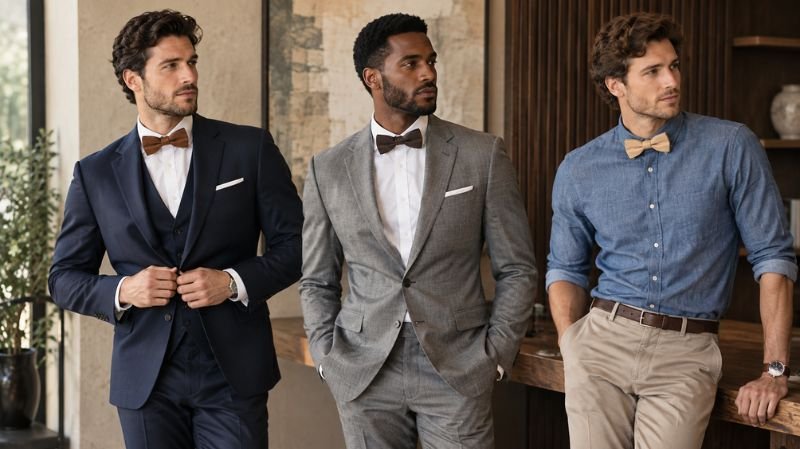
White Shirt + Walnut Bow Tie + Navy Suit
This is one of the safest ways to introduce wood into formal tailoring. The white shirt gives the bow tie a clean background, while navy provides enough contrast for the walnut grain to remain visible.
Finish with brown leather shoes and a simple pocket square. Keep jewelry restrained because the bow tie already provides a distinctive focal point.
Chambray Shirt + Light Wood Bow Tie + Chinos
This combination works because the materials speak the same casual language. Chambray provides texture without competing with the natural grain, while chinos keep the silhouette polished.
Choose loafers, derbies, or clean leather shoes depending on the occasion. Avoid adding a heavily patterned jacket unless the bow tie itself is extremely simple.
Gray Suit + Dark Wooden Bow Tie + White Shirt
For an evening wedding or dressy social event, charcoal or medium-gray tailoring creates a sophisticated background for dark wood. The result is more contemporary than a rustic brown-on-brown combination.
A black or dark-brown leather shoe can work depending on the suit and accessories. The important point is to keep the bow tie’s color noticeably darker than the shirt.
Suspenders + Wooden Bow Tie + White Shirt
Suspenders immediately push the outfit toward vintage or rustic territory. Brown leather suspenders with medium walnut or oak can create a cohesive wedding look without requiring a waistcoat.
If the event is more formal, add a tailored jacket. Without one, the combination works best for relaxed ceremonies, receptions, outdoor events, or themed celebrations.
Wooden Bow Tie vs. Traditional Fabric Bow Tie
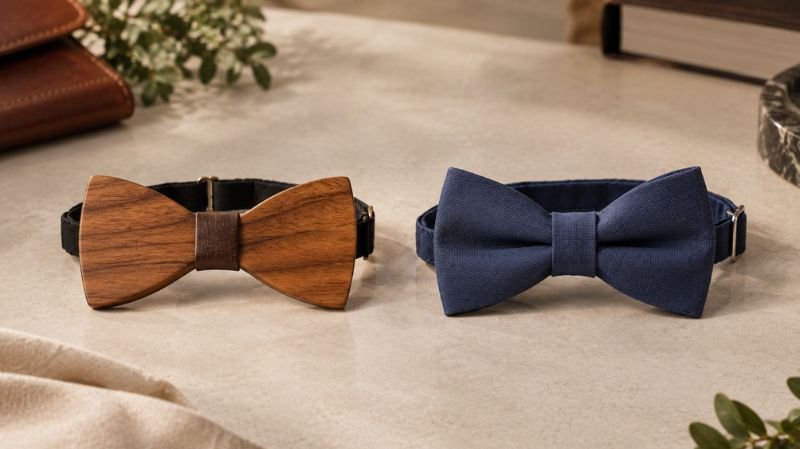
| Feature | Wooden bow tie | Fabric bow tie |
| Structure | Naturally structured | Softer and foldable |
| Texture | Wood grain and finish | Textile weave or pattern |
| Wearing method | Often adjustable/pre-tied | Pre-tied or self-tie |
| Visual impact | Distinctive and sculptural | Classic and adaptable |
| Pattern options | Engraving, carving, grain | Very broad textile patterns |
| Formal versatility | Depends heavily on design | Broadest traditional range |
| Maintenance | Usually simple, but finish matters | Depends on fabric |
| Personalization | Wood, engraving, fabric center | Fabric, embroidery, pattern |
The difference is ultimately one of visual language. A fabric bow tie can disappear elegantly into a traditional formal outfit, while a wooden bow tie usually announces itself as a deliberate style choice.
When Should You Wear a Wooden Bow Tie?
Weddings
Weddings are among the most natural settings for wooden bow ties, particularly when the celebration has a rustic, outdoor, creative, or contemporary character. Darker woods can also work with conventional suits when the dress code leaves room for interpretation.
Parties and Celebrations
A wooden bow tie can add personality to cocktail parties, celebrations, holiday gatherings, and other social events where a conventional necktie would feel too ordinary.
Prom and Graduation
For younger formalwear, a wooden bow tie can provide individuality without requiring a complicated styling strategy. Pair it with a solid shirt and suit so the accessory remains the main point of interest.
Date Nights
Choose a relatively understated wooden bow tie for a date-night outfit. A simple design with a blazer and open-to-moderately formal tailoring can look intentional without appearing excessively dressed up.
Creative or Smart-Casual Events
This is where wooden bow ties have the most freedom. Denim, chinos, textured jackets, waistcoats, linen, and patterned shirts can all work when the colors and proportions remain controlled.
Strict Formal Events
Use caution when an invitation specifies black tie or another traditional dress code. Emily Post’s black-tie guidance specifies a black bow tie, while Debrett’s recommends a traditional hand-tied bow tie and cautions against ready-tied versions for conventional black tie.
How to Care for a Wooden Bow Tie
Care depends on the finish and construction, so the manufacturer’s instructions should take priority. In general, avoid soaking untreated or finished wood, and do not treat a wooden bow tie like a washable fabric accessory.
Store it somewhere dry where the wooden wings will not be crushed or repeatedly knocked against hard objects. If the design contains fabric, elastic, leather, or metal hardware, inspect those components separately because they can age differently from the wood.
Some commercial wooden bow ties are sealed or lacquered for protection, but that does not mean every wooden bow tie is waterproof or maintenance-free. Product specifications should be checked before applying any cleaner, oil, polish, or solvent.
Wooden Bow Tie vs. Bow Tie Joint: Why the Terms Are Confusing
If you searched for bowtie woodworking, bow tie joint wood, or bow tie joint while researching wooden bow ties, you may have encountered a completely different subject.
In woodworking, a bow tie joint is a butterfly-shaped wooden inlay, also called a butterfly key, dovetail key, or Dutchman. It is installed across cracks, splits, or joints in wood and can provide reinforcement while also creating a deliberate decorative detail.
That woodworking technique should not be confused with fashion accessories. A wooden bow tie is worn around the neck; a bow tie joint is fitted into a piece of furniture, slab, tabletop, or other woodworking project.
What Is a Bow Tie Joint in Woodworking?
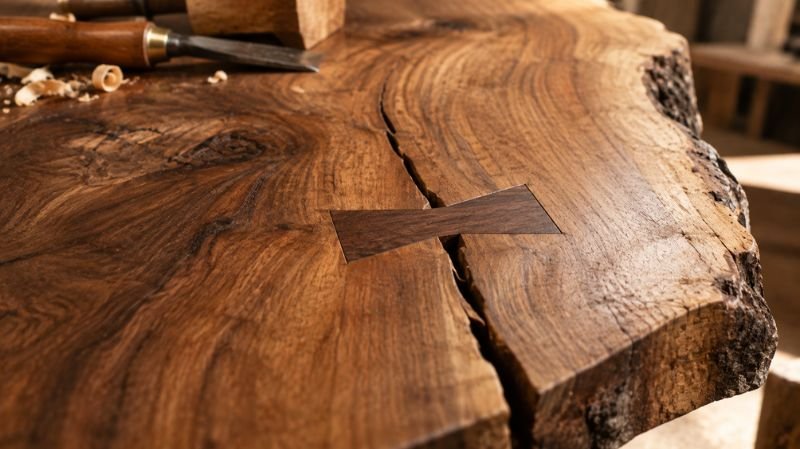
A bow tie joint uses a tapered butterfly-shaped insert whose wider ends help resist movement across a crack or split. The technique is particularly visible in live-edge furniture, where contrasting wood can turn a structural repair into a prominent design element.
The terminology is not accidental. Woodworkers also call these inserts butterfly joints, butterfly keys, bow tie keys, or Dutchmen, and templates are specifically marketed for creating these inlays.
The woodworking process can involve a template, router, marking knife, chisels, and careful fitting, but that is a separate craft topic from choosing or styling a wooden neck bow tie. Keeping the two meanings distinct makes both searches easier to understand.
Common Wooden Bow Tie Styling Mistakes
Choosing the Wrong Proportion
A bow that is dramatically wider than the collar can dominate the face, while a very small bow can disappear beneath a large collar. Check the entire neck-and-collar area rather than judging the bow on its own.
Pairing Too Many Patterns
A patterned shirt, engraved bow, patterned pocket square, statement suspenders, and novelty shoes can quickly create visual competition. When the bow tie is detailed, simplify at least two other elements.
Ignoring the Collar
The shirt collar frames the bow tie. A bow that sits awkwardly between collar points can make even an expensive accessory look poorly fitted.
Matching Every Accessory
Wooden bow tie, wooden cufflinks, wooden watch, wooden belt details, wooden sunglasses, and a matching wooden pocket accessory can easily become too literal. Repeat one or two elements rather than building the entire outfit around the material.
Wearing the Wrong Level of Formality
The most common mistake is not choosing the “wrong” wood; it is wearing an accessory that conflicts with the event’s dress code. Always read the invitation before interpreting a formal occasion creatively.
Choosing Style Over Comfort
If the strap is too tight, the bow shifts, or the wood presses uncomfortably against the neck, the accessory will distract you throughout the event. Adjustable fastening and sensible weight should therefore be considered part of style.
Final Guide
A wooden bow tie works best when it looks intentional rather than simply unusual. Start with the occasion, then choose the bow shape, wood tone, size, fastening, and level of detail that support the rest of your outfit.
For weddings, darker refined woods and clean silhouettes are easy starting points. For smart-casual outfits, lighter or medium woods can work beautifully with chambray, denim, chinos, and textured jackets.
For a minimalist wardrobe, choose natural grain and simple geometry. For a statement look, consider engraving, laser-cut details, contrasting fabric, or distinctive wood grain—but give the accessory enough visual space to stand out.
And if you encounter the phrase bow tie joint wood while researching this topic, remember that you have crossed into woodworking terminology. A bow tie joint is a butterfly-shaped structural or decorative inlay, not a wooden fashion bow tie.
The best wooden bow tie is ultimately the one that fits your occasion, collar, proportions, wardrobe, and personality. Choose the accessory first for compatibility, then let the craftsmanship and wood grain provide the individuality.
Ready to build your look? Start with a solid white or light-blue shirt, identify the formality of your event, and choose a wooden bow tie whose shape and wood tone complement—not compete with—the rest of your outfit.
Frequently Asked Questions
Are wooden bow ties comfortable?
They can be. Many current designs are intentionally lightweight and use adjustable elastic or fabric straps, but comfort depends on the specific construction, dimensions, fastening, and individual fit. BeWooden, for example, lists several models at 23 grams.
Are wooden bow ties easy to wear?
Most modern wooden bow ties are designed to be easier to put on than a self-tied fabric bow tie. Many use an adjustable strap or simple closure, so the wearer does not have to form the bow manually.
Can you wear a wooden bow tie to a wedding?
Yes, particularly when the wedding is rustic, outdoor, creative, or does not impose a strict traditional dress code. For a formal wedding, choose a restrained design and make sure it aligns with the invitation’s stated level of formality.
What shirt goes best with a wooden bow tie?
A white dress shirt is the most versatile option, while light blue works particularly well with many natural woods. Chambray, denim, linen, and subtle checks can work for casual outfits when the bow tie itself is not overly elaborate.
What wood is best for a bow tie?
There is no single best species. Walnut and other dark woods create a richer appearance, while maple and other light woods create a cleaner modern effect; the best choice depends on your outfit, occasion, preferred grain, and finish.
Can you wear a wooden bow tie with a suit?
Absolutely. Navy, gray, charcoal, and neutral suits provide particularly useful backgrounds for wooden accessories. Keep the shirt relatively simple when the wood has prominent grain or engraving.
Can you wear a wooden bow tie with a tuxedo?
It depends on the dress code. Traditional black tie calls for a conventional black bow tie, while creative black tie permits more expressive accessories, so a wooden version is more appropriate when the event explicitly allows creative interpretation.
How should a wooden bow tie fit?
It should sit centered beneath the collar with the bow proportionate to your face and collar. The fastening should be secure without feeling restrictive, and the bow should not continually rotate or drop below the collar points.
Are wooden bow ties good gifts?
They can make distinctive gifts because many designs allow choices in wood, fabric, engraving, or motif. Personalized options are particularly appropriate for weddings, anniversaries, graduations, birthdays, and other occasions where a conventional accessory may feel less personal.
How do you clean a wooden bow tie?
Follow the manufacturer’s care instructions first. In general, avoid soaking the wood or applying household cleaners unless the maker specifically recommends them, and clean fabric, leather, and metal components according to their respective material requirements.