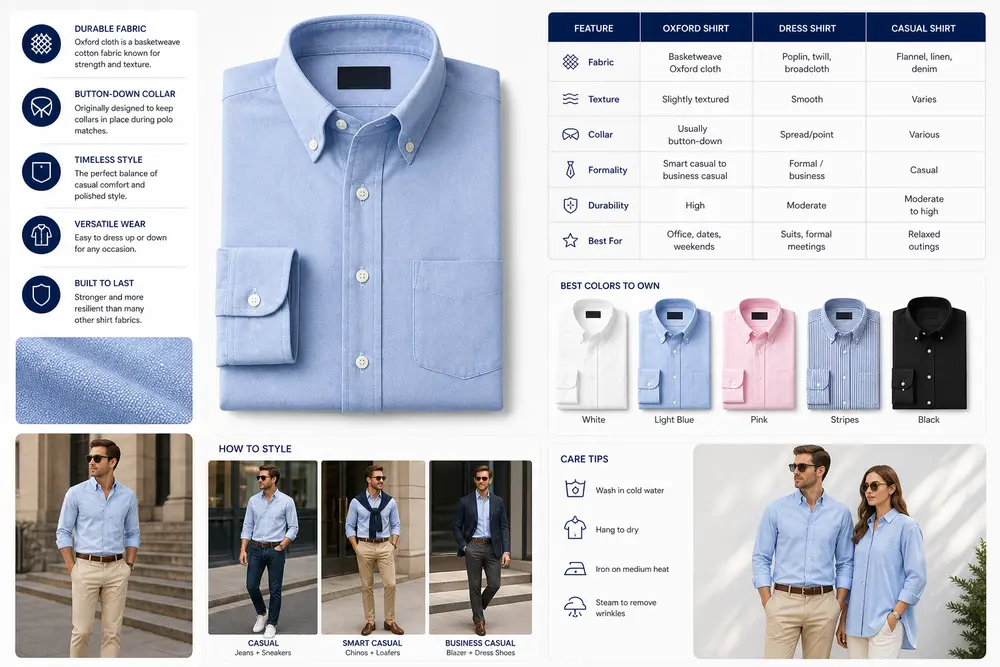
An Oxford shirt is a durable, versatile button-up shirt made from Oxford cloth, a basketweave cotton fabric known for its textured appearance, softness, and strength. Traditionally featuring a button-down collar, Oxford shirts balance casual comfort with polished style, making them ideal for everything from office wear to weekend outfits.
Few wardrobe staples have remained as timeless, adaptable, and universally respected as the Oxford shirt. Whether you’re building a smart casual capsule wardrobe, upgrading your office attire, or simply asking what is an Oxford shirt, understanding this menswear icon can instantly improve how you shop and dress.
From Ivy League campuses to modern business casual offices, the Oxford shirt has earned its reputation through durability, style flexibility, and understated sophistication.
In this in-depth guide, we’ll cover:
- What is Oxford cloth?
- Oxford shirt definition
- The origin of Oxford shirts
- Oxford shirt vs dress shirt
- Fit, styling, and buying tips
- Real data and fashion authority insights
Comparison Table: Oxford Shirt vs Dress Shirt vs Casual Shirt
| Feature | Oxford Shirt | Dress Shirt | Casual Shirt |
| Fabric | Basketweave Oxford cloth | Poplin, twill, broadcloth | Flannel, linen, denim |
| Texture | Slightly textured | Smooth | Varies |
| Collar | Usually button-down | Spread/point | Various |
| Formality | Smart casual to business casual | Formal/business | Casual |
| Durability | High | Moderate | Moderate to high |
| Best For | Office, dates, weekends | Suits, formal meetings | Relaxed outings |
If you want one shirt that works across the most scenarios, the Oxford shirt often offers the best balance.
What Is Oxford Cloth? The Fabric Behind the Shirt
To truly understand what’s Oxford shirt is, you first need to understand Oxford cloth.
Oxford Cloth Definition:
Oxford cloth is a woven cotton fabric made using a basketweave pattern, where multiple weft threads cross over warp threads. This creates:
- A subtle textured finish
- Enhanced durability
- Breathability
- A softer, thicker feel than standard dress shirt fabrics
Why Is It Called Oxford?
In the 19th century, Scottish fabric makers developed four shirt fabrics named after prestigious universities:
- Yale
- Harvard
- Cambridge
- Oxford
Oxford was the only weave that achieved lasting popularity.
Authority-Style Insight:
According to textile experts and menswear historians, Oxford cloth became globally significant because it bridged the gap between formal tailoring and functional sportswear. Its dense weave offered more resilience than finer shirting fabrics while maintaining comfort, one key reason it became a cornerstone of American Ivy League fashion by the mid-20th century.
The History of the Oxford Shirt: From Polo Fields to Ivy League

The Oxford shirt’s roots are deeply connected to sport and status.
Key Historical Timeline:
1800s:
- Scottish mills create Oxford cloth
- Designed for durability and wearability
Late 1800s:
- Polo players adopt button-down collars to stop flapping during matches
Early 1900s:
- Brooks Brothers popularize the button-down Oxford in America
1950s–1960s:
- Ivy League students embrace it
- Hollywood icons like Paul Newman and Steve McQueen make it aspirational
Today:
- A wardrobe essential for men and women globally
Example:
Imagine a young professional who needs one shirt for:
- Friday office meetings
- Dinner dates
- Weekend brunch
A white or light blue Oxford shirt can seamlessly transition across all three with simple styling changes, tie and blazer for work, rolled sleeves for evenings, chinos for casual weekends.
That’s precisely why Oxford shirts consistently outperform trend-based pieces in cost-per-wear.
What Makes an Oxford Shirt Different?
Signature Features:
1. Basketweave Fabric
More texture and strength than poplin
2. Button-Down Collar
Originally practical, now iconic
3. Chest Pocket (Traditional Styles)
Classic Americana detail
4. Versatility
Dress up or down effortlessly
Oxford Shirt vs Button-Down: Are They the Same?
Not exactly.
Important Distinction:
- Oxford shirt = Fabric type
- Button-down shirt = Collar style
Many Oxford shirts are button-downs, but not all button-downs are made from Oxford cloth.
Types of Oxford Shirts You Should Know
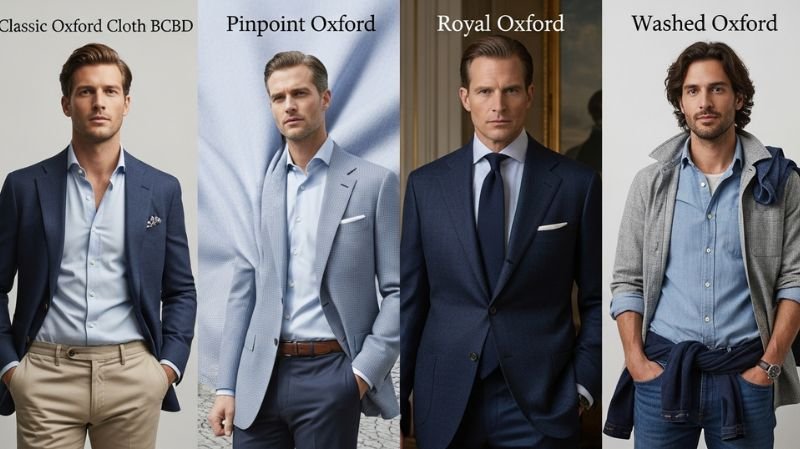
1. Classic Oxford Cloth Button-Down (OCBD)
- Thickest traditional version
- Best for timeless style
2. Pinpoint Oxford
- Finer weave
- Slightly dressier
3. Royal Oxford
- More luxurious texture
- Formal leaning
4. Washed Oxford
- Soft, broken-in feel
- Great for casual wear
How Should an Oxford Shirt Fit?
Fit can make or break your style.
Perfect Oxford Shirt Fit Checklist:
Shoulders:
- Seam ends at shoulder bone
Collar:
- Two fingers fit comfortably
Sleeves:
- End near wrist bone
Torso:
- Slim but not tight
Common Mistakes:
- Overly tight chest pulling
- Baggy waist
- Collar too loose
- Sleeves too short
Slim Fit vs Regular Fit Oxford Shirts
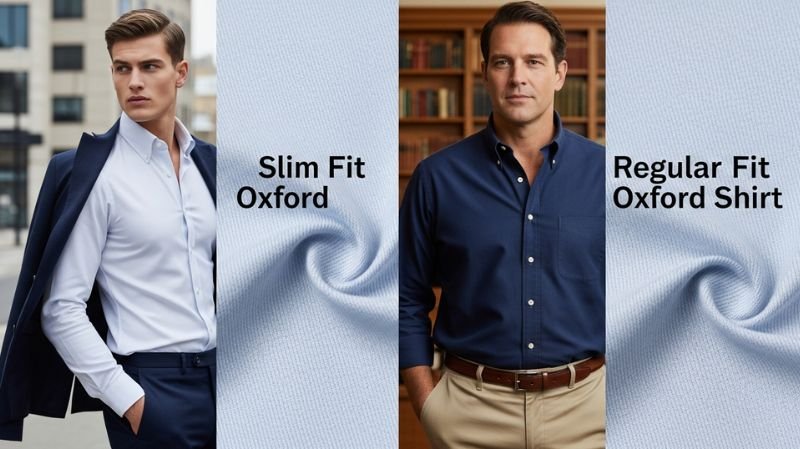
Slim Fit:
Best for:
- Lean builds
- Contemporary style
- Layering under blazers
Regular Fit:
Best for:
- Broader frames
- Traditional Ivy League look
- Maximum comfort
How to Style an Oxford Shirt?
Casual:
- Untucked Oxford shirt
- Dark jeans
- White sneakers
Smart Casual:
- Navy chinos
- Brown loafers
- Layer with sweater
Business Casual:
- Grey trousers
- Blazer
- Leather shoes
Best Oxford Shirt Colors to Own
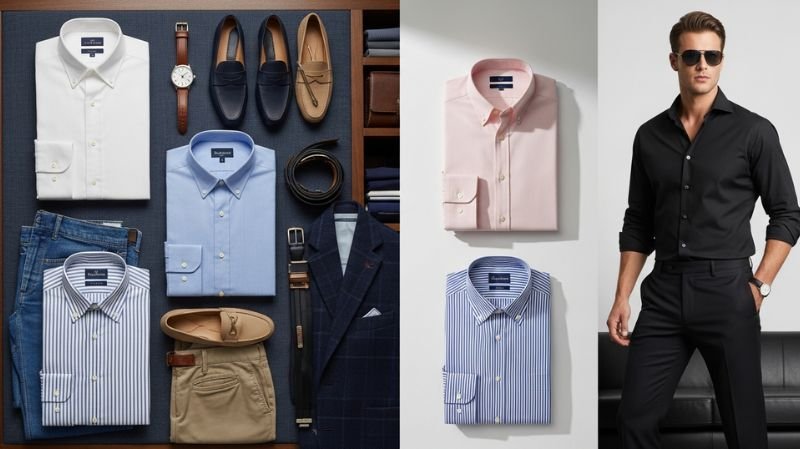
Essential Colors:
White:
Most versatile
Light Blue:
Classic and universally flattering
Pink:
Subtle personality
Stripes:
Visual interest
Black:
Modern edge
Data-Backed Fashion Insight:
Menswear retail analysis consistently shows white and blue Oxford shirts among the highest-searched men’s wardrobe staples due to versatility, office compatibility, and timelessness.
Oxford Shirts for Women
Oxford shirts are no longer exclusively menswear.
Popular Women’s Styling:
- Oversized tucked into trousers
- Layered over tank tops
- Belted as shirt dresses
When Should You Wear an Oxford Shirt?
Ideal Occasions:
- Business casual offices
- College campuses
- Dinner dates
- Travel
- Layering in cooler seasons
How to Care for Oxford Cloth Properly
Best Practices:
- Cold wash
- Avoid over-drying
- Steam for texture retention
- Hang rather than fold
Pro Tip:
Oxford cloth often looks better, slightly relaxed than overly pressed.
How to Buy a Quality Oxford Shirt
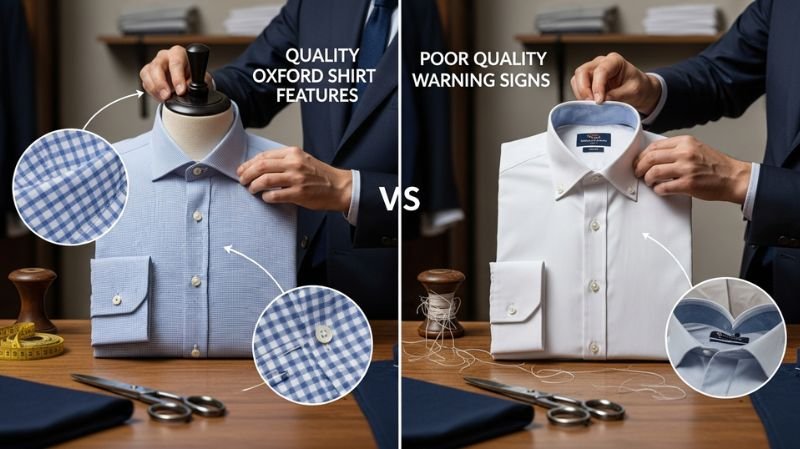
Look For:
- 100% cotton or premium cotton blend
- Strong stitching
- Collar roll
- Fabric weight
- Reinforced seams
Avoid:
- Thin synthetic blends
- Poor collar construction
- Excessive shrinkage risk
Why Oxford Shirts Remain a Wardrobe Essential
Unlike fast fashion trends, Oxford shirts combine:
- Heritage
- Durability
- Functionality
- Timeless appeal
This makes them one of the smartest apparel investments.
Conclusion
Absolutely. The Oxford shirt is more than just another button-up, it’s a menswear and womenswear icon that has stood the test of time through craftsmanship, versatility, and effortless style.
Whether you’re exploring what is oxford cloth, searching for the best office staple, or refining your personal style, investing in a quality Oxford shirt offers unmatched value.
If you only own a few shirts, make one of them a well-fitted white or blue Oxford.
Ready to upgrade your wardrobe? Start with a premium Oxford shirt in white or light blue, focus on fit first, and build versatile outfits that work from office to weekend, because timeless style always outranks trends.
FAQs
1. What is an Oxford shirt?
An Oxford shirt is a button-up shirt made from textured Oxford cloth, known for durability and versatile style.
2. What is Oxford cloth?
Oxford cloth is a basketweave cotton fabric with a textured, breathable, durable structure.
3. Is an Oxford shirt formal?
It is usually smart casual to business casual, though finer versions can be semi-formal.
4. What is the difference between Oxford and dress shirts?
Oxford shirts are thicker and textured; dress shirts are smoother and more formal.
5. Why do Oxford shirts have button-down collars?
Originally to prevent polo players’ collars from flapping.
6. Can you wear an Oxford shirt with a suit?
Generally better with blazers than formal suits, though pinpoint versions can work.
7. Are Oxford shirts good for summer?
Yes, especially lightweight cotton versions.
8. Should Oxford shirts be tucked in?
Depends on occasion, tucked for polished looks, untucked for casual wear.
9. Are Oxford shirts durable?
Yes, Oxford cloth is among the most durable shirting fabrics.
10. What color Oxford shirt is most versatile?
White and light blue are considered the most versatile.