The traditional office uniform has changed dramatically. For decades, men were expected to wear full suits, stiff collars, and ties five days a week. But today’s workplace, from Fortune 500 headquarters to hybrid offices, has embraced a more flexible, polished, and personality-driven standard: corporate casual attire for men.
Modern offices now value adaptability, confidence, and style that reflects professionalism without unnecessary rigidity. According to workplace trend reports from Gallup and LinkedIn, hybrid work culture and evolving office norms have shifted dress codes toward more relaxed but still polished attire, making corporate casual dress code men one of the most searched professional style topics globally.
Whether you’re entering a new office, attending client meetings, or refining your personal brand, understanding the difference between business casual men, business formal, and true corporate casual can impact how colleagues, employers, and clients perceive you.
What Is the Corporate Casual Dress Code for Men?
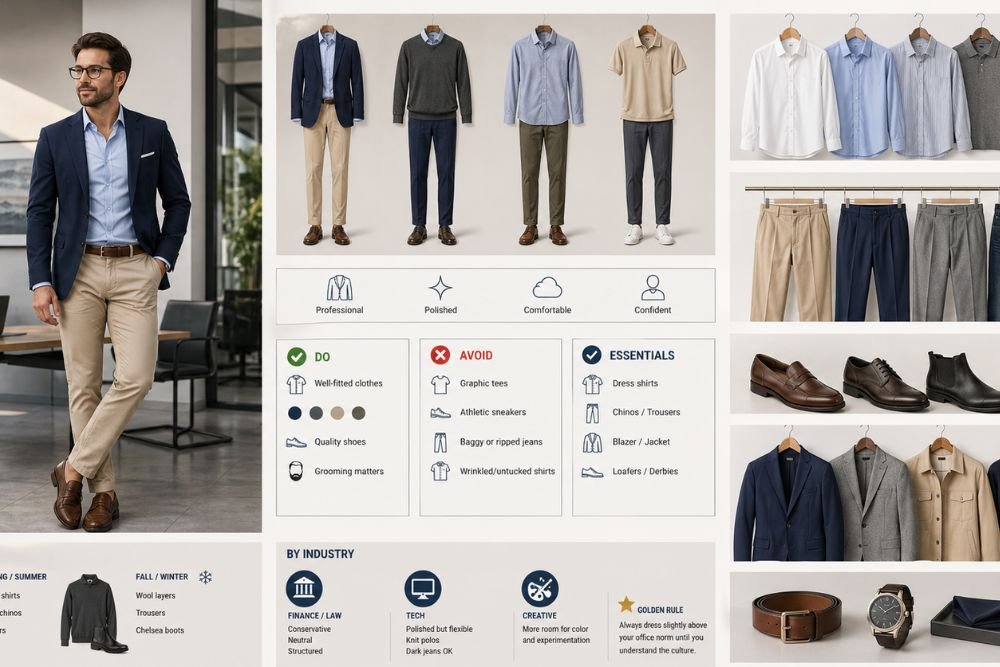
Corporate casual dress code for men is a professional style that blends business-ready clothing with relaxed sophistication. It typically includes button-down shirts, polos, chinos or tailored trousers, loafers or dress shoes, and optional blazers, without the full suit-and-tie requirement. The goal is to look polished, modern, and workplace-appropriate while maintaining comfort and individuality.
Cheat Sheet:
- Tops: Dress shirts, Oxford shirts, knit polos, sweaters
- Bottoms: Chinos, tailored trousers, dark jeans (if approved)
- Shoes: Loafers, derbies, Chelsea boots, minimal sneakers
- Avoid: Graphic tees, distressed denim, athletic shoes, shorts
Rule: Professional, polished, and comfortable, not sloppy.
What Is Corporate Casual for Men?
Corporate casual is often confused with standard business casual, but there’s an important distinction.
Business casual can lean slightly relaxed depending on industry, while corporate casual attire for men usually carries a sharper, more structured edge suitable for office environments where professionalism still matters.
Corporate Casual Defined:
Corporate casual is:
- More polished than smart casual
- Less rigid than business formal
- Built around tailored essentials
- Focused on fit, grooming, and understated style
Think:
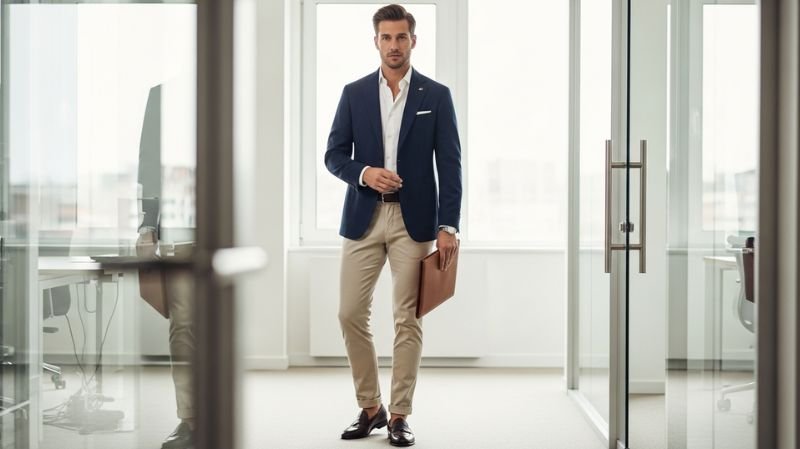
Blazer + Oxford + Chinos + Loafers
Note: Hoodie + Jeans + Sneakers
Why Dress Codes Still Influence Career Success
A Princeton University study on first impressions found that people form judgments about competence and trustworthiness within seconds of seeing someone. In professional environments, attire influences perceived authority, reliability, and leadership potential. While skill matters most long-term, your wardrobe often shapes first impressions before you even speak.
In short: dressing well is not vanity, it’s strategic communication.
Corporate Casual vs Business Casual vs Smart Casual
| Dress Code | Tops | Bottoms | Shoes | Blazer | Tie |
| Corporate Casual | Dress shirt, polo, knitwear | Chinos, tailored trousers | Loafers, Derbies | Optional | Rare |
| Business Casual | Dress shirt, sweater | Chinos, slacks | Dress shoes, loafers | Optional | Optional |
| Smart Casual | Polo, untucked shirt, turtleneck | Jeans, chinos | Sneakers, boots | Optional | No |
| Business Formal | Suit, dress shirt | Matching trousers | Oxfords | Required | Yes |
The Evolution of Men’s Office Style
The rise of corporate casualness didn’t happen overnight.
Timeline:
1960s–70s:
- Casual Fridays introduced in select U.S. companies
1980s:
- Power suits dominate corporate culture
1990s:
- Silicon Valley reshapes workplace fashion
2000s:
- Open collars replace neckties
2026:
- Quiet luxury, tailored essentials, knitwear, and soft structure define office style
Today’s workplace prioritizes:
- Flexibility
- Comfort
- Professionalism
- Personal branding
Essential Corporate Casual Wardrobe Staples for Men
A strong corporate casual wardrobe isn’t about quantity, it’s about strategic essentials.
1. Shirts That Always Work
Best Options:
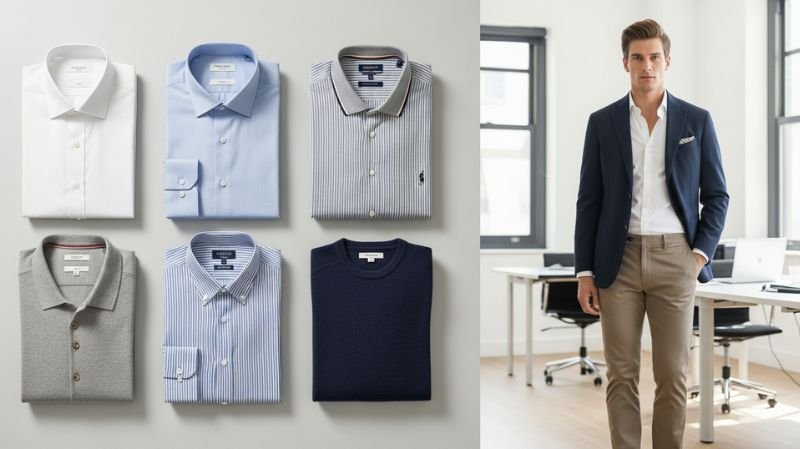
- White Oxford shirts
- Light blue dress shirts
- Fine-knit polos
- Subtle striped button-downs
- Merino wool sweaters
Pro Tip:
Stick to neutral colors:
- White
- Navy
- Grey
- Beige
- Pale blue
Avoid:
- Loud prints
- Wrinkled fabrics
- Oversized fits
2. Bottoms That Balance Comfort and Professionalism
Ideal Choices:
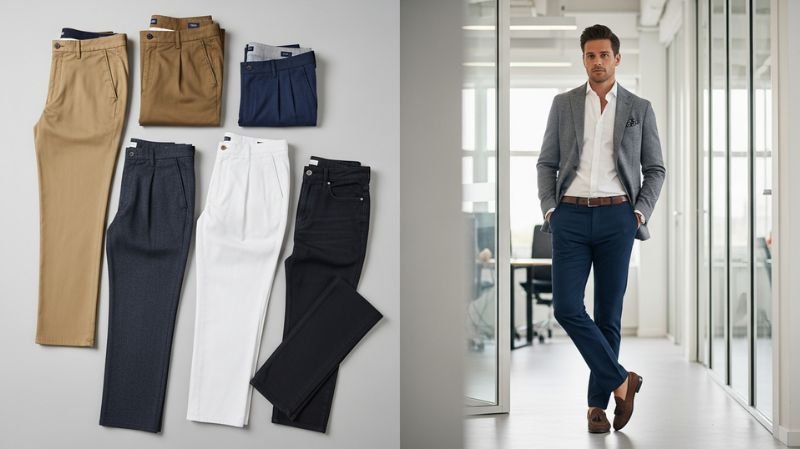
- Slim or straight chinos
- Tailored wool trousers
- Pleated trousers
- Dark non-distressed jeans (if workplace allows)
Best Colors:
- Navy
- Khaki
- Charcoal
- Olive
Real-Life Example:
A marketing executive at a mid-sized tech company may wear navy chinos, a white Oxford, brown loafers, and a grey blazer, formal enough for presentations but comfortable enough for collaborative office days.
3. Corporate Casual Shoes That Elevate Your Look
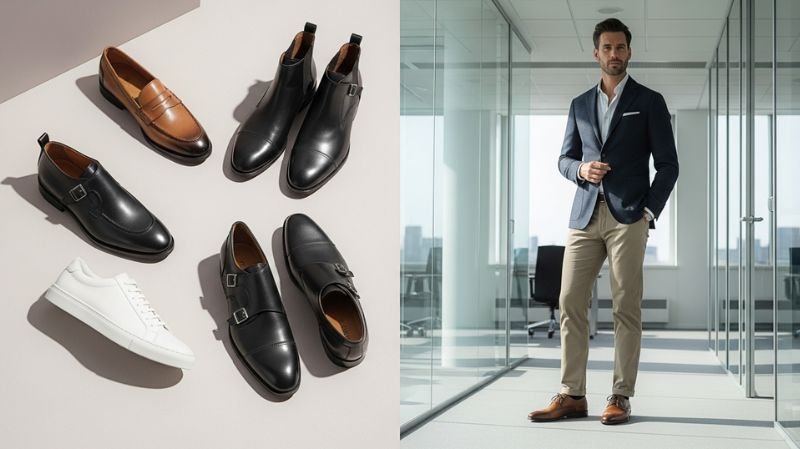
Top Picks:
- Penny loafers
- Derby shoes
- Chelsea boots
- Monk straps
- Minimal leather sneakers (only in relaxed offices)
Shoe Rule:
If your shoes look gym-ready, they’re not office-ready.
Blazers, Jackets & Layering for Corporate Casual Men
Blazers instantly upgrade business casual men into true corporate casual territory.
Best Choices:
- Navy unstructured blazer
- Grey wool blazer
- Linen blazer (summer)
- Cardigans
- Quarter-zips
2026 Trend:
“Quiet luxury” layering:
- Soft cashmere
- Fine merino
- Earth-tone overshirts
Corporate Casual Dress Code Rules Every Man Should Follow
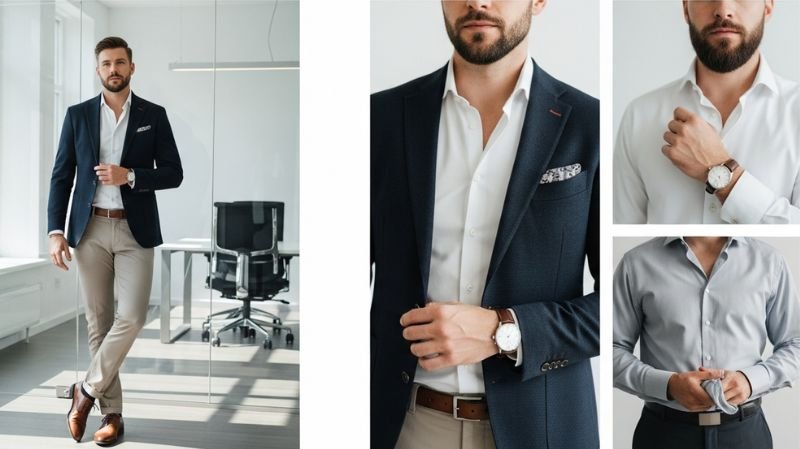
Prioritize Fit Over Brand
A $60 tailored shirt often looks better than a $600 ill-fitting designer shirt.
Key Fit Rules:
- Shoulder seams align properly
- Trousers break lightly at shoes
- Sleeves reveal slight wrist
Grooming Is Part of the Dress Code
Your outfit can’t compensate for poor presentation.
Essentials:
- Clean haircut
- Trimmed beard
- Polished shoes
- Wrinkle-free clothes
Keep Accessories Minimal
Wear:
- Leather belt
- Watch
- Pocket square (optional)
Skip:
- Flashy logos
- Oversized jewelry
- Distracting patterns
Seasonal Corporate Casual Style Guide
Spring/Summer:
Wear:
- Linen shirts
- Breathable chinos
- Loafers
- Lightweight blazers
Fall/Winter:
Wear:
- Wool trousers
- Chelsea boots
- Layered sweaters
- Structured coats
Seasonal Tip:
Texture matters more in colder months, flannel, wool, suede.
Corporate Casual by Industry
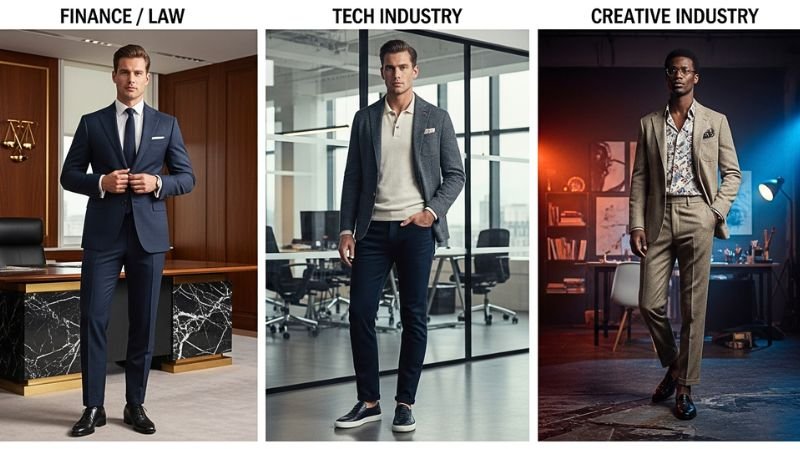
Finance / Law:
- Conservative
- Neutral
- Structured
Tech:
- Polished but flexible
- Knit polos
- Dark jeans acceptable
Creative:
- More room for color and experimentation
Rule:
Always dress slightly above your office norm until you understand the culture.
Common Corporate Casual Mistakes Men Make
Avoid:
- Sneakers that look athletic
- Baggy chinos
- Overly skinny trousers
- Untucked wrinkled shirts
- Graphic tees
- Shorts
- Loud logos
Golden Rule:
Corporate casual should feel intentional, not accidental.
Building a Capsule Corporate Casual Wardrobe
Must-Have Pieces:
- 3 Oxford shirts
- 3 chinos
- 2 blazers
- 2 knit polos
- 2 pairs loafers/derbies
- 1 overcoat
Budget Strategy:
Invest most in:
- Shoes
- Blazers
- Outerwear
Save on:
- Basics
- Layering tees
10 Expert Office Style Rules Every Man Should Know
- Dress for the role above you
- Fit beats labels
- Neutral colors dominate
- Shoes matter more than you think
- Tailoring changes everything
- Grooming completes the look
- Understand company culture
- Keep one “power outfit” ready
- Layer strategically
- Confidence is your best accessory
Conclusion
The modern workplace no longer demands outdated rigidity, but it absolutely rewards polished professionalism.
Mastering corporate casual attire for men means understanding balance: structure without stiffness, personality without sloppiness, and comfort without sacrificing authority.
Your wardrobe is part of your professional identity. Whether you’re navigating interviews, promotions, hybrid work, or daily office life, dressing well communicates competence before you say a word.
In 2026, the best-dressed man in the office isn’t always wearing a full suit, he’s the one who understands fit, context, and confidence.
Ready to upgrade your office wardrobe? Start by refining your essentials, better shirts, sharper chinos, smarter shoes, and build a corporate casual style that positions you for confidence, credibility, and career growth. Your wardrobe should work as hard as you do.
FAQ
1. What is corporate casual attire for men?
Corporate casual attire combines professional clothing like dress shirts, chinos, and loafers with relaxed styling that avoids full suits and ties.
2. Is corporate casual the same as business casual?
Not exactly. Corporate casual is usually slightly more polished and office-structured than general business casual.
3. Can men wear jeans in corporate casual?
Yes, if they are dark-wash, tailored, and non-distressed, only in offices that permit denim.
4. Are sneakers acceptable in corporate casual?
Minimal leather sneakers may work in relaxed workplaces, but loafers or dress shoes are safer.
5. What shirts are best for corporate casual?
Oxford shirts, dress shirts, knit polos, and fine sweaters are top choices.
6. Do you need a blazer for corporate casual?
Not always, but a blazer adds polish for meetings, interviews, or presentations.
7. What colors work best for corporate casual men?
Neutral tones like navy, grey, white, beige, and olive offer maximum versatility.
8. Are polos considered business casual?
Yes, high-quality polos are often appropriate, especially in modern or tech offices.
9. What should men avoid in corporate casual?
Graphic tees, shorts, distressed jeans, athletic shoes, and wrinkled clothing.
10. Why does corporate casual matter?
It shapes first impressions, supports professionalism, and can positively influence workplace perception.